


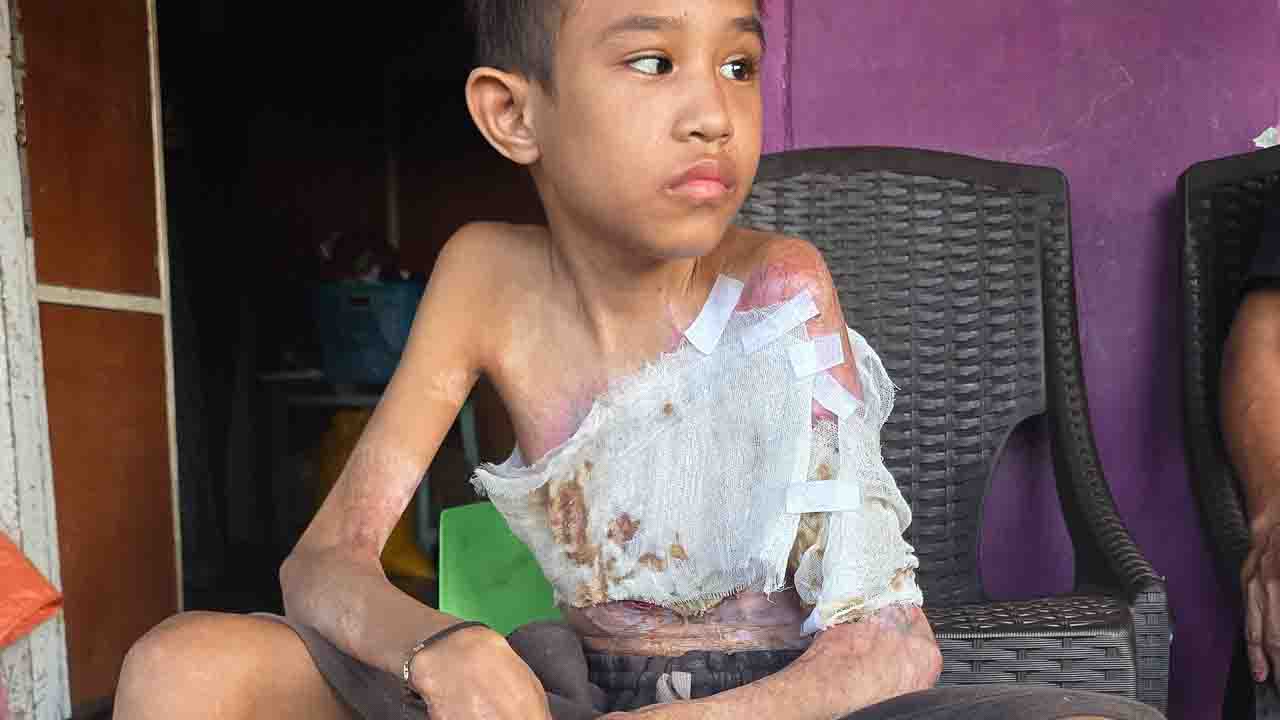
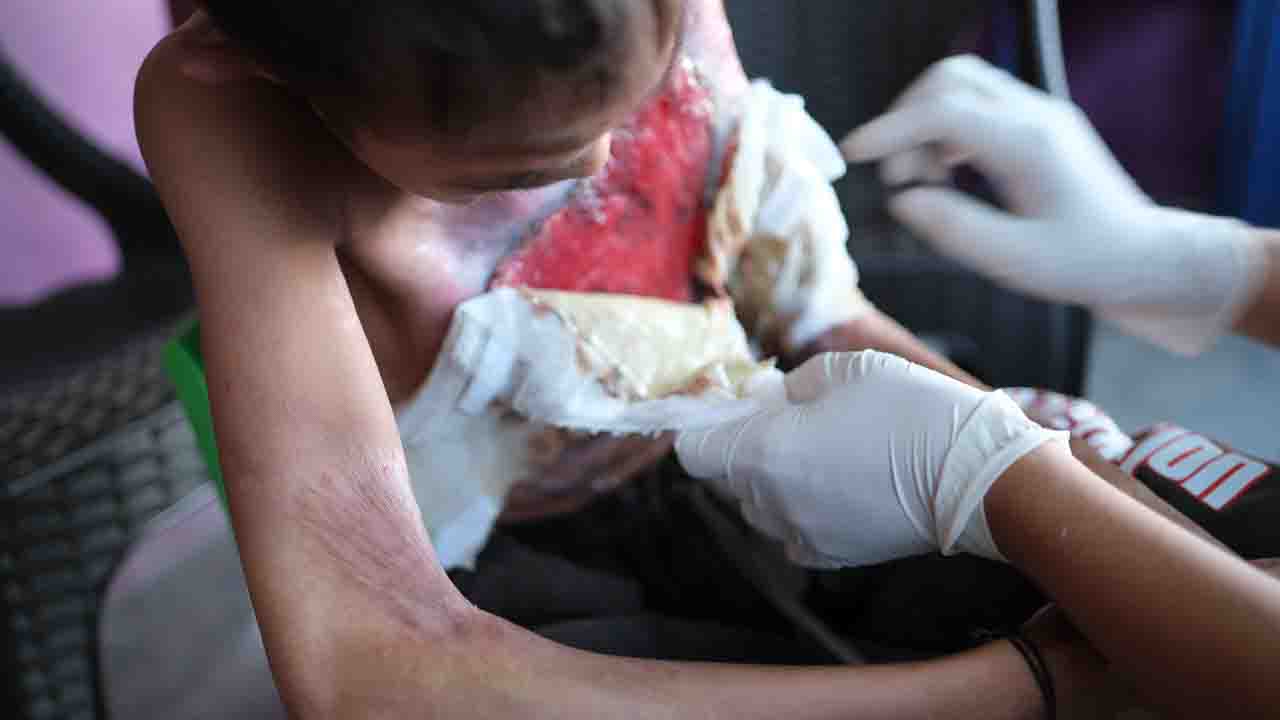
Umbu, a child named here to protect his identity, receives painful but essential burn wound care in East Sumba, after months without specialised medical treatment.
Umbu: Months with Third-Degree Burns Without Care
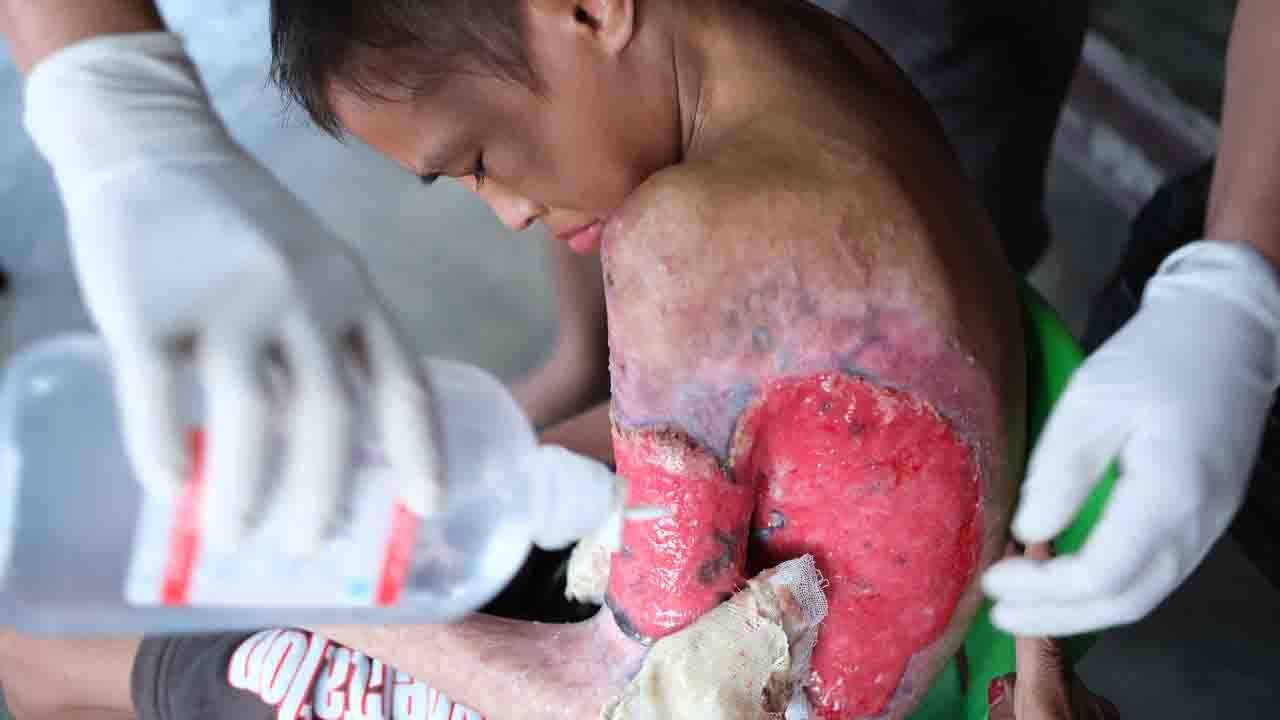
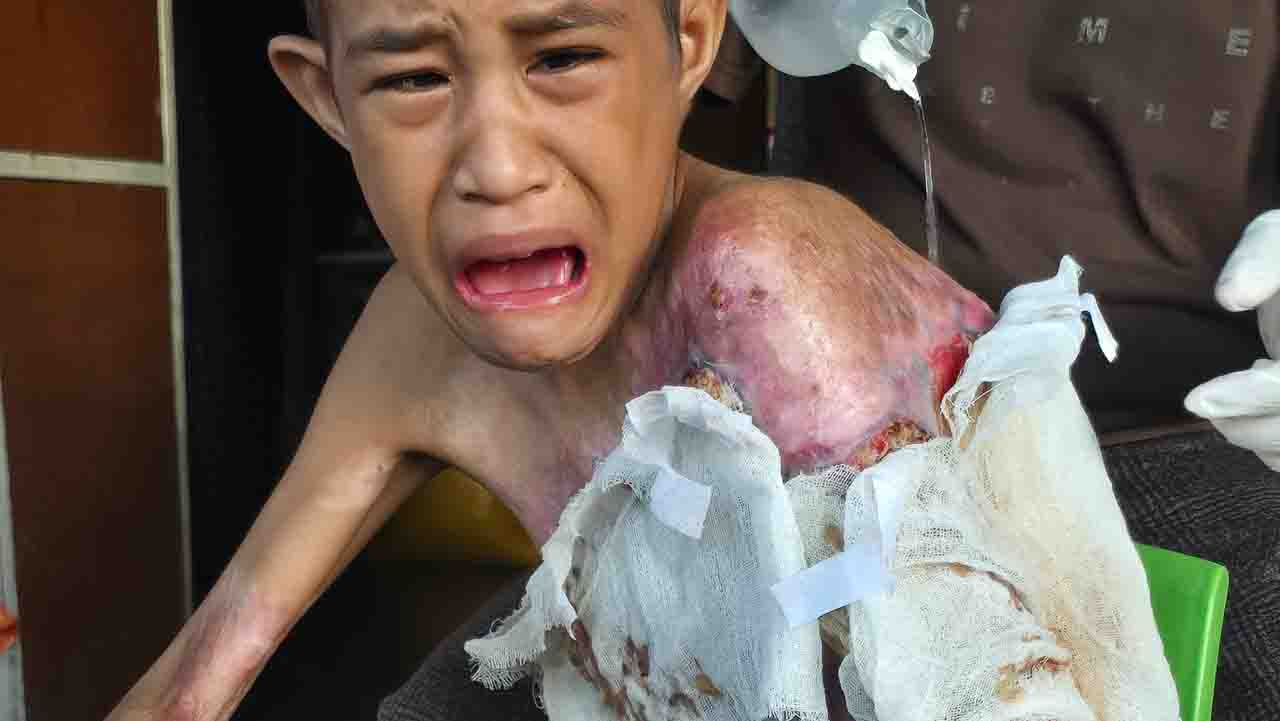
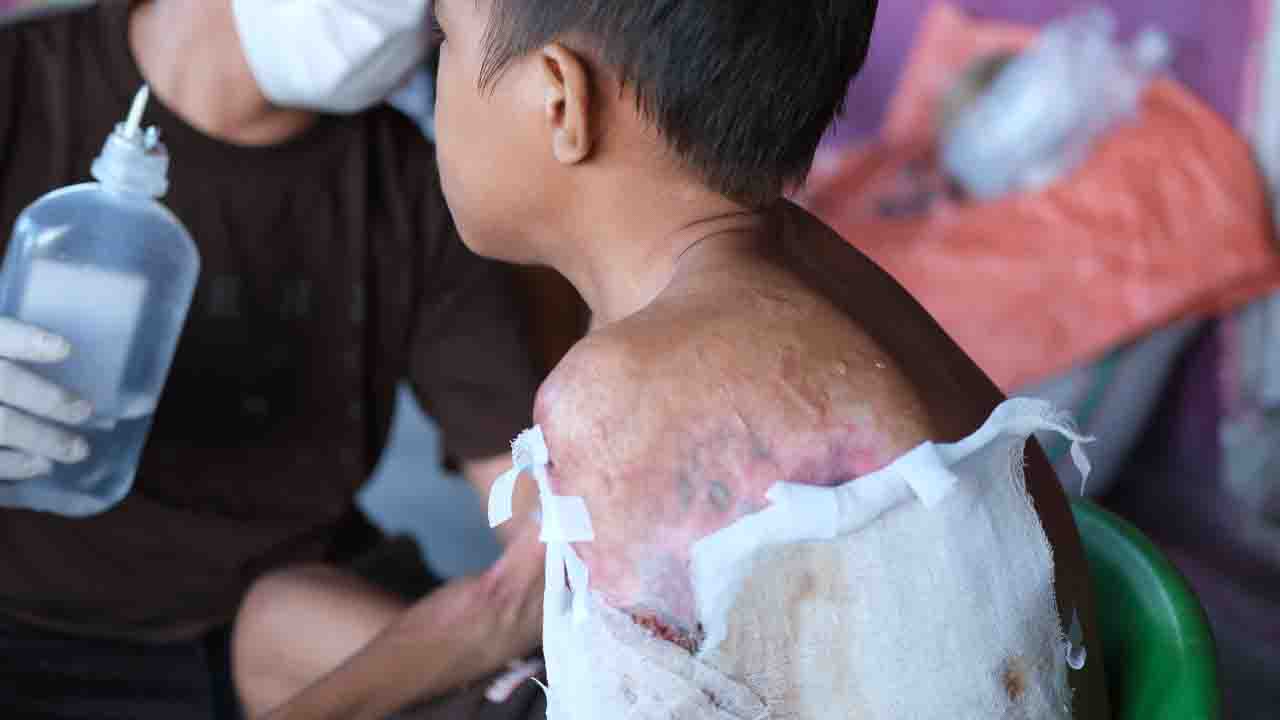
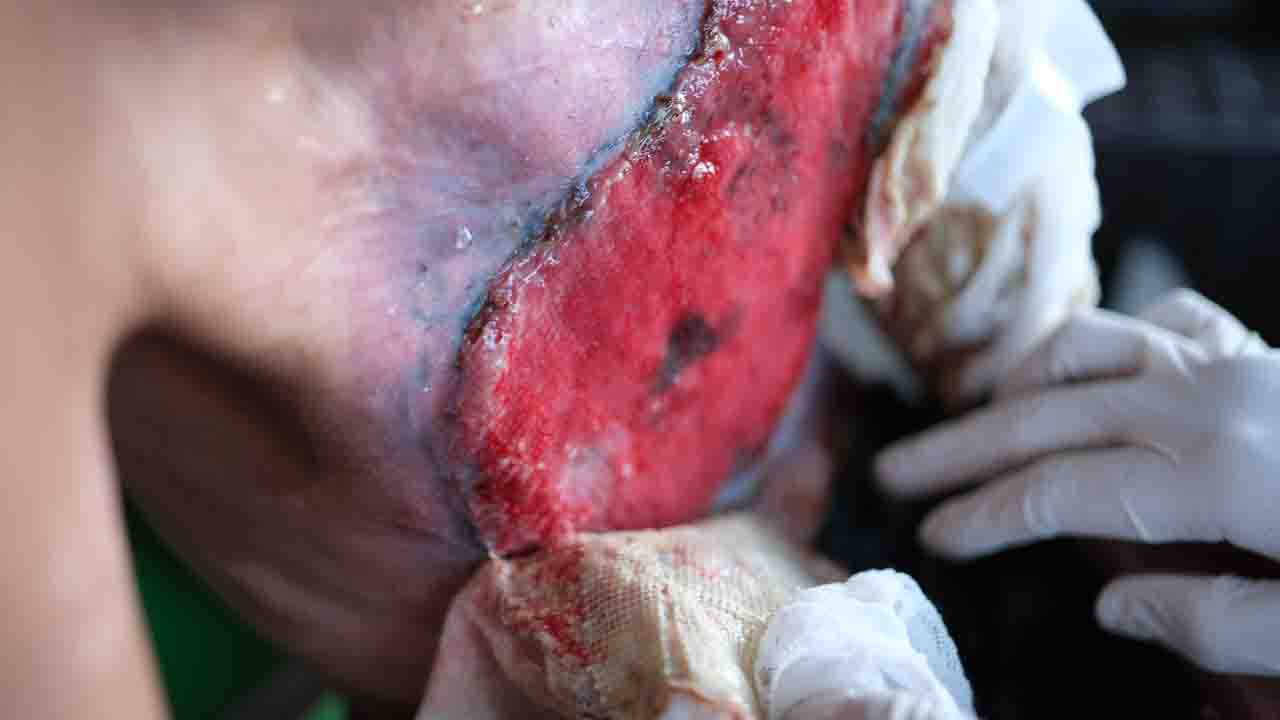
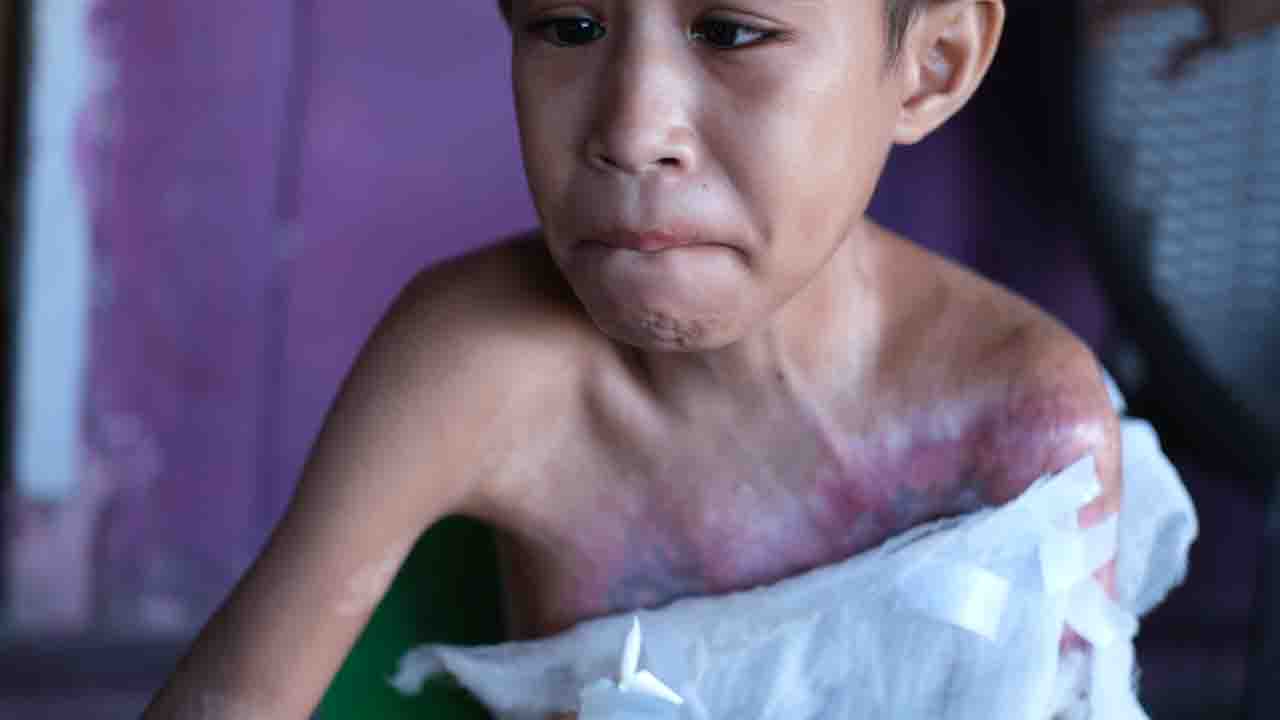
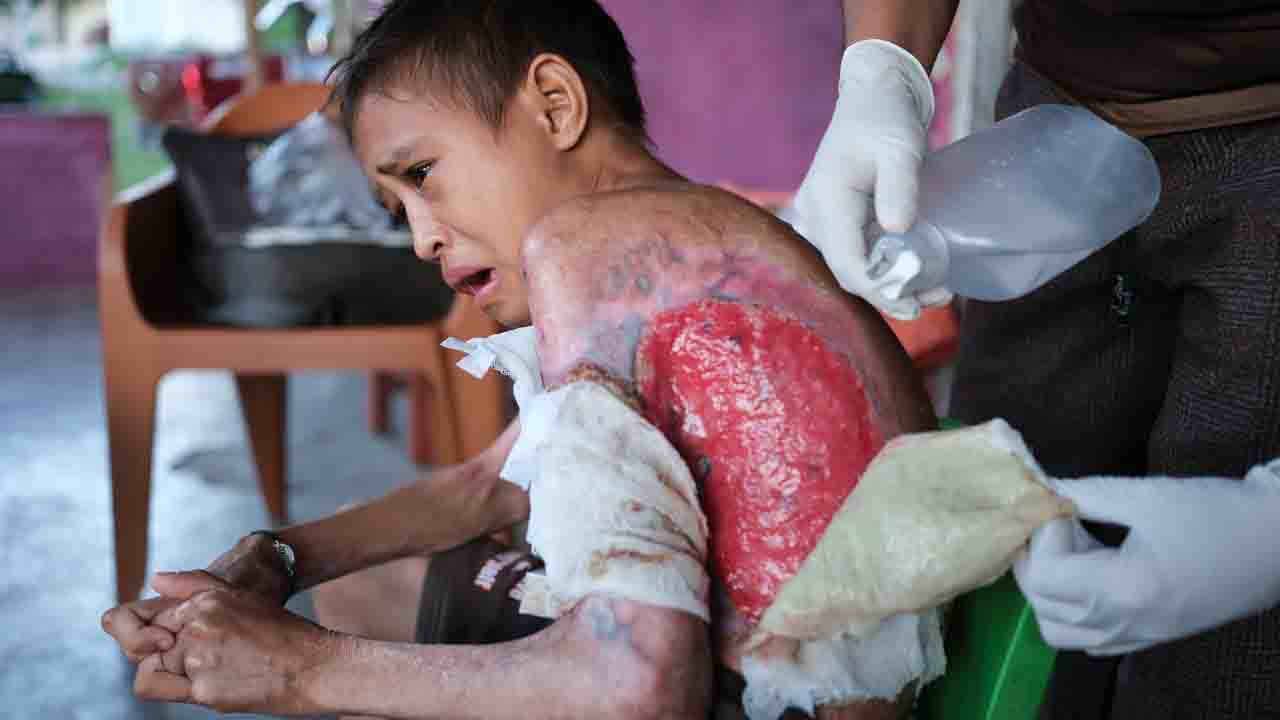
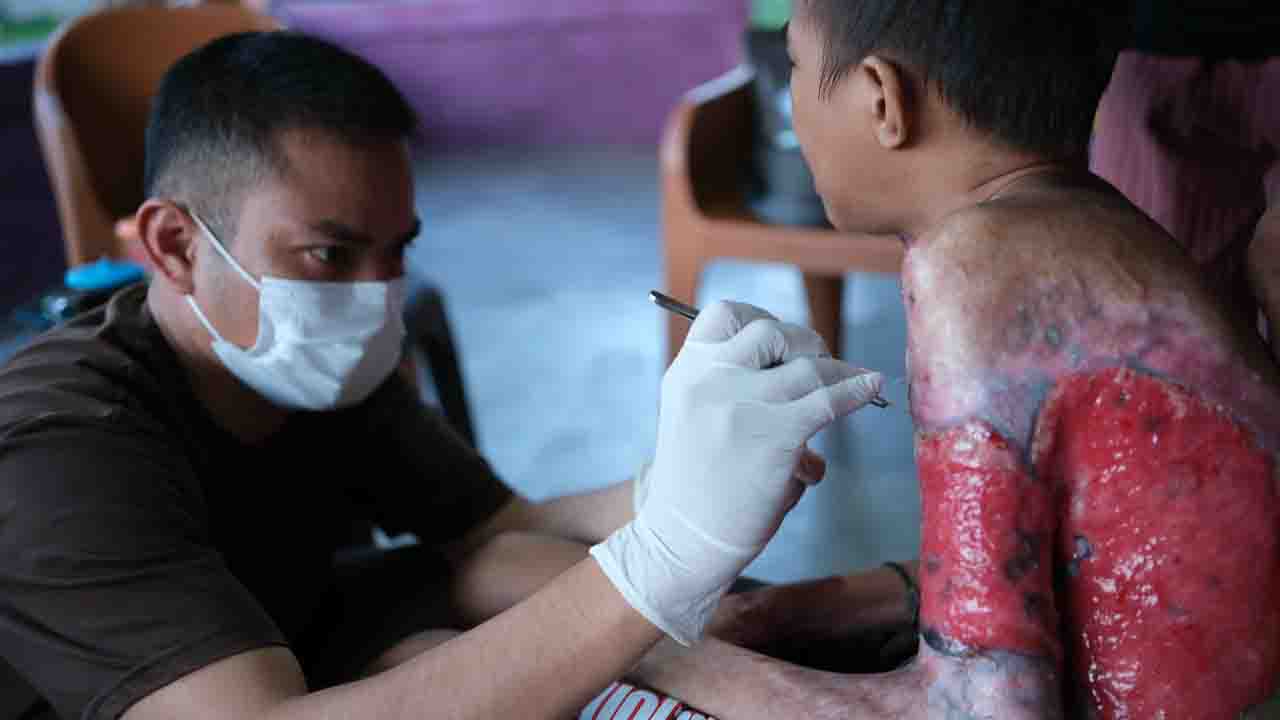
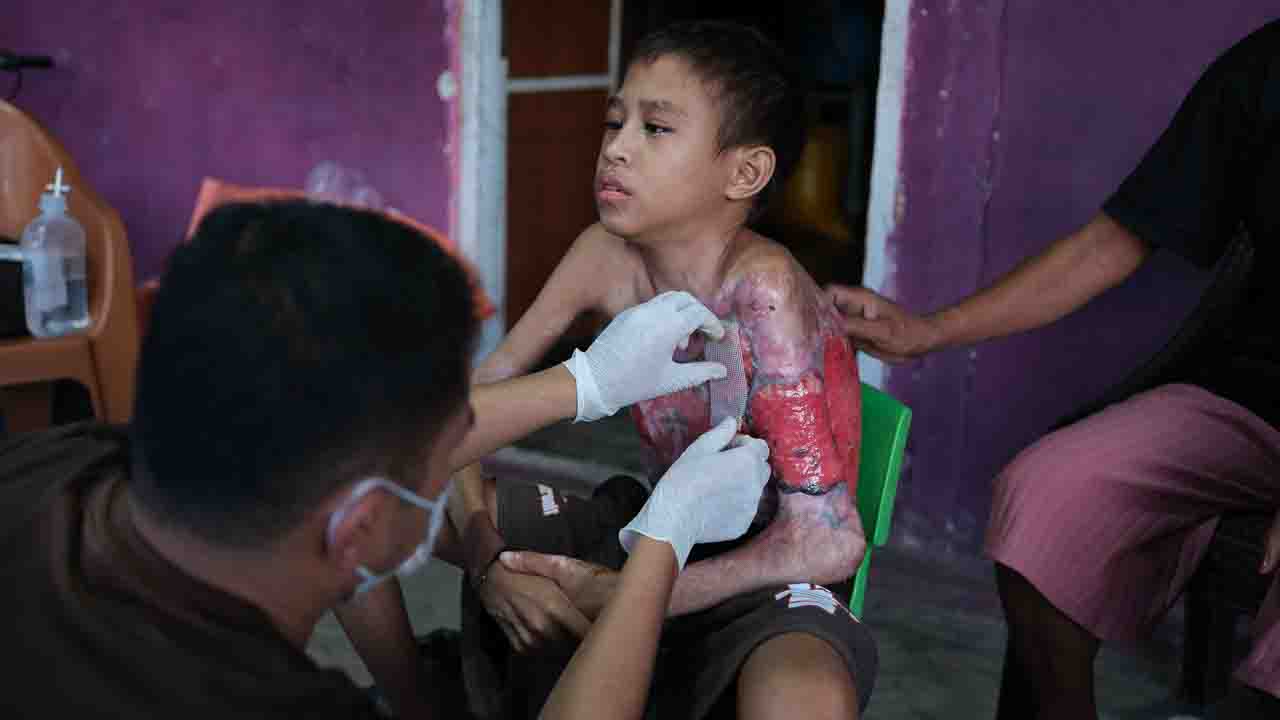
Umbu is not his real name. It is a child’s name we use here to protect his identity. He is 14 years old. More than eight months ago, he suffered severe burns over approximately 20%++ of his body. Today, he is still living with an injury that should have received specialised medical care from the first hours. His skin is not only scarred. In several places, it has become hard, thick, almost like stone. Large chronic wounds remain open across his chest, shoulder, and arm. His left arm is fixed against his body by severe contractures. He can no longer move it. His right hand moves only with difficulty. He cannot lie down to sleep. He sleeps sitting, because his body no longer allows any other position. He is in constant pain, visibly exhausted, and suffering from severe malnutrition.
For seven months after the accident, Umbu remained in his house in Desa Lailara, Kecamatan Katalahamulingu, East Sumba. He received only home care, without ever being seen by a health professional. He was found by our friend Ardy on the 14th of March 2026 and was taken to the hospital for the first time on the 25th of March. That means seven months passed between a severe burn injury and the first real medical assessment. Seven months during which his body healed badly, painfully, and in a position that now threatens his future.
Desa Lailara is not a place cut off from the world in a romantic sense. It can be reached, but only with a 4×4 vehicle and real field logistics. The village has some electricity, mainly enough for basic lighting, but not the kind of reliable power that allows medical care, refrigeration, equipment, or emergency response. Water is available, but families must go fetch it. Sanitary facilities are inadequate, often dirty, and can themselves become a health risk. In this setting, there was no burn unit, no sterile dressing material, no pain control, no early surgery, and no structured follow-up for a child with deep burns.
His family did what many families do when the health system stops before the village: they tried to treat him with what they had, using traditional remedies and unsafe local practices because no medical alternative was reachable. This is not a story written to judge them. It is a story of medical absence. When care does not arrive, families improvise. They use what is near, what is known, what someone suggests, and what poverty leaves in their hands. His family is extremely poor. Poverty did not cause the fire, but it shaped everything that followed: the delay, the lack of treatment, the lack of food, the lack of transport, and the silence around a child slowly becoming disabled.
Untreated third-degree burns are not static wounds. They continue to destroy life long after the fire has gone out. Without early cleaning, debridement, infection control, appropriate dressings, nutrition, analgesia, and surgical assessment, deep burns become chronic open wounds. Infection risk remains high, including the risk of sepsis. Scar tissue thickens and contracts. Fibrosis pulls skin, muscles, tendons, and joints into fixed positions. Mobility is lost. Pain becomes permanent. A child who should be growing becomes weaker, undernourished, and disabled. The body needs energy and protein to repair tissue. Without enough food, clean water, safe hygiene, and medical support, healing becomes almost impossible. This is why, in rural medicine, delay changes everything.
Here in Sumba, there is no realistic way to properly treat a child in Umbu’s condition. Basic care can clean wounds, change dressings, reduce some risks, and keep him alive. But basic care will not release his contractures. It will not restore the use of his left arm. It will not prevent his body from remaining bent by scar tissue. It will not allow him to lie down again if nothing more is done. Without specialised treatment, physiotherapy, nutritional rehabilitation, pain management, and reconstructive surgery, Umbu may remain disabled for life. Not because nothing can be done, but because the care he needs is not available where he lives.
For the past weeks, Umbu has been cared for by a family in Waingapu, together with his mother. They opened their home because there was no other solution. Since then, the care teams come to clean and dress the wounds approximately every two days; this takes an hour each time, but it should take much longer to be truly effective. These dressings are necessary, but they are not enough. Each change causes extreme pain. The photos show what words cannot carry: a child trying to endure a level of suffering no child should face in silence. He also needs psychological support. A child cannot spend months in pain, unable to move normally, unable to sleep properly, and remain untouched inside.
Before any transfer, surgery, or specialised hospital treatment can take place, Umbu needs help at his current location. The family caring for him has very limited means. Umbu lacks almost everything: adequate food, clean clothes, better wound-care materials, medicines, pain relief, hygiene supplies, and safe daily care. We are ready to organise this local support immediately. With donations received for him, we can buy better dressings, antiseptics, medicines, protein-rich food, clothing, and pay for medical visits when possible. These are not luxury items. They are the minimum conditions needed to reduce pain, prevent infection, improve nutrition, and keep him stable while we search for a more advanced medical solution. This is also why we speak often about malnutrition and infection: one makes the other more dangerous.
We are asking clearly and directly: Are there hospitals willing to receive Umbu? Are there burn surgeons, plastic surgeons, rehabilitation specialists, nutrition teams, mental health professionals, or organisations able to help with his transfer, treatment, and long-term recovery? Clinical guidance on burn management is clear: deep burns require structured assessment, infection control, pain management, nutrition, rehabilitation, and surgical planning. Umbu is one child, but he represents many others living where access to care does not exist in any realistic way. His case is not exceptional. It is simply visible today. Behind him are villages where burns, infections, malaria, malnutrition, trauma, and childbirth complications become life-threatening, or disabling, because care is too far, too late, too costly, or too difficult to reach.
Umbu does not need pity. He needs a future. He needs medicine, surgery, nutrition, rehabilitation, psychological support, and people willing to act. If nothing different is done, he may never lie down normally again. He may never use his left arm again. His right hand may continue to lose function. His body may remain folded by scars that should have been treated months ago. If you can help medically, logistically, or through a donation, please do so through Fair Future Foundation. Every contribution received for him will be used to improve his care: food, dressings, medicines, transport, medical consultations, and the next steps toward specialised treatment.
Thank you for reading, for sharing, and for helping us turn a visible suffering into a concrete medical response.
Today, the 26th of April 2026 | Alex Wettstein
In Short – When distance becomes medical violence
“Umbu” was not only burned by fire. He was burned a second time by distance, poverty, silence and the absence of care. For six months, no road, no clean water, no electricity and no medical access stood between him and the treatment a child should receive immediately. His wounds show a failure we see too often in rural Indonesia: when systems stop before the village, children are left to survive the impossible.
"Umbu’s" Dressing Change After Eight Months Without adequate Care
List of Related Organisations with Hyperlinks
- WHO Burns: WHO outlines the medical, social and economic burden of burns, particularly in low-resource settings where care is delayed.
- WHO Malnutrition: WHO defines malnutrition as an imbalance of energy and nutrients, a major barrier to wound healing and recovery in children.
- WHO Rehabilitation: WHO describes rehabilitation as essential care to reduce disability and restore function after severe injury or illness.
- WHO Sepsis: WHO explains sepsis as a life-threatening response to infection, a major risk when deep wounds remain untreated.
- NCBI Bookshelf Burn Management: NCBI Bookshelf reviews burn evaluation and management, including wound care, surgery and interprofessional follow-up.
- UNICEF Indonesia Nutrition: UNICEF Indonesia focuses on child nutrition, a central factor in recovery when injury, poverty and infection overlap.
- Save the Children Health and Nutrition: Save the Children supports child health and nutrition, both essential when injured children lack food, medicine and care.