|
Sixteen Cards Beside a Stethoscope
👋 Hello, it's Alex. How are you all doing? I'm writing from East Sumba. Three weeks without a letter. Here, the days often end before I've had time to tell you about them.
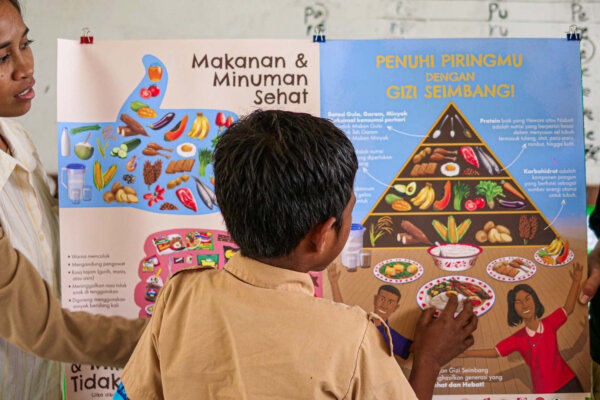
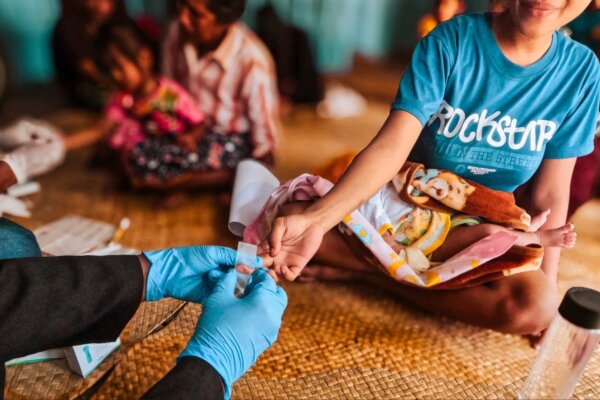
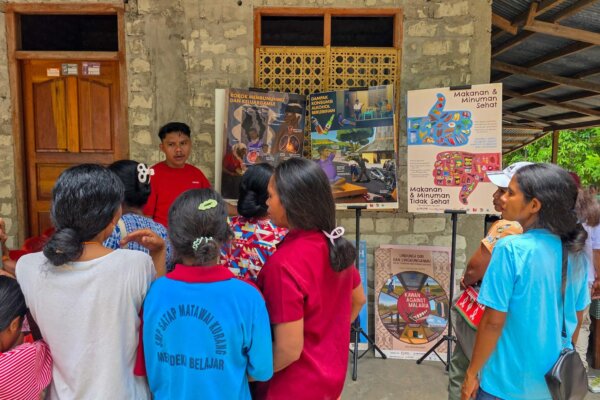
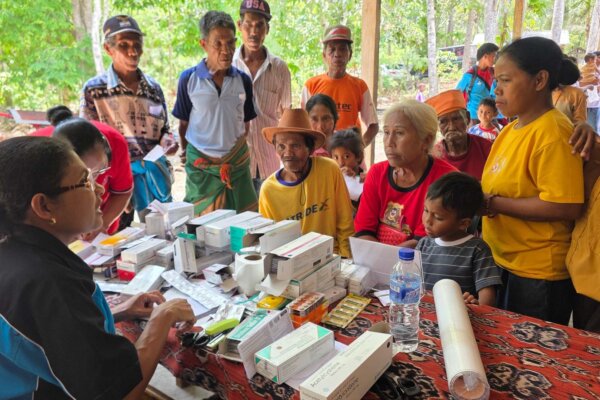
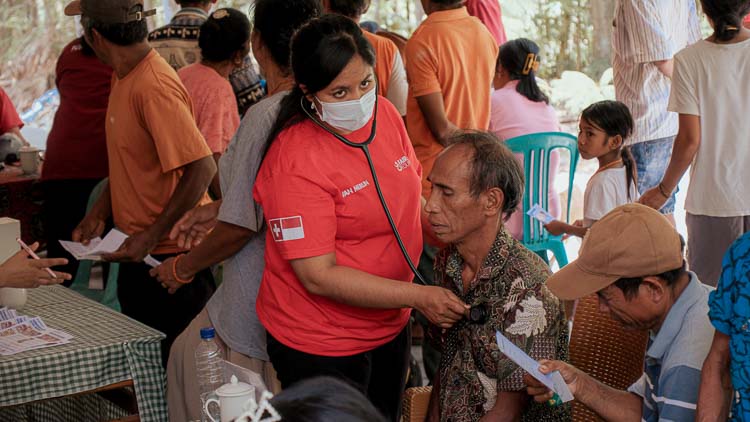
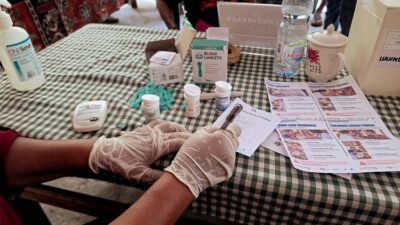 Saturday 24 October. We set off at six in the morning for Bidi Hunga. Three vehicles, three hours on the road, doctors, nurses, a midwife and a pharmacist. We saw around a hundred patients. On a table, beside a stethoscope, lay sixteen illustrated health cards in Indonesian.
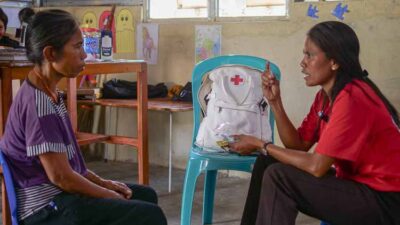
The idea came from Flavie (my daughter), an emergency nurse at CHUV hospital in Switzerland. Safe water, wound care, malaria, nutrition, warning signs: with patients, we choose one or two things they can realistically do at home. Meanwhile, Erwin leads conversations about prevention. These cards do not replace medicine or a doctor. They simply help the consultation continue a little after we've left.
Because this is the question: what happens when our trucks drive away? Our Kawan Sehat community health workers stay in the villages. Our Primary Medical Care programme sees nearly a thousand patients every month. Demand is growing, and so are the distances we travel. We need to deliver treatments, follow up on cases and supervise newly trained health workers. But medicines are becoming scarce and difficult to transport. Funding this continuity of care is getting harder. Without supplies, even a well-trained health worker cannot provide proper care.
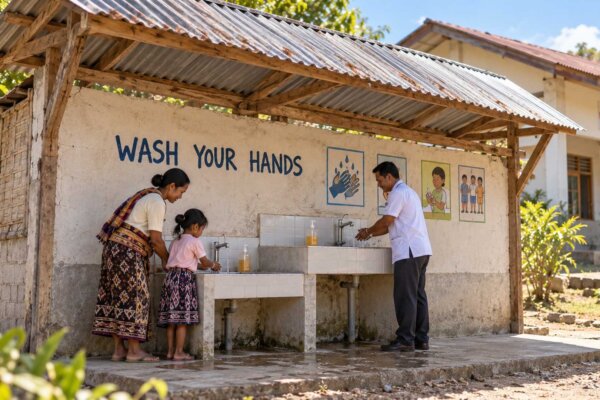
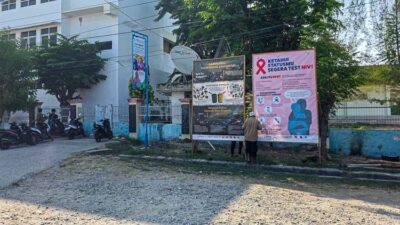 In Waingapu, large billboards now speak openly about HIV testing and waste management. In the villages, we continue malaria testing and prevention ahead of the rainy season. This work also connects with our sepsis study. Sepsis is a life-threatening response to infection. The study included 1,001 households and 162 healthcare workers. Among 998 households answering the relevant question, 950 did not have both water and soap available at their handwashing place. Kawan Baik plans to publish our second report, on how the fieldwork was carried out, in about ten days.
We will then present this work to the authorities. Our ingenuity here lies in connecting things that might seem unrelated: water reservoirs, nutrition education starting at school, a wound treated early, a health worker recognising danger signs. Each offers a way to prevent infections or their complications. We will need to measure the results.
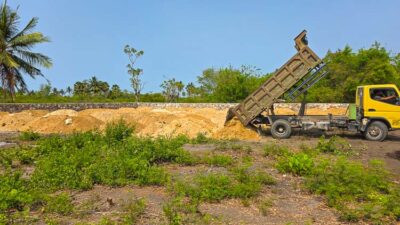 In Kawangu, the perimeter wall around the new Rumah Kambera site is finished. One hundred truckloads of sirtu, around 350 cubic metres of locally sourced sand, gravel and earth, have arrived. This week, an excavator is expected to spend two days spreading, levelling and compacting the material. But not a single building has been constructed yet. We are preparing the ground for a pharmacy, a small treatment room, a laboratory and training spaces. You can follow the work as it actually happens on our new dedicated website. Smart Energy Tech has proposed a solar installation, and the Rotary Club Beaulieu Côte d'Azur is preparing a fundraising gala to help pay for it. Nothing has been installed yet.
And one more piece of news: thanks to TranslatePress, Unsere Website is now available in English, French, German and Italian. That's between five and six million words to translate, so more people can read our stories. Thank you to everyone who continues to stand beside us, each in their own way. Here, your support becomes medicines, fuel, water and hours of training. There is already another journey to prepare.
Alex
For the whole Fair Future Foundation team
East Sumba, Indonesia, 29 October 2026 |

 🩺 When the Doctor Leaves, Who Is Still There to Care?