|
Where the Roads End, Our Work Continues
👋 Hello, it’s Alex. How are you?
Over the past ten days, we have built, treated patients, carried out field research and made repairs, far from roads and electricity.
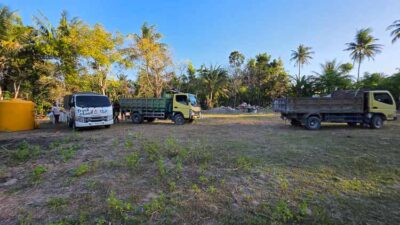 Work has begun at Rumah Kambera 2.0. The land has been purchased and legally registered. We are building nearly 300 metres of stone wall along three sides of the site, 1.20 metres high and 30 centimetres wide. The foundations, designed to withstand heavy rain and flooding, reach depths of up to 75 centimetres in some places.
Eight workers are living on the construction site, sleeping under a tarpaulin and working with a generator. The well already provides them with water, and electricity should arrive within two weeks. To allow the connection to be installed, we are building a four-by-five-metre structure made of mahogany wood and covered with alang-alang thatch. It will become the centre’s first small building, giving the workers a dry place to eat and rest. Later, it will be moved and preserved.
We are proposing this name: Rumah Kambera, Health and Community Centre, by Fair Future Foundation. But we would genuinely like to hear your ideas. A place like this is built with stones, but also with a shared vision.
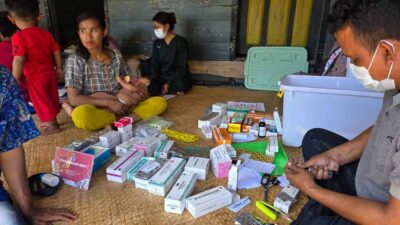 On 1 August, Swiss National Day, we chose another way to celebrate: we went to provide medical care. It took us more than six hours to reach Kampung Madu Tolung, in Kambata Bundung, Kahaungu Eti district.
The tracks damaged both of our trucks: the roof rack broke on the Truck of Life, and the Truck n’Load probably suffered suspension damage.
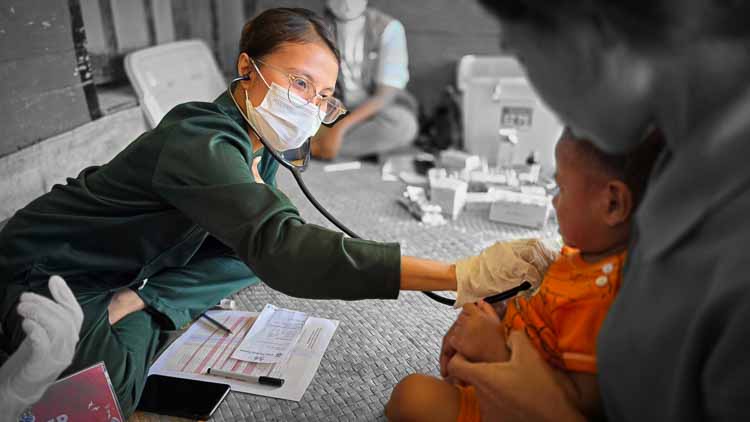
We treated just over 110 people, many of them children. Consultations, medicines, nutritional assessments, vitamins and health education on malaria, alcohol, HIV, healthy eating and hygiene. We also carried out many blood tests for glucose, cholesterol, uric acid and malaria, using microscopy whenever possible.
What we saw most often were respiratory infections, skin diseases, untreated wounds and malnutrition.
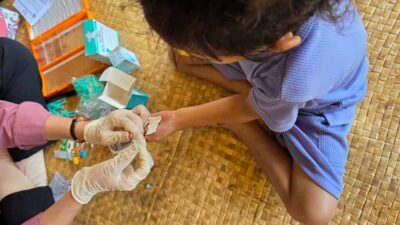 A day like this costs around CHF 900.
That covers medicines, tests, medical teams, vehicles and the logistics required to treat between 100 and 200 people.
Fair Future Foundation has never received funding from the Swiss government. Our story began in the field in 2006, and Fair Future Foundation was established in Switzerland in 2008. That was quite a while ago now, wasn’t it?
Linking this medical day to 1 August was simply a way of remembering where I come from, and the responsibility I carry here with the Swiss Fair Future Foundation.
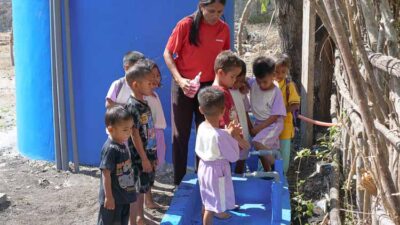 Water Connections continues. Thanks to CHF 10,000 in funding, four new 5,300-litre reservoirs will be built in Mbatapuhu.
Each one costs CHF 2,245 and improves the daily lives of at least three families. Our teams will remain on site and build them together with the villagers.
In Hudumburung, we improved the two most recently completed reservoirs by installing concrete collection basins with taps connected directly to the tanks. This helps improve hygiene and prevents stagnant water, which can create breeding grounds for mosquitoes and increase malaria risk. Building is not enough. We have to observe, correct and improve.
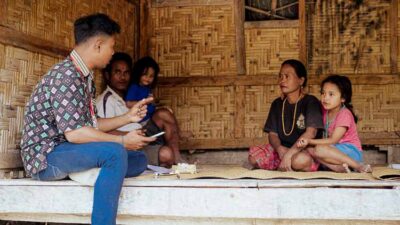 Our sepsis study is approaching 1,000 households. Only one village remains, Napu. More than three months of work, house after house.
Last week, we presented the first results to around ten partner doctors. During that meeting, several doctors told us that their hospital administrations had instructed them to record diagnosed cases of sepsis or septicaemia under another diagnosis.
The reason is financial: when a case is officially recorded as sepsis, the hospital does not receive reimbursement from the state. This practice obviously distorts the statistics and makes it much more difficult to understand the true scale of the problem, as well as to prevent and treat it effectively.
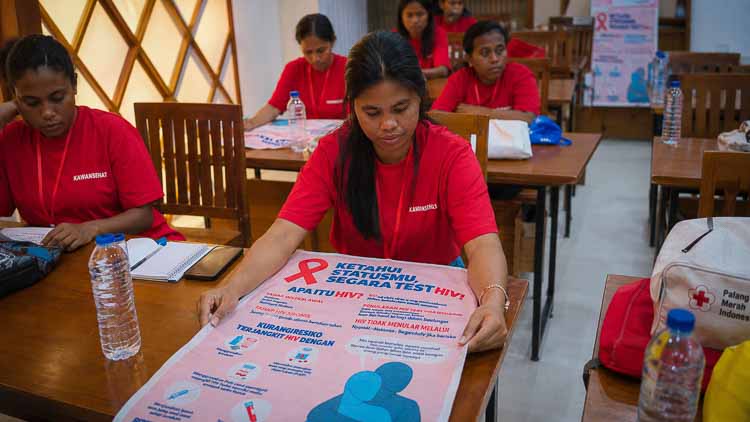
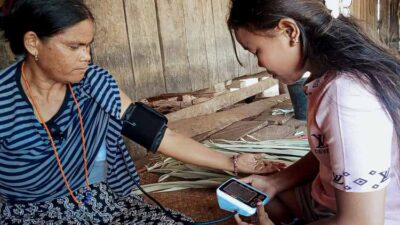 The Primary Medical Care programme now has 28 Kawan Sehat health agents. They are volunteers. The Foundation pays for their internet data every month so they can document cases and ask for medical advice whenever they have network access. Some of the newest agents are already among the most active, and the number of patients is increasing rapidly.
This programme works because it is local, structured and human. It must not stop.
On 2 August, our Board approved the annual accounts, which were audited by the same authorised auditor who has worked with us since the beginning. Our model remains deliberately lean: no salaried Swiss or expatriate positions, and locally employed teams paid at local rates. According to the approved accounts, 98.3% of funds are invested directly in the field. Out of every CHF 100, almost all of it goes into medicines, fuel, construction materials, water and healthcare.
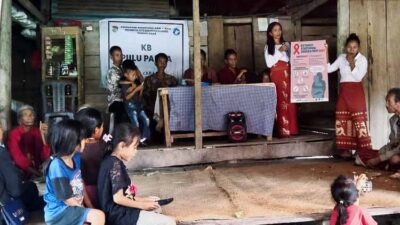 We are also launching a campaign encouraging HIV testing. Here, the number of cases is increasing, and children are still being born with HIV. Early testing, early treatment and preventing mother-to-child transmission are essential.
Our programmes work. The real question is whether we will have enough medicines, fuel and materials to keep them running. We need around CHF 1,000 worth of generic medicines every month, the equivalent of three or four 120-litre containers filled with essential treatments.
We continue because every day, someone is waiting for medical care, a water reservoir, or simply for someone to be there. Our work can be summed up in one sentence: leave no one behind.
Alex, for Fair Future, from East Sumba - 7 August 2026. |

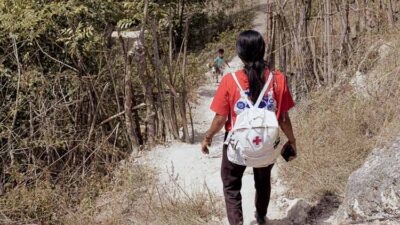 In the villages, our 28 Kawan Sehat health agents also talk about HIV.