|
While the walls are going up
 👋 Hello, it’s Alex. How are you?
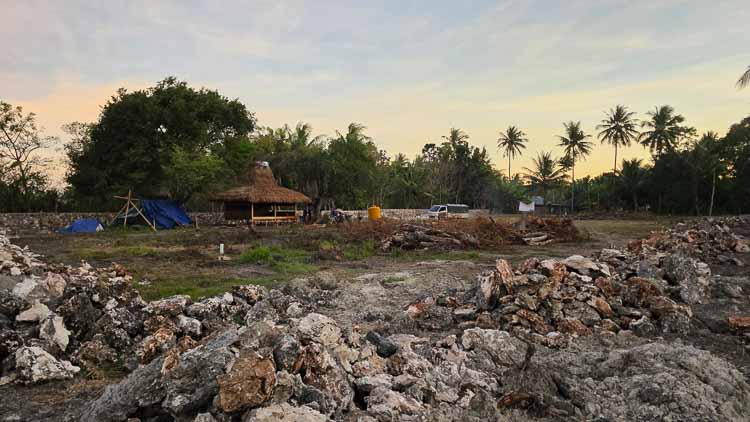
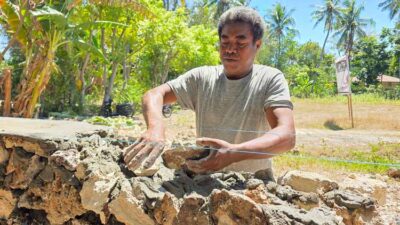
For a month now, I have been spending a large part of my days on the site of our future community socio-medical centre here in Kawangu. There are between five and eight of us working there, myself included. For now, there is no treatment room, no pharmacy and no laboratory.
There is earth, dust, stone, and a wall slowly making its way around our 4,200 m² plot of land. Around 270 metres of stone wall, 1.22 metres high, with solid foundations, particularly in one of the wetter parts of the site. Then, across roughly 20% of the land, we will bring in sirtu, a local sand-and-gravel fill, to raise and level the ground. It may sound far removed from medicine. But making sure a future health centre does not flood is already a form of prevention.
Electricity has arrived. We have installed 2,200 watts, which is enough for the construction work for now. Before PLN could install an electricity meter in the Foundation’s name, there first had to be a building on the land. So we finished our first small wooden house, four metres by five.
This lopo (a typical small Sumba house, which you can see in the main photo of this post) gives us somewhere to take cover, work, eat, sleep at night and store a few tools. It is nothing spectacular. But Rumah Kambera 2.0 now exists for real, even if for the moment it consists of a few wooden boards, an electricity meter and a great many stones.
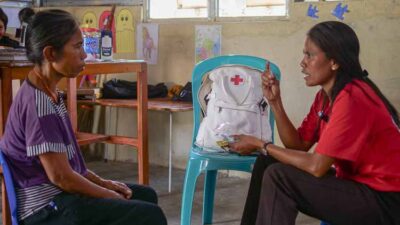
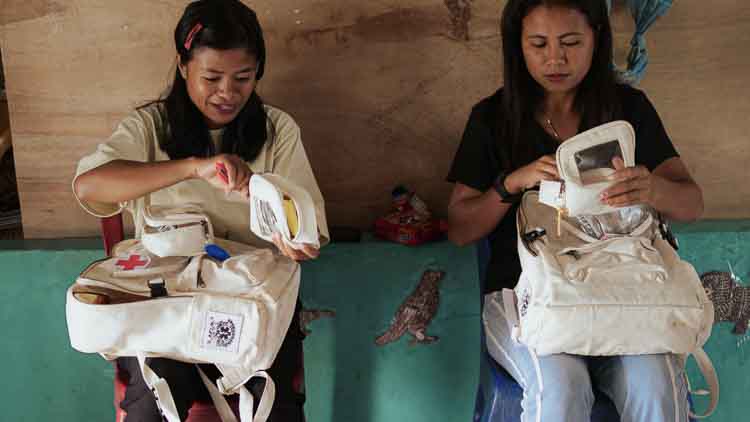
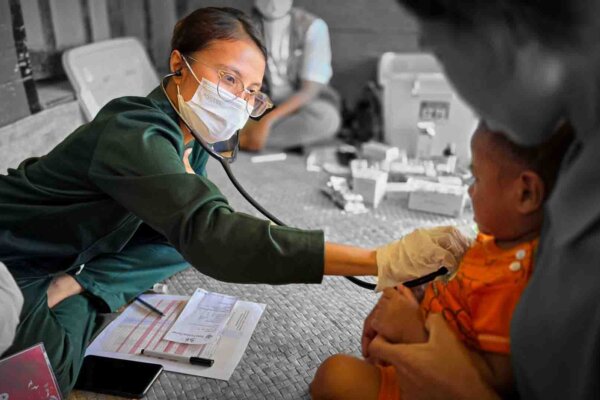
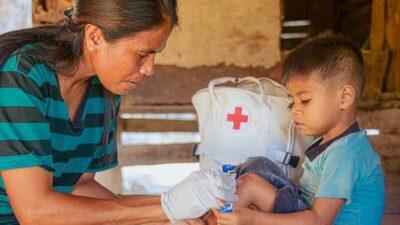 Meanwhile, our 28 Kawan Sehat health workers continue caring for people in their villages. They have learned how to examine a patient, recognise warning signs, treat a wound, monitor a fever, use medicines carefully and know when someone needs to be referred.
We also teach them that medicine is not always the first answer. Sometimes the best prescription is explaining how to clean a wound, store water safely, wash hands properly, eat better, or recognise an infection before it becomes serious.
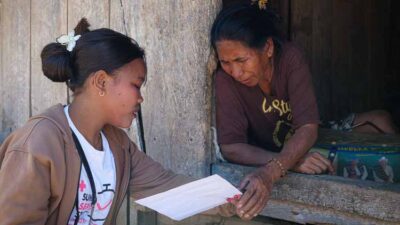 This is also what we are trying to understand through our sepsis study. The fieldwork is now complete:
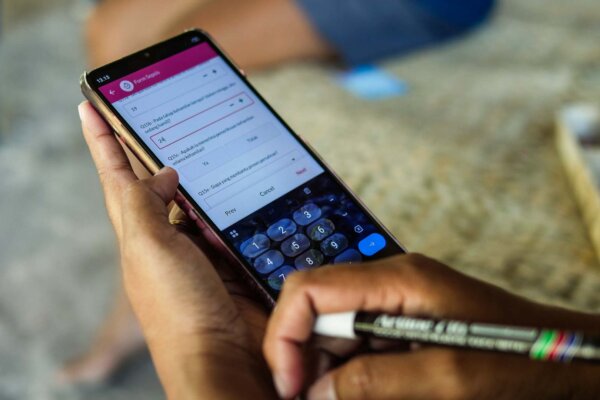
1,001 households across nine villages, representing more than 5,800 people.
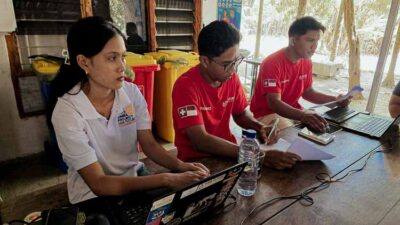
Since then, we have been deep in the data. One question keeps coming back: where is time being lost before an infection becomes an emergency? We will share the answer on 13 September 2026, for Journée mondiale de la sépsis.
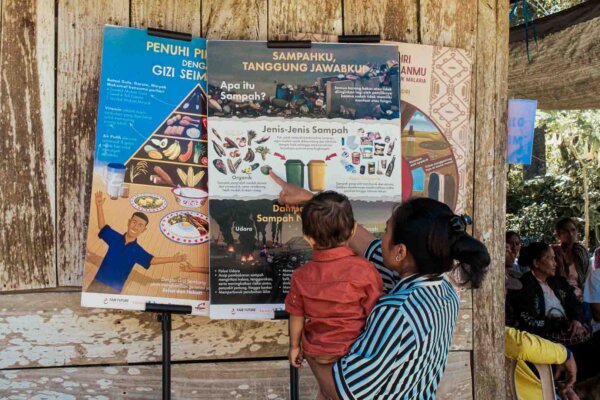
In the same spirit, we are preparing large public information billboards on HIV testing and waste management, entirely designed by our own team. We are also about to begin building two new 5,300-litre water tanks, thanks to a Swiss donor whom we would like to thank once again.
 On 15 August, this idea of prevention suddenly took on another meaning. At 5:58 in the morning, a magnitude 7.7 earthquake struck Flores and several parts of Nusa Tenggara Timur.
The latest figures report 111 deaths and more than 1,600 people injured. Three weeks later, 188,161 people were still living away from their homes in evacuation sites. More than 95,567 houses were damaged, including over 27,414 severely. And the ground has not stopped moving: nearly 10,000 aftershocks were recorded in just fifteen days. (BMKG had already counted 10,232 by the morning of 31 August, and we are still feeling them every day.)
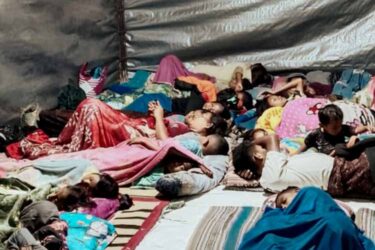 Amis proches and Fair Future have already committed around 60 million Indonesian rupiah to reconstruction materials, blankets, medicines, generators and water tanks. After a disaster, people very quickly need the essentials again: a roof, water, light and something to treat the sick and injured with.
That is a little of what our life looks like at the moment. I spend a lot of time surrounded by stones, a spirit level, plans, and dust on my clothes. But underneath it all, it is still the same work: trying to see the problem before it becomes something more serious.
Thank you for being here, for reading us and for continuing to stand alongside us. Here, your support very quickly becomes something concrete: a medical consultation, medicines, a few more metres of wall, water beside a family’s home, or emergency supplies sent to people who have just lost everything.
If you would like to contribute to the earthquake response or help us continue this work, you can do so through the Foundation, via TWINT in Switzerland, or by bank transfer. Here, support very quickly becomes something real.
Alex, for Fair Future, from East Sumba - 4 September 2026 |