This image is in 1920×1080 resolution. Click on it to enlarge and view at full size.
Kawan Sehat La cura delle ferite offre cure tempestive nella parte orientale di Sumba
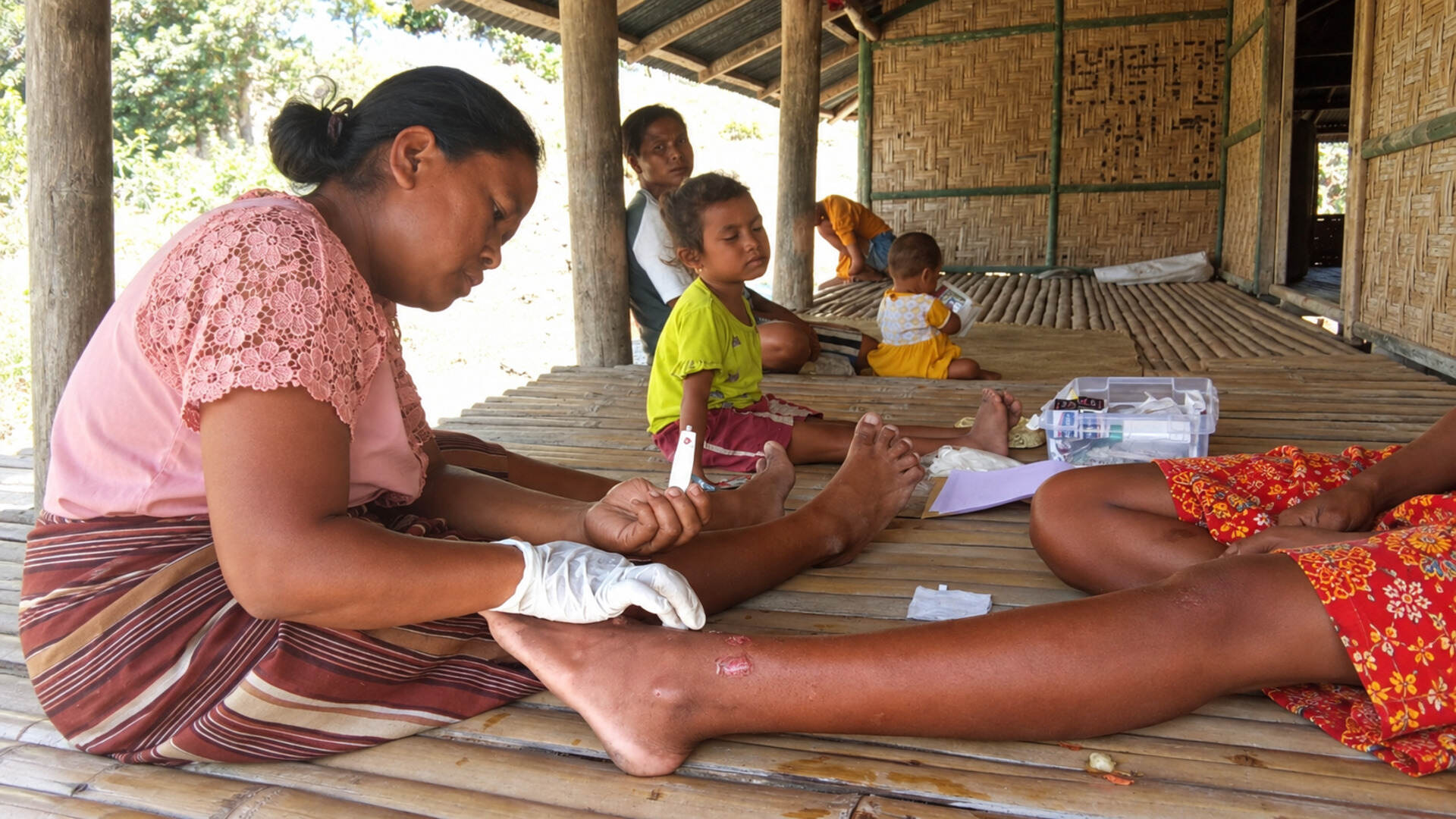
Questa nuova Foto della Giornata shows a Kawan Sehat health agent providing wound care inside a family home in East Sumba. Wearing gloves, she cleans and assesses an injury while the family remains close by. The photograph was taken by a Kawan Sehat health agent during the work they carry out in the communities where they live.
Kawan Sehat Wound Care at First Contact
For more than four years, the Primary Medical Care programme has supported 27 Kawan Sehat health agents. Each month, they treat, advise, relieve symptoms, teach, listen and report on nearly one thousand consultations. For many patients, this is the first accessible point of care.
A wound is not automatically sepsis. But when it is not cleaned, monitored or referred in time, infection can progress. In places where distance, cost, transport and limited health information delay hospital care, early attention matters. The agent must recognise what can be managed safely at home, explain danger signs, document what she sees and refer without delay when the condition requires higher-level medical care.
Evidence from the Sumba Sepsis Study
Il nostro Sumba Sepsis Study 2026 interactive results bring this reality into focus. The study reached 1,001 households and received 162 submissions from healthcare workers. It documents where prevention fails, where time is lost before care and where referral barriers place people at risk.
Kawan Sehat does not replace nurses, doctors or hospitals. It creates a safer first step between the household and the health system. A clean dressing, practical advice, a careful question and an early referral can prevent a small injury from becoming a late emergency.
Fair Future Foundation and Kawan Baik Indonesia have built this work with local communities since 2008. It is not a substitute for public health services. It is a practical bridge while access remains unequal.
Today, 19 September 2026 | Alex Wettstein
Per ulteriori informazioni
- Organizzazione Mondiale della Sanità: Explains sepsis as a life-threatening response to infection and stresses timely recognition, prevention and access to appropriate care.
- Organizzazione Mondiale della Sanità: Describes accessible first-contact care as a foundation for prevention, early action, referral and health equity.
- US Centers for Disease Control and Prevention: Provides public-health information on infection, sepsis warning signs and the need for urgent clinical evaluation.
- UNICEF: Shows how trained local health workers extend practical prevention and care to communities facing geographic barriers.