This image is in 1920×1080 resolution. Click on it to enlarge and view at full size.
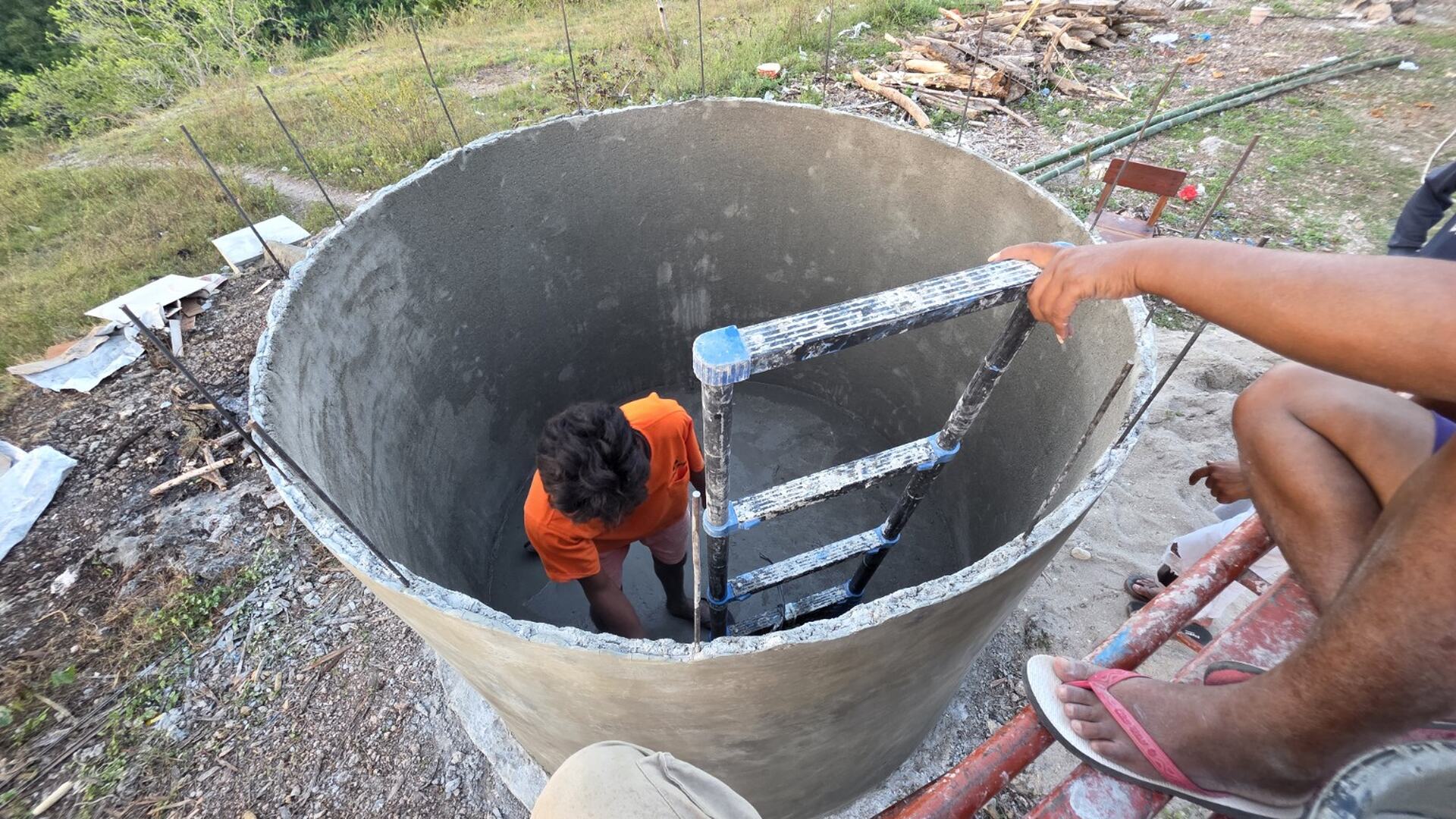
All'interno di un serbatoio in ferro cemento costruito per raccogliere in sicurezza le acque piovane
Questa nuova Foto della Giornata shows the Fair Future Foundation and Kawan Baik Indonesia team applying Sika 107 inside a circular reservoir. Local villagers work beside them and learn the technique as the tank takes shape. This unfinished ferrocement reservoir will store rainwater for three rural homes. Waterproofing protects the structure that keeps it safe.
Building a Ferrocement Water Reservoir
The tank measures 2.12 metres across and 1.50 metres high. Its circumference is about 6.66 metres and its usable volume is about 5,300 litres. Fair Future Foundation, Kawan Baik Indonesia and village members build its steel-reinforced shell layer by layer. The work is technical and shared. People who will use it learn how it is made and cared for.
Sika 107 is applied inside the cement shell, followed by a specialist internal paint. The inner surface must be continuous and dry properly before the final coating. In a remote village, a small weakness is not cosmetic. It can compromise water storage for a whole family.
Collecting Rain Before It Is Lost
This reservoir is part of Water Connections work developed with local communities. Rain is collected from a suitable clean roof, filtered, then stored close to the families who need it. Where necessary, part of the roof is replaced. Construction takes around ten working days, plus drying. The Hambarita reservoirs report documents the same work with families in East Sumba.
The Least Expensive Medicine
At CHF 2,245, one reservoir serves three homes and more than fifteen people. It does not replace diagnosis, medicines or referral. It makes handwashing, cooking, cleaning and daily hygiene more possible before illness occurs. In rural public health, safe water is often the least expensive medicine. More about these ferrocement reservoirs explains why this work belongs beside primary healthcare, prevention and local training.
Today, 21 September 2026 | Alex Wettstein
Per ulteriori informazioni
- Organizzazione Mondiale della Sanità: Sets out why safe water that is available close to home supports hygiene and reduces infection risks linked to contamination.
- UNICEF Indonesia: Explains Indonesia’s water, sanitation and hygiene challenges, where safe supply and hygiene action protect child and community health.
- WHO and UNICEF Joint Monitoring Programme: Provides the global framework for measuring water services that are available when needed, on premises and free from contamination.
- WHO Water Sanitation and Health: Offers technical guidance on water safety, sanitation and disease prevention from collection through safe household use.
- UNICEF Water Scarcity Programme: Documents how water scarcity makes hygiene harder and supports climate-resilient sources, including rainwater harvesting and storage.