This image is in 1920×1080 resolution. Click on it to enlarge and view at full size.
Il nostro team ha appeso un cartello per la raccolta differenziata prima di metterlo in funzione Waingapu
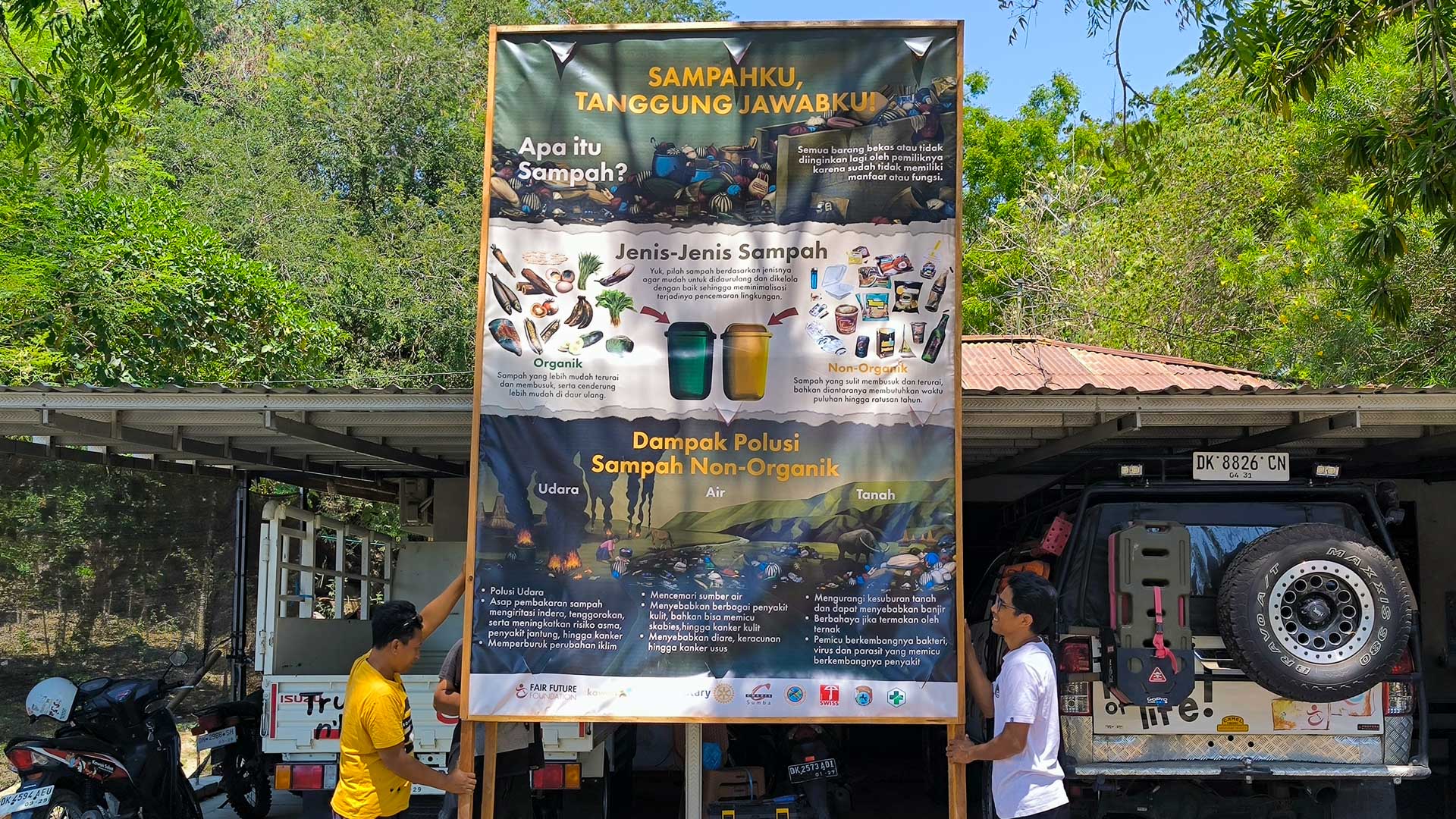
Questa nuova Foto della Giornata shows our team holding a tall waste education billboard outside Rumah Kambera. Its first words, “My waste, my responsibility,” stand above drawings of food scraps, packages and two bins. It explains how discarded materials can affect air, water and soil. It invites a conversation about plastic waste in Waingapu. The panel is one of ten prepared for public places in Waingapu; the photograph was taken before installation.
Plastic waste in Waingapu reaches beyond the street
Our Fair Future Foundation and Kawan Baik Indonesia teams see plastic left along roads and open ground in East Sumba. More packaged goods have become easy to buy, while responsible collection and disposal remain difficult. It is tempting to tell people simply to stop littering. We also have to ask where their separated waste can actually go.
Plastic waste in Waingapu is a public health concern when rubbish is burned, scattered into waterways or left where children play. Open burning releases polluted smoke. Waste carried by rain can obstruct drainage and reach the coast. Tiny plastic particles have been found in food, water and air, but their health effects and local exposure are still being studied. We cannot honestly tell families here that they swallow a fixed weight of plastic each week.
What the billboard asks of us
The sign shows a practical first step: keep organic scraps apart from dry packaging and other non-organic waste. Use a suitable collection point where one exists. Do not burn plastic. Reduce disposable packaging when alternatives are realistic. These are shared responsibilities, but households cannot solve a collection problem alone. Shops, local services and authorities also need to make safer disposal possible.
Il nostro Kawan Sehat agent’s lesson with schoolchildren asked young people to think about what they throw away. This large panel carries that same conversation into the city. It should be read, questioned and followed by workable waste services, not treated as a finished solution.
A message our own hands must carry
In the photograph, two teammates steady the wooden frame between our field vehicles. Soon it will stand where passersby can see it. The test is what happens afterwards, at home, at a shop and in the public places we all share. We are asking people to take responsibility, and asking the systems around them to do their part too.
25 September 2026 | Alex Wettstein
Per ulteriori informazioni
- Organizzazione Mondiale della Sanità: Reviews evidence on exposure to microplastic particles through food, water and air, and identifies uncertainties about effects on human health.
- Organizzazione Mondiale della Sanità: Explains how open burning of household waste pollutes air and why safer collection and disposal can protect the respiratory health of families.
- Programma dell'ONU per l'ambiente: Describes plastic pollution across production, use and disposal and the need to reduce waste while improving systems that manage it.
- World Bank: Provides comparative waste data and shows why education must be supported by collection, transport and responsible treatment services.
- NOAA National Ocean Service: Explains how larger plastic items break into microplastics in water and why monitoring marine debris matters for coastal communities.