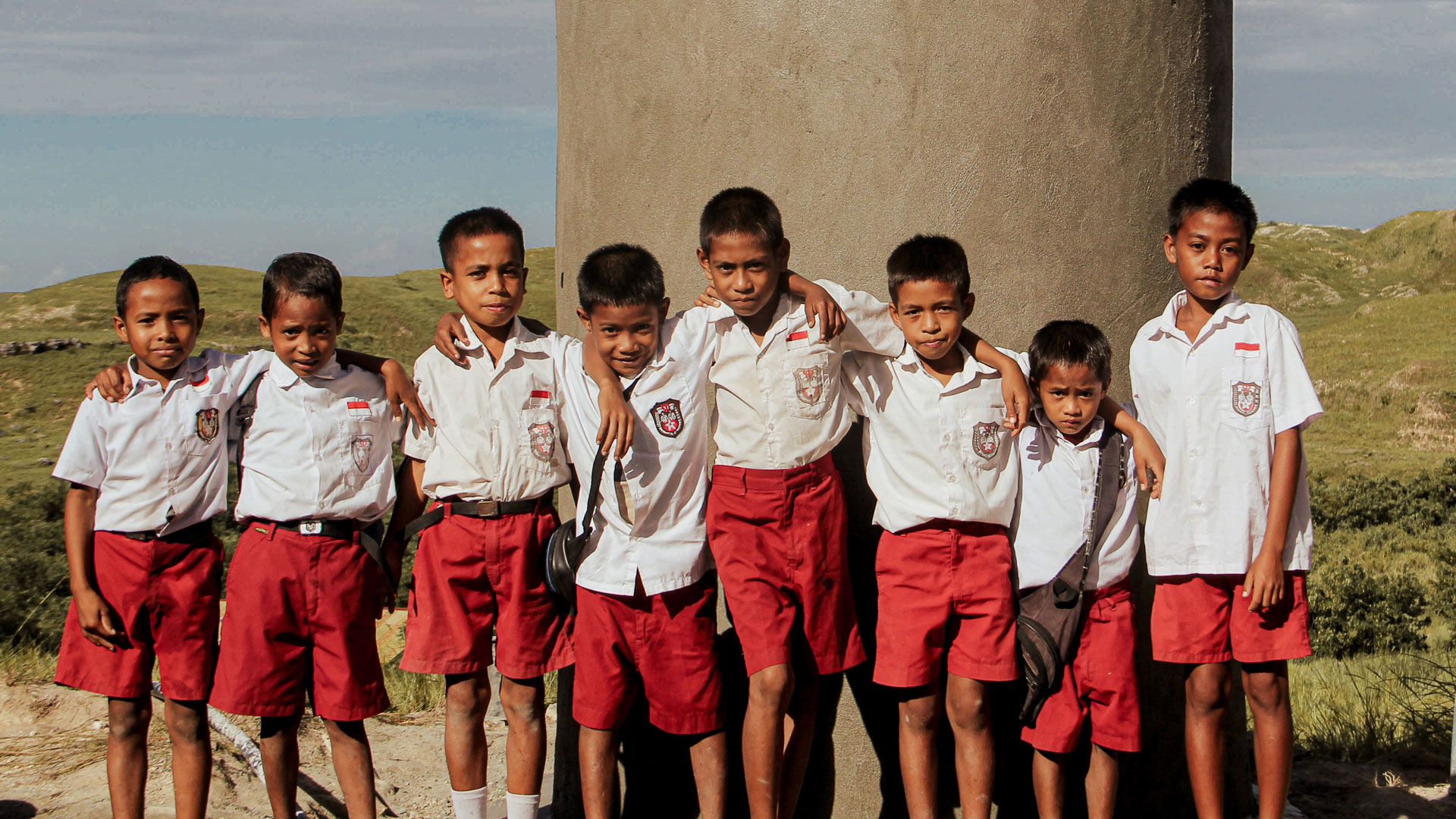
Eight schoolchildren stand together before a newly finished, unpainted Water Connections reservoir in East Sumba.
Photograph in 1920 × 1080 format. Click the image to view it at full size.
Otto bambini, un nuovo bacino idrico e acqua per gli studenti della scuola di East Sumba
Questa nuova Foto della Giornata shows eight children standing side by side in front of a newly completed, unpainted water tank in East Sumba. Some rest their arms on another child’s shoulder. Dressed in the white shirts and red shorts that make up their uniforms, they face the camera. Here, water is a daily necessity for schoolchildren’s growth, health, and learning.
Making water for schoolchildren available
Through Water Connections, Fair Future Foundation and Kawan Baik Indonesia have built around twelve reservoirs in this village area. These children attend a school that previously had neither water nor toilets. It still has no electricity. Bringing electricity there remains dependent on future funding.
Growing bodies need safe daily routines.
For a growing child, safe drinking water, varied food, and hygiene go hand in hand. Contaminated water can cause diarrhoea, which can worsen undernutrition. Water within reach makes handwashing possible. Protect stored water from contamination and treat it when needed before drinking. Soap and usable sanitation facilities are part of these daily routines.
Our posters and guides on water, drinking-water safety, kitchen gardens and nutrition connect practical learning with daily needs. Providing water for schoolchildren makes those lessons practical when hands, food, or utensils need washing.
The next reservoirs are still needed.
Dozens more reservoirs are needed. Each planned 5,300-litre unit costs CHF 2,245 and serves more than 15 people across three to four families.
These children need water for the ordinary work of a school day, to wash their hands and handle food safely. Maintaining existing reservoirs and building new ones are part of that daily care. Thank you to everyone helping us continue this work.
See inside a ferrocement reservoir to understand the waterproofing work behind this rainwater storage system.
14 October 2026 | Alex Wettstein
Per ulteriori informazioni
- WHO · Drinking-water: WHO explains how safe drinking water, reliable access and protected storage help prevent infections and support hygiene and public health.
- UNICEF Data · WASH in schools: UNICEF and WHO data explain drinking water, sanitation and handwashing services in schools, with definitions and evidence on global gaps.
- WHO · Diarrhoeal disease: WHO outlines how diarrhoeal infections, dehydration and malnutrition affect children, and how safe water, sanitation and hygiene reduce risk.
- WHO · WASH interventions to prevent diarrhoea: WHO reviews safe water, sanitation and handwashing measures that help prevent diarrhoea and protect children’s nutrition and development.
- WHO · WASH and child nutrition evidence: WHO summarises research on water, sanitation, hygiene and child nutrition, showing why claims about improved growth need careful evidence.