


Donare
Assistenza sanitaria
Articoli e News
Storie dal campo
Glossario
Guida escursionistica
Environment & Climate Program
The environment enters the body
In East Sumba, climate and pollution are not distant issues. They are the water a child drinks, the smoke a mother breathes while cooking, the food a family can grow, and the infections that become dangerous when care is far away.
- Water, heat & food
- Smoke, waste & plastics
- Vectors, infection & care
Health begins before the clinic
A consultation can treat dehydration, pneumonia, diarrhoea or dengue. It cannot refill a dry well, remove smoke from a kitchen, collect a village’s waste or restore a failed harvest. This programme works further upstream: reducing exposure, building practical protection, sharing knowledge and documenting decisions that put health at risk.
Environment and health
Environmental health, lived at village level
A hotter climate does not create one disease. It changes the conditions in which many diseases become more likely, more severe or harder to treat.
Fair Future connects safer water, primary care, household air, waste, food, vector control and community education. We look at the whole pathway from exposure to illness, then work with families and local health agents on protection that can be used every day.
Economic activity is not progress when it consumes scarce water, degrades land or coasts, multiplies disposable packaging and leaves communities with the health costs. Large water-intensive projects, including industrial aquaculture in arid areas, require serious environmental and public-health scrutiny.
Four routes into illness
What we watch in every village
Drought, distant sources, unsafe storage and polluted water increase dehydration, diarrhoeal disease, skin infections and the pressure on hygiene.
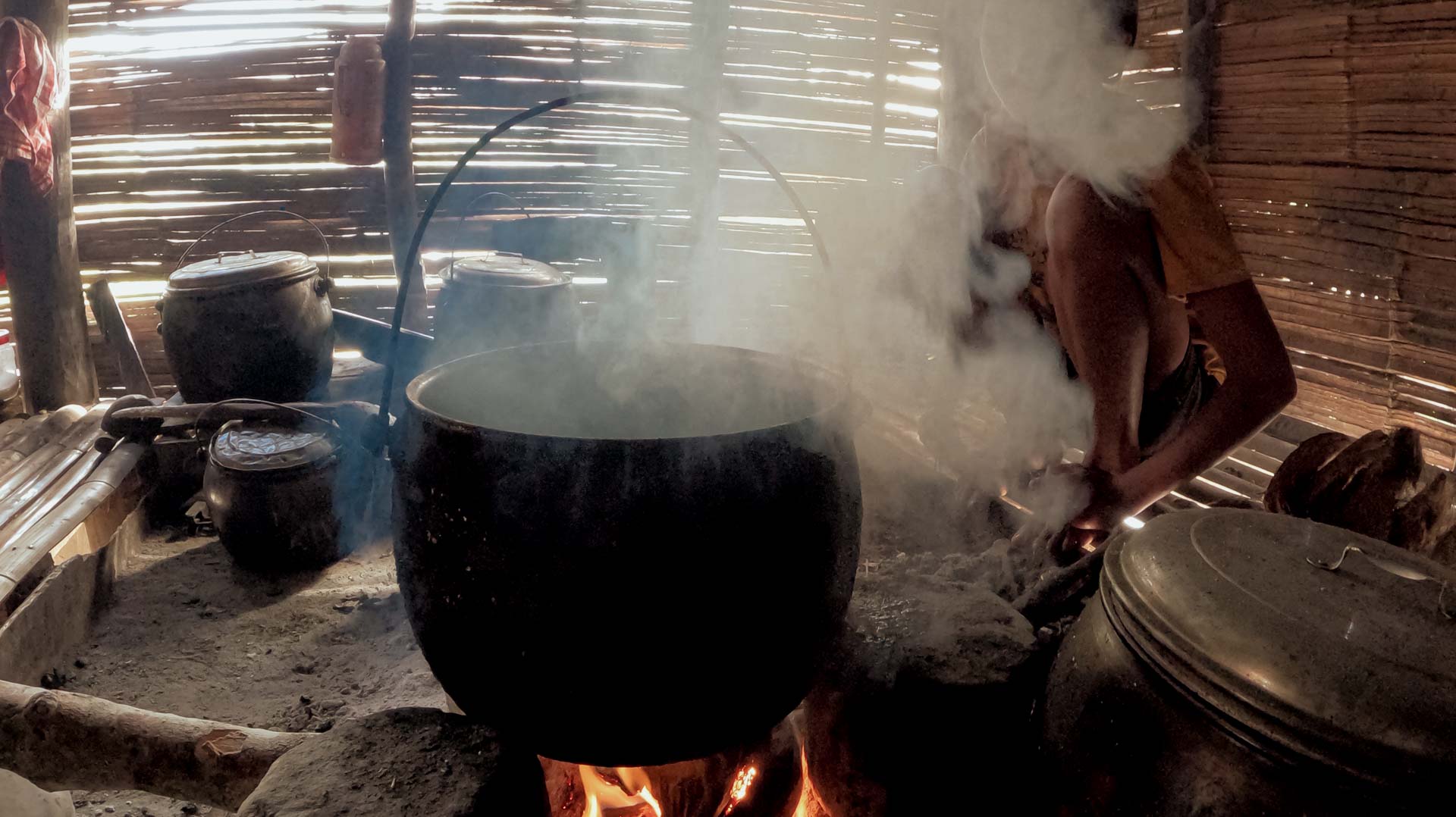
Wood fires in poorly ventilated homes and the open burning of mixed waste expose families to smoke, fine particles and toxic emissions.
Heat, drought, unstable harvests and cheap ultra-processed food reduce dietary quality and weaken children’s resistance to infection.
Changing rainfall, heat, standing water and difficult access to diagnosis affect malaria, dengue and other infections that need early care.
From environment to disease
The pathway is rarely one cause
Clinical risk builds in stages. Seeing the chain makes prevention more precise and shows where local action, public services and regulation must meet.
Exposure begins at home
Smoke, unsafe water, heat, waste and low-quality food enter daily life long before a person reaches a health post.
The body loses margin
Dehydration, poor nutrition, repeated pollution exposure and exhausting work reduce the body’s ability to recover.
Disease finds an opening
Respiratory illness, diarrhoea, malaria, dengue, skin disease and other infections become more likely or more dangerous.
Distance adds severity
Transport costs, damaged roads, weak services and delayed recognition turn treatable illness into an emergency.
Local action interrupts the chain
Safer water, ventilation, waste prevention, mosquito control, nutrition, early assessment and referral reduce risk together.
Practical action, honest limits
What we can change, and what we cannot shift onto families
Environmental health fails when every responsibility is placed on the household. Communities need practical knowledge and local capacity, but they also need public systems, safer products and accountable decisions.
Work we carry with communities
- Build and maintain safer water systems
- Reduce smoke exposure and recognise respiratory danger signs
- Teach the health consequences of waste and open burning
- Strengthen food, nutrition and child-health practice
- Reduce mosquito exposure and connect testing, treatment and follow-up
- Train Kawan Sehat agents to observe, explain, act and refer
Responsibilities beyond the household
- Organised waste collection and safe disposal
- Access to cleaner and affordable household energy
- Environmental and health assessment of land, coastal and water-intensive development
- Producer responsibility for packaging and plastic pollution
- Public adaptation, surveillance, transport and healthcare
- Transparent decisions based on health, water and ecological limits
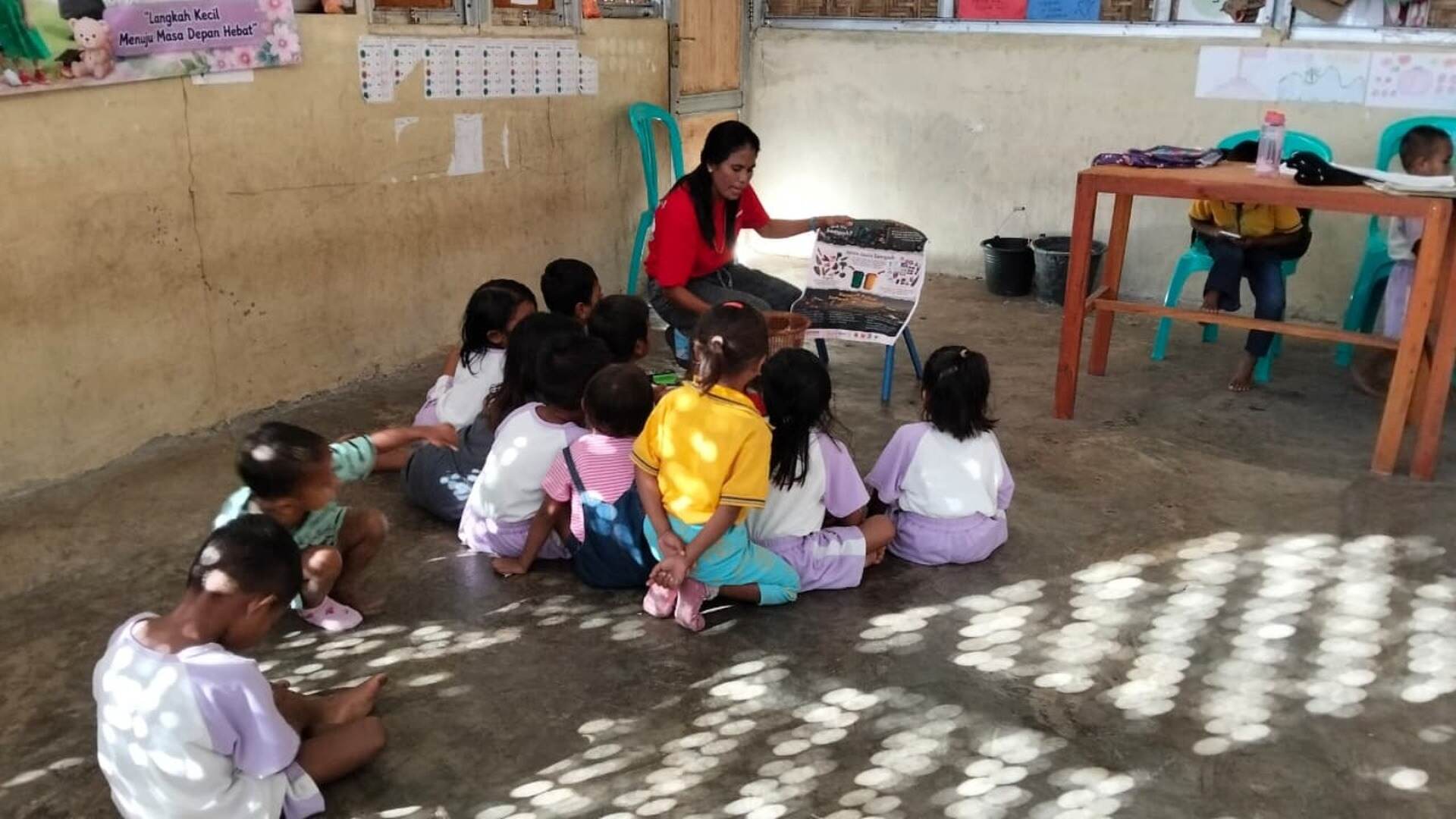
Environmental health education with children in East Sumba.
Knowledge that can travel
Children should not inherit the risk without the science
Education helps people connect what they see with what happens in the body. Posters, schools, local health agents and field data turn invisible exposure into practical understanding without pretending that information alone can replace public services.
Bilingual, illustrated teaching on water, hygiene, waste, malaria, nutrition and daily health choices.
A practical clinical and prevention reference for Kawan Sehat agents working far from professional care.
Structured observations reveal how housing, distance, exposure and delayed care combine in real households.
Quality checks and maintenance connect infrastructure with the health protection it is supposed to provide.
Quali cambiamenti nella pratica
Protection becomes part of daily life
Water is safer and closer
Reliable systems reduce unsafe sources, impossible journeys and the hygiene compromises created by scarcity.
Danger is recognised earlier
Families and local agents connect exposure with symptoms and know when observation must become clinical care.
Exposure becomes visible
Smoke, heat, waste, plastic, food and water are discussed as health conditions, not accepted as harmless background.
Evidence reaches public debate
Field observations and health data make it harder to ignore the costs transferred to remote communities.
HealthCooking should not cost your healthHousehold wood smoke, poor ventilation and respiratory exposure documented through field research.
CommunityPlastic waste is a public-health failureWhy burning, dumping and microplastics cannot be solved by blaming households without services.
HealthWhen heat becomes a diagnosisExtreme heat as a medical risk for children, older people, pregnant women and outdoor workers.
AcquaWater ConnectionsCommunity-built rainwater systems that protect health through long dry periods.
CommunityMalnutrition and child healthFood quality, infection, growth and household conditions viewed as one clinical reality.
L'apprendimentoTen community education campaignsIllustrated tools that make prevention understandable in homes, schools and village meetings.
ReferenceWHO climate change and healthGlobal health evidence and the actions needed to protect people from climate-related risk.
In diretta dal campo
Environmental health, as conditions change
Two recent clinical and prevention notes from East Sumba. These notes refresh automatically when relevant Field Notes are published.
Direttamente dal campo
Latest Environment & Climate reports
Reporting from East Sumba connects heat, water, air, food, waste and climate-sensitive infections with the decisions that shape everyday health.

East Sumba Leap: gli sforzi per l'accesso all'acqua e l'igiene si uniscono
Si è tenuta una riunione cruciale nel 2018 Waingapu, durante la quale è #WaterConnections Laindatang stato lanciato un progetto chiamato. Il progetto mira a fornire acqua pulita e servizi igienici nella East Sumba, ed è un'iniziativa collaborativa tra le comunità, lo Stato e organizzazioni non governative come Fair Future e Kawan Baik.

I due enormi bacini idrici situati a Desa TanaMbanas
Two large reservoirs in Tanambanas support local water storage and form part of the Water Connections infrastructure serving rural communities.

Matawai: il documentario di Fair Future sull’emergenza idrica nell’Indonesia orientale
Matawai’ è un monito profondo per la comunità globale sulla crisi idrica nell’Indonesia orientale. Prodotto da Fair Future Foundation, questo documentario coinvolgente racconta vividamente le lotte quotidiane delle famiglie rurali. Grazie a questo film, potrete anche assistere alle iniziative innovative che abbiamo implementato per trasformare l’accesso all’acqua…

Crisi della zanzara nell'est di Sumba: la salute umana e ambientale a rischio
La crisi dei parassiti nell’East Sumba va oltre la devastazione agricola, rappresentando una grave minaccia per la salute umana, il benessere psicologico e l’integrità ambientale. Fair Future Foundation Prosegue approfondendo questa grave emergenza umanitaria, sostenendo soluzioni olistiche.

Empoderando Laindatatang: un percorso verso l’opportunità e l’unità
Partecipa a un viaggio con le famiglie del villaggio di Laindatatang, mentre esse, con il supporto di Fair Future e Kawan Baik, hanno trasformato con successo l’accesso alla loro comunità, inaugurando nuove opportunità per tutti. Scopri come questo ambizioso progetto infrastrutturale, caratterizzato da un impegno costante e da un coinvolgimento locale, simboleggi il loro impegno a…

Lotta alla malaria: responsabilizzare le comunità per un futuro libero dalla malaria
Prendetene posizione contro la malaria nell’Indonesia orientale! Il nostro programma pionieristico di #ZeroMalaria Sumba dà alle comunità le conoscenze e le risorse necessarie per contrastare questa minaccia mortale. Attraverso l’educazione, interventi mirati e iniziative di base, stiamo guidando la strada verso un mondo libero dalla malaria.

L'accesso al villaggio è una speranza per una vita migliore
Scoprite i notevoli progressi dei nostri continui sforzi di costruzione e riparazione lungo la strada verso il villaggio di Laindatatang nell’East Sumba. Fair Future Foundation È stato al primo posto, coordinando e supervisionando meticolosamente questo importante progetto per mesi.

Sono contento di avere acqua senza dover andare lontano per procurarmela
Un bambino Mbinudita può accedere a acqua pulita vicino a casa dopo anni in cui le famiglie dovevano percorrere distanze molto maggiori per procurarsi questa fonte di acqua.

8 miliardi di persone equivalenti? E la questione alimentare?
Otto miliardi di persone sulla terra: stiamo per morire di fame? Da un lato, c’è la crescita della popolazione; dall’altro, le risorse mondiali consentono di nutrire gli esseri umani. Come conciliare i due aspetti? Oggi e domani, riusciremo tutti a provvedere a noi stessi?

Una preghiera per l’acqua intorno a un pozzo nella East Sumba
Con alcuni amici di Kawan Baik e Fair Future abbiamo avuto il privilegio e l’emozione di vivere un momento toccante grazie alle forti parole dei residenti di una zona molto isolata dell’Indonesia orientale. Abbiamo sentito che queste persone coraggiose speravano che il tempo e il Signore potessero offrirgli una vita migliore.

Bevendo e mangiando meglio grazie a water connections
For months, Fair Future has noticed a fundamental change in habits in families who benefit from the “Water Connections” program. Gardens are created. People eat better, drink more, have more energy and are less ill. This observation fills us with joy and comforts us in our choices and decisions.

Acqua pulita e servizi igienici per un trucco magico
Grazie al Water Connections programma, per alcuni mesi le famiglie sono diventate più sane e più felici e hanno molto più energia. I villagioni, composte da 100% agricoltori, sono molto meno malate e hanno una migliore salute. Sono state create ortive e si sta costruendo un'economia.
Responsabilità
Environmental work must be judged in daily life
A reservoir, a lesson, a clinic visit or a published report is an output, not the result. The result is safer water, less harmful exposure, earlier care, stronger local capacity and public decisions that stop exporting health costs to remote families.
