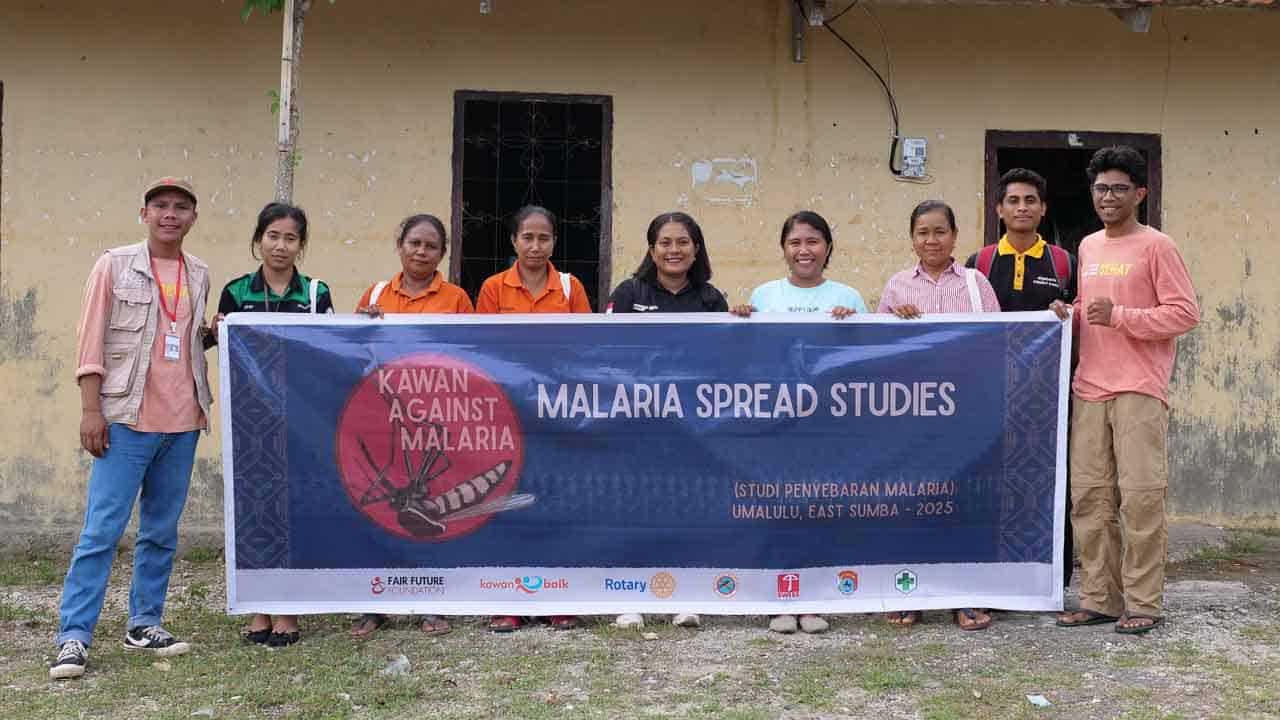
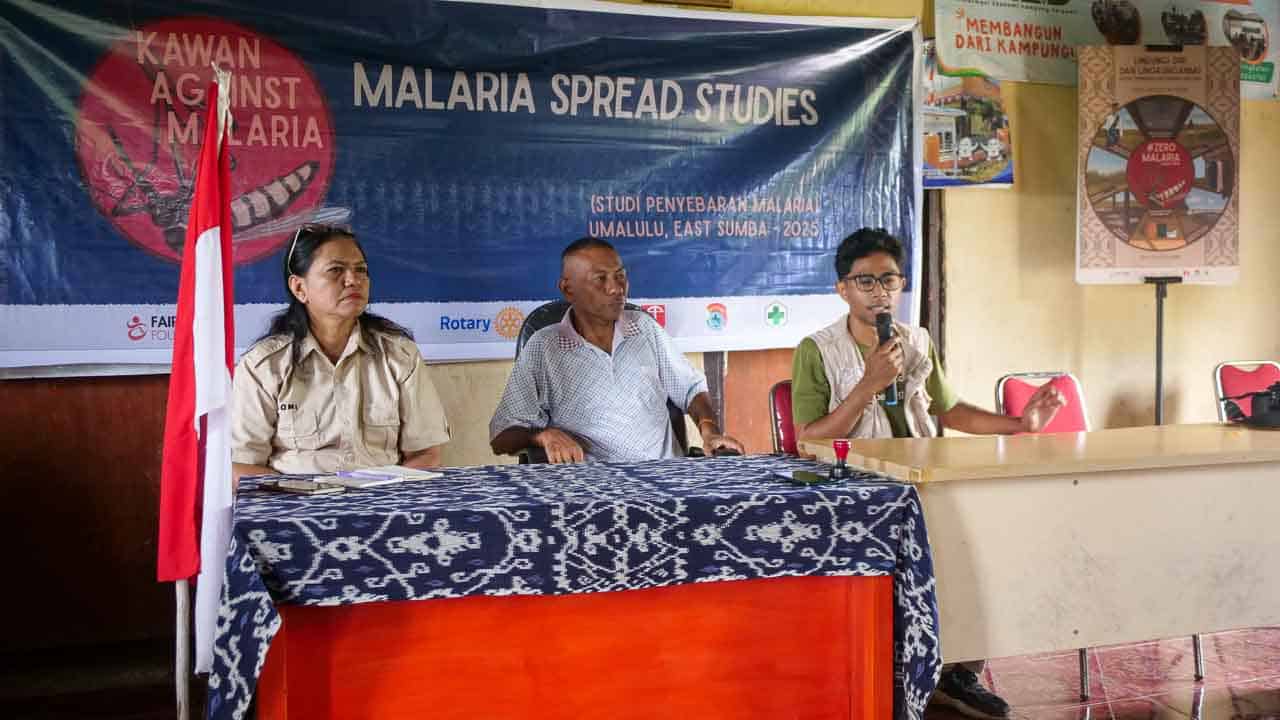
Fair Future Foundation trains local teams to launch the Malaria Spread Study using digital tools.
Giornate di formazione per lo studio della malaria tramite l’app Kawan
On April 23rd and 24th, we gathered in Umalulu to lay the foundations of a crucial step in the fight against malaria: understanding before acting.
In medicine, a diagnosis is never made on a whim. Even with obvious diseases, reflection must precede action. Malaria, caused by the Plasmodium parasites and transmitted by infected Zanzare Anopheles, requires a nuanced approach due to its complexity and the interplay of socio-environmental factors. This principle is the heart of our “Malaria Spread Studies”. Enough of random testing—precise diagnosis is essential for effective planning.
Umalulu, in East Sumba, is a region where nearly 55% of the population has tested positive for malaria in recent months. This staggering figure highlights the urgent need for targeted interventions. The community consists of 1,350 people living in 400 homes (see the map we’ve created here), without access to electricity, and where clean water remains an inaccessible luxury for most, compounding health challenges and increasing malaria risk.
The study is based on three key areas:
- The Family: The number of members, as well as social and health data, is collected to understand how familial interactions might influence malaria transmission and treatment adherence.
- The House and Environment: potential breeding sites for mosquitoes and household hygiene conditions are surveyed to identify interventions that can effectively reduce mosquito populations. The Zanzare Anopheles typically breed in stagnant waters, which can often be found in household vicinities with poor water management.
- Malaria Knowledge: recognition of symptoms, understanding of prevention, and treatment. Educating the community about these aspects is crucial, as knowledge significantly impacts health-seeking behaviours and preventive practices.
We designed a detailed questionnaire comprising 65 questions that cover these three pillars. Data collection uses two methods:
- Il nostro application, Kawan Against Malaria, was explicitly developed for this study and is intuitive, available offline, and in the local language, ensuring inclusivity and data integrity even in remote settings.
- A printed backup version to ensure no data loss should devices fail, reflecting our commitment to data reliability.

Fair Future Foundation trains local teams to launch the Malaria Spread Study using digital tools.
Interviews last about 30 minutes. Seven trained individuals will visit every house over the next month to gather data for a precise portrait of malaria transmission. This data will reveal how socioeconomic factors, such as healthcare access, intersect with environmental conditions to influence the spread of malaria.
Questi two days of training were invaluable. We provided equipment: instructions, badges, long-sleeved shirts, and 300 mosquito nets—the first distribution in over two years in Umalulu. Insecticide-treated nets are effective in preventing mosquito bites and reducing malaria transmission. Nearly 600 kg were transported by our Truck n’ Load, highlighting the logistical efforts of Un futuro giusto e Kawan Baik Indonesia Foundations.
Il Formazione also included practical exercises, such as household assessments, environmental inspections, hygiene observations, and the use of the app to collect GPS locations and photos. This combination of practical and technological applications enhances the accuracy and depth of our data collection.
“Without a diagnosis, there can be no treatment. This study will finally give malaria a face, a map, and a plan to fight back.” — Alex Wettstein,
Il Kawan Against Malaria app — our fifth tool — enables data collection without internet access, ensuring reliability. This innovation aligns with global health recommendations for mobile health solutions in combating malaria in resource-limited settings.
The second day of Formazione coincided with World Malaria Day, reminding us that every statistic represents lives and highlighting the urgent, deeply human fight against malaria, which is aligned with the international commitment to reduce its burden within the global health framework.
By July, a comprehensive epidemiological report will be published in medical journals to guide future actions. It will shift focus from reaction to prevention, providing sustainable solutions for Umalulu and similar communities, fostering proactive interventions instead of solely reactive measures.
Today, the 26th of April, 2025 – Alex Wettstein
Elenco delle organizzazioni collegate con link
- Last Mile Health I treni formano i lavoratori della sanità rurale, proprio come fa il Kawan Sehat programma di Fair Future, per combattere le malattie infettive in aree dove i servizi sanitari sono scarsi.
- Consorzio Malarica Si impegna a controllare la malaria attraverso interventi sanitari e strategie di prevenzione basati su prove scientifiche.
- Rotary International sostiene i programmi contro la malaria di Fair Future attraverso partnership per la fornitura di forniture mediche essenziali.
- SolarBuddy Collabora con Fair Future per distribuire lampade solari, contribuendo a migliorare l’istruzione e le condizioni sanitarie nelle comunità senza elettricità.
- PATH avanza nell’innovazione sanitaria globale, in linea con lo sviluppo di Fair Future di app per la salute mobile come Kawan Against Malaria.
- Programma della WHO per la malaria offre supporto tecnico e orientamenti politici per l’eradicazione della malaria, ispirando le iniziative di Fair Future.
- Kawan Baik Indonesia collabora Fair Future Foundation per implementare programmi di salvataggio nelle comunità indonesiane più remote.