|
Where Poverty Becomes a Medical Emergency
 👋 Hello, it’s Alex. How are you? 👋 Hello, it’s Alex. How are you?
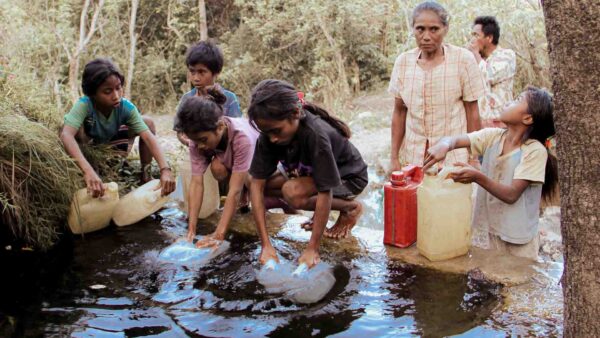
Here in East Sumba, medicine rarely begins in a hospital. It begins much earlier. It begins in an isolated village, on a dirt track, in a house without enough water, without transport, without money, and often with no real option except to wait. Or do whatever is possible. This week, once again, that reality hit us hard.
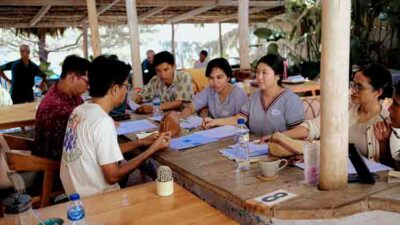
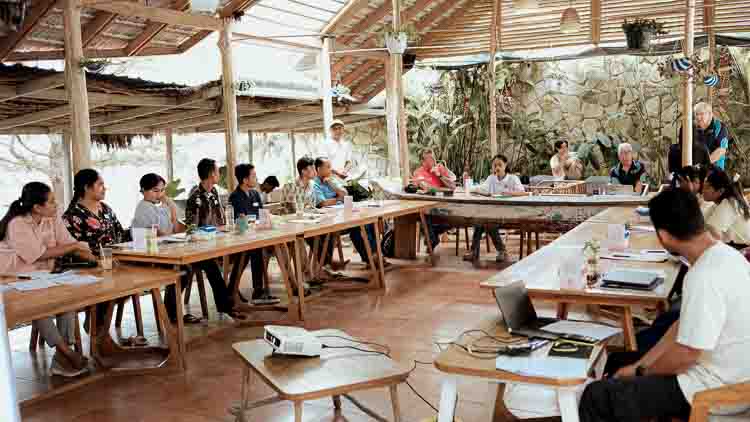
With our friends from Rotary Australia, who came here for the fifth time to work alongside us, we spent a full day preparing the sepsis study we are about to carry out in the region. Nearly ten hours of work with around thirty people: doctors, clinicians, nurses, hospital staff, Puskesmas teams, and local authorities. We went through every question, every word, every detail of two questionnaires, one for the communities and one for the medical staff. Behind all this lies one simple but terrible question: how does an ordinary infection become a severe emergency, then sepsis, and sometimes death, when it could have been treated earlier?
We also decided to rename this study by associating it with the name of our friend, who died at the age of 24 from sepsis after a simple appendectomy. This routine operation should never have cost him his life. And yet, here, this happens. And it still happens far too often.
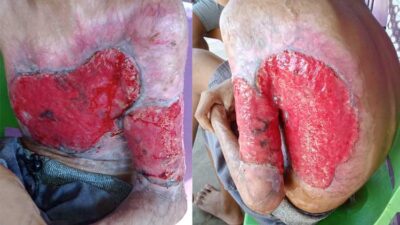 A few days earlier, we had met Aldo, a boy of about twelve, who had suffered third-degree burns over more than 20% of his body after throwing gasoline onto a fire. For more than three months, he remained at home without any real medical care. People put on his burns whatever they could find, whatever they believed might help: soil, used oil, leaves, coffee grounds, sometimes even diesel. We should not judge too quickly. When there is no care, no money, no road, and no structure capable of receiving a burned child, families do what they can, even when it makes everything worse. What we see in a case like this is not only a massive wound. It is poverty laid bare. It is the absence of early care. It is a delayed treatment. It is a major infectious risk. It is pain left alone. And this, too, is why our work exists here. A few days earlier, we had met Aldo, a boy of about twelve, who had suffered third-degree burns over more than 20% of his body after throwing gasoline onto a fire. For more than three months, he remained at home without any real medical care. People put on his burns whatever they could find, whatever they believed might help: soil, used oil, leaves, coffee grounds, sometimes even diesel. We should not judge too quickly. When there is no care, no money, no road, and no structure capable of receiving a burned child, families do what they can, even when it makes everything worse. What we see in a case like this is not only a massive wound. It is poverty laid bare. It is the absence of early care. It is a delayed treatment. It is a major infectious risk. It is pain left alone. And this, too, is why our work exists here.
The following day, we were received by the authorities of East Sumba with an extremely positive welcome. They understood the importance of this sepsis study, which will be conducted here and whose results will, we hope, reach far beyond this island. They also strongly supported a second project that we are preparing together with Rotary International, Global Village, and other partners: the upcoming distribution of nearly 175 adapted wheelchairs for children who do not have one. For both of these projects, we sincerely thank Rotary Australia and all those who continue to commit themselves here with seriousness, loyalty, and kindness.
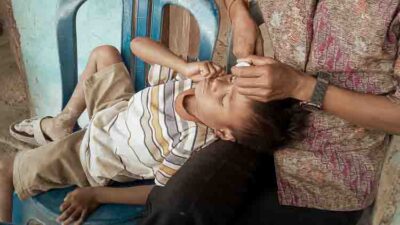 Meanwhile, our Primary Medical Care programme continues. It never stops, 24h/24. Our Kawan Sehat health agents continue their work in the most isolated villages, often far from everything. They treat, prevent, monitor, reassure, and refer. They see hundreds of patients every month. And this week, as announced, we began replenishing medicine stocks for all health agents. To do this, Alex and the teams travel from village to village, sometimes for a full day, sometimes for two, for a single visit. These journeys make it possible to deliver medicines, answer questions, update the app, and also listen to the realities and difficulties of the field. But the truth is simple: we are lacking many medicines and essential medical supplies. And this shortage is becoming deeply worrying. Meanwhile, our Primary Medical Care programme continues. It never stops, 24h/24. Our Kawan Sehat health agents continue their work in the most isolated villages, often far from everything. They treat, prevent, monitor, reassure, and refer. They see hundreds of patients every month. And this week, as announced, we began replenishing medicine stocks for all health agents. To do this, Alex and the teams travel from village to village, sometimes for a full day, sometimes for two, for a single visit. These journeys make it possible to deliver medicines, answer questions, update the app, and also listen to the realities and difficulties of the field. But the truth is simple: we are lacking many medicines and essential medical supplies. And this shortage is becoming deeply worrying.
The overall situation is also getting worse. Here, poverty is increasing fast, very fast. One reason is the drastic reduction in public budgets: allocations to villages have fallen by nearly 75%. Whereas some villages once received around 1.2 billion rupiah per year, they now have to survive on less than 300 million, which is less than US$17,000. And since the beginning of the year, no village has received anything. And yet this money is still supposed to cover healthcare, medicines, health staff, teachers, small infrastructure, and basic services. In reality, almost nothing is left. Systems are now collapsing quickly. Many workers are leaving the villages. Services are stopping. Families who were already poor are becoming even more vulnerable. And when this economic fragility is added to climate change, drought, irregular rainfall, and increasingly intense heat, everything becomes more fragile, harsher, and more violent.
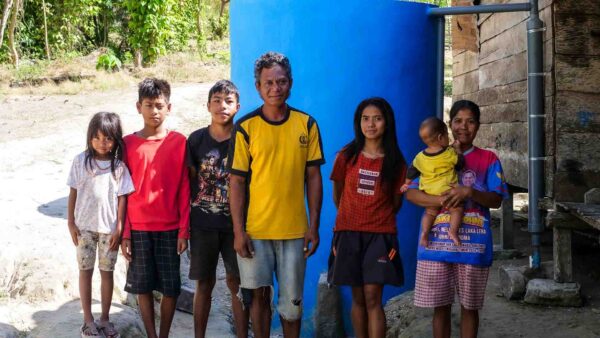
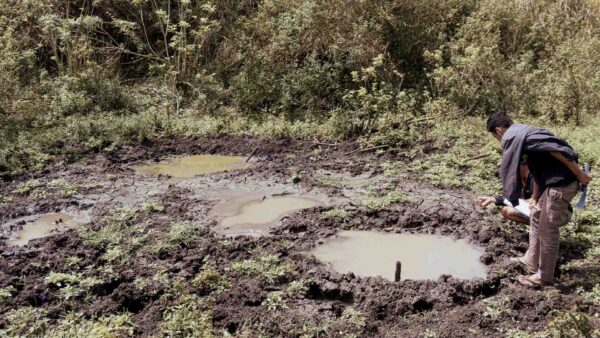
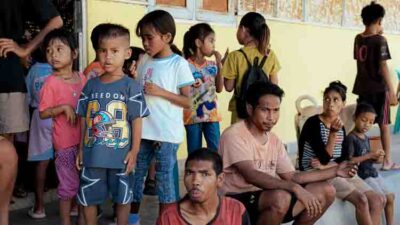 In this context, we are also continuing the Water Connections programme. We have financed two new 5,300-litre reservoirs in the Kawangu area from our own reserve funds. We did it because we keep our word, and because these families need water now, not later. These two reservoirs will provide around 50 people with access to clean, filtered, and safely stored rainwater, including children from the village of Hudumburung, as shown in the photo. But things must be said as they are: this is not enough. Beyond these two reservoirs, there are still hundreds, perhaps thousands, of people without sufficient water. That is why we must finance the 10 remaining reservoirs planned for this year. Here, water is not a comfort. It determines hygiene, nutrition, wound care, infection prevention, children’s health, and survival during the dry months. We invite you to consult the project document here. In this context, we are also continuing the Water Connections programme. We have financed two new 5,300-litre reservoirs in the Kawangu area from our own reserve funds. We did it because we keep our word, and because these families need water now, not later. These two reservoirs will provide around 50 people with access to clean, filtered, and safely stored rainwater, including children from the village of Hudumburung, as shown in the photo. But things must be said as they are: this is not enough. Beyond these two reservoirs, there are still hundreds, perhaps thousands, of people without sufficient water. That is why we must finance the 10 remaining reservoirs planned for this year. Here, water is not a comfort. It determines hygiene, nutrition, wound care, infection prevention, children’s health, and survival during the dry months. We invite you to consult the project document here.
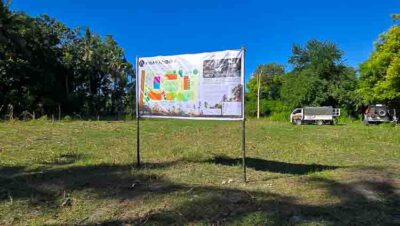 Finally, we spent time on the land of Rumah Kambera 2.0 with our Rotary friends. The land has been acquired. The project is moving forward. Advice is being given, as are ideas, and we need them. Because our current centre is truly falling apart. The roofs leak, the walls are weakening, the spaces have become too small, and it is no longer reasonable to imagine staying there much longer. This future socio-medical centre must be simple, solid, and useful. A place to treat, store, train, coordinate, and work better—a place designed to last and to respond to the reality here. We have already received important early support for this project, and we are deeply grateful, but we are still very far from what is needed. We invite you to consult the project document here. Finally, we spent time on the land of Rumah Kambera 2.0 with our Rotary friends. The land has been acquired. The project is moving forward. Advice is being given, as are ideas, and we need them. Because our current centre is truly falling apart. The roofs leak, the walls are weakening, the spaces have become too small, and it is no longer reasonable to imagine staying there much longer. This future socio-medical centre must be simple, solid, and useful. A place to treat, store, train, coordinate, and work better—a place designed to last and to respond to the reality here. We have already received important early support for this project, and we are deeply grateful, but we are still very far from what is needed. We invite you to consult the project document here.
Thank you for being here, for reading us, for following us, and above all for understanding that behind every word there are very real lives, very real emergencies, and solutions that we are trying, every single day, to make possible.
Alex, for Fair Future - Wednesday, 22 April 2026 |

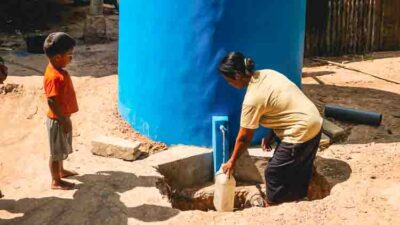 Two reservoirs are already underway. Ten still need to be built.