|
A centre to build, lives to protect
 👋 Hello, it’s Alex. How are you? 👋 Hello, it’s Alex. How are you?
I am writing to you from East Sumba, after three weeks without sending you a letter. Not because nothing happened. Rather, because too much happened, and the days still only have 24 hours. I find this to be a rather unfortunate design flaw.
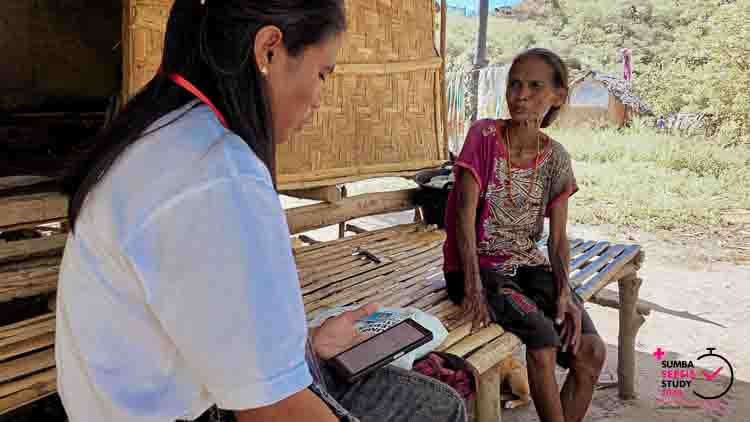
Today, June 4, 2026, our major study on sepsis began in the field. The first interviews took place this morning in the villages, and everything went very well. After almost three months of preparation, four days of training, tests, corrections, and a lot of coffee, tea for me, we are finally inside the homes, with the families, listening to what they live through every day.
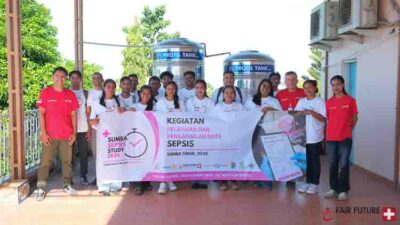 This study involves around forty people, including about twenty in the field for two months. They will visit more than 600 households and ask 60 questions to each family. These are many numbers, yes, but behind them are very concrete stories: a fever that does not stop, a wound that becomes infected, impossible transport, treatment started too late, a health centre too far away. This study involves around forty people, including about twenty in the field for two months. They will visit more than 600 households and ask 60 questions to each family. These are many numbers, yes, but behind them are very concrete stories: a fever that does not stop, a wound that becomes infected, impossible transport, treatment started too late, a health centre too far away.
Sepsis, here, is not a complicated word reserved for hospitals. It is often the silent end of a simple infection, poorly treated or treated too late. Our goal is clear: to understand why people arrive too late, where the delays happen, and what we can change before a preventable infection becomes fatal.
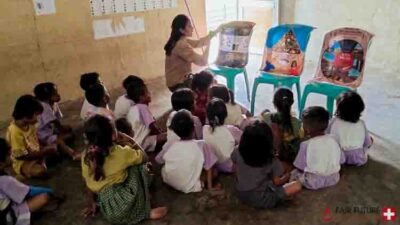
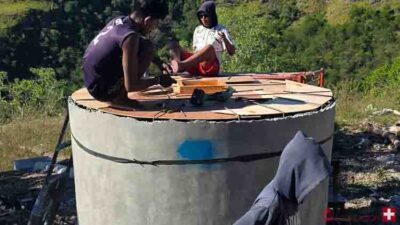 Meanwhile, on a dry hill, we are finishing the first water tank built with our new model. 5,300 litres, 2.12 meters in diameter, 1.50 meters high. Lower, wider, easier to build, clean, and repair. It took us about ten days. Next week, we will begin the second project for a school without access to water. For the children and teachers, this will mean less fatigue, better hygiene, and fewer diseases linked to unsafe water. Meanwhile, on a dry hill, we are finishing the first water tank built with our new model. 5,300 litres, 2.12 meters in diameter, 1.50 meters high. Lower, wider, easier to build, clean, and repair. It took us about ten days. Next week, we will begin the second project for a school without access to water. For the children and teachers, this will mean less fatigue, better hygiene, and fewer diseases linked to unsafe water.
We still need to build at least a dozen more tanks. Today, only two are funded. One tank costs 2,245 Swiss francs. This is not an abstract idea: it is cement, steel, sand, transport, labour, and at the end of it, clean water for families who do not have any.
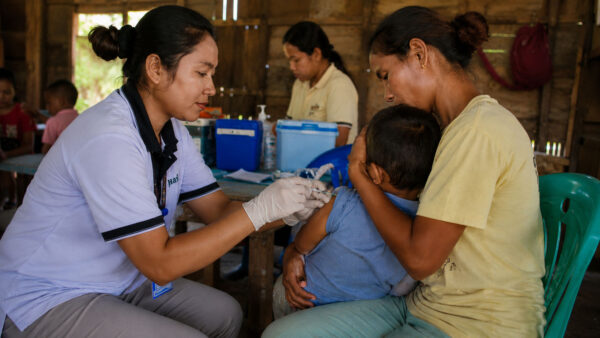
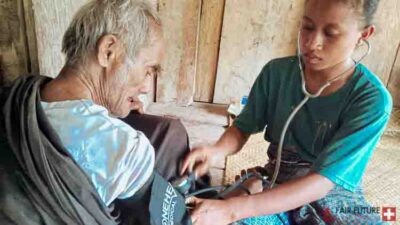
 The Primary Medical Care program also continues, with more and more patients. Families are poorer, villages receive less, people eat less well, wait longer, and sometimes buy medicines at random. Our Kawan Sehat health agents see this every week: more fevers, more infected wounds, more weak children, more patients arriving when the problem is already serious. The Primary Medical Care program also continues, with more and more patients. Families are poorer, villages receive less, people eat less well, wait longer, and sometimes buy medicines at random. Our Kawan Sehat health agents see this every week: more fevers, more infected wounds, more weak children, more patients arriving when the problem is already serious.
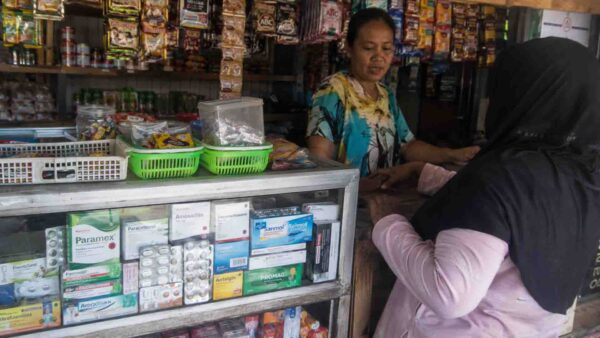
And to provide care, we need medicines. Not promises. Antibiotics, tests, dressings, treatments for fever, malaria, infections, and pain. The needs are increasing, while funds are decreasing. It is difficult to write, but it is the truth.
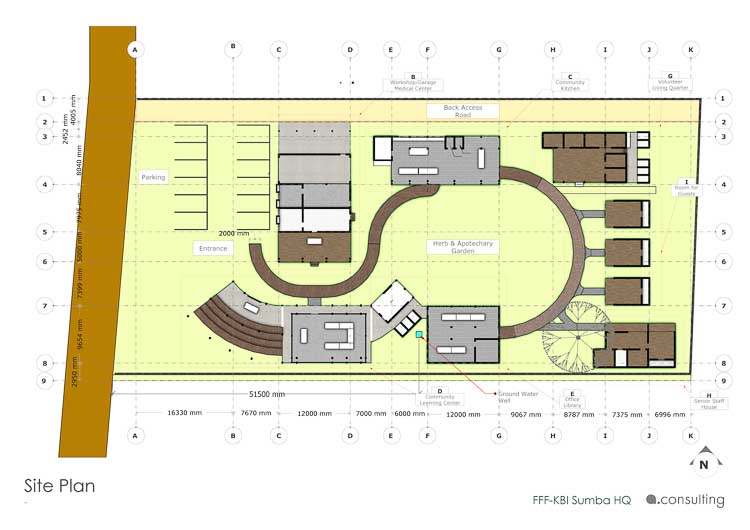
 This week, we also received the finalised plans for Rumah Kambera 2.0, our future socio-medical centre. A medical center, a laboratory, a pharmacy, training spaces, a library, a community kitchen, housing for volunteers, staff, and our guests, workshops, and storage areas. These are not nice drawings to decorate a newsletter. These are the plans we need in order to keep working properly. This week, we also received the finalised plans for Rumah Kambera 2.0, our future socio-medical centre. A medical center, a laboratory, a pharmacy, training spaces, a library, a community kitchen, housing for volunteers, staff, and our guests, workshops, and storage areas. These are not nice drawings to decorate a newsletter. These are the plans we need in order to keep working properly.
Rumah Kambera 2.0 is now our absolute priority. In about six months, we will have to leave our current workplace. If we do not have a base ready, everything becomes fragile: medicines, training, patients, teams, trucks, and departures to the villages.
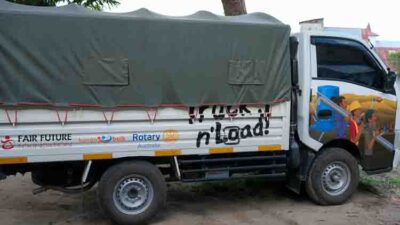 On Saturday, we are also leaving for Surabaya with the Truck n’Load, three days by ferry, carrying two 5,000-watt generators and two 2,000-watt generators, all broken after years of fieldwork. We will try to repair them. Here, even generators eventually need sick leave. On Saturday, we are also leaving for Surabaya with the Truck n’Load, three days by ferry, carrying two 5,000-watt generators and two 2,000-watt generators, all broken after years of fieldwork. We will try to repair them. Here, even generators eventually need sick leave.
So this is where we are: a medical study that has begun, water tanks to build, more and more patients, medicines to renew, and a centre to build before we have to leave.
Thank you for being here, for reading, for sharing, and for supporting us when you can. Here, every franc becomes something precise: a medicine, a test, a bag of cement, a litre of clean water, a day of training, a trip to an isolated village.
We continue. Because the villages cannot wait.
Alex, for Fair Future - Friday, June 5, 2026 |

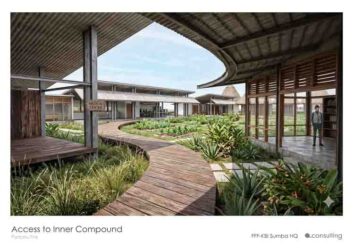 This week, we received the finalised plans for Rumah Kambera 2.0, our future socio-medical centre in East Sumba. The project is becoming very real: a medical centre, a treatment room, a small laboratory, a pharmacy, storage areas, workshops, a community kitchen, a library, a training centre, and housing for teams and volunteers.