This image is in 1920×1080 resolution. Click on it to enlarge and view at full size.
A Small Wound, a Trained Health Agent, and Care Close to Home in Hudumburung
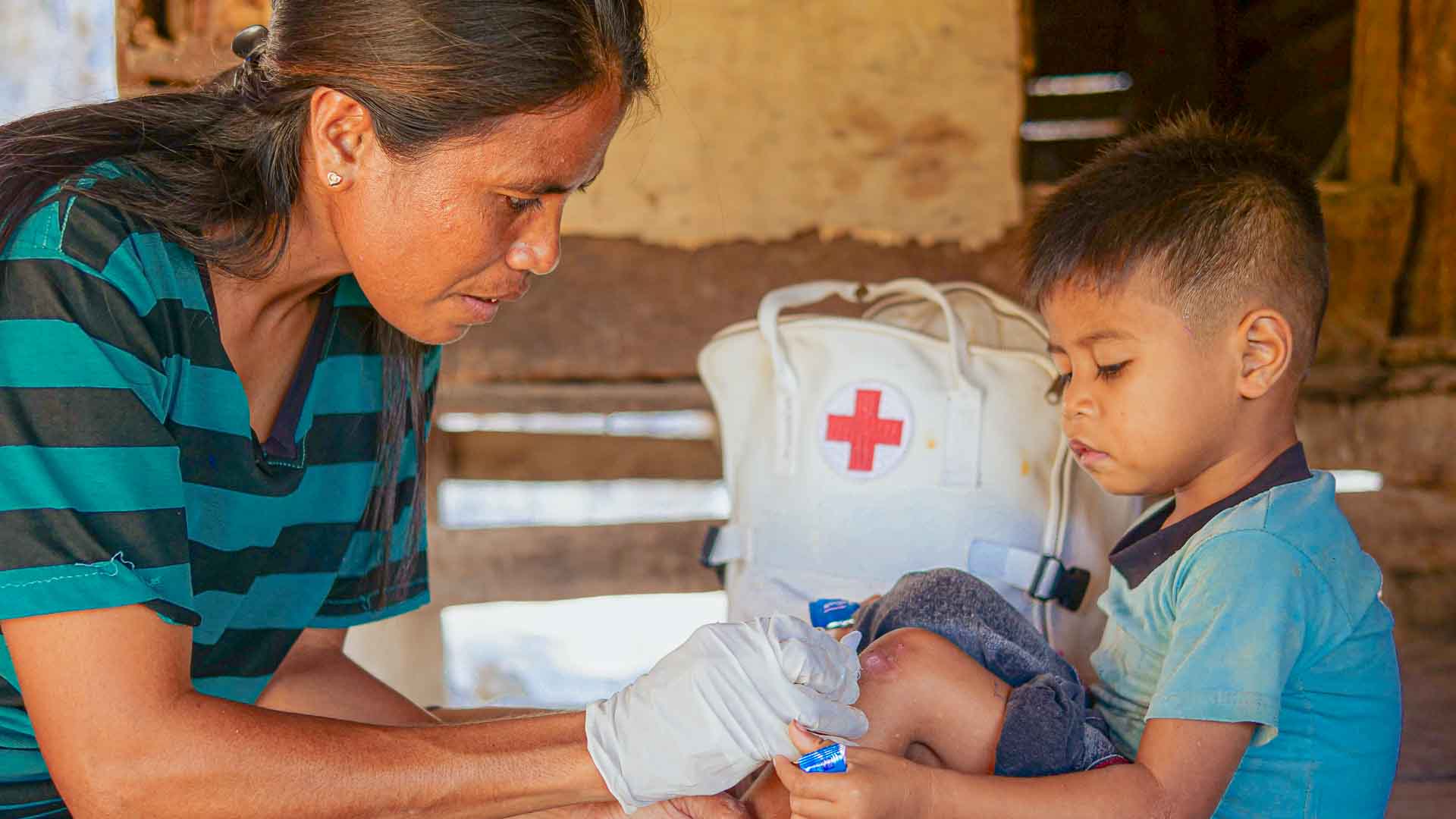
This new Picture of the Day shows Veronika, a Kawan Sehat health agent, treating a child’s wound in her village of Hudumburung. This is primary healthcare in East Sumba in its most concrete form: a trained person, equipment, and time given before a small problem becomes serious.
Primary healthcare in East Sumba: Veronika has worked as a Kawan Sehat agent for two years and treats around 50 to 70 patients each month. Her medical backpack contains medicines, medical supplies, educational material, her training book and the Kawan Sehat application. These tools help her assess, clean, treat, document, explain and decide when referral is needed.
For a child with a wound, early care matters. Broken skin can provide an entry point for bacteria. A wound is not sepsis, but increasing redness, swelling, pain, fever, altered behaviour or deterioration need attention. Sepsis is a life-threatening response to infection, and delayed recognition and treatment increase the danger.
Prevention starts before an emergency: Primary care does not replace a doctor, laboratory or hospital. In an isolated village, it can reduce dangerous delays by bringing observation, basic treatment, prevention, health education and referral closer to the patient. This is central to primary health care.
Veronika is also an enumerator for the 2026 Sepsis Study. The same person who treats a wound helps us understand how families recognise serious illness, when they seek care, and where delays begin. Care and data meet in the same village.
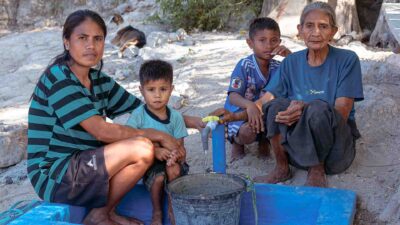
Water, hygiene and care belong together: Hudumburung also faces severe difficulty accessing water. Fair Future Foundation built two new 5,300-litre reservoirs there. Water availability supports hygiene, wound care and infection prevention, although water access alone does not guarantee safe water quality. UNICEF identifies water, sanitation and hygiene as fundamental determinants of child health.
The photograph shows what primary healthcare in East Sumba looks like on the ground: a child, a wound, gloved hands, and a medical bag. Through Fair Future Foundation and Kawan Baik Indonesia, trained local agents bring basic care, education, medical data and referral closer to people living far from formal health services.
Today, the 17th of August 2026 – Alex Wettstein
Weitere Informationen
- World Health Organisation | Sepsis: Explains how infection can progress to life-threatening sepsis and why early recognition, prompt treatment and prevention are essential.
- World Health Organisation | Primary Health Care: Defines primary health care as prevention, treatment, education and referral delivered as close as possible to people’s daily lives.
- World Health Organisation | Community Health Workers: Provides global guidance for training community health workers to deliver essential services safely within primary health care systems.
- Centres for Disease Control and Prevention | Sepsis Prevention: Outlines practical ways to prevent infections that can lead to sepsis, including wound care, hygiene, symptom recognition, and rapid action.
- UNICEF Indonesia | Water, Sanitation and Hygiene: Describes work to improve safe water, sanitation and hygiene in Indonesia, all closely linked to child health and infection prevention.
- World Health Organisation | Infection Prevention and Control: Presents evidence-based infection prevention and control measures that protect patients and health workers across health services.
- World Bank | Health Programs in Indonesia: Summarises health-system work in Indonesia focused on stronger primary care, nutrition and access to effective services across communities.