


Spenden
Support Care
Artikel & News
Feldgeschichten
Glossar
Feldführer
Unsere Verpflichtung zur Kinderschutz
Children have the right to be safe, respected and protected in every activity that involves them. Our Child Protection Policy defines the standards, responsibilities and safeguards that apply to Fair Future Foundation teams, partners and projects.
Child protection is a responsibility shared by every adult
Clear standards for every adult, every activity and every partnership
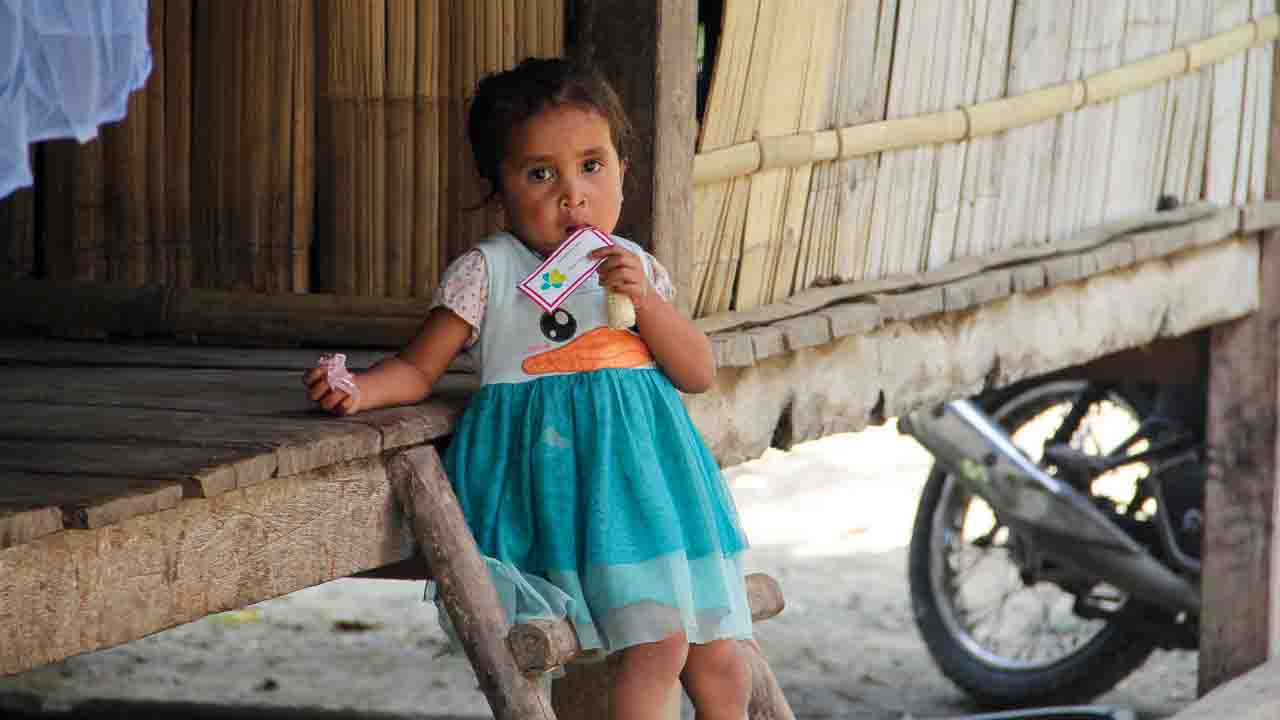
A child in rural East Sumba, where safeguarding, dignity and responsible adult conduct apply to every field activity and community interaction.
What our policy protects
Fair Future Foundation’s Child Protection Policy applies to all our actions and partners. It is not limited to schools or medical activities. It applies whenever our work brings adults into contact with children, including healthcare, education, community activities, field visits, documentation and communications.
The policy prohibits forced or paid child labour in Foundation projects and any task that could endanger a child’s health, development or education. Participation in educational or community activities must be voluntary, age-appropriate, safe and supervised. Children must be treated with dignity and without discrimination, their privacy must be respected, and our activities must not interfere with their education.
Protection also includes health. Children must not be exposed to passive smoking or alcohol consumption in the context of our activities, and adults working with them are expected to model responsible behaviour.
Responsibilities, supervision and reporting
Child safeguarding is a collective adult responsibility. Fair Future Foundation team members and local partners are expected to understand children’s rights, recognise unsafe or abusive behaviour, maintain appropriate boundaries and act when concerns arise.
Our policy establishes zero tolerance for sexual abuse and inappropriate behaviour. Team members receive training on prevention and reporting, and mechanisms must be available to respond immediately when abuse is suspected or identified. When necessary, the Foundation works with local authorities so that appropriate protective action can be taken.
These responsibilities are part of the same ethical framework described in our Ethische Werte und unser Arbeitsprinzipien. Child protection is not an optional addition to a project. It is part of how a project must be designed, conducted and documented.
Photography, privacy and consent
Photography and video are important parts of documenting humanitarian work, but documentation never takes priority over a child’s dignity or safety. Where possible, explicit permission must be obtained from a parent or legal guardian before images are captured or used, with a clear explanation of how the material may be published.
Where appropriate, particularly with older children, the child’s own consent should also be sought. Images that could compromise privacy, safety or dignity must not be used. In sensitive circumstances, faces or identities may be anonymised.
This principle applies to reports, our website, social media, fundraising material and any other communication. A technically usable photograph is not automatically an ethically acceptable photograph.
Read the official policy
This webpage summarises the main safeguarding principles. The formally adopted policy remains the reference document. It is available in English and French and should be read by team members, partners and anyone working with Fair Future Foundation in activities involving children.
International references: UNICEF – Child Protection · WHO – Child Health
Policy at a glance
Version: v1.2
Adopted: 9 September 2024
Scope: All Fair Future Foundation actions and partners
Languages: Englisch · Frage: Wie viel kostet die Lieferung?
Adopted by: Fair Future Foundation Board
Questions about this policy:
[email protected]
