This image is in 1920×1080 resolution. Click on it to enlarge and view at full size.
Plastic Waste Education Starts in an East Sumba Classroom
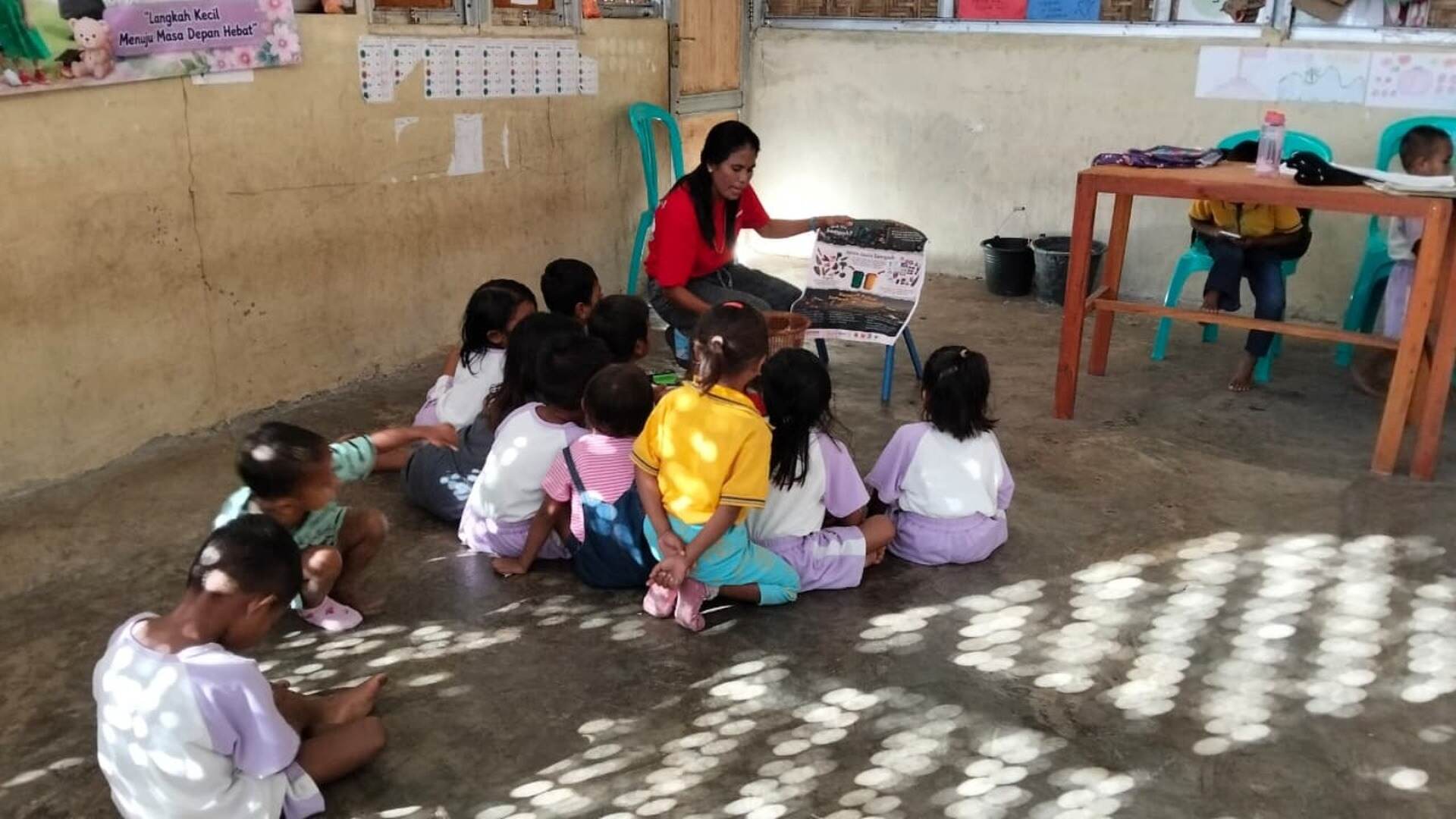
Dieses neue Foto des Tages shows a Kawan Sehat health agent sitting with young children in their classroom, using one of our hand-drawn plastic waste education posters. This small rural school in East Sumba still has no electricity. Until very recently, it had no water either. Our teams built a 5,300-litre reservoir so pupils and teachers now have clean water on site.
Plastic Waste Education in a Rural School
The agent is not giving a technical lecture. She uses simple words, pictures and questions. The children learn to separate waste, to use less plastic where possible, and not to throw it into the ground, drains or nearby water. They are also invited to speak with their parents and brothers and sisters. That conversation matters. In a village with no organised waste collection, what enters the environment is usually dealt with at home.
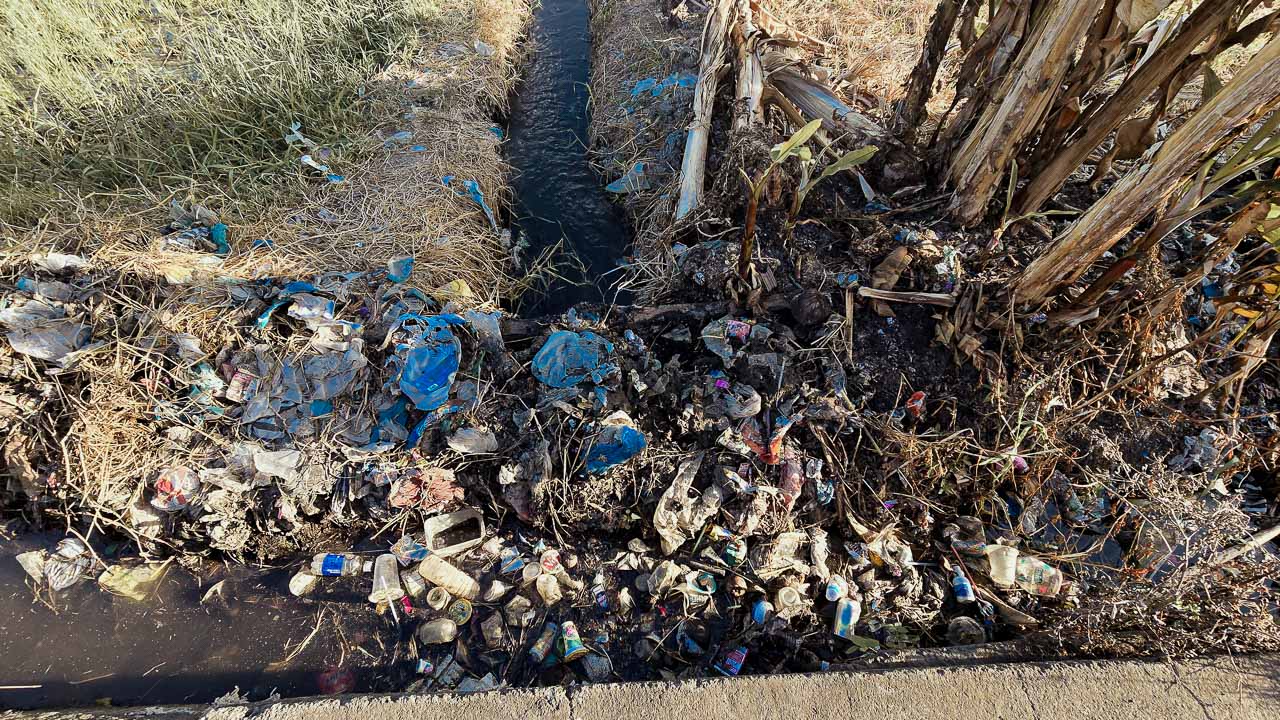
Plastic does not disappear when it is out of sight. It can be burned, releasing harmful smoke, or fragment into progressively smaller pieces that move through soil and water. The point is not to burden children with complex science. It is to give them habits that are practical, understandable and safe.
A Poster Made for Conversation
This poster is one of ten health education posters created by Fair Future Foundation and Kawan Baik Indonesia, drawn by hand for use in the field. It is a teaching tool, not a decoration. The full poster series also addresses nutrition, malaria, hand hygiene, tobacco smoke, alcohol and HIV prevention. Kawan Sehat agents carry these messages into villages, homes and schools as part of Primary Medical Care.
From This Classroom to Waingapu
Next week, this waste-management poster is planned to appear on twenty 3 by 2 metre billboards across Waingapu, alongside messages on HIV prevention and encouragement to test. The scale will be different, but the principle is the same. Prevention has to be visible, clear and close to daily life.
For these children, clean water, a safe place to learn and understandable health information belong together. This is how a health system grows in a rural community, one practical conversation at a time.
Today, 19 September 2026 | Alex Wettstein
Weitere Informationen
- Weltgesundheitsorganisation: Explains how clear, age-appropriate health information helps children and families understand, assess and act on everyday health risks.
- Weltgesundheitsorganisation: Details how unsafe disposal and open burning pollute air, soil and water, creating health risks that affect children particularly severely.
- WHO Global Malaria Programme: Explains how environmental measures help reduce mosquito breeding conditions and complement proven malaria prevention and vector control.
- Food and Agriculture Organization: Supports practical nutrition education that helps children and families turn understandable food information into daily choices and habits.
- UNICEF Indonesien: Documents water, sanitation and hygiene action in Indonesia, where safe water and better hygiene protect children from preventable infection.
- Weltgesundheitsorganisation: Sets out prevention, health promotion, treatment and community participation as essential parts of care delivered close to daily life.