Posyandu In Lambanapu ist jeder Kind benötigt eine individuelle Aufzeichnung
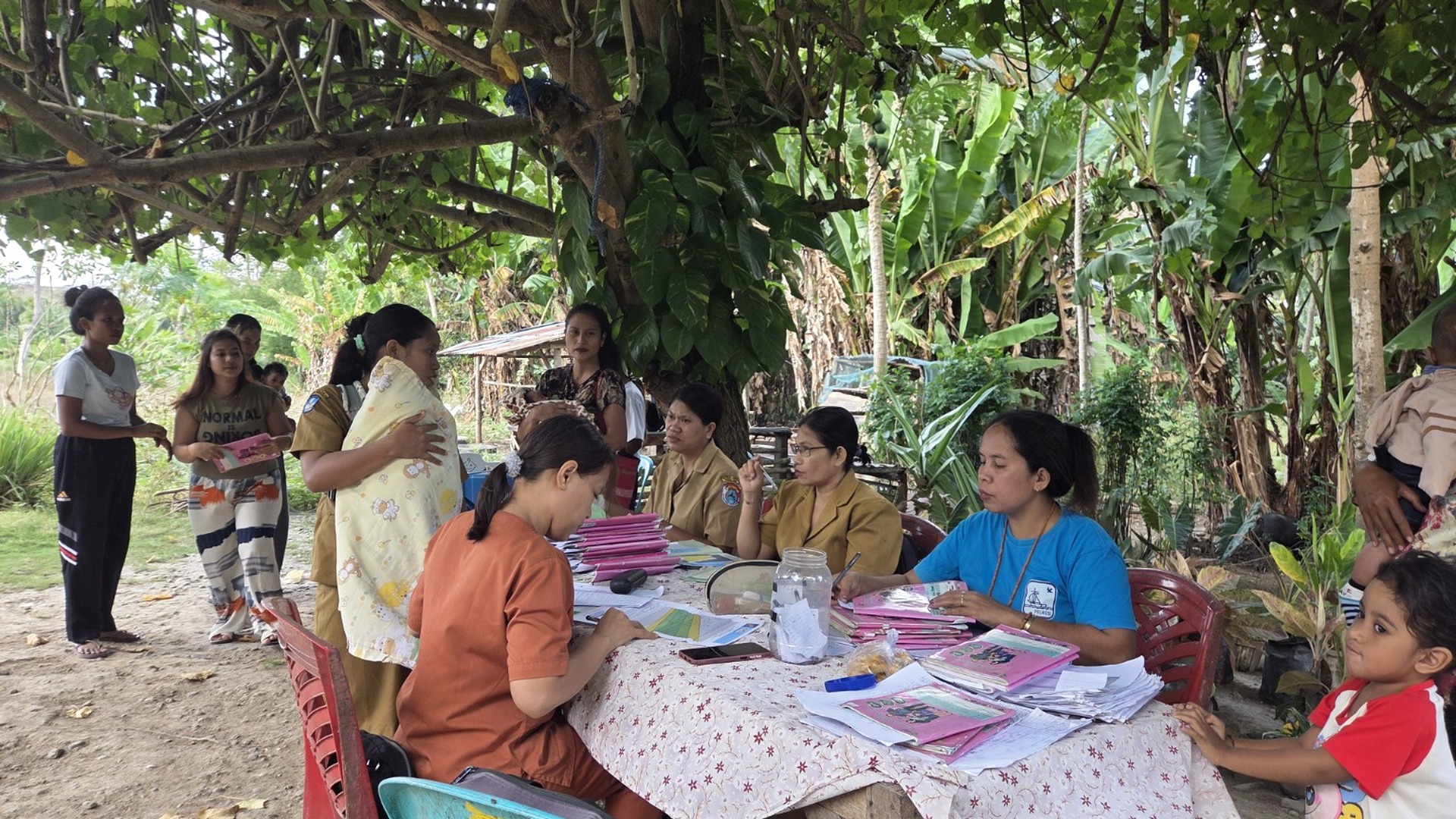
Dieses neue Foto des Tages shows mothers and children gathered around a table beneath a tree in Lambanapu. Health workers from Puskesmas Kambaniru sit among pink child health books and loose papers. In August 2026, more than 100 children, roughly one month to five years old, came for weighing, measurement, nutrition assessment and, when available, vaccination. This photograph cannot show whether each decision was safe.
Child health care in Lambanapu needs a name.
Our team watched names get mixed up on the papers. We saw children approached for vaccination without careful checks, while others risked being missed. We saw little direct conversation with children and caregivers. Vaccine and medicine supplies appeared insufficient for those who came. These are observations from this session, not a judgement about every worker.
Before giving a vaccine, a health worker needs to establish the child’s identity, age, previous doses, and relevant history, then document the dose. Growth measurements likewise need an age and a continuing record to mean much. A crowded table and scarce stock make that work harder. They never make it optional.
The mothers cannot simply walk away.
Near Waingapu, this Posyandu is relatively close to the families it serves. For many mothers here, the session is still their only realistic point of care. Farther into East Sumba, parents may walk kilometres with a child for a similar visit. If the session is missed, cancelled or undersupplied, the next chance may be uncertain.
Staff work outdoors under pressure and with limited supplies. We cannot infer how any individual worker felt. The child and parent experience still matters. A parent should hear what was measured, what it means, which vaccine is due, and what to do if a dose or a needed medicine is unavailable. A child needs to be addressed as a person, not moved silently through a queue.
Care that follows the child
Fair Future Foundation and Kawan Baik Indonesia organise community medical days and primary medical care and work through local Kawan Sehat agents. We aim to listen, examine, document, explain and refer when a child’s needs exceed what we can safely provide. Our work cannot replace a functioning public service. On the busiest day, every service must protect the right child, the right record, the right decision and a clear path back to care.
27 September 2026 | Ayu Setia Wardani and Alex Wettstein
Weitere Informationen
- Weltgesundheitsorganisation: WHO child growth standards help health workers interpret a child’s weight and length or height with age and sex rather than as isolated numbers.
- WHO growth assessment: This guide describes measurement, plotting and counselling so a caregiver can understand the child’s growth and the next steps after a visit.
- WHO home-based records: Child health books document individual vaccination history, support safe decisions at each session and help families plan the next visit.
- UNICEF Indonesien: UNICEF explains the childhood vaccination schedule and notes that routine vaccines are available at Puskesmas, Posyandu and other facilities.
- UNICEF e-Posyandu: This Indonesian field report examines how better records at community health posts can support follow-up for mothers and children.