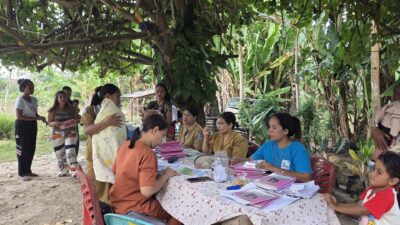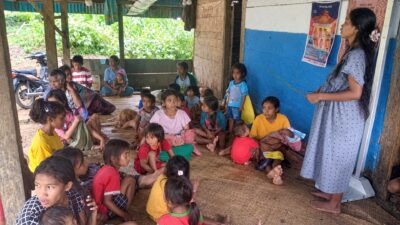
Die Gesundheitsversorgung in der Gemeinde East Sumba beginnt mit einem Besuch in einem Haus.
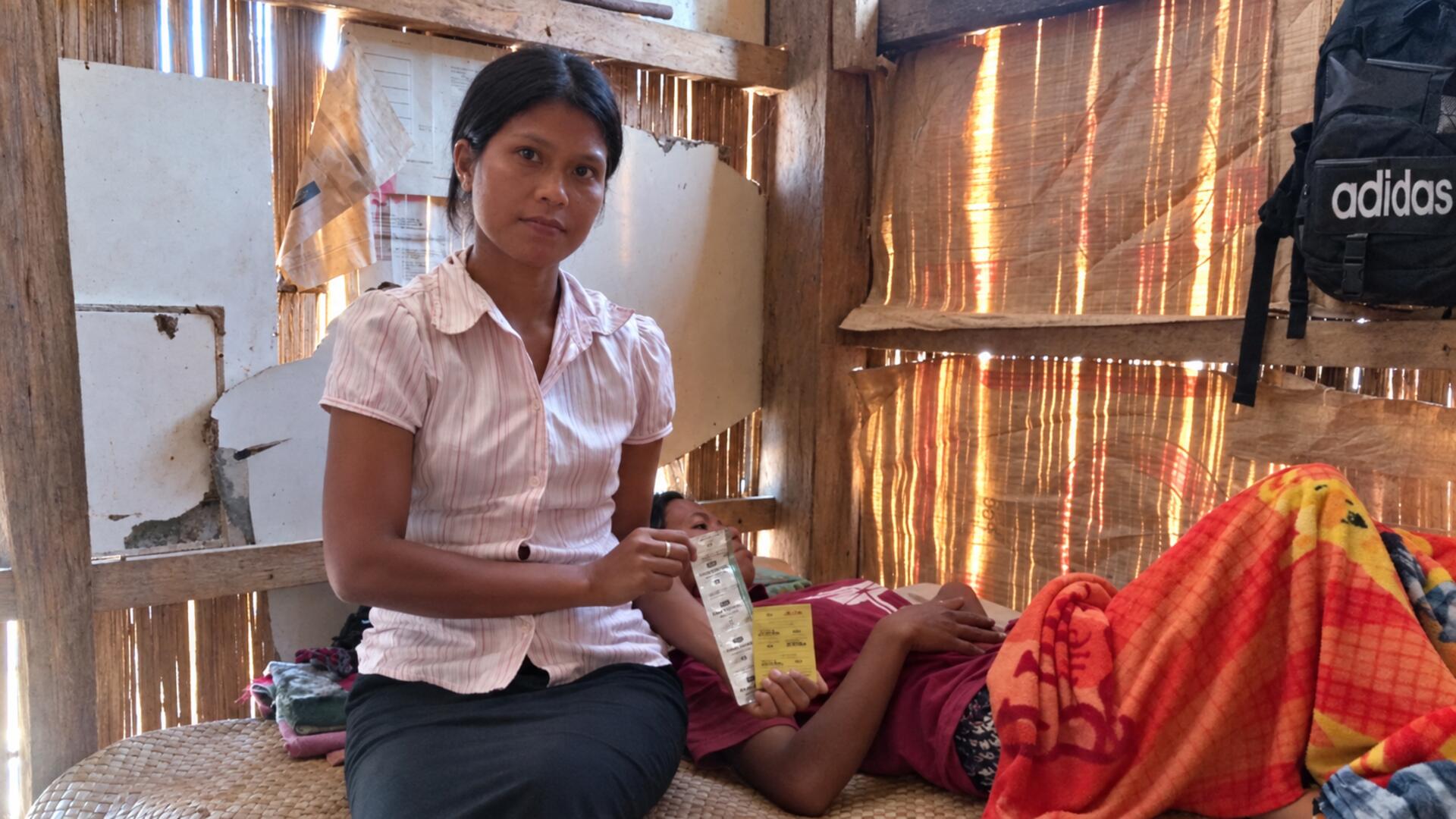
Dieses neue Foto des Tages shows Rambu Esther seated beside a woman lying on a woven mat in a wooden home in Nggaha Ori Angu, East Sumba. She holds blister packs of medicine. The room is simple, but it is a place of care. This is community healthcare East Sumba, delivered close to the person who needs it.
Community healthcare East Sumba at home
Rambu Esther is a Kawan Sehat community health agent. On this occasion, she was providing care to a woman who was unwell. We cannot diagnose the patient from a photograph, nor can a community agent replace a doctor, nurse, Puskesmas or hospital. Her role is different and essential: to listen, assess within her training, provide treatment that is appropriate to her scope, explain what to do, and recognise when a medical referral is needed.
In an ultra-rural village, the distance between a person becoming ill and professional help can be measured in hours of travel, transport costs and roads that are sometimes impassable. A trained neighbour who can respond early, remain in contact with our medical team and guide a family through the next step changes that reality. It does not remove the limits of the health system. It makes the first link stronger.
One visit, a wider service
Fair Future Foundation and Kawan Baik Indonesia support the Primary Medical Care programme with training, supervision, essential medicines and referral links. Across East Sumba, Kawan Sehat agents now provide more than 1,000 patient consultations each month. Each consultation is a real person, a household and a decision made closer to home. The value is not only the medicine in Rambu Esther’s hand. It is the knowledge behind it, the safety net around it, and the fact that someone comes.
For Rambu Esther and the people she serves, primary care is not an abstract system. It is the moment when illness is met early, explained clearly, treated safely where possible, and referred without delay when it is not.
2 October 2026 | Alex Wettstein
Weitere Informationen
- Weltgesundheitsorganisation: WHO guidance shows how trained, supported community health workers can expand equitable access to essential primary care services.
- WHO Primary Health Care: WHO explains that first-contact care must work close to daily life and connect people with higher levels of care when needed.
- WHO community health worker curriculum: This guide links community health worker competencies, supervision and training to safe essential care close to home.
- WHO Indonesia: WHO describes primary health care as services, prevention and community participation that respond to needs across the life course.
- Indonesia Ministry of Health: Indonesia’s Ministry of Health describes stronger community health roles within integrated, preventive primary health care services.