This image is in 1920×1080 resolution. Click on it to enlarge and view at full size.
Preventive Measures Alongside Clinical Care in Kampung Madutolung, East Sumba
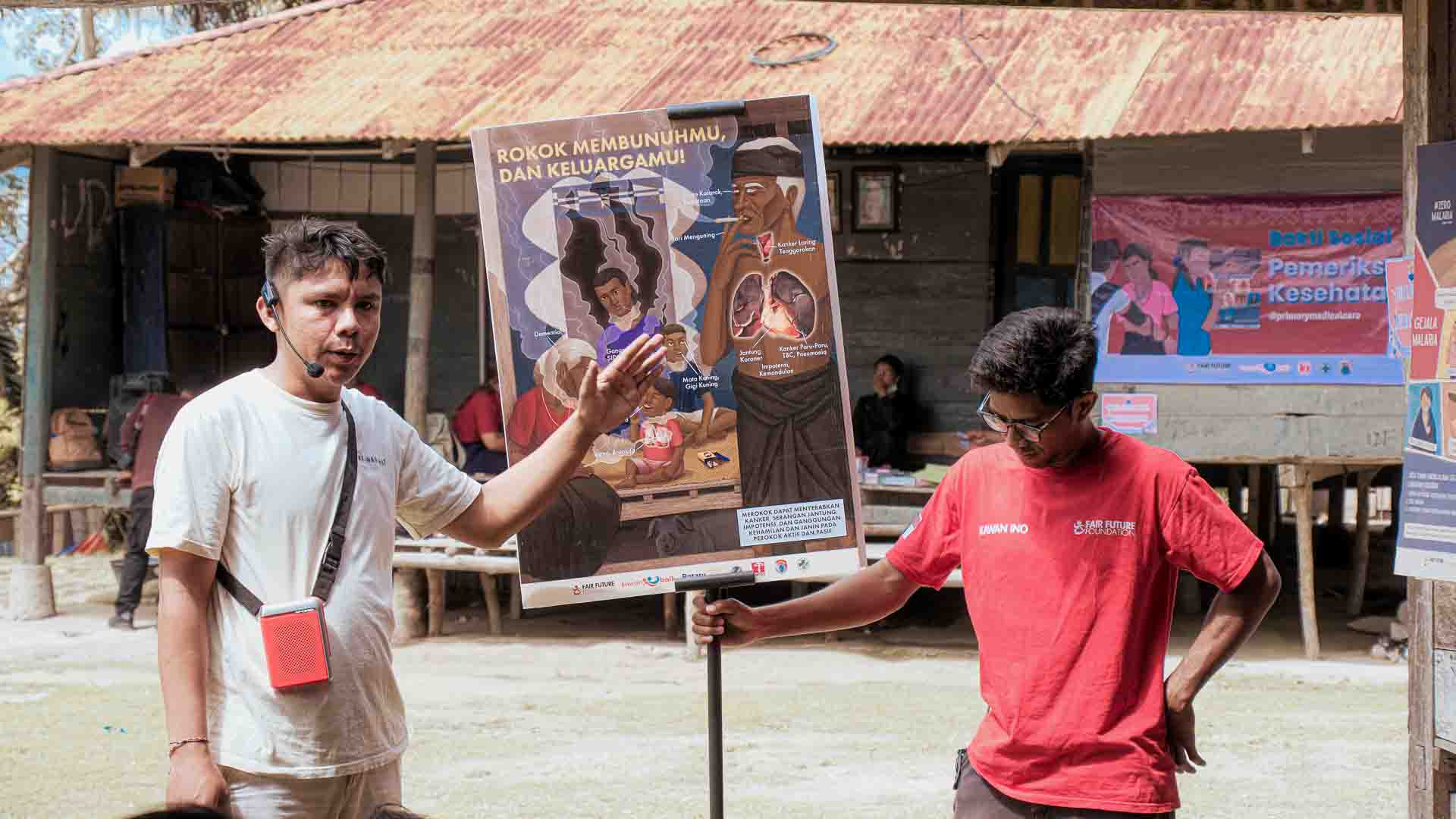
This new Immagine del giorno captures community health prevention in action on August 1, 2026—Switzerland’s National Day—at Kampung Madutolung in Kahaungu Eti. One team member is speaking next to our secondhand smoke poster while another holds it up. In the background, you can see a medical care area. On that day, over 110 people received healthcare services.
Community health prevention is an integral part of clinical care. A healthcare day includes more than medications, exams, and blood tests; while treatment addresses immediate issues, prevention intervenes earlier. The poster in the photo highlights the dangers of secondhand tobacco smoke, which doesn’t end with the smoker themselves. Any exposure to secondhand smoke poses risks—there’s no safe level—and children can experience respiratory damage as a result. Additionally, pregnant women and individuals with chronic conditions require environments devoid of smoke for their well-being. Educating about this in a village is essential primary healthcare, not merely supplementary.
Our educational focus beyond treatment includes topics such as nutrition, the dangers of excessive alcohol consumption, recognising malaria symptoms, methods to recognise mosquito exposure at home, and a pyramid specifically designed for local instruction. Although these discussions do not replace professional diagnosis or treatment, they empower individuals by increasing risk awareness, enabling earlier symptom recognition, and guiding them on when testing or medical consultation is necessary.
Education influences future decisions, which is why the Fair Future Foundation and Kawan Baik Indonesia prioritize education alongside clinical prioritizeuring Primary Medical Care activities. While tests or medicines are crucial when illness strikes, clear information can make a difference in advance. It can shield children from tobacco smoke exposure, help families recognize fever as an indicator for malaria testing, and shape daily dietary choices.
In remote communities, accessing healthcare is challenging, and every delayed decision can have significant consequences. While prevention cannot eliminate distance or eradicate disease, it empowers individuals with crucial knowledge exactly when they need it. Providing clean water represents one of the most cost-effective treatments available. Similarly, education operates on this same principle. For us, promoting community health through preventive measures serves as a practical approach to public health—delivered directly and personally—to avert future medical emergencies.
Today, August 18 2026 – Alex Wettstein
Per ulteriori informazioni
- World Health Organisation Tobacco: WHO explains why secondhand tobacco smoke harms non-smokers and why smoke-free environments are essential for protecting families.
- CDC Secondhand Smoke: CDC details the health effects of secondhand smoke in adults and children, including respiratory illness, asthma and cardiovascular disease.
- UNICEF Indonesia: UNICEF Indonesia documents smoke-free school action in East Java, linking tobacco prevention with healthier environments for children and adolescents.
- World Health Organisation Healthy Diet: WHO summarises evidence-based principles for healthy diets, including food variety and limiting salt, free sugars and unhealthy fats.
- World Health Organisation Alcohol: WHO outlines the health and social harms linked to alcohol use and the public-health measures used to reduce preventable alcohol-related harm.
- World Health Organisation Malaria: WHO explains malaria symptoms, prevention, testing and treatment, supporting community education on early recognition and prompt diagnosis.
- World Health Organisation Primary Health Care: WHO defines primary health care as promotion, prevention, treatment and other services delivered as close as possible to people’s daily lives.
- The Global Fund Malaria: The Global Fund describes malaria prevention, testing and treatment tools that help communities reduce infection and progression to severe disease.