


Donare
Assistenza sanitaria
Articoli e News
Storie dal campo
Glossario
Guida escursionistica
Access, Transport & Logistics Program
Field Mobility & Logistics
Care only exists when teams, medicines, diagnostics, water systems and construction materials can physically reach remote communities.
- Inter-island freight
- 4×4 medical access
- Motorcycles for the last mile
Distance is a clinical and operational risk
In East Sumba, a vehicle is not simply transport. It is the link between a patient and a medical team, between a water project and its materials, and between an isolated village and the supplies that make sustained field work possible.
Our field mobility and logistics program brings together trucks, 4×4 vehicles, motorcycles, medical deliveries, equipment movement, ferry crossings and local coordination. It keeps every other program moving.
Il programma
Mobility is the foundation beneath every mission
From a clinical consultation to a water installation, the work starts with the practical ability to reach the place, carry what is needed and return safely.
In East Sumba, a vehicle is not simply transport. It carries medical teams, diagnostics, medicines, equipment and materials through difficult roads and long distances. It is the link between a patient and care, and between a project plan and real work on the ground.
Our field mobility and logistics program brings together trucks, 4×4 vehicles, motorcycles, medical deliveries, equipment movement, ferry crossings and local coordination. It keeps every other program moving.
The route before the field route
A mission to Sumba begins far beyond Sumba
Many medicines, medical supplies, spare parts and construction materials are not available locally. They move through road freight, ports, ferries and storage before a vehicle can carry them into rural East Sumba.
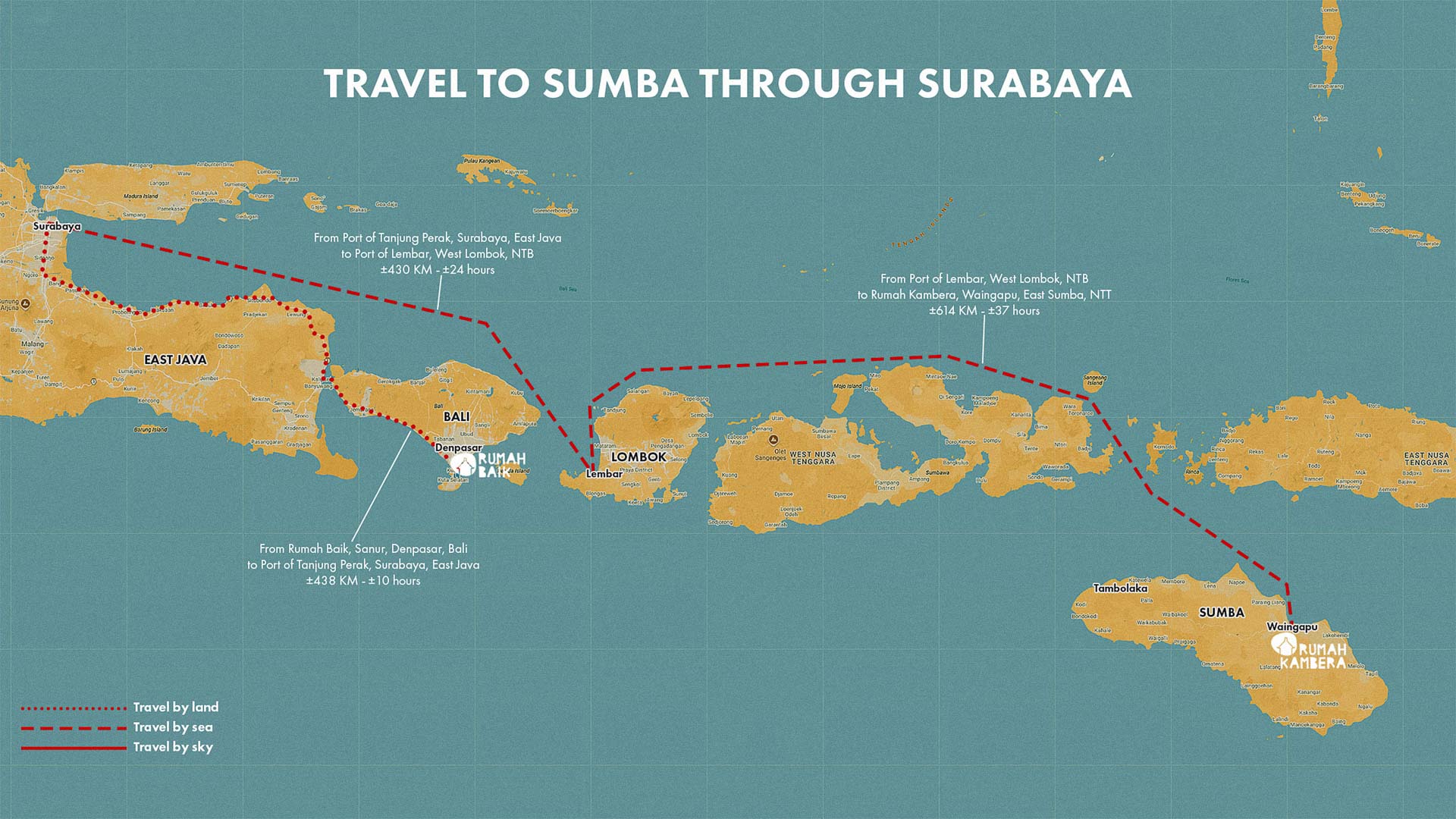
The mapped route begins at Rumah Baik in Bali, travels by road to Surabaya, crosses by sea to Lembar in Lombok, and continues to Waingapu. At Rumah Kambera, cargo is received, checked, stored and prepared for the final journey to villages.
Vehicles carry field teams and equipment through difficult roads and long distances.
Freight, ferries, ports and storage connect essential supplies with East Sumba.
Motorcycles and local transport extend the route where a truck cannot go.
Maintenance, fuel and route planning make follow-up possible, not only one visit.
How care moves
From planning to the final kilometre
A field mission is a chain. Each part has to hold for the work to reach people safely and continue after the visit.
Plan the route
Teams assess distance, road conditions, weather, fuel, cargo and the time required to work on site.
Load and prepare
Medicines, diagnostics, equipment and materials are checked, stored and loaded for the mission.
Cross the supply route
Freight moves through road transport, ports, ferries and local storage before the field route begins.
Reach the last mile
Trucks, 4×4 vehicles and motorcycles carry people and supplies towards villages where access changes with the season.
Return and follow up
Vehicles carry records, referrals, maintenance needs and commitments into the next cycle of work.
Practical limits, responsible delivery
Transport is essential, but it is never the whole response
Vehicles reduce distance. They do not replace trained teams, local partners, public health services or long-term investment in local systems.
What field mobility allows
- Bring clinical teams and equipment to remote villages
- Carry medicines, diagnostics and hygiene supplies safely
- Deliver materials for water, sanitation and community infrastructure
- Support referrals, repeat visits and continuity of care
- Respond when weather, geography or isolation interrupt access
What responsible logistics requires
- Route planning, maintenance, fuel and safe driving practices
- Local knowledge, coordination and clear communication
- Realistic payloads, storage and cold-chain safeguards where required
- Budgeting for repeated journeys, not one-off visibility
- Accountability for safety, procurement and environmental impact

Remote access depends on vehicles that are maintained, prepared and operated with local knowledge of the route.
People, tools and systems
Vehicles work when the whole field system works
Reliability comes from people and processes, not from the vehicle alone. Local coordination, loading discipline, records, maintenance and safe driving make the work possible over time.
Reliable vehicles
Trucks, 4×4 vehicles, motorcycles and medical transport adapted to rural field work.
Local coordination
Village contacts, drivers, health workers and partners help teams plan safely.
Operational discipline
Inventory, loading, fuel and route records keep missions dependable.
Maintenance
Equipment checks and repair planning protect access before a failure becomes a missed mission.
What stays after a journey
Access becomes more reliable over time
The aim is not only to arrive once. It is to make repeat care, supplies and local collaboration possible across a geography that otherwise excludes people.
Continuità
Teams can return, follow referrals, replenish supplies and keep commitments with communities.
Reach
Health, water and community programs can operate beyond the places that are easy to access.
Preparedness
Maintained vehicles, trusted routes and local coordination improve readiness when conditions become urgent.
Responsabilità
Route records, maintenance and follow-up make the real cost and limits of access visible.
Clinical outreachPrimary Medical CareMedicines, diagnostics, patient follow-up and supervised care move with teams into remote villages.
PersoneAgenti Kawan SehatVillage health agents connect local care with restocking, supervision and referrals across difficult ground.
Attrezzi da campoWater ConnectionsCement, filters, pipe, tanks and repair tools need a reliable supply route before work can begin.
Programme evidenceKawan Against MalariaNets, tests, spray equipment and monitoring reached villages through coordinated transport and storage.
Logistics baseRumah Kambera 2.0The new socio-medical centre will receive, store, prepare and dispatch medical and construction supplies.
Registrazione in campo in tempo realeNote di viaggio dall'Indonesia orientaleRead dated reports from care, water, road access and operational work as it happens.
Field mobilityHumanitarian trucksSee the trucks, 4×4 vehicles and field transport that make remote programmes possible.
In diretta dal campo
Mobility and logistics Field Notes, as the work moves
Two recent operational signals from remote outreach and water delivery in East Sumba. These notes refresh from the Field Notes archive when a relevant field update is published.
Direttamente dal campo
Latest mobility and logistics reports
These reports show what access requires in practice: difficult routes, heavy loads, medical outreach, vehicle maintenance and the repeated work needed to keep remote programs moving.
Nessun risultato
La pagina richiesta non è stata trovata. Affina la tua ricerca, o utilizza la barra di navigazione qui sopra per trovare il post.

Truck of Life La missione di s: le regioni dimenticate dell’Indonesia
Soddisfatto di aver fornito tutto ciò di cui i pazienti hanno bisogno per sopravvivere, Fair Future Truck of Life è pronto per il suo prossimo viaggio vitale. Questo non è solo un camion, ma una linea di salvataggio su ruote che percorre strade pericolose per raggiungere le comunità nelle regioni più isolate dell’Indonesia.

Supporto #TruckOfLife: il chilometraggio fa la differenza
In iperesclusivi angoli dell’Indonesia orientale, ogni chilometro conta. Fair Future #TruckOfLife non è solo un mezzo di trasporto; è una via di fuga per le comunità colpite da malattie come la malaria e la tubercolosi. Con soli 0,56 CHF per chilometro, puoi essere parte di questo viaggio di trasformazione.

Aimere Truck of Life è pronto a salire a bordo Waingapu
Dopo diversi giorni in viaggio, i Truck of Life membri dell’equipaggio hanno effettuato l’ultimo traghetto da Aimere verso la sede di Fair Future per Waingapu trasportare attrezzature per i programmi di campo.

Aiutateci a caricare il camion dei soccorritori
Nell’ambito del progetto per l’accesso ai servizi sanitari primary medical care per i bambini delle aree rurali dell’Indonesia orientale, la fondazione ha bisogno del vostro sostegno per finanziare il suo bilancio. Vogliamo poter caricare il nostro camion medico il più possibile per ridurre i costi logistici.
One foundation, connected programs
Explore the programs that field mobility supports
Support the route behind the work
Every remote program begins with access
Funding field mobility means funding the practical conditions that allow medical care, clean water, local partnerships and emergency support to reach communities that are too often left out.
