


Donare
Assistenza sanitaria
Articoli e News
Storie dal campo
Glossario
Guida escursionistica
Water, Health & Infrastructure
Water Connections in Laindatang & Hambarita
Since 2022, two neighbouring villages and Fair Future Foundation have built the roads, reservoirs and local systems that keep safer water closer to families.
- Working together since 2022
- 115,000-litre community reservoir
- Household ferrocement tanks
Water begins with the people who live here
Laindatang and Hambarita are not project sites on a map. After four years of work, they are part of our daily field life. Families have repaired access roads, carried materials, built ferrocement tanks and organised the care of shared water systems. The infrastructure works because responsibility remains inside the villages.
Il programma
A water system built with the village
In this dry part of East Sumba, water access shapes infection risk, nutrition, hygiene, school attendance and the time families can give to work and food production.
Work began in 2022 with the understanding that a tank alone would not solve the problem. The programme had to connect catchment roofs, first-flush systems, filtration, storage, protected taps, access roads and local maintenance. In Laindatang, this led to a 115-cubic-metre community reservoir. In Laindatang and Hambarita together, around twenty household ferrocement reservoirs bring water closer to families.
The work has required patience. Roads were rebuilt so trucks and materials could reach the villages. A groundwater attempt continued for nine months without producing a reliable supply. The failure was documented, the plan changed and the work continued. A new possible borehole location has since been identified for technical validation.
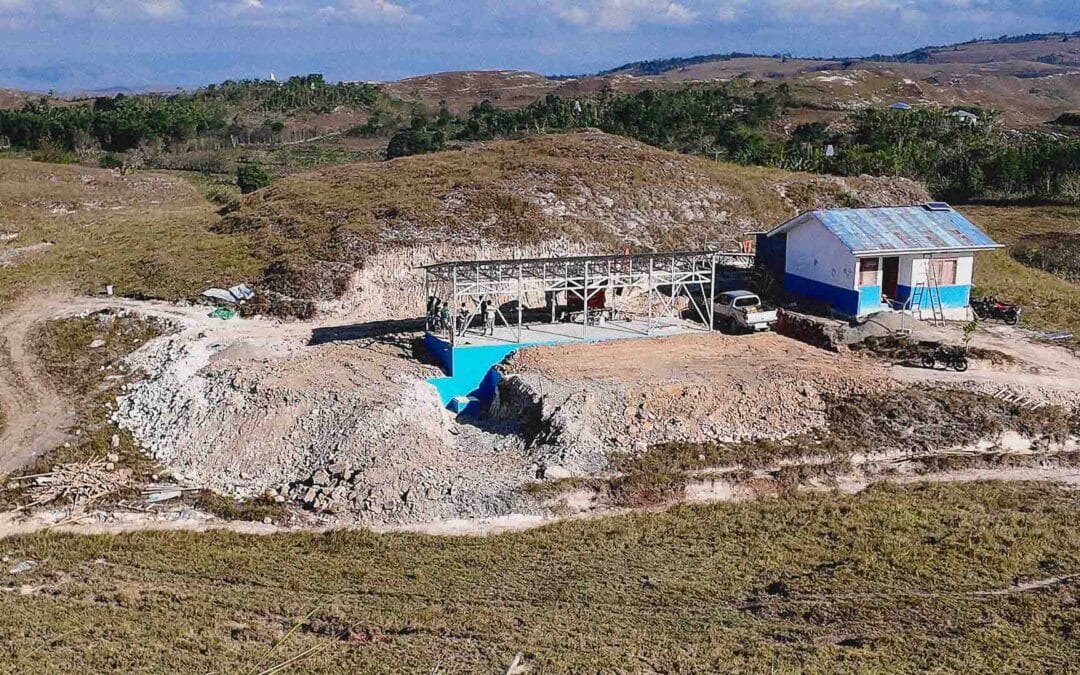
A large semi-buried reservoir in Laindatang protects filtered rainwater for the wider community.
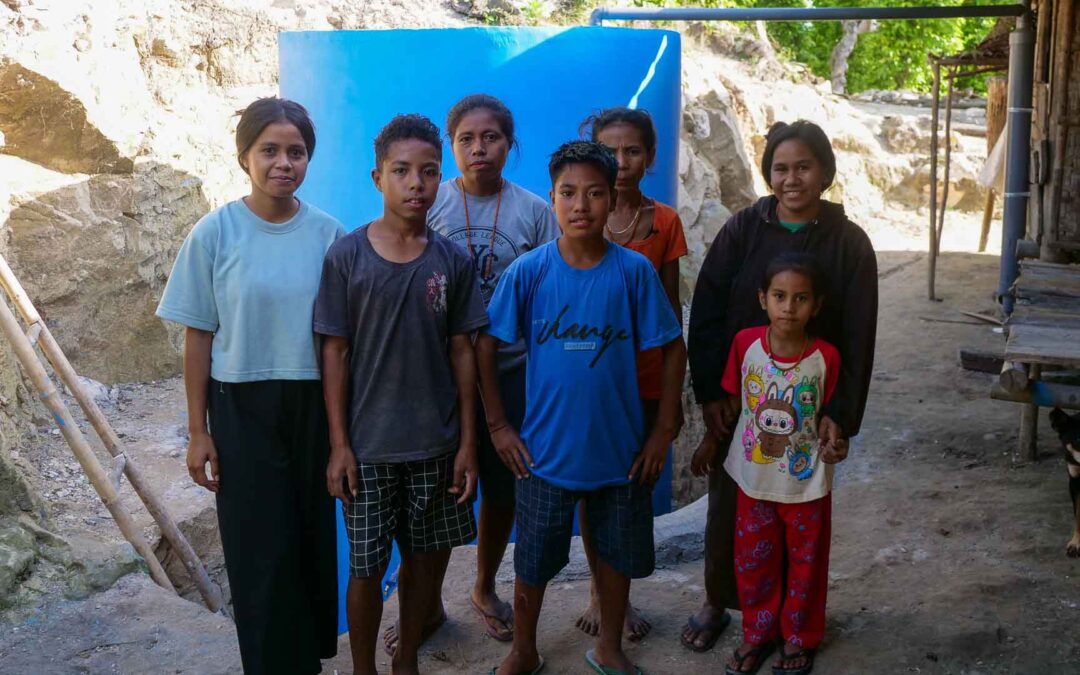
Ferrocement tanks across the two villages bring stored water closer to daily family life.
Construction, road access, maintenance and new phases have continued with the community since 2022.
A new storage reservoir for Hambarita is being considered, subject to engineering and funding.
From a field constraint to daily water
How water reaches a family
A safe water system is a chain. Access, construction, clean catchment, protected storage, maintenance and household practice must work together.
Listen and map the need
Families identify water routes, roof surfaces, dry-season pressure, available land and the people who will care for each system.
Make access possible
Roads, slopes and delivery routes are repaired before cement, steel, pipes and filters can reach the construction site.
Capture and protect rain
Gutters, first-flush devices and filtration reduce contamination before water enters a reservoir.
Store water close to home
The community reservoir and household tanks protect useful rain for cooking, hygiene and the dry months.
Maintain and adapt
Families clean, inspect and repair the systems. Field teams document failures and change the plan when evidence requires it.
Responsibility must remain shared
Infrastructure works when ownership and safety stay together
The village brings knowledge, labour and long-term care. Fair Future brings engineering, materials, water-safety measures and the obligation to recognise technical limits.
What the community makes possible
- Choose land and agree how shared water will be used
- Repair access routes and help move materials into the villages
- Build with local masons and families throughout construction
- Name caretakers for tanks, roofs, gutters, filters and taps
- Report cracks, contamination risks, damaged pipes and empty reserves
- Use available water for hygiene, household needs and small food gardens
What requires technical responsibility
- Structural design, reinforcement and safe ferrocement construction
- Catchment sizing, first flush, filtration and protected distribution
- Water-quality testing and corrective action when contamination is found
- Engineering review before a new large reservoir is built
- Hydrogeological validation before another borehole attempt begins
- Transparent reporting of cost, failure, maintenance and work still unfinished

The 115 m³ reservoir is one part of a wider village system that includes roads, roofs, filters, household tanks, protected taps and local maintenance.
The infrastructure behind each litre
Built for repair, daily use and the dry season
Useful infrastructure must fit the land and the people who maintain it. Ferrocement can be built and repaired locally. Gravity reduces dependence on pumps. Roof catchment protects short rain events that would otherwise be lost. Every part has to remain understandable and maintainable inside the village.
Ferrocement storage
Reinforced mesh and cement create durable reservoirs that local builders can inspect and repair.
Roof catchment
Gutters and first-flush devices collect rain while diverting the most contaminated initial flow.
Filtration and taps
Filters, protected outlets and clean handling reduce contamination between the roof and the household.
Roads and logistics
Excavators, trucks, repaired tracks and manual carrying make construction possible where access is fragile.
Quali cambiamenti nella pratica
Safer water changes the whole day
Water is closer to home
Families spend less time walking and carrying water over difficult ground, especially during the dry season.
Household storage is safer
Protected catchment, filtration and closed reservoirs reduce reliance on open or visibly contaminated sources.
Children regain time
When water collection is less dominant, there is more space for school, hygiene, rest and care inside the family.
Food gardens become possible
Carefully managed water gives households a small but important margin for vegetables and daily nutrition.
Water & healthWater Connections programmeSee the wider programme linking safe water, disease prevention, nutrition and community infrastructure.
CommunityEight Hambarita reservoirsSee how named household tanks were built with families and local caretakers.
Attrezzi da campoLaindatang filtration systemUnderstand the catchment, filtration and storage safeguards behind the reservoir.
Field archiveLaindatang and Hambarita reportsOpen the complete archive of construction, access, maintenance and water updates.
Registrazione in campo in tempo realeNote di viaggio dall'Indonesia orientaleFollow short, dated reports from water work, health, logistics and community life.
Guida pratica e glossarioWater and hygiene, explainedExplore practical terms behind rainwater capture, filtration, storage and safe household use.
Referenza medicaWHO drinking-water guidanceRead the public-health evidence connecting safe water with infection prevention and health.
In diretta dal campo
Water Field Notes, as the work happens
Two recent signals from water, construction and village life in Eastern Indonesia. These notes refresh automatically when a relevant Field Note is published.
Direttamente dal campo
Latest Laindatang and Hambarita reports
These reports document the work as it happens: road access, rainwater capture, reservoir construction, filtration, maintenance, local decisions, technical limits and the next phases.
Unico bacino di raccolta delle acque Laindatang piovane
Fair Future ha costruito un serbatoio per l’acqua piovana a tre filtri da 115.000 litri nel remoto villagio Laindatang di East Sumba, superando le condizioni estreme per garantire acqua pulita e sicurezza sanitaria.
Gli serbatoi in ferro cemento forniscono acqua pulita Hambarita
Nel 2018 Laindatang, otto serbatoi in ferro cemento forniscono acqua pulita, migliorando la salute e riducendo le malattie. Con un serbatoio da 113 m³, questo progetto cambia la vita di centinaia di persone in una comunità ultra rurale.

Inizio di una massiccia missione umanitaria nell'est dell'Indonesia
In Sumba inizia una missione umanitaria di cinque mesi che porta assistenza medica, accesso all’acqua e energia solare nelle comunità isolate. Fair Future sta consegnando 3 tonnellate di forniture, sta lanciando uno studio sulla malaria e sta costruendo infrastrutture vitali per migliorare la qualità della vita dove è più necessaria l’assistenza.
Fondazione Clean Water per Laindatang i suoi ultimi quattro bacini idrici
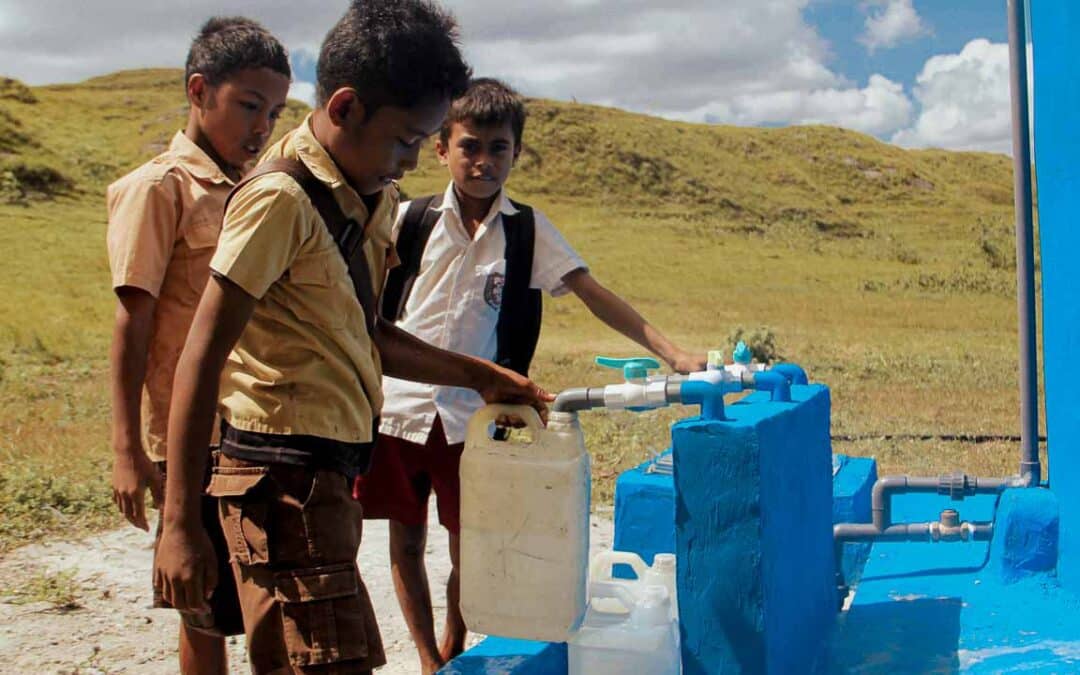
Negli ultimi tre anni Fair Future ha costruito serbatoi d’acqua Laindatang per garantire l’accesso all’acqua pulita. Tuttavia, quattro famiglie isolate continuano a affrontare difficoltà. Con solo quattro serbatoi aggiuntivi necessari, possiamo completare questo importante lavoro.
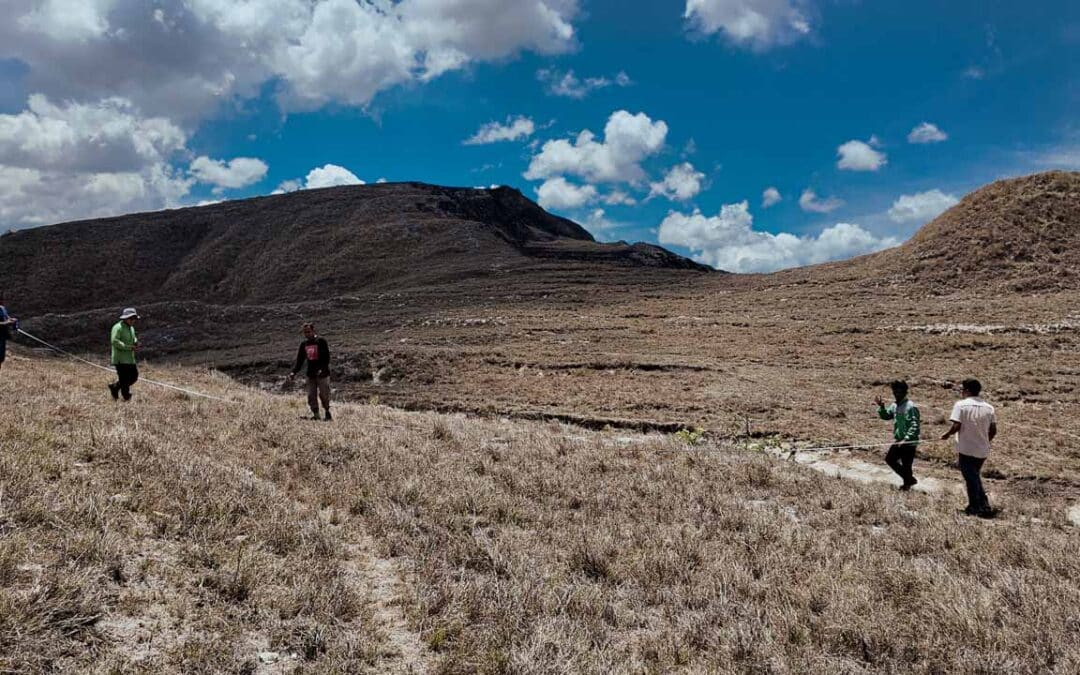
Costruzione di un serbatoio idrico da 110.000 litri Laindatang
Nel maggio 2025, Fair Future intende costruire un serbatoio idrico con una capacità di 110.000 litri nella città di Laindatang, un villaggio isolato che sta affrontando gravi condizioni di siccità. Questa iniziativa mira a garantire un accesso sostenibile a acqua potabile per 300 residenti – tra cui 100 bambini – utilizzando tecniche di raccolta e filtrazione delle acque piovane per…

Fase III: Laindatang Water Connections Relazione
La Laindatang Water Connections relazione della Fase III descrive i nove mesi di lavoro dedicato per affrontare la crisi idrica nell’East Sumba. Nonostante le numerose difficoltà incontrate, la comunità e Fair Future sono impegnate a superarle e hanno proposto piani innovativi per un bacino idrico da 100 m³ che dovrebbe essere costruito entro il 2025, garantendo una gestione sostenibile…

Costruzione di un bacino idrico vitale nell'area arida dell'Est di Sumba
La prevista costruzione di un serbatoio d’acqua da 110 m³ a East Sumba da parte di Fair Future contribuirà a risolvere la grave carenza idrica. Questo progetto fondamentale, se completato, consentirà di immagazzinare l’acqua piovana per quasi 300 persone, tra cui 100 bambini, garantendo l’accesso a acqua pulita in una delle regioni più aride del mondo.

Installazioni sanitarie per la salute e la dignità
Fair Future costruisce servizi igienici e lavatoi nel remoto East Sumba per migliorare l’igiene, ridurre i rischi per la salute legati all’igiene e restituire dignità dove i servizi di base sono scarsi.

Laindatang L'attività di perforazione è sospesa: nuovo piano per la raccolta dell'acqua piovana
Dopo nove mesi di attività di perforazione nel 2018 Laindatang, Fair Future ha interrotto le operazioni a causa di problemi di sicurezza e di natura tecnica. L’attenzione è ora rivolta alla costruzione di un sistema di raccolta dell’acqua piovana per fornire acqua pulita al villaggio.

Tagli di capelli e igiene: i bambini nelle zone ultra rurali Laindatang
Nella zona rurale di Laindatang, i bambini usano un solo paio di vecchie forbici per tagliare i capelli gli uni agli altri nell’ambito della nostra iniziativa di igiene. Questo insegna loro le competenze per prendersi cura di sé e porta gioia nonostante le condizioni difficili.

Trasformare gli spazi insicuri in ambienti salutari
La ristrutturazione degli impianti igienizzanti scolastici pericolosi e il miglioramento dell’approvvigionamento idrico e dell’igiene nelle zone rurali dell’East Sumba riducono i rischi per la salute legati alla sanità igienica e creano ambienti di apprendimento più sicuri.

Laindatang Testi dei pozzi sotterranei, speranza per l’acqua pulita
Fair Future continua il suo lavoro pionieristico nella regione più arida del mondo Laindatang, la Rift Valley. Durante questa fase cruciale di test per la perforazione di pozzi profondi, l’obiettivo è quello di fornire accesso all’acqua vitale a oltre 600 persone, tra cui molti bambini. Il nostro team si impegna a garantire che queste comunità remote possano prosperare grazie a un miglioramento della salute…
Responsabilità
Water systems must remain measurable, maintained and transparent
We document what is built, how much water can be stored, what fails, what requires repair and what remains unfinished. The next work may include a new 80,000 to 100,000-litre reservoir in Hambarita, solar energy for the school and another groundwater attempt after technical validation. Each phase depends on evidence, local responsibility and available resources.
