


Donare
Assistenza sanitaria
Articoli e News
Storie dal campo
Glossario
Guida escursionistica

Community & Prevention Program
Emancipazione della comunità
Communities are not the last link in our work. They are the people who decide, build, care, teach, document and keep each project alive.
- Built with communities
- 27 local health agents
- 10 bilingual health campaigns
Nothing lasts if people are left outside it
A water tank, a health service or a school becomes sustainable when local people help shape it, gain the skills to use it and have the means to maintain it. This is why community empowerment runs through every Fair Future programme.
Il programma
Local knowledge, shared work and practical autonomy
We often say that Fair Future has a thousand collaborators. This is not a payroll figure. It describes the villagers, teachers, farmers, health agents, local leaders and families who work beside us and make projects possible.
When a reservoir is built, residents help choose the site, organise the work and build it with our teams. They learn a reproducible ferrocement method and how to inspect, clean and repair the system. When care is needed, people from the community are trained and equipped as Kawan Sehat health agents. In education, local adults learn how to teach and adapt practical knowledge to daily life.
Empowerment is therefore not a separate activity after delivery. It is the way each project is designed, implemented, documented and maintained. The aim is not dependence on Fair Future, but stronger local capacity with continued technical support and accountability.
Local women and men trained, equipped and supervised to provide safe first-line care and referral.
Visual prevention tools in English and Indonesian, built for teaching in homes, schools and villages.
Community participation turned lived experience into evidence for the 2026 Sumba Sepsis Study.
Ferrocement systems designed to be built with residents and maintained with locally transferable skills.
From presence to continuity
How participation becomes capacity
Community work is not a single consultation meeting. It is a sequence of shared decisions, practical learning, responsibility and follow-up that continues after the first visible result.
Listen in place
Families describe priorities, constraints, local knowledge and the risks that outsiders may not see.
Decide together
Communities and field teams agree on the need, location, roles, materials, timing and realistic limits.
Build and learn
Residents work beside technical teams, practising the method instead of receiving a finished object.
Use and teach
Health agents, teachers and local organisers pass practical knowledge from one household to another.
Maintain and improve
Local feedback, records, repairs and field follow-up show what works and what must be corrected.
Shared ownership, clear duties
Participation does not mean transferring risk
Communities bring knowledge, labour, leadership and continuity. Fair Future remains responsible for the technical, clinical, financial and safeguarding standards that make participation safe and meaningful.
What communities lead
- Describe priorities, barriers and locally workable solutions
- Help select sites and organise collective work
- Learn construction, maintenance, teaching and care practices
- Share prevention messages in familiar language and settings
- Identify changes, failures and emerging needs early
- Carry knowledge between households and across generations
What Fair Future must guarantee
- Financing, procurement and transparent use of resources
- Engineering standards, clinical protocols and safe limits
- Training quality, supervision and essential supplies
- Referral pathways when local capacity is not enough
- Documentation, monitoring and honest reporting of setbacks
- Long-term technical presence without replacing public services
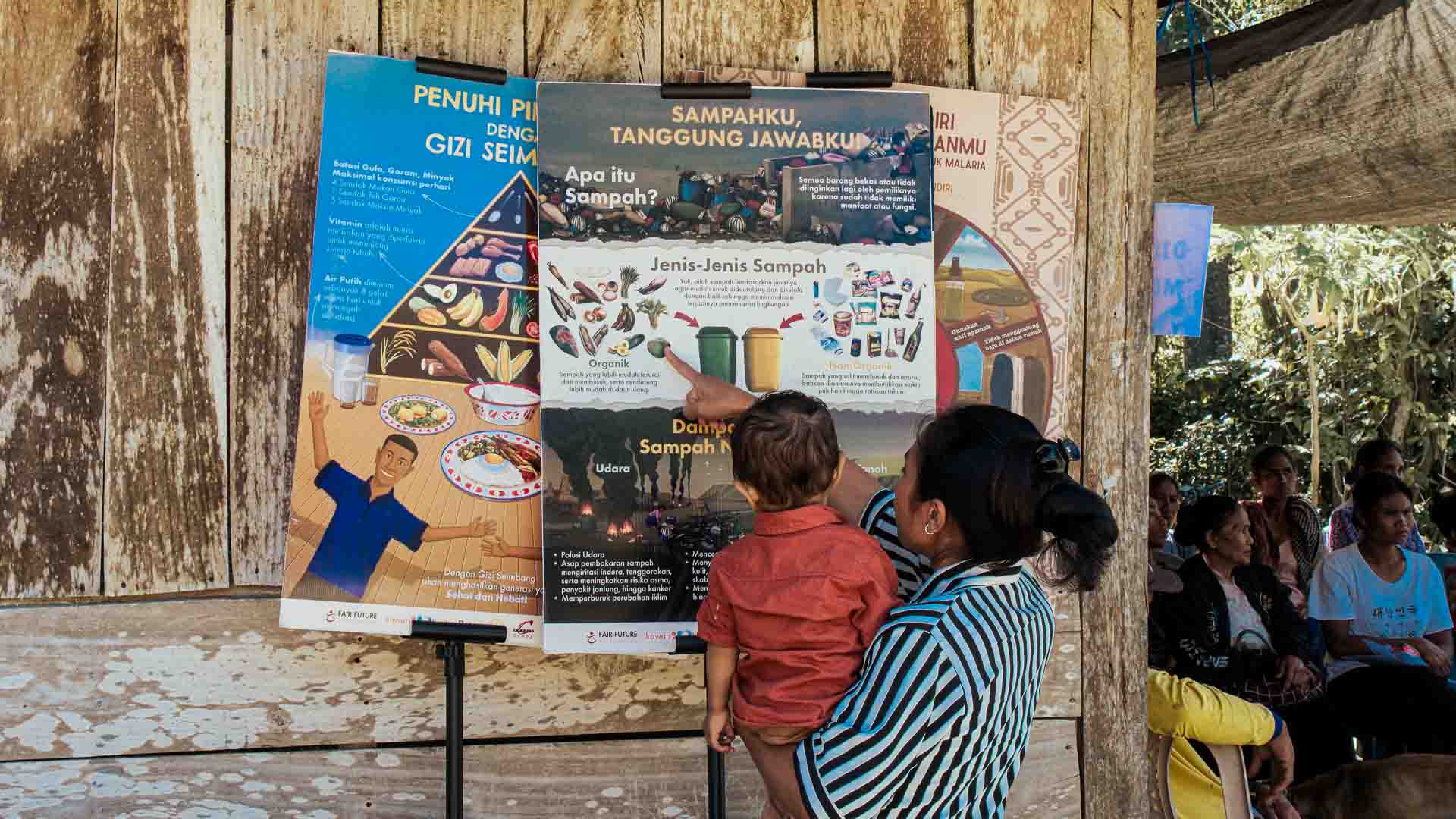
A workshop matters when people can take the message home, explain it again and connect it to decisions in daily life.
Knowledge that can travel
Ten campaigns made for community teaching
Fair Future has produced ten bilingual visual campaigns on hygiene, malaria, nutrition, tobacco smoke, waste, alcohol and HIV. The posters are designed for homes, schools, care days and village discussions. They turn technical guidance into images and language that people can use, question and teach to others.
10 visual campaigns
English and Indonesian posters for repeated, practical prevention work.
150-page health manual
Fourteen structured modules help local health agents learn safe first-line practice.
Offline field apps
Records, follow-up and evidence remain usable where connectivity is unreliable.
Reproducible methods
Construction and maintenance skills are taught through hands-on work with local materials.
Quali cambiamenti nella pratica
Capacity remains after the activity ends
Infrastructure can be maintained
Residents understand how a tank, water line, building or solar system was made and what routine care it needs.
Care begins inside the community
Trained Kawan Sehat agents recognise danger, provide safe first-line support and organise referral earlier.
Knowledge moves between households
Teachers, parents, agents and young people reuse books, posters and demonstrations in everyday settings.
Evidence reflects lived reality
Household interviews, field records and community feedback help programmes respond to actual barriers rather than assumptions.
Community healthConosci i Kawan Sehat AgentsLearn how local women and men become trained first points of care, prevention and referral.
Water & infrastructureWater ConnectionsFollow reservoirs and distribution systems built with communities for local use and maintenance.
10 campaignsCommunity education postersOpen ten bilingual prevention campaigns covering health, hygiene, nutrition and daily risks.
Community evidenceStudio Sepsis Sumba 2026Explore results built from interviews with 1,001 households and 162 healthcare-worker submissions.
Registrazione in campo in tempo realeField Notes from East SumbaRead short, dated updates on construction, training, prevention, research and local decisions.
Books & field guidesPractical publications to reuseBrowse books, manuals and illustrated guides made for teachers, health agents, children and families.
External referenceWHO community engagement guideRead the international framework for relationships that enable stakeholders to work together for health and well-being.
In diretta dal campo
Community capacity, as it grows
Two recent signals from construction, water, care and prevention in East Sumba. These notes refresh automatically when a relevant Field Note is published.
Direttamente dal campo
Latest Community Empowerment reports
These reports show empowerment in practice: villagers shaping projects, local people learning new roles, infrastructure built together, and knowledge moving through communities.
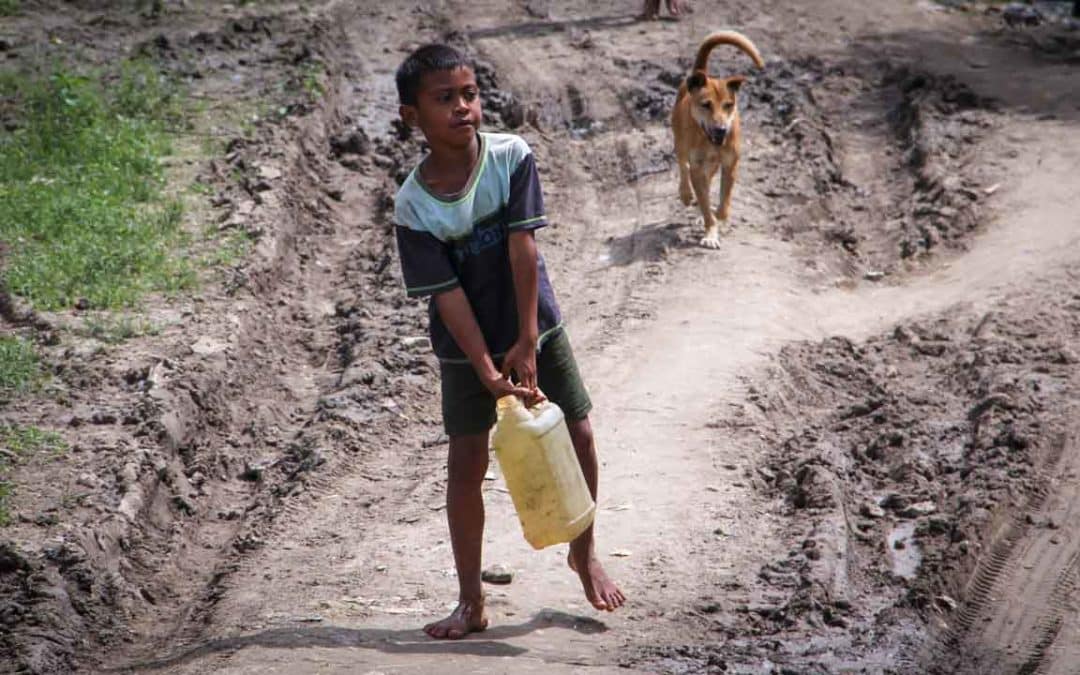
L'accesso all'acqua pulita è fondamentale per la salute umana
I bambini del remoto East Sumba percorrono spesso lunghe distanze trasportando l’acqua a mano. Un accesso migliore riduce il carico quotidiano e favorisce una maggiore igiene e una migliore salute.
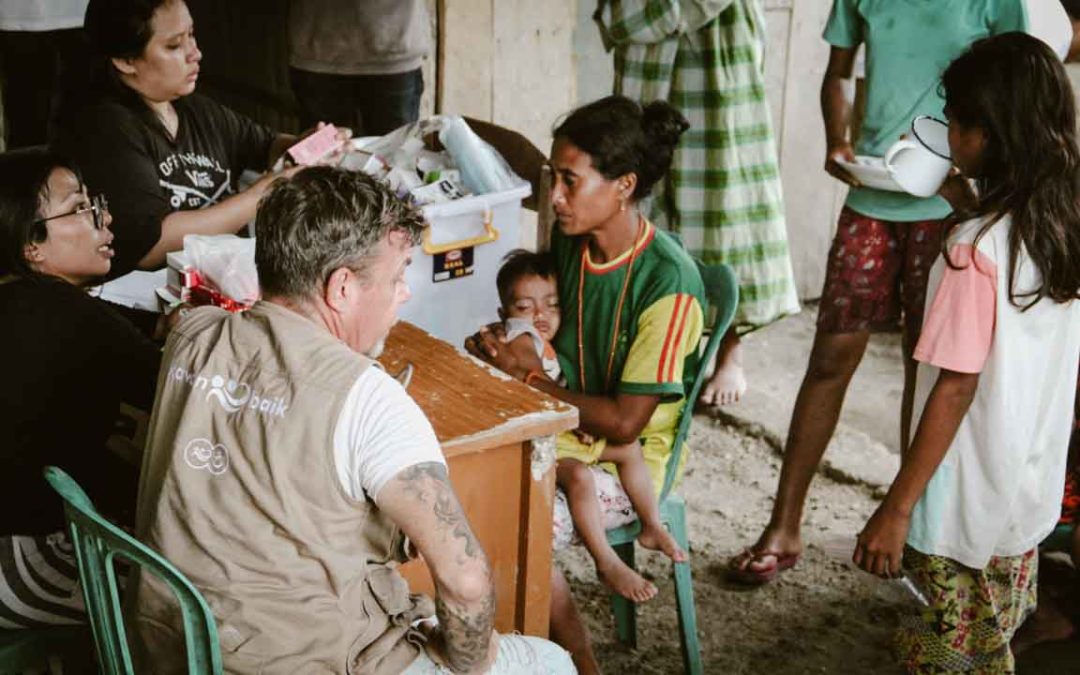
Assistenza medica per i bambini affetti da malaria
Un bambino molto infreddolito e sospettato di avere la malaria riceve cure iniziali prima di essere ricoverato nel centro sanitario più vicino nella zona rurale di East Sumba.

Valutazione del programma PMC Lapinu
Queste donne, coinvolte nel programma PMC, dedicano parte della loro vita a salvare altre persone. Queste eroine non note lavorano instancabilmente per evitare che le persone siano esposte al rischio di malattie e lesioni. Possono mettere a repentaglio la propria vita per garantire che gli altri possano vivere fino a vedere il giorno dopo.

Valutazione del programma PMC a Kabanda
Kabanda è davvero una delle località più isolate che abbia mai visto. Arrivarci è difficile, a volte addirittura pericoloso. Non c’è strada che porti a questo villaggio; solo sentieri estremamente ripidi o lastricati ci consentono di arrivare lì. Ci abbiamo messo oltre sei ore per arrivarci, compresi quattro ore di terreno davvero difficile con il Truck of Life, un camion medico 4×4 appositamente…

Valutazione del programma PMC a Mbatapuhu
I non professionisti che forniscono assistenza medica e medicine alle persone, ai bambini malati e alle persone ferite. Lo fanno attraverso un programma di assistenza medica unico e innovativo. Perché qui non ci sono dottori, né centri sanitari, né altro troppo lontani. Nessuno ha un mezzo di trasporto, e le strade che portano a questi villaggi sono spesso impraticabili.

Valutazione di 8 Kawan Sehat Agents, in Mbinudita
Nel villaggio dove tutto è iniziato per noi: il programma di #ricostruzione e riqualificazione è la costruzione di una scuola e la costruzione di una rete di approvvigionamento idrico per oltre 2700 persone, di cui 60% sono bambini sotto i 12 anni. È davvero la (ri)costruzione di un intero villaggio o l’imparare a vivere in modo più sano, più sano tutti insieme, all’interno di…

Pre-assessment del programma PMC Mbinudita
Le squadre di Fair Future esaminano e indagano su oltre duecento casi di varie malattie o lesioni trattate dal primary medical care programma da parte di operatori sanitari. Inoltre, valutiamo cosa accadrà la prossima settimana per poter valutare accuratamente la disponibilità di nuovi strumenti, farmaci e dispositivi medici.

Valutazione del Primary Medical Care programma in loco
This primary medical care program in ultra-rural areas, which we initiated and started last year, is extraordinary, it saves lives. Since December 2022, the participants in the primary medical care program – who are the village teachers – have been providing first aid to children and villagers. They treat wounds, diseases, malaria, dengue fever.

Gli insegnanti forniscono primary medical care
La magia di questo programma di “Assistenza Medica Primaria”? È proprio che è unico al mondo e funziona. Il primo gruppo di sessanta insegnanti che ha seguito la formazione primary medical care nelle zone rurali ci racconta i loro “successi” e il loro lavoro come soccorritori. Prendono fiducia in se stessi è la cosa più importante e noi ne siamo testimoni.

Epidemia di malaria nell’East Sumba, Indonesia
La malaria è uno dei problemi di salute pubblica più gravi al mondo. Qui in Indonesia, e soprattutto nelle regioni orientali, è una delle principali cause di morte e malattie. I bambini di età inferiore ai cinque anni e le donne in gravidanza sono i gruppi più colpiti.

Donne forti che rappresentano una nazione forte
Queste donne svolgono un ruolo importante nell’economia rurale del loro villaggio. Sono loro a trasportare la sabbia per la costruzione di un nuovo serbatoio per l’acqua potabile sul Mbinudita sito. Canticolano delle canzoni tradizionali per dare loro coraggio, perché richiede molto impegno.
Responsabilità
Participation must leave skills, evidence and ownership
We document who decided, what was built or taught, how resources were used, what communities report and what still does not work. A participatory programme must be open to correction and show whether local capacity is genuinely stronger, not simply count meetings or completed objects.
