


Argomenti relativi alla salute
Sepsi
Recognising when an infection becomes a medical emergency, acting on danger signs, and keeping the route to hospital open in ultra-rural communities.
La revisione clinica della traduzione è in corso. La revisione nella lingua di origine non approva questa traduzione.
Quando la cura non può aspettare
Seek emergency care immediately if someone with a possible infection becomes confused, very difficult to wake, breathless, unusually cold, pale or mottled, collapses, passes very little urine, or seems seriously unwell. A child who cannot feed or drink, has a seizure or is difficult to wake also needs immediate help.
Explain that you are worried about sepsi. Contact the nearest available emergency service or health centre and arrange the fastest safe referral. Do not wait for every sign, a test result or a high temperature.
Sepsis fact sheet · Sepsis: recognition and hospital treatment
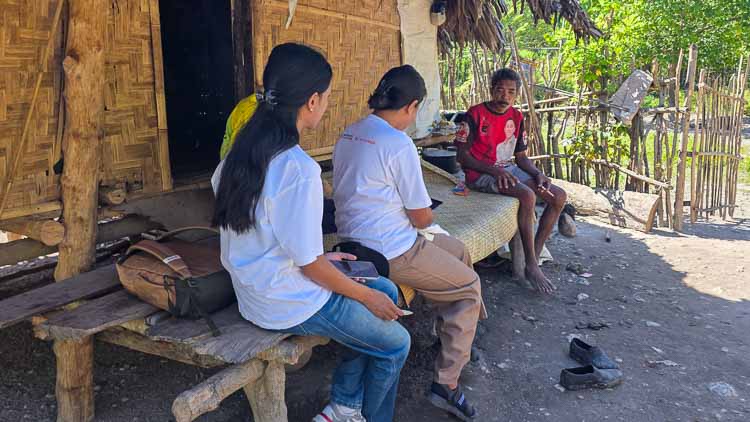
Understanding sepsis
Sepsis develops when the response to an infection damages the body’s own tissues and organs. The infection may start in a lung, the urinary tract, the skin, a wound or the digestive system. It may also follow childbirth or an operation.
Bacteria are a common cause, but viruses, fungi and parasites can also trigger the process. Sepsis describes what the infection and the body’s response are doing to the person. It does not name a single germ.
When circulation and organ function become severely disturbed, the person may develop shock settico. The brain, kidneys, lungs and other organs can be affected. Someone who was speaking and walking earlier can become critically ill.
Sepsis fact sheet · About sepsis
How our understanding of sepsis developed
Understanding sepsis grew from the study of infection, circulation, inflammation and organ failure. The central question became why an infection that begins in one place can disrupt the whole body.
In 2016, Mervyn Singer, Clifford Deutschman and an international task force published the Sepsis-3 consensus definitions. They combined expert review with analyses of clinical records to place life-threatening organ dysfunction at the centre of the definition.
This work helped distinguish a local infection from the dangerous systemic response that needs urgent treatment. Clinical scoring systems help professionals assess risk, but a family should seek help for serious deterioration without trying to calculate a score at home.
The Third International Consensus Definitions for Sepsis and Septic Shock, Sepsis-3
Signs and symptoms to recognise
Sepsis can look different from one person to another. A change in the person’s usual behaviour or ability to function matters. Look for a possible infection together with signs such as these:
- New confusion, unusual drowsiness or difficulty waking.
- Fast, difficult or uncomfortable breathing.
- Severe pain, profound weakness or a feeling that something is seriously wrong.
- Fever and shivering, or feeling unusually cold.
- Clammy skin, a weak pulse, faintness or collapse.
- Passing much less urine than usual.
Babies and children may feed poorly, vomit repeatedly, become unusually quiet or irritable, breathe rapidly or have a seizure. Changes in skin colour can be easier to notice on the palms or soles in people with darker skin.
Not every sign has to be present. Older people and people with weakened immunity may not develop a high fever. A wound that looks small does not exclude a serious infection elsewhere.
About sepsis · Sepsis: recognition and hospital treatment
Who needs particular attention?
Anyone with an infection can develop sepsis. Newborns, older adults, pregnant or recently pregnant women, people with reduced immune protection and people with chronic disease need particular attention.
Diabetes, kidney disease, cancer treatment, recent hospital care and some other conditions can increase vulnerability. Undernutrition and difficult access to healthcare may make an infection harder to manage. A history of good health is not a reason to ignore a sudden deterioration.
Sepsis fact sheet · Risk factors for sepsis
When and where to seek care
Possible sepsis needs emergency medical assessment and usually hospital treatment. In a remote village, start the referral process as soon as danger is recognised. Call ahead if possible. Describe the symptoms, when they began, any pregnancy or recent birth, medicines taken and the last time the person passed urine.
A Kawan Sehat agente sanitario can help identify danger within their training, contact medical supervision and support referral. An apparently reassuring single measurement must be considered alongside the person’s overall condition.
While help is being arranged, stay with the person and follow the instructions of the emergency team. Do not give food, drink or tablets to someone who is drowsy, unconscious or unable to swallow safely. Bring medicines, available records and relevant test results.
About sepsis · Sepsis: recognition and hospital treatment · Kawan Sehat rural health agents
How clinicians assess the problem
Assessment considers breathing, circulation, mental state, urine output and the likely source of infection. Clinicians may use blood tests, cultures, urine testing and imaging, according to the situation and local capacity.
Tests help identify the infection and guide treatment. Urgent care must not be postponed while a seriously ill person waits for diagnostic certainty. Repeated assessment is important because organ function can change quickly.
Sepsis: assessment and treatment · Caring for patients with sepsis
Treatment and recovery
Treatment addresses both the infection and its effects on the body. It may include appropriate antimicrobials, oxygen, carefully monitored intravenous fluids and support for organs that are failing. Some patients need medicines to support blood pressure or intensive care.
A wound or another source of infection may need drainage, surgery or a different procedure. The medical team reviews test results, response and possible resistance to choose and adjust treatment.
Sepsis is not a condition to treat at home with leftover antibiotics. A medicine may be ineffective against the cause, and tablets alone cannot correct shock or organ failure. Tell the team about allergies, medicines already taken and any difficulty obtaining prescribed care.
Sepsis fact sheet · Sepsis: assessment and treatment · Caring for patients with sepsis
After leaving hospital
Recovery can continue long after the immediate infection is controlled. Some people experience weakness, sleep problems, difficulty concentrating, anxiety or reduced ability to manage daily activities.
Ask for an understandable follow-up plan: which medicines continue, which activities can resume, what support is needed and which changes require urgent reassessment. New infection symptoms or renewed deterioration need prompt attention. Families and community teams can help with follow-up, nutrition, rehabilitation and the practical work of reaching appointments.
Preventing infections and recognising deterioration early
- Keep recommended vaccinations up to date through the appropriate public health service.
- Use safe water, handwashing and food hygiene. Clean and protect wounds and seek advice when redness, swelling, pain or discharge increases.
- Manage chronic conditions and follow treatment plans. Ask how to recognise infection risks relevant to diabetes, pregnancy or reduced immunity.
- Use antimicrobials only as prescribed. Ask when to return if symptoms persist or worsen.
- Make an emergency plan before it is needed. Know whom to call, how transport can be arranged and which facility can receive a seriously ill patient.
Infection prevention also depends on safe healthcare: clean equipment, appropriate wound care, reliable water and sanitation, and good infection-control practice. Recognising sepsis early adds a second layer of protection when infection has already occurred.
Preventing infections that can lead to sepsis
Sepsis and Fair Future’s work in East Sumba
In the ultra-rural east of Indonesia, the interval between becoming unwell and reaching effective care can include a long walk, a search for transport and uncertainty about where to go. These are practical questions in our Primary Medical Care work.
Il Studio sulla sepsi a Sumba examines conditions that can increase infection risk and delay care. Its findings help connect household realities, health-worker training, prevention and referral. A community survey describes risks and experiences; it does not diagnose sepsis in every person surveyed.
Water Connections, nutrizione e Salute dei bambini contribute to the same chain of care. Safer water helps prevent infection. Better nutrition supports recovery. Training helps an agent recognise when a patient needs more than the village can provide.
Il nostro offline medical applications support records and continuity. They can help pass on a clearer history, but they cannot replace emergency assessment or the treatment available in hospital.
Kawan Sehat rural health agents · Primary Medical Care · Sumba Sepsis Study 2026, interactive results
Questions for the healthcare team
- What infection is suspected, and are any organs affected?
- What treatment is being given, and how will the response be monitored?
- Does the person need transfer to a higher level of care?
- What warning signs should we watch for after discharge?
- Who can help with follow-up, medicines, rehabilitation and transport?
Programmi correlati e risorse del settore
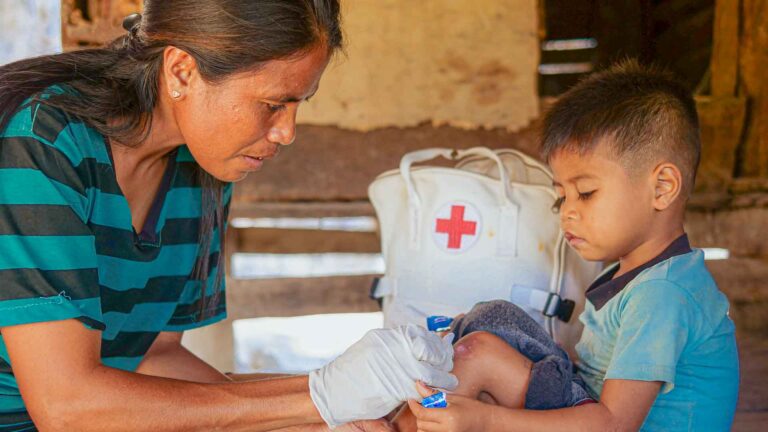
programma
Primary Medical Care nelle zone remote
Connect early recognition with supervised primary care and referral.
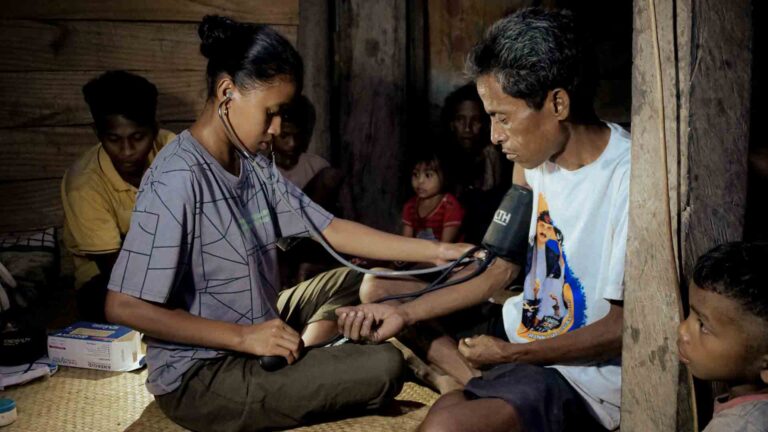

programma
Water Connections per i Villaggi Rurali
Explore the link between safe water, hygiene and infection prevention.
article
Sumba Sepsis Study Risultati | Evidenze interattive online
Read how the Sumba Sepsis Study informs prevention and access to care.
Fonti di riferimento
- Sepsis fact sheetOrganizzazione Mondiale della SanitàConsultato
- About sepsisCentri per il Controllo e la Prevenzione delle MalattieConsultato
- Sepsis: recognition and hospital treatmentServizio sanitario nazionaleConsultato
- The Third International Consensus Definitions for Sepsis and Septic Shock, Sepsis-3Singer, Deutschman and colleagues, JAMAConsultato
- Risk factors for sepsisCentri per il Controllo e la Prevenzione delle MalattieConsultato
- Managing recovery from sepsisCentri per il Controllo e la Prevenzione delle MalattieConsultato
- Preventing infections that can lead to sepsisCentri per il Controllo e la Prevenzione delle MalattieConsultato
- Kawan Sehat rural health agentsFair Future FoundationConsultato
- Primary Medical CareFair Future FoundationConsultato
- Sumba Sepsis Study 2026, interactive resultsFair Future FoundationConsultato
- Sepsis: assessment and treatmentMedlinePlus, US National Library of MedicineConsultato
- Caring for patients with sepsisCentri per il Controllo e la Prevenzione delle MalattieConsultato
Informazioni generali sulla salute, non una diagnosi o una prescrizione individuale.
