


Spenden
Support Care
Artikel & News
Feldgeschichten
Glossar
Feldführer
Gesundheitsprogramm
Kawan gegen Malaria
Year-round malaria prevention, parasite-based diagnosis, treatment support and vector control with families across remote East Sumba.
- Active across East Sumba since 2022
- Thousands of insecticide-treated nets distributed
- Hundreds of homes protected through IRS
Malaria control must continue after a campaign leaves
In remote East Sumba, exposure, fever and delayed access are part of daily life. Since 2022, Kawan Against Malaria has worked with families throughout the year: preventing bites, testing suspected cases, supporting appropriate treatment and recognising when a patient needs urgent referral.
Das Programm
A continuous malaria programme built around families
Malaria is preventable and curable, but the first symptoms can resemble many other infections. A patient needs observation, a parasite-based test and timely clinical decisions, not treatment based on fever alone.
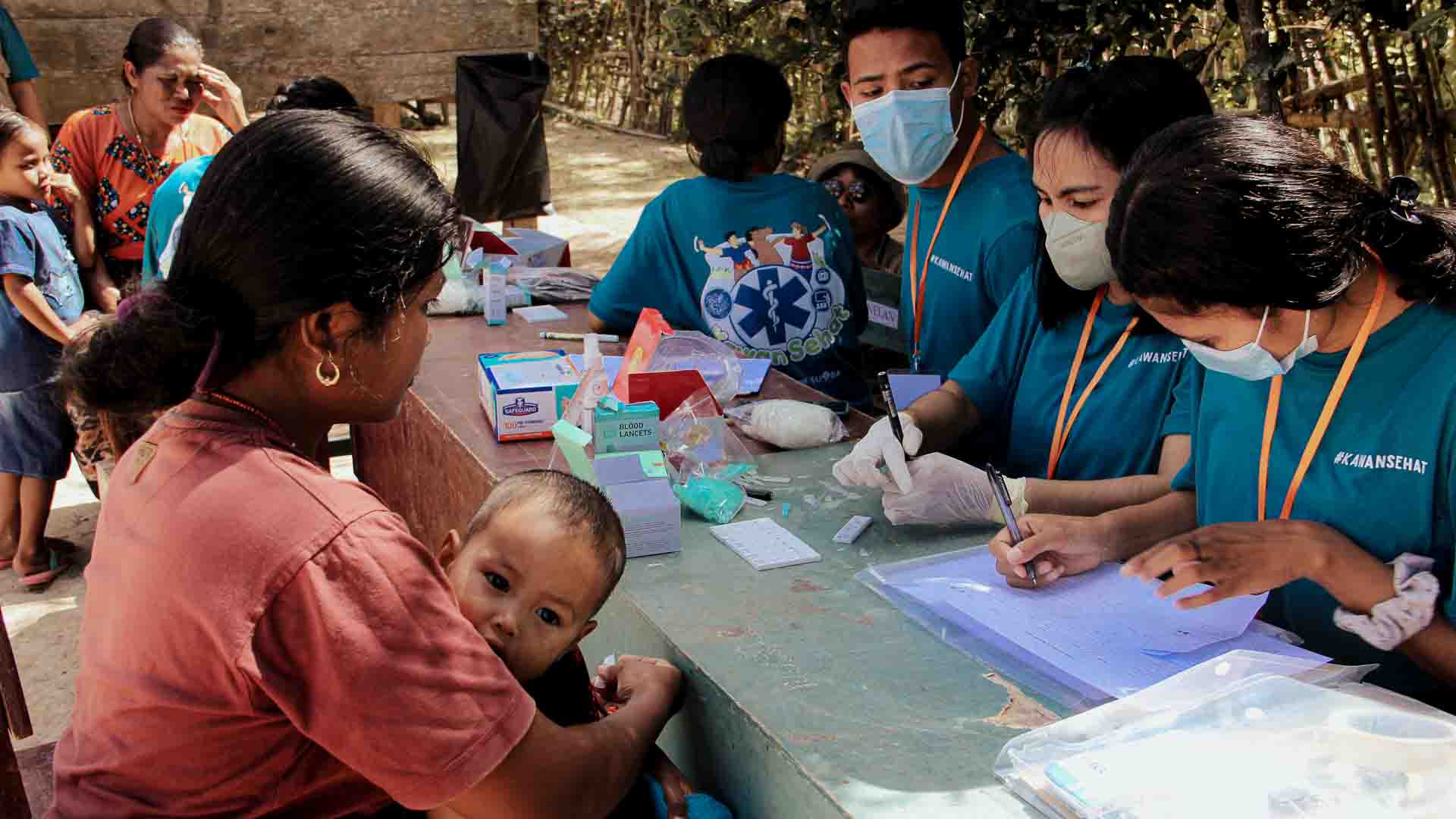
Since 2022, Kawan Against Malaria has brought prevention and clinical action into remote villages. Kawan Sehat agents meet people at home, assess fever, support rapid testing, explain results, follow patients and refer danger signs. During community medical days, teams add broader clinical assessment, malaria screening, microscopy where available, medicines, prevention education and follow-up.
The programme also acts before anyone becomes ill. Thousands of insecticide-treated nets have been distributed, hundreds of homes have received indoor residual spraying, and families learn how to reduce exposure, recognise symptoms and seek testing early. The 2025 Umalulu study is one carefully documented part of this wider programme. It helps measure household risk and refine future action; it does not define the programme on its own.
Prevention, testing, treatment support, training, surveillance and referral continue throughout the year.
Repeated village actions combine net distribution with practical teaching on correct use, care, repair and replacement.
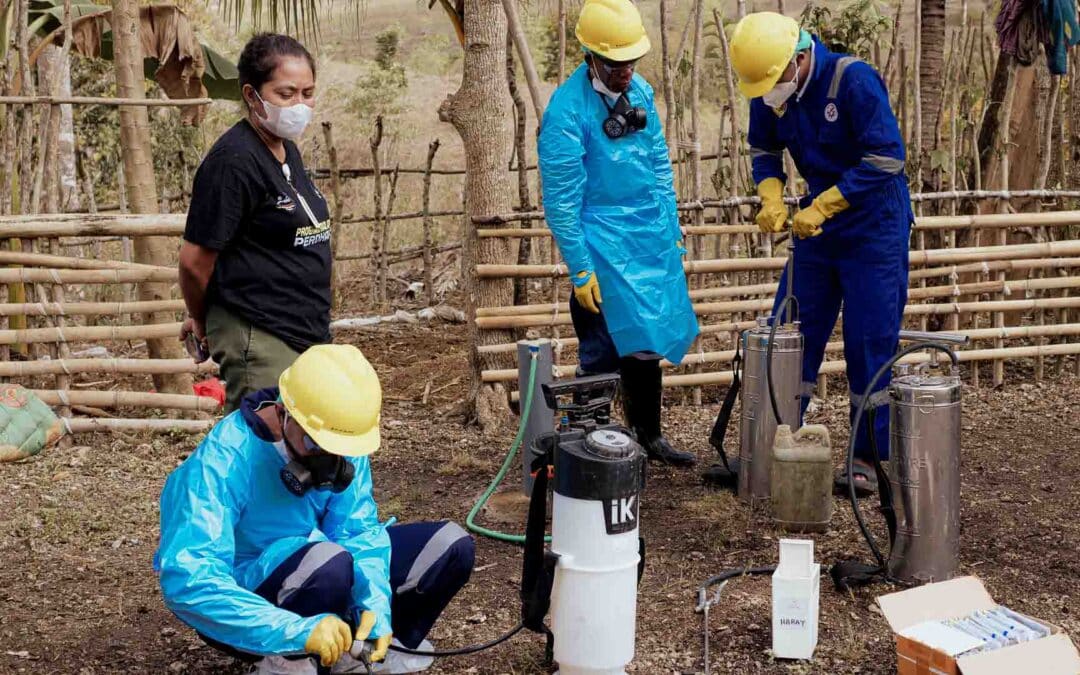
Indoor residual spraying is carried out as part of wider vector-control work by trained teams following safety protocols.
Kawan Sehat agents and community medical teams assess fever, support parasite-based diagnosis and follow patients in remote villages.
From suspected malaria to safer care
A fever must move through a reliable clinical pathway
Early action matters, but speed without diagnostic discipline can miss malaria, overlook another serious infection or expose a patient to the wrong medicine.
Recognise possible malaria
Fever, chills, headache, weakness and recent exposure are taken seriously, with particular caution for young children, pregnant women and people who are already fragile.
Confirm the parasite
A rapid diagnostic test or microscopy is used whenever available. Parasite-based diagnosis guides treatment and helps avoid treating every fever as malaria.
Assess severity
Consciousness, breathing, hydration, repeated vomiting, convulsions, jaundice, bleeding and the ability to drink help determine whether referral is urgent.
Treat or refer safely
Confirmed uncomplicated malaria follows approved national protocols through qualified services. Severe disease, uncertainty or unavailable treatment requires rapid referral.
Follow up and protect
Recovery, medicine completion and recurring fever are reviewed while the household receives practical support on nets, mosquito exposure and when to seek care again.
Fever is not a diagnosis
Local action must remain clinically safe
The programme brings prevention and diagnostic access closer to families while keeping clear limits. Severe malaria can progress rapidly, and other dangerous infections may begin with the same fever.
What the programme can do safely
- Document fever history, exposure, previous treatment and household risk
- Teach early symptoms, danger signs and when waiting is no longer safe
- Provide and demonstrate correct use and care of insecticidal mosquito nets
- Support rapid testing and microscopy through trained health personnel
- Carry out indoor residual spraying under controlled safety protocols
- Connect confirmed or worsening cases to treatment, referral and follow-up
When urgent referral is required
- Altered consciousness, repeated convulsions, collapse or extreme weakness
- Difficulty breathing, shock, severe pallor or suspected severe anaemia
- Inability to drink, persistent vomiting or signs of severe dehydration
- Jaundice, dark or bloody urine, abnormal bleeding or rapidly worsening illness
- Fever in a very young child, during pregnancy or in a highly vulnerable patient
- Any suspected malaria when testing, appropriate treatment or safe monitoring is unavailable
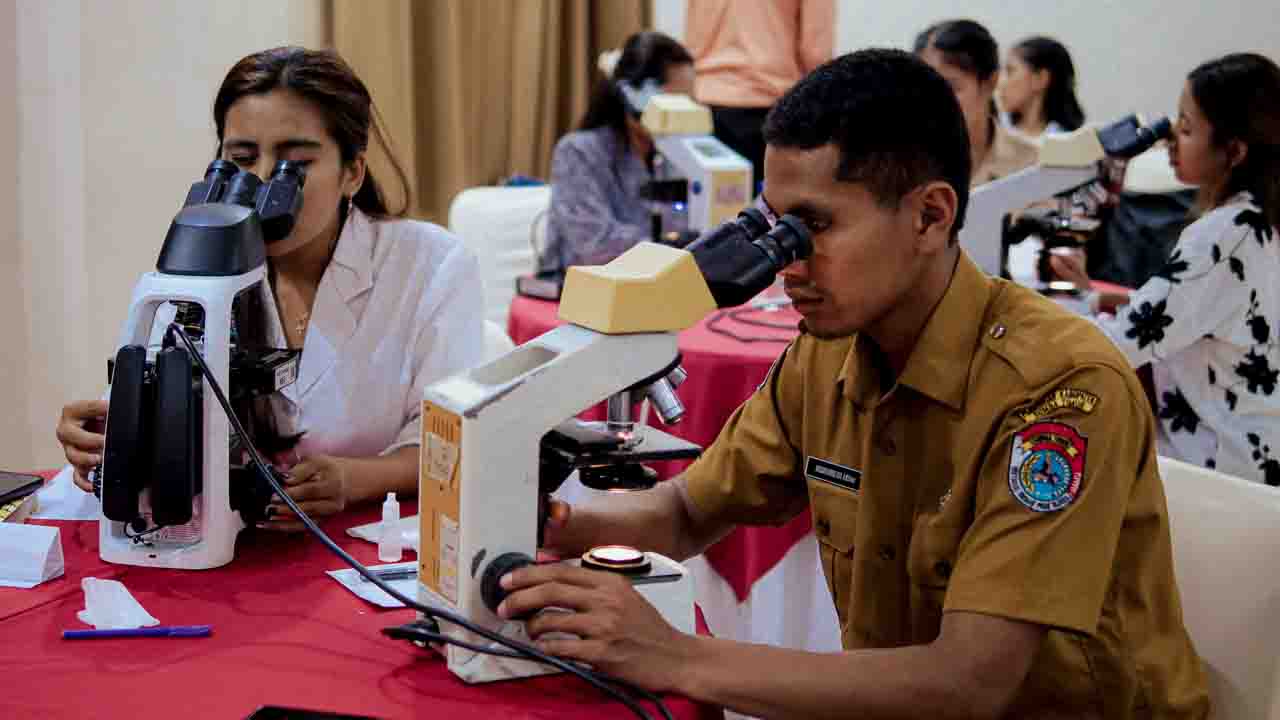
A diagnosis is not a device alone. It depends on correct sampling, slide preparation, reading, recording, clinical interpretation and a treatment pathway that the patient can actually reach.
The diagnostic and prevention chain
Every tool must lead to a safer decision
Rapid tests, microscopes, mosquito nets and sprayers only protect people when training, quality control, clear protocols, stock management and follow-up remain connected. Kawan Against Malaria builds that chain with local teams rather than delivering isolated equipment.
Household knowledge
Families learn how malaria is transmitted, how to use and repair nets, where mosquitoes breed and which symptoms require testing.
Parasite-based diagnosis
Rapid diagnostic tests support early decisions, while microscopy strengthens species identification, parasite detection and laboratory capacity.
Vector control
LLIN distribution and indoor residual spraying are documented, explained and adapted to the condition of each household.
Treatment and follow-up
Confirmed cases are connected to approved treatment and reviewed for deterioration, recurring fever, adherence and referral needs.
Welche Änderungen in der Praxis
Malaria control becomes local, measured and repeatable
Fewer fevers are treated blindly
Testing separates confirmed malaria from other causes of fever and directs patients towards more appropriate care.
Protection fits the household
Net condition, sleeping spaces, wall surfaces, behaviour and exposure are observed before prevention is planned.
Severe disease is recognised earlier
Families and local agents share a practical language for danger signs, urgent referral and the limits of home care.
Local data changes the next action
Household evidence, test results and field records guide training, supplies, vector control and follow-up instead of assumptions.
Complete field reportThe full Umalulu reportOpen the complete report, including household evidence, field observations and action priorities from the 2025 study.
Scientific reportIMRaD methods and resultsOpen the scientific version covering methodology, findings, discussion, limitations and public-health implications.
Field resultsEast Sumba prevention in practiceSee how education, LLINs, IRS, diagnostics and village partnerships were delivered and documented.
Diagnostic capacityMicroscopy training and validationFollow the practical work of preparing, reading and discussing malaria slides with local laboratory teams.
Live FeldaufzeichnungFeldbesprechung aus OstindienRead current observations from testing, prevention sessions, household work and the realities teams meet in remote villages.
Feldhandbuch & GlossarMalaria terms explainedOpen practical explanations of RDTs, microscopy, LLINs, IRS, parasites, referral and community surveillance.
Medizinisches ReferenzmaterialWHO guidelines for malariaConsult the current evidence-based recommendations for diagnosis, treatment, prevention, vector control and surveillance.
Live aus dem Feld
Kawan Against Malaria Field Notes, as the work happens
Two recent field signals from testing, microscopy, household prevention, mosquito-net use or vector control. These notes refresh when a relevant Field Note is published.
Direkt vom Feld
Latest Kawan Against Malaria reports
These reports follow the continuing programme: fever assessment, rapid tests, microscopy, treatment support, LLIN distribution, indoor residual spraying, education, referral and the limits teams meet in remote villages.
Ein kleiner Blutproben, ein Moment der Fürsorge
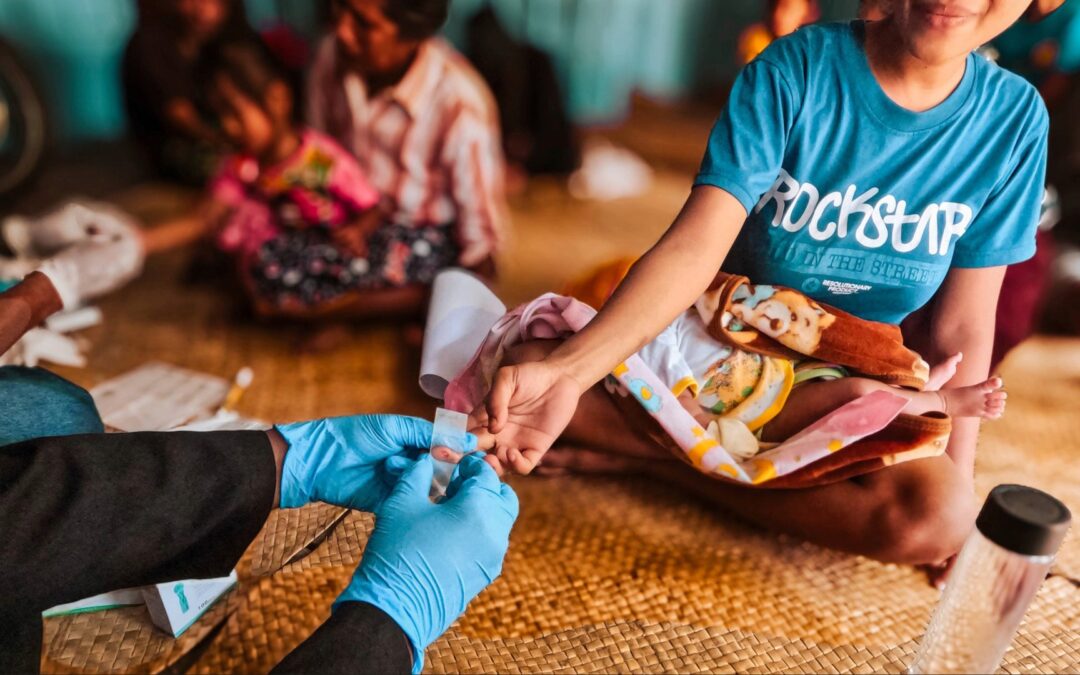
Eine Mutter hält ihr Baby, während unser Team eine Blutprobe entnimmt. In Ostindonesien steht die Malaria-Screeninguntersuchung neben der ganzjährigen Prävention. Vor den Regenfällen verwenden unsere Kawan Sehat Mitarbeiter zwei illustrierte Poster, um über Symptome, Schutz vor Mücken und die Situation zu sprechen, in der Familien eine Behandlung in Anspruch nehmen müssen.
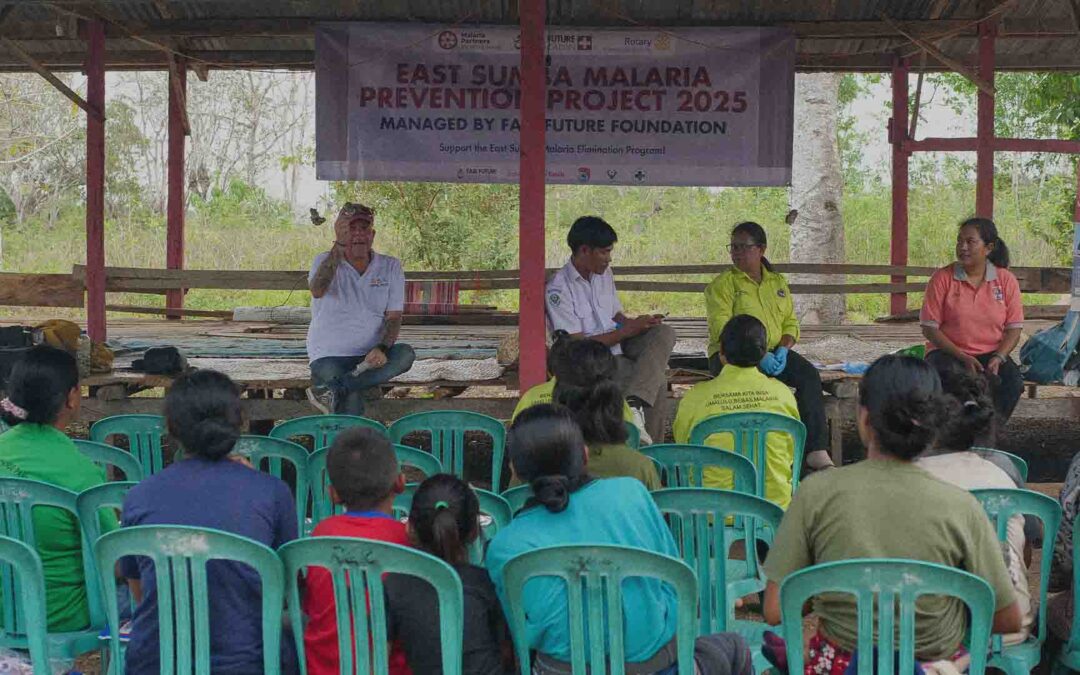
Malariaprevention in der Feldmedizin Pahomba |
Die Malariaprävention Pahomba basiert auf Bildung, frühzeitiger Erkennung und der korrekten Verwendung von Moskitonetzen. Fair Future und ihre Kawan Baik Indonesia Teams arbeiten direkt mit Familien in Ost-Sumba zusammen und leisten vor Ort medizinische Hilfe, da der Zugang zu Gesundheitsversorgung weiterhin eingeschränkt ist.
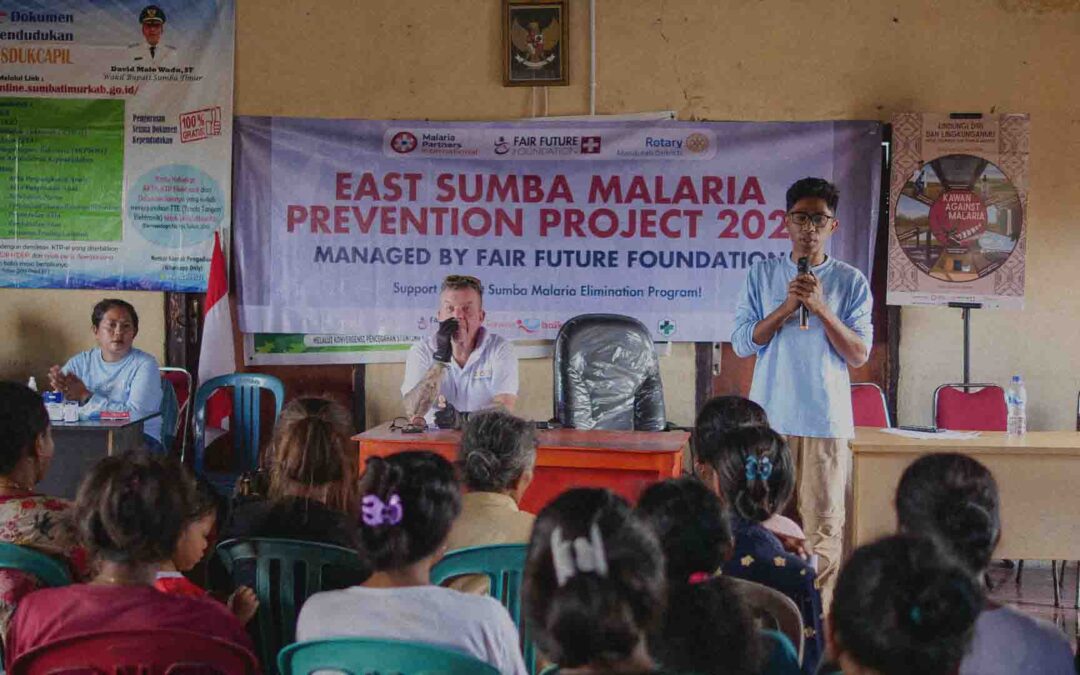
Malariabegeleitung in der Gemeinde Marada | Feldprävention
Die Malariaprävention setzt in Marada 2015 auf Bildung, schnelle Tests und klare Instrumente, die direkt an die Familien verteilt werden. Feldteams arbeiten mit den Gemeinden zusammen, um verzögerte Diagnosen zu reduzieren und den Schutz der Haushalte in der ultra-ländlichen Region Ost-Sumba zu stärken.
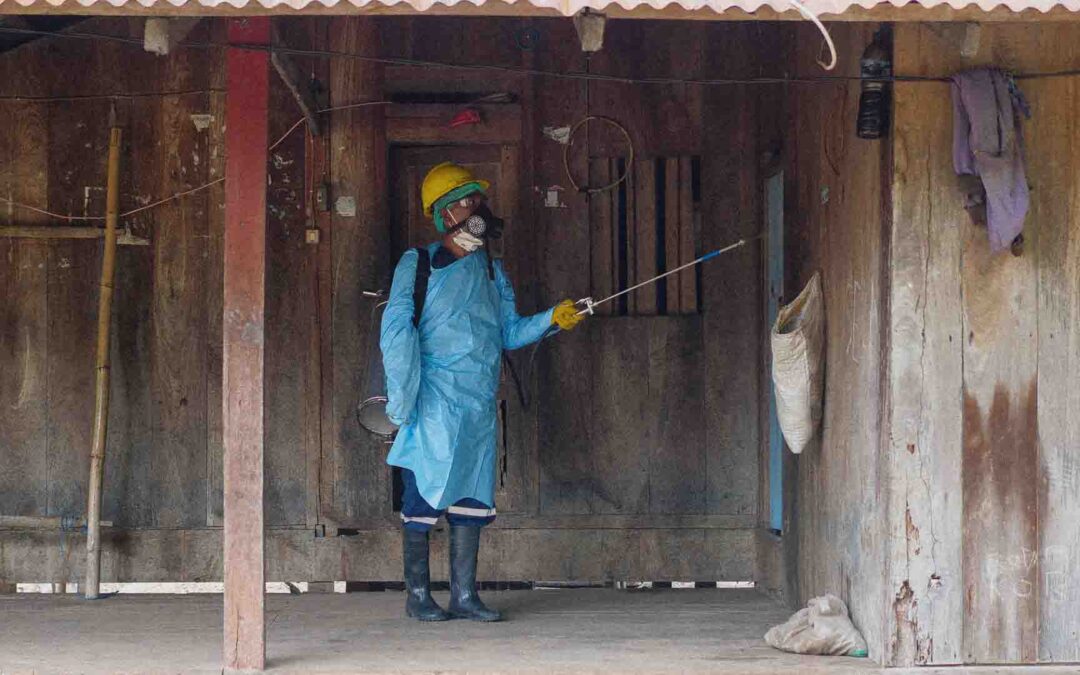
Inkubationssprühung zur Malariabekämpfung
Die In-Dach-Sprühanwendung ist ein wichtiges Instrument zur Malariaprävention in Indonesiens ländlichen Regionen. Die Teams von Fair Future und Kawan Baik wenden strenge medizinische Protokolle innerhalb der Häuser an und richten ihre Maßnahmen gegen Anopheles-Mücken, während sie gleichzeitig die jeweiligen Interventionen dokumentieren, um Sicherheit, Rückverfolgbarkeit und messbare Auswirkungen auf die öffentliche Gesundheit zu gewährleisten.
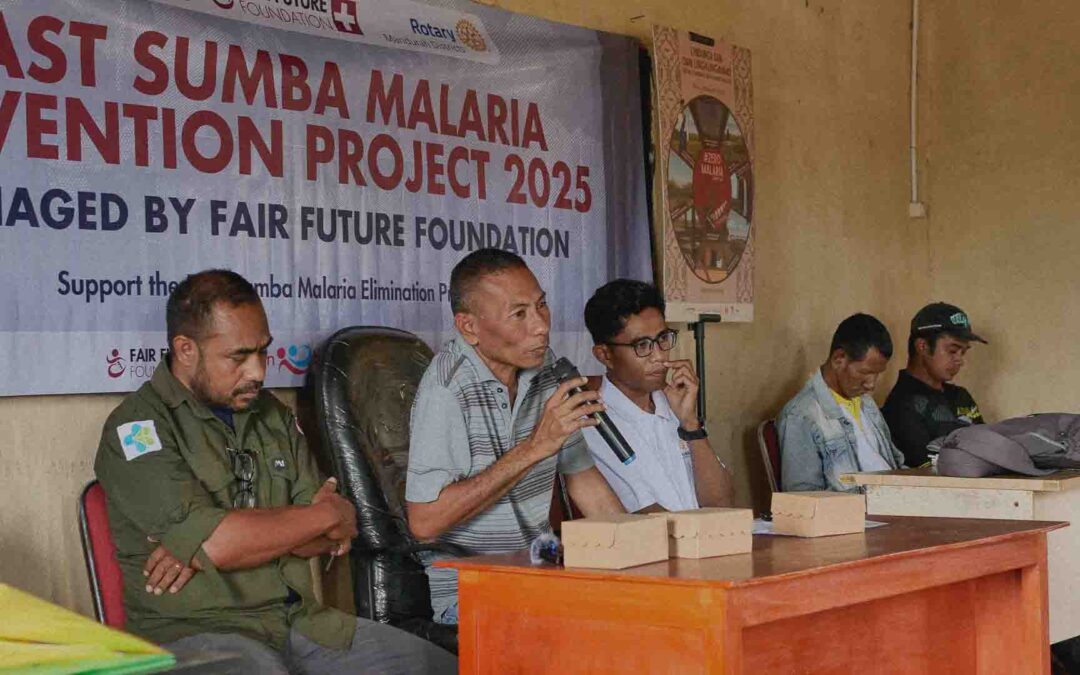
Malariaprävention durch IRS-Schulungen Umalulu | Fair Future
Der zweite Tag der Schulung zur Mikroskopie für Malaria bestätigt die praktischen diagnostischen Fähigkeiten in East Sumba. In Kliniken ohne Krankenhäuser oder Labore ermöglichen präzise Bildaufnahmen eine korrekte Behandlung, verhindern schwere Fälle und schützen Leben durch eine disziplinierte, im Feld durchgeführte medizinische Praxis.
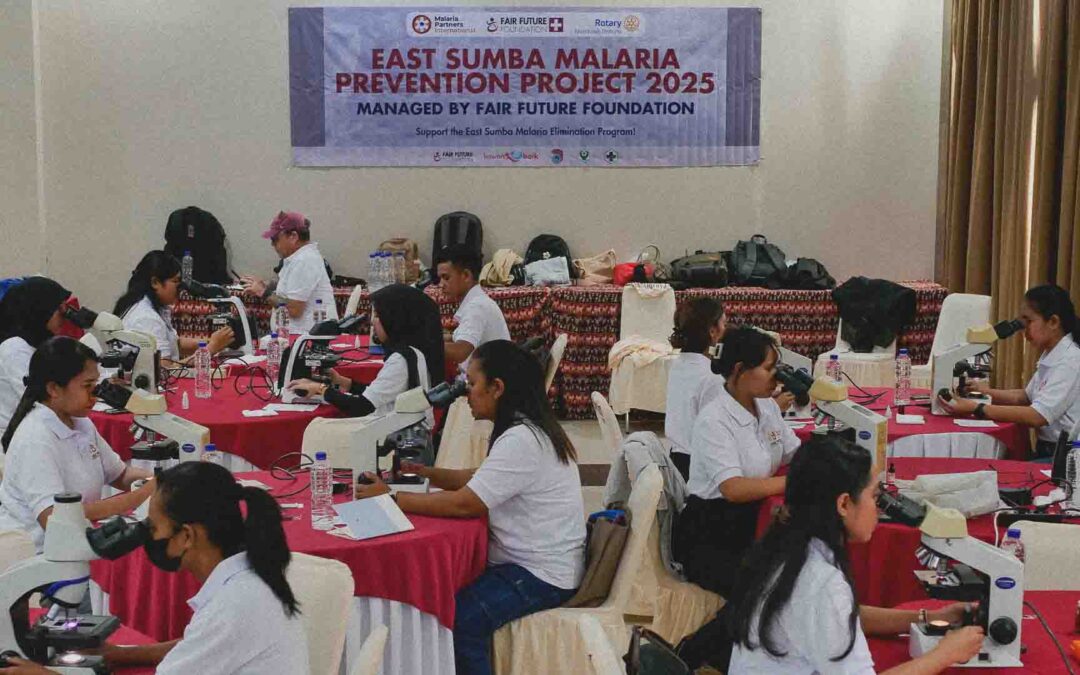
Malariamikroskopie-Schulungstag zwei | Feldvalidierung
Der zweite Tag der Schulung zur Mikroskopie für Malaria bestätigt die praktischen diagnostischen Fähigkeiten in East Sumba. In Kliniken ohne Krankenhäuser oder Labore ermöglichen präzise Bildaufnahmen eine korrekte Behandlung, verhindern schwere Fälle und schützen Leben durch eine disziplinierte, im Feld durchgeführte medizinische Praxis.
Malariamikroskopie-Schulungstag eins | Fair Future Foundation
Der erste Tag der Malaria-Mikroskopie-Schulung in East Sumba konzentrierte sich auf die Präparation von Objektträgern, das Handhaben des Mikroskops und die diagnostische Genauigkeit, um die Kapazitäten der lokalen Labore zu stärken.
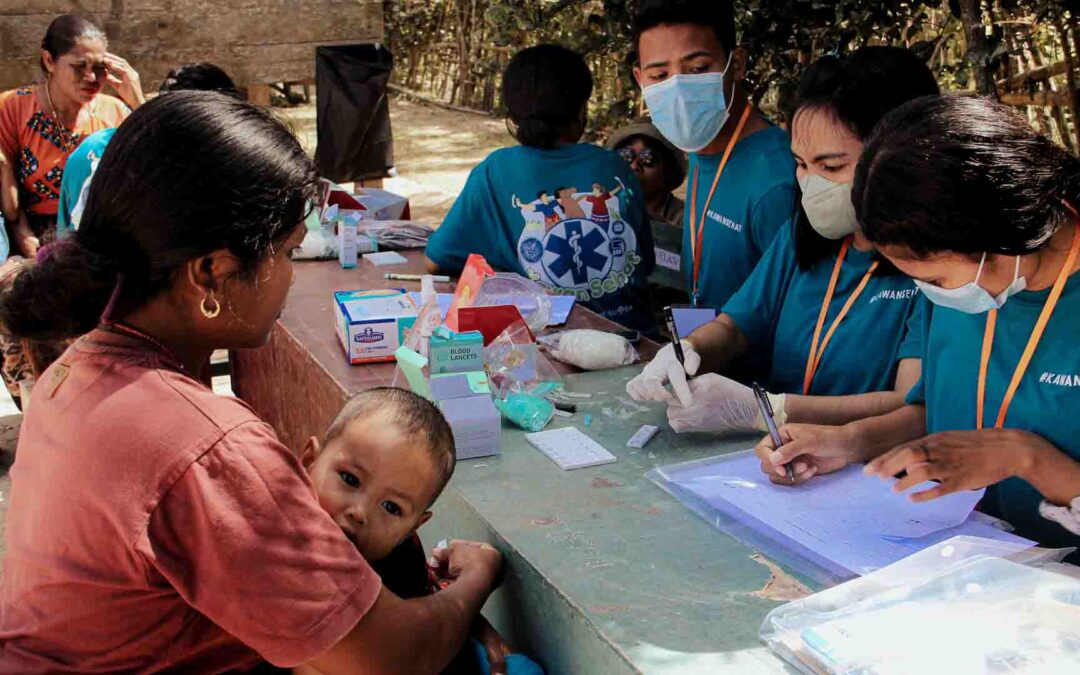
Malariaserologie in ländlichen Indonesien | Schweizer medizinischer Einsatz
Neben dem Schnelltest umfasst jede Vorsorgeuntersuchung auch eine Schulung, Erläuterung und praktische Beratung. Dieser Dialogpunkt wird oft die erste echte medizinische Beratung, die Familien jemals erhalten haben, und verwandelt eine Diagnose in sofortige Schutzmaßnahmen.
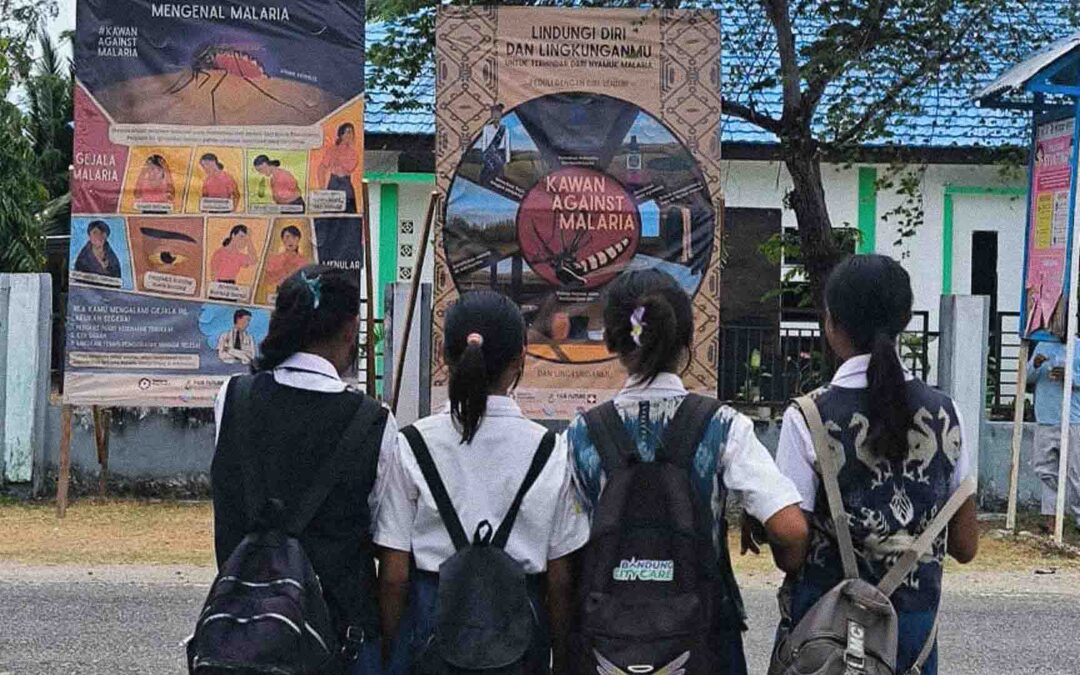
Malariapräventions-Werbeplakate schützen Familien in Ost-Sumba
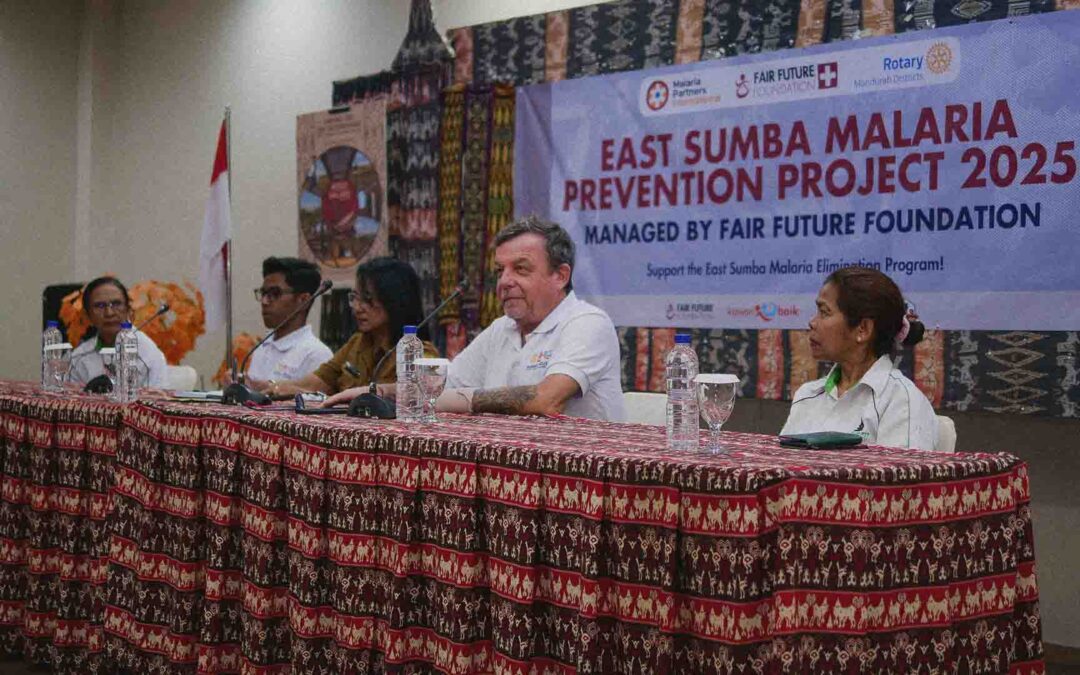
Mit dem Malariapräventionsprojekt in Ost-Sumba Fair Future Foundation und der Unterstützung von Rotary und Malaria Partners International Kawan Baik Indonesia errichteten wir zwanzig Malariabannschilder für Märkte, Schulen und Straßenrand, damit jede Reise eine Gesundheitsvorlage über Fieber und Schutz wird.
Malariaprävention in Ost-Sumba 2025 | Zusammenfassung der Ergebnisse vor Ort
In diesem Artikel werden die Felddaten, Methoden und Auswirkungen der Malariaprävention in Ost-Sumba beschrieben. Teams arbeiteten mit Gesundheitsstationen, Schulen und Dorflebildern zusammen, um Bildung, Impfstoffe, Insektizide und Diagnostik zu koordinieren. Die Daten und Kosten sind vollständig dokumentiert, sodass Partner und Gesundheitsdienstleister die Deckung verbessern, die Übertragung reduzieren und das, was funktioniert, wiederholen können.

Malarienschutznetze wurden in Dörfern im Osten von Sumba verteilt
Wir haben in Dörfern in Ost-Sumba 450 Malarienschutznetze verteilt. Jede Familie erhielt ein Netz, gedruckte Anleitungen und ein Nähset für Reparaturen. Durch die Kombination von Verteilung und Bildung lernten die Familien, warum die korrekte Anwendung wichtig ist, um tödliche Malariainfektionen zu verhindern.

Malariapräsentation in Umalulu East Sumba
In vier Dörfern von Ost-Sumba führte Fair Future einen Tag voller Malaria-Ausbildung und Screening durch. Die Gemeinden lernten, spielten, stellten Fragen und entdeckten, wie sie ihre Familien schützen können. Hunderte wurden getestet, behandelt und mit Moskitonetzen ausgestattet. Gemeinsam spart Wissen Leben.
Verantwortung
Malaria control must remain measurable after the campaign leaves
We document households reached, tests performed, confirmed cases, nets distributed, surfaces sprayed, people trained, referrals made and gaps that remain. Kawan Against Malaria is not a one-day distribution. It is a continuing clinical and public-health process built with communities and local services.
