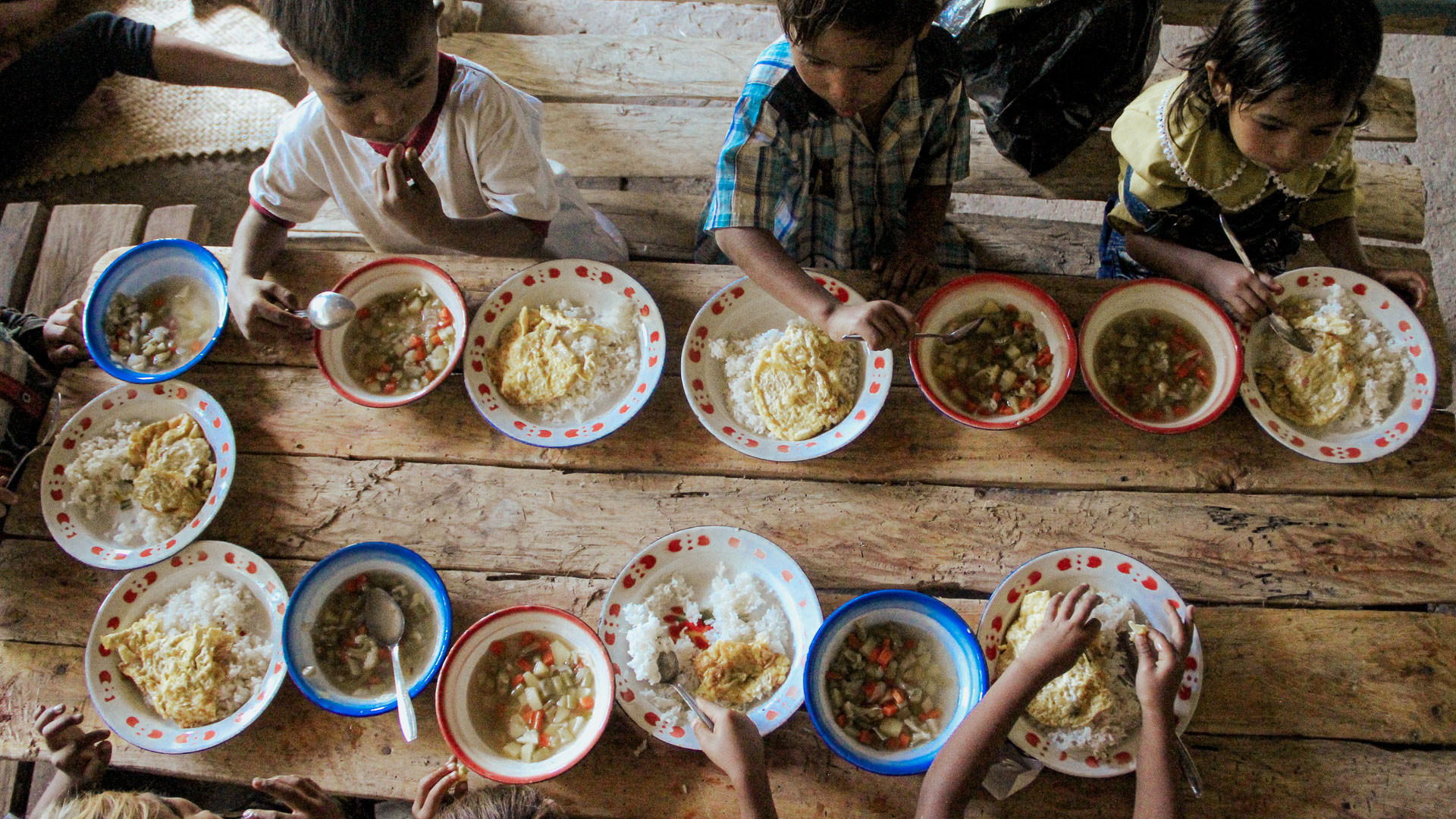
Children share a meal prepared by our teams in an East Sumba village, alongside practical nutrition education.
Photograph in 1920 × 1080 format. Click the image to view it at full size.
Weltwoche für Ernährung in Ost-Sumba: Dort braucht eine gesunde Mahlzeit mehr als nur Nahrung
Dieses neue Foto des Tages shows children sharing a meal around a wooden table, with plates of rice and bowls of soup. For World Food Day, 16 October, we return to an earlier meal our teams prepared in a small village in East Sumba. Healthy child nutrition begins here, with food to eat and families who can put practical advice into use.
Healthy child nutrition starts around the table
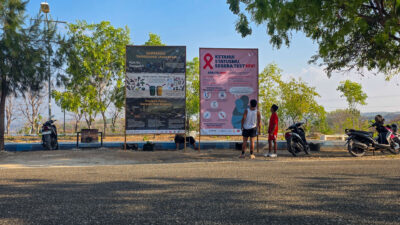
We teach children and their parents about protein, green vegetables and varied meals. Our nutrition pyramid illustrates food groups, from staples to fruit, vegetables and protein sources. Our healthy and unhealthy food poster opens discussion about everyday choices and foods to limit. We prepare a meal, sit together and explain. The learning includes the adults who buy, grow and prepare food, and the community around them.
But knowing what a child needs does not put it within a family’s reach. Money, local food supplies and water determine what can go into the next meal. In a dry region, heat and unreliable rainfall make that work harder. Climate change can damage harvests and deepen food insecurity.
Nutrition advice also needs individual assessment and follow-up. Our report from the Posyandu in Lambanapu explains why every child needs a verified record.
Water, sanitation and care belong at this table
A child also needs to keep and absorb the nutrients they eat. Diarrhoea can cause nutrient losses, while undernutrition makes infections more dangerous. Protecting healthy child nutrition also means preventing these infections, with safe water, sanitation and accessible care.
Through Water Connections, Fair Future Foundation works on clean water and sanitation. Primary Medical Care brings care and prevention closer to families. With Kawan Baik Indonesia, we connect this work to practical education. A meal shared with children matters. So does what their parents will have available tomorrow, when our teams have left the table.
16 October 2026 | Alex Wettstein
Weitere Informationen
- FAO | World Food Day: FAO explains World Food Day, marked on 16 October, and the shared action needed to improve access to reliable, affordable, nutritious food.
- WHO | Healthy diet: WHO describes a healthy diet through adequacy, balance, moderation and diversity, with practical guidance on foods, nutrients and food access.
- WHO | Darminfektionen: WHO explains how diarrhoea and malnutrition reinforce one another, and how safe water, sanitation, hygiene and timely care protect children.
- WHO | Climate change and health: WHO outlines how climate change disrupts food systems, affects food quality and availability, and increases waterborne and foodborne risks.
- WHO | Drinking-water: WHO connects safe drinking-water, sanitation and hygiene with disease prevention, while describing the risks of contaminated water supplies.