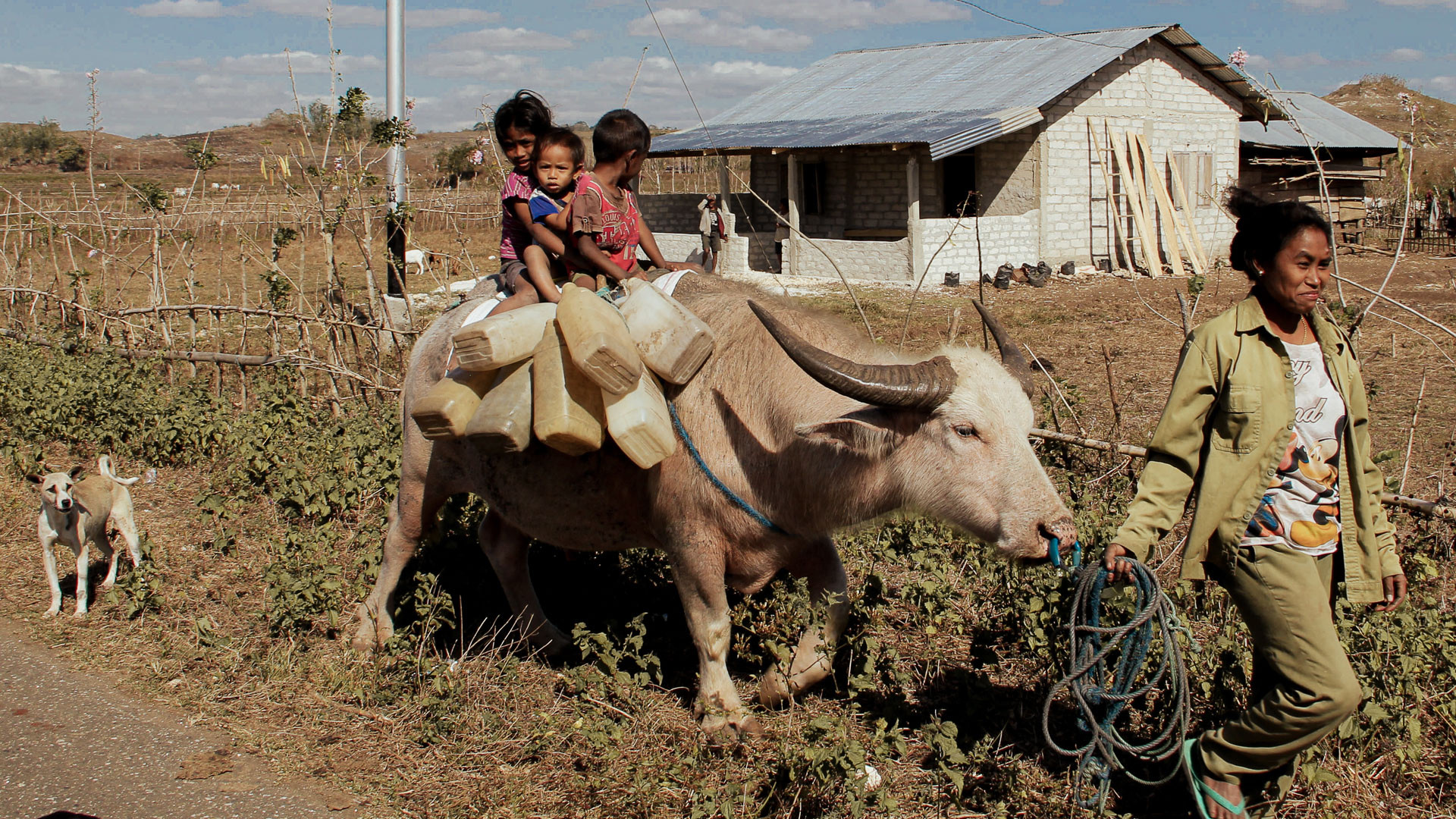
Three children ride a kerbau carrying reused jerrycans as their mother leads it to collect water in East Sumba.
Photograph in 1920 × 1080 format. Click the image to view it at full size.
Drei Kinder auf einem Kerbau und die tägliche Wasserreise in Ost-Sumba
Dieses neue Foto des Tages shows three children on a kerbau while their mother leads it to fetch water. The buffalo is part of our life here. These five-litre jerrycans once held cooking oil and were collected second-hand. Water scarcity in East Sumba makes this a daily journey for families without a motorbike or a usable route. The kerbau carries the children and the containers.
East Sumba water scarcity and daily health
In my work, I estimate that some families we meet have around two litres per person per day for drinking, cooking and all washing combined. At that level, meeting basic drinking and food needs leaves very little for hands, bodies, clothes or menstrual hygiene. Our teams regularly meet people who, in the most difficult conditions, can bathe only once a month, using a small amount of water without running water. Collecting it can take hours. Some families leave in the evening and return the next morning, unsure whether they will find water. Water scarcity in East Sumba makes basic daily hygiene difficult for the families we meet.
Water, hygiene and care close to home
Today, 15 October, is Global Handwashing Day. Our article on handwashing with soap connects water, soap and practical learning. Unsafe water and inadequate washing facilities increase infection risks, affecting child health and nutrition. Scarcity also affects safe food preparation, menstrual hygiene, and dignity, while collection takes time away from childhood, learning, and rest. Through Water Connections, we work with communities to bring safer water closer to daily life. Primary Medical Care links this work with local health agents, early care and prevention. For me, water belongs in the same conversation as medicine. Families need enough to drink, prepare food safely, wash and manage menstruation with privacy.
15 October 2026 | Alex Wettstein
Weitere Informationen
- WHO | Domestic water quantity: Review how household water quantity, distance, reliability and service levels affect drinking, food preparation, hygiene and public health.
- WHO | Drinking-water: Read the health evidence on unsafe drinking-water, infection risks and the importance of water that is safe and available when needed.
- UNICEF | Menstrual hygiene: Explore how access to water, sanitation, suitable materials and privacy supports menstrual health, dignity and participation in daily life.
- WHO | Water, sanitation and hygiene: Understand how water, sanitation and hygiene support health, reduce preventable disease and inform safer services at home and in communities.
- UNICEF Data | Clean water and sanitation: See how water, sanitation and hygiene are monitored, including the availability of both soap and water at household handwashing facilities.