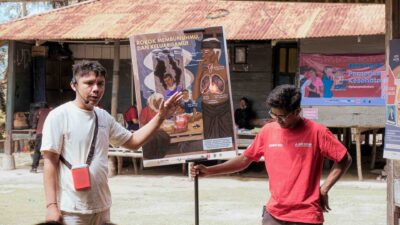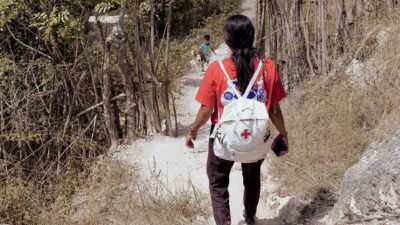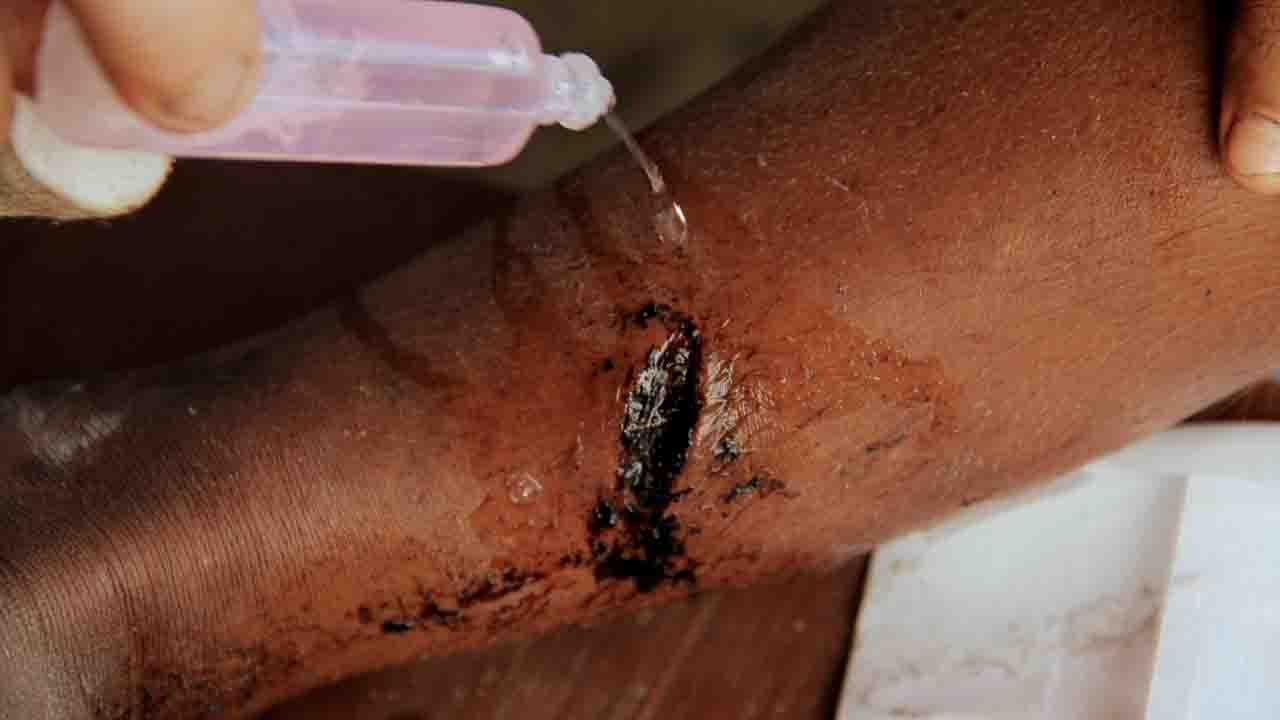
This image is in 1920×1080 resolution. Click on it to enlarge and view at full size.
At 19, Rambu Fratika is bringing sepsis prevention measures to villages in East Sumba.
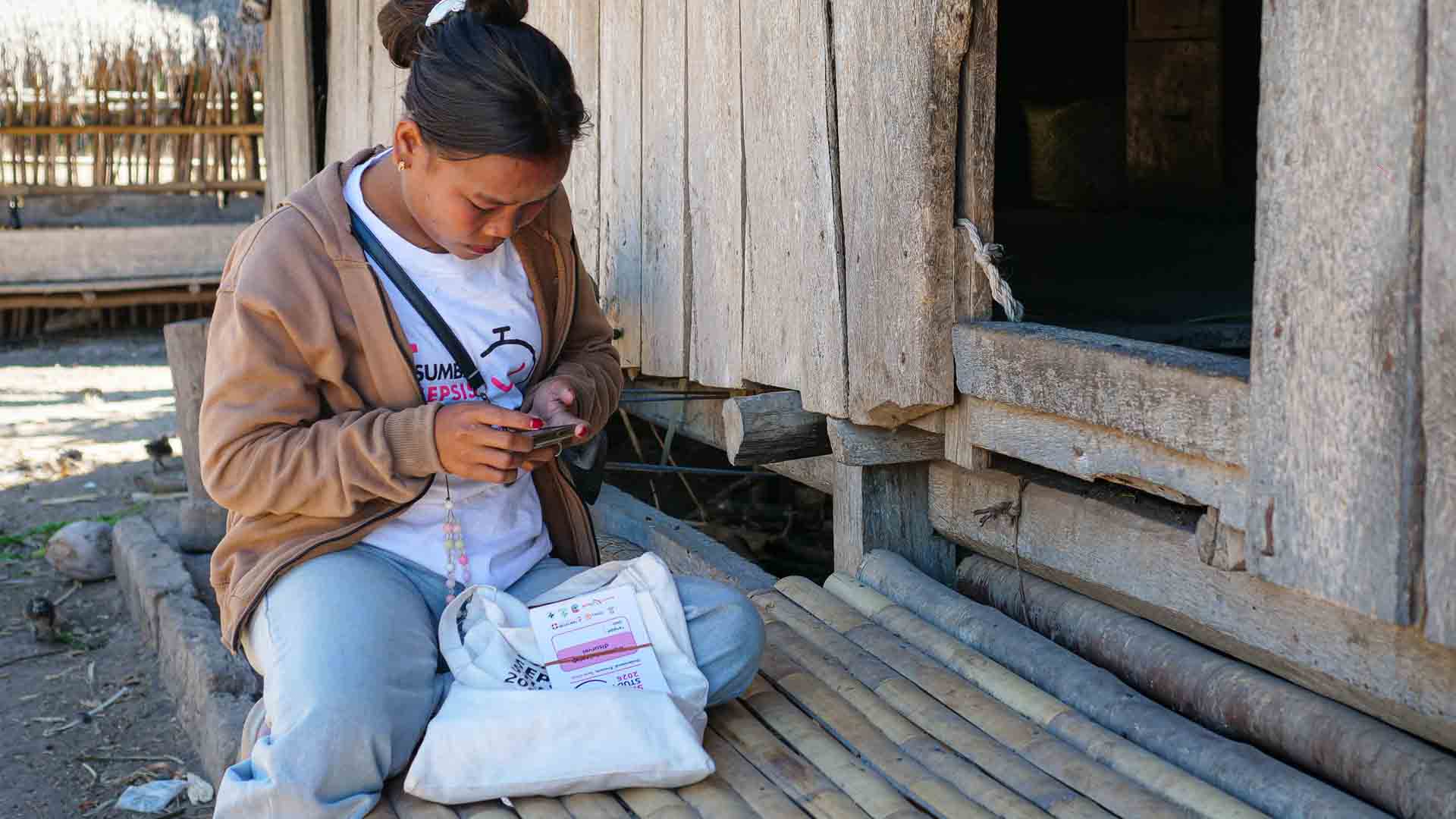
This latest Bild des Tages captures Rambu Fratika, 19, sitting outside a wooden house in East Sumba, intently focused on her phone. She wears a shirt from the Sumba Sepsis Study and carries a field bag. Rambu is bringing sepsis prevention to remote areas, where distance, limited connectivity, and delayed healthcare can significantly heighten infection risks.
Sepsis prevention in Sumba begins at the local level: Rambu hails from Mbatapuhu and joined Kawan Sehat just a few months ago as one of seven new health agents trained in June. She also served as an enumerator for the Sumba Sepsis Study 2026. The three-month field phase of this study concluded on Friday, August 14, 2026.
Her role did not involve using a phone to diagnose sepsis. Instead, she gathered structured field data, communicated with families, enhanced prevention efforts, and flagged situations needing medical attention. The application supports her work but does not replace clinical assessment, treatment, or referrals.
A mobile device used in medical fieldwork: She isn’t using her phone to chat or browse TikTok. Instead, it’s a crucial component of her fieldwork and research toolkit. The device gives her access to the Sumba Sepsis Study app and the Kawan Sehat medical database, even in regions where mobile connectivity is lacking or unstable.
Digital tools are valuable when they enable a trained individual to ask more insightful questions, accurately document events, identify potential risks sooner, and determine the appropriate time to seek assistance. Their effectiveness lies in Rambu’s understanding of her purpose for using them.
Knowledge that remains within the community: The most important aspect of this photograph is her intense focus. At 19, she wants to learn, understand, and be more valuable to those around her. Her dual roles bridge research and primary healthcare. Household data helps to understand sepsis risk and health behaviours. Kawan Sehat brings prevention, basic care, and timely referrals closer to home.
Die Fair Future Foundation und Kawan Baik Indonesien offer training, medical equipment, applications, and guidance. It is Rambu’s dedication and commitment to learning that empowers her to return to the village, make careful observations, and take action. By identifying concerning situations early on—before they escalate into severe conditions—it buys crucial time in cases like sepsis or other acute infections where every moment counts. This approach embodies community-level sepsis prevention in Sumba by focusing on knowledge sharing, vigilant observation, and prompt intervention.
Today, August 20th 2026 – Alex Wettstein
Weitere Informationen
- World Health Organisation – Sepsis: WHO explains sepsis, its link to infection and organ dysfunction, and why early recognition and rapid clinical management are essential.
- Centres for Disease Control and Prevention – Sepsis: CDC provides practical guidance on sepsis signs, risk factors, prevention, and treatment, with an emphasis on acting quickly when infection worsens.
- World Health Organisation – Community Health Workers: WHO outlines core competencies for community health workers, including training, supervision and integration into primary healthcare systems.
- World Health Organisation – Digital Health Interventions: WHO reviews digital health interventions for health workers and shows how mobile tools can strengthen care without replacing clinical judgement.
- World Health Organisation – Primary Health Care: WHO defines primary healthcare as integrated care, prevention and community participation, a model directly relevant to remote village health work.
- UNICEF – Community Health Workers: UNICEF describes how community health workers extend essential services to underserved families and strengthen access to care close to home.
- World Sepsis Day: World Sepsis Day supports global awareness, education and prevention, promoting earlier recognition of sepsis by communities and health professionals.