

School toilets need water, soap and privacy
For World Toilet Day on 19 November, we ask what girls need to manage a period at school: water, soap and a safe place to change in private.
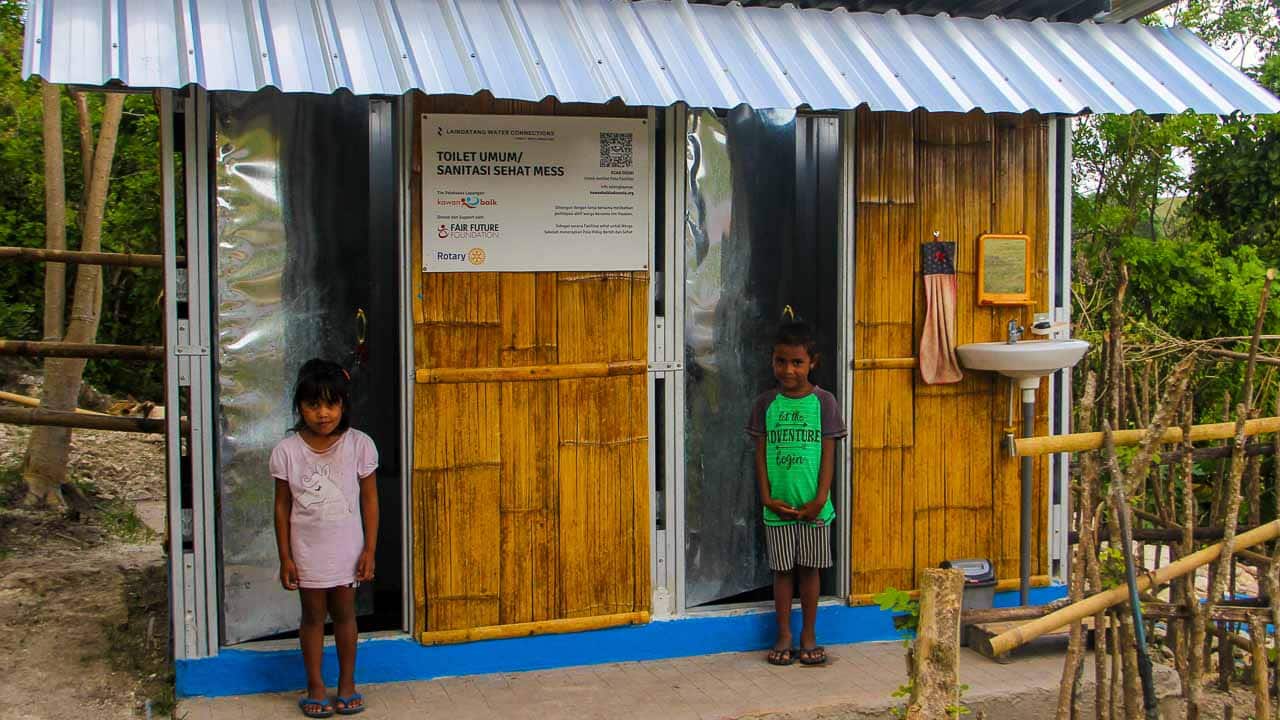
School toilets need water, soap and privacy. When a girl gets her period in class, she should be able to close a door that locks from the inside, change, dispose of a used pad and wash her hands. She should be able to do all of that without leaving school.
On 19 November, World Toilet Day puts sanitation and gender equality in focus. A toilet that runs out of water or has no lock is still counted as a toilet. For the girl who needs it, that distinction matters.
Water and sanitation are part of care
In rural East Sumba, earlier figures shared with us by local authorities put the share of rural families without reliable access to clean water at around 65%. That figure is for water access. It does not tell us how many families also lack safe sanitation. In the villages where we work, we see families ration water so tightly that some go weeks between baths. When water is scarce, washing a baby, managing a period, keeping clean during pregnancy and caring for someone with a chronic illness all become harder.
Attraverso Primary Medical Care, our Kawan Sehat health agents work with families on hygiene and prevention. Through Water Connections, we build reservoirs close to where water is needed, including near toilets and handwashing stations. One school in East Sumba now has a reservoir where it previously had neither water nor toilets. The practical test is whether there is water and soap when a pupil actually needs them.
Putting a reliable supply of safe water next to a usable toilet is one of the most practical things we can do to prevent illness. At school, it also gives a girl the privacy she needs to change and get back to class.
