


Donare
Assistenza sanitaria
Articoli e News
Storie dal campo
Glossario
Guida escursionistica

Acqua, energia e infrastrutture
Water Connections
Safe water systems planned, built and maintained with rural communities where no public network exists.
- 5,300-litre ferrocement tanks
- 115 m³ reservoir built at Laindatang
- Rainwater, gravity and solar-pumped systems
Water must reach the home before disease does
In rural East Sumba, water may be several kilometres away, seasonal or visibly unsafe. A reservoir, protected source and working pipe change more than convenience. They change hydration, hygiene, food preparation and the daily exposure of children to preventable infection.
Il programma
Water infrastructure built around health
Without a public network, every litre depends on distance, rainfall, storage and the condition of the source. Those constraints become health risks long before a patient reaches a clinic.
Water Connections designs practical systems for the terrain and the people who will use them. Depending on the site, this may mean rooftop rainwater harvesting, a ferrocement tank, a reinforced reservoir, a deep well, a solar pump, gravity-fed piping or a protected distribution point.
The work is carried out with village leaders, families and local builders. Construction is only the beginning. Gutters, lids, filters, pipes, overflow areas and water quality must remain inspectable, repairable and understood by the community.
A compact rainwater system adapted to homes, small groups of families and rural schools.
Large reinforced storage designed for more than 200 people and a local school.
A recent Hudumburung connection carries stored water directly to two homes and around fifteen people.
A solar-powered pump lifts groundwater to a 10,000-litre elevated storage system.
From source to household
How a water system becomes reliable
The visible tank is only one part of the system. Reliability begins with understanding the source and continues through design, construction, protection, distribution and maintenance.
Assess
The team studies the source, rainfall, terrain, household demand, access and the risks around the proposed site.
Design
Storage volume, foundations, catchment area, pumping or gravity and distribution are adapted to local conditions.
Build together
Local builders and families take part so the structure, materials and repair needs are understood close to home.
Protect and connect
Roofs, gutters, filters, sealed storage, overflow and pipes are installed as one continuous water pathway.
Inspect and maintain
Leaks, cracks, contamination risks and damaged components are identified, corrected and followed over time.
Water safety is continuous
A full tank is not automatically a safe tank
Safe access depends on the complete pathway from catchment or source to storage, pipe and household container. A weakness at any point can reintroduce contamination or interrupt supply.
What the system must protect
- A source or roof catchment kept away from avoidable contamination
- Gutters and first-flow components aligned and clear of debris
- A sealed tank with a protected lid and controlled access
- Filtration appropriate to the source and intended use
- Clean pipes, taps and household collection containers
- Drainage and overflow that do not create stagnant water
When corrective action is needed
- Cracks, leaks, unstable foundations or damaged tank walls
- Rust, open inspection holes or a lid that no longer seals
- Broken gutters, blocked filters or unburied damaged pipes
- Visible contamination, unusual colour, odour or persistent turbidity
- Standing overflow water that increases mosquito or hygiene risks
- Concerning test results or a cluster of diarrhoeal illness after use
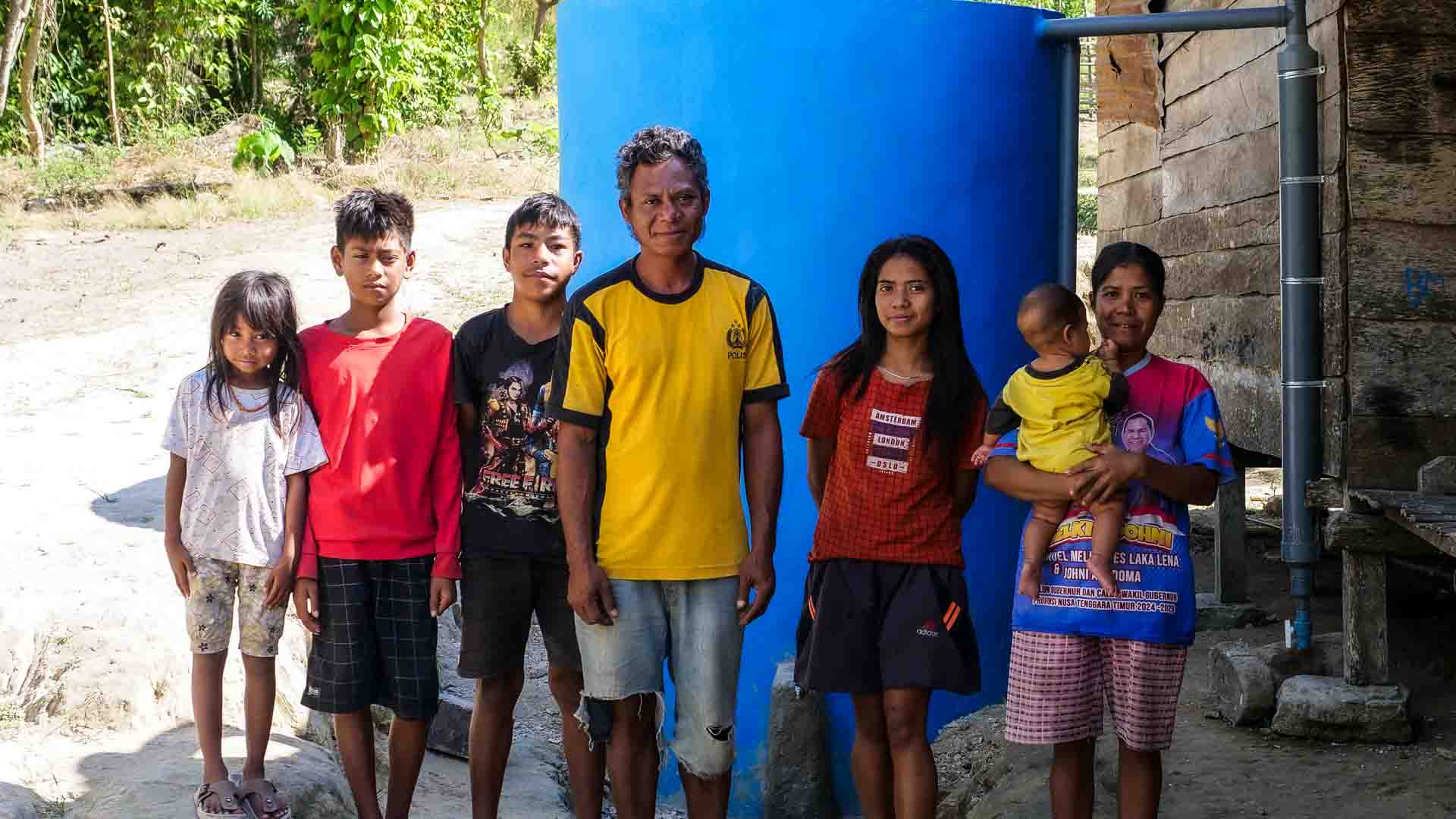
A reservoir is useful only when its catchment, filtration, structure, overflow and distribution remain safe and repairable.
See how a new reservoir brings water to schoolchildren in East Sumba, and why the daily journey to collect water remains a health concern for families.
The system behind every tap
Engineering that can be maintained locally
A tank alone is not water access. Each project combines source assessment, structural choices, protected storage, distribution and a maintenance plan. The aim is not technical complexity. It is a system that fits the terrain, can be inspected and can keep working after the construction team leaves.
Site assessment
Rainfall, groundwater, access, soil, terrain and household demand guide the design before materials arrive.
Reinforced storage
Ferrocement tanks and larger reinforced reservoirs are sized and built for the community and site conditions.
Protected distribution
Filters, pumps, gravity-fed HDPE pipe, taps, overflow and drainage move water without losing control of safety.
Water monitoring
Field checks and the Rumah Kambera laboratory support testing for microbial, physical and chemical indicators.
Quali cambiamenti nella pratica
Safe water changes the conditions in which illness begins
Less time collecting water
A household connection can return hours of walking, waiting and transport to families, especially women and children.
Safer daily hygiene
Water close to home makes handwashing, wound cleaning, food preparation and household cleaning more consistent.
Water where children learn
School storage supports drinking, toilets, cleaning and basic infection prevention throughout the day.
Stronger dry-season continuity
Storage, protected sources and planned distribution reduce dependence on a single distant or seasonal collection point.
Relazione finaleLaindatang 115 m³ reservoirRead the technical and field report for a large rainwater system serving more than 200 people and a school.
Project areaLaindatang & HambaritaExplore the linked reservoirs, filtration, construction and village water systems developed across these communities.
Child healthUnsafe water and childhood diarrhoeaUnderstand how contaminated water, dehydration and malnutrition reinforce one another in rural families.
Registrazione in campo in tempo realeNote di viaggio dall'Indonesia orientaleFollow dated updates on construction, repairs, water access, health and the realities encountered by field teams.
Guida pratica e glossarioWater and sanitation, explainedExplore practical terms and field guides related to water safety, storage, hygiene and public health.
Public health referenceDrinking-water and healthRead the international evidence connecting safe water, sanitation, infection prevention and health.
Water and sanitation referenceWater, sanitation and hygieneExplore the wider framework linking safe water access, hygiene, childhood health and dignity.
In diretta dal campo
Water Field Notes, as the work happens
Two recent updates from water construction, distribution or monitoring. These notes refresh when a new Water Connections Field Note is published.
Direttamente dal campo
Latest Water Connections reports
These reports document construction, water quality, household access, maintenance, failures, corrective work and the health conditions each system is built to change.

Portare acqua pulita e educazione sanitaria nelle aree rurali
In villaggi ultra rurali dove l’accesso è difficile, Fair Future porta acqua pulita e un’importante educazione sanitaria. Le squadre dedicate insegnano ai residenti e al personale scolastico l’igiene, la nutrizione e la prevenzione delle malattie. Questo #WaterConnections progetto beneficia di quasi 800 persone, tra cui 60% bambini, evidenziando il potere trasformativo dell’acqua pulita…

Unitevi a noi per l'evento di sensibilizzazione sull'acqua pulita il 14 giugno
Prenota la data: unitevi a noi il 14 giugno 2024 presso Kulidan Space vicino a Denpasar per celebrare Fair Future Foundation il 15° anniversario di questa iniziativa. Il nostro evento di sensibilizzazione sull’acqua pulita prevede la proiezione di ‘Matawai, the Shades of Water’, discussioni sulle soluzioni sostenibili per l’acqua e performance artistiche.

Una vita sana grazie a acqua pulita e ad una nutrizione adeguata
In East Sumba, il Water Connections programma Fair Future Foundation sta trasformando la vita delle persone fornendo acqua pulita, migliorando l’igiene e promuovendo cibi nutrienti e stili di vita sani per un futuro più luminoso e sano per tutti.

Collaborazione con il Rotary Club Australia nell'East Sumba
Dal 17 al 24 aprile, Fair Future ha ospitato cinque membri del Rotary Club Australia. Hanno visitato East Sumba per conoscere il nostro lavoro, tra cui i progetti per l’acqua pulita e gli sforzi per combattere malattie come la malaria e il dengue. Insieme, abbiamo distribuito SolarBuddy lampade e promosso uno stile di vita sano. Abbiamo apprezzato profondamente il loro supporto.

L'acqua pulita porta salute e felicità nelle aree rurali
Il Water Connections progetto di Fair Future Foundation è trasformando la vita nella zona Laindatang di East Sumba. Offrendo acqua pulita a 600 residenti, tra cui quasi 100 studenti, non solo miglioriamo l’igiene e riduciamo il rischio di malattie come la malaria, la polio e la tubercolosi, ma insegniamo anche pratiche di vita sostenibili.

Premiazione di Matawai: Crisi idrica nell'East Sumba
Unitevi a noi l‘8 maggio per la premiere su YouTube di ’Matawai: The Shade of Water”. Diretto da Indira Larin, questo documentario di 15 minuti rivela le acute crisi idriche che affliggono le comunità dell’East Sumba e gli impatti trasformativi del #WaterConnections programma sulla vita delle persone.

Facciamo lavare le mani: un salvavita per la salute delle comunità rurali
In East Sumba, lavarsi le mani è un gesto che salva vite. La campagna Fair Future Foundation‘Let’s Wash Your Hands’, realizzata da UNICEF Water Connections, ha installato lavandini nelle scuole e nei villaggi, aiutando i bambini a combattere le malattie e a crescere sani.

Quattro pilastri per una vita più sana nelle aree ultra-rurali
”Quattro pilastri per una vita sana” serve da guida per Fair Future alle comunità ultra-rurali, sottolineando i pilastri dello stile di vita equilibrato: attività fisica, nutrizione, igiene e riposo. Questo documento incoraggia l’esercizio fisico quotidiano, una dieta ricca di alimenti freschi, il lavaggio regolare con sapone e acqua e un riposo adeguato per la salute mentale e fisica, con l’obiettivo di…

Mangiare sano: trasformare la vita con cibi nutrienti
”Riempire il piatto con cibi sani” è un’iniziativa Fair Future Foundation volta a migliorare la salute nelle aree ultra-rurali. Questo poster educativo, concepito come una piramide alimentare, sottolinea l’importanza di una nutrizione equilibrata con alimenti di provenienza locale.

Sfruttando Laindatang al massimo le condizioni più difficili
Fair Future documenta le sfide tecniche e logistiche della perforazione per l’approvvigionamento idrico sotterraneo Laindatang durante il Water Connections progetto.

Connettendo le famiglie della provincia indonesiana di Papua con acqua pulita
Water Connections uses pipes, storage and local infrastructure to bring clean water closer to rural families and support sanitation and hygiene.

Rivoluzionando la sanità Laindatang con la nuova sanità igienica
Fair Future builds sanitation facilities in Laindatang to improve hygiene, privacy and daily living conditions alongside clean-water access.
Responsabilità
Water systems must remain measurable, repairable and transparent
We document volumes, construction, materials, beneficiaries, site inspections, faults, corrective work and how funds are used. A completed structure is not the end of responsibility. Its condition and usefulness must continue to be checked.
