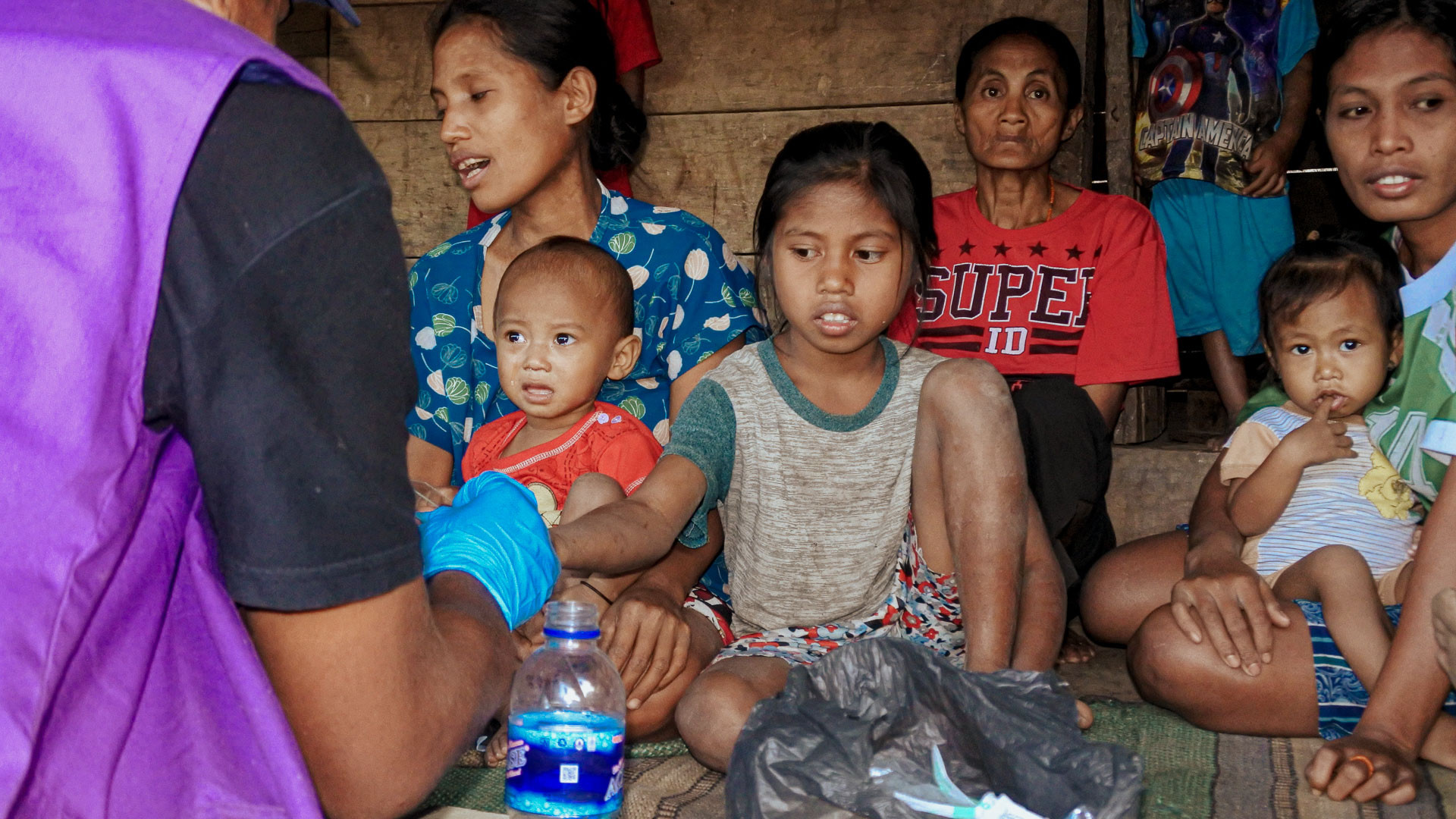
A team member supports a girl’s hand during malaria testing, with women and young children seated close behind.
Original photograph, 1920 × 1080 pixels. Click the image to view it at full size.
Gli Intimi dietro un Test per la Malaria
Questa nuova Foto della Giornata shows our team carrying out rapid malaria testing in East Sumba. A girl watches the gloved hands supporting her own. Behind her, women and young children sit close together. Rural malaria care begins here, with attention to one person and to the people sharing this small room.
Rural malaria care beyond the test
The hands in the foreground draw our eyes first. Then we notice the faces behind them, the different directions of their gazes, the children seated close to the adults against the wooden wall. We work within this proximity. A careful gesture and a clear explanation belong together.
Through Kawan Against Malaria, we bring testing, Prevenzione and referral closer to rural communities. A rapid diagnostic test helps identify malaria infection. Its result must be read correctly and considered alongside a clinical assessment. A negative result does not explain persistent illness; we still need to look for another cause.
An answer must lead somewhere
In our 2025 Umalulu survey, 250 of 460 respondents reported living more than five kilometres from a health facility. That reported distance helps explain why access must remain part of the conversation. Transport, travel costs and referral arrangements can shape whether someone reaches the next stage of care.
Confusion, seizures or difficulty breathing require urgent medical attention. We need to explain danger signs, identify the appropriate next step and help make it reachable. A test takes a short time; arranging treatment or referral may ask much more of a family.
Rural malaria care means staying attentive to both. Here, with the girl watching our hands and others seated just behind her, the task is precise and practical. Test carefully, explain clearly and connect the result to care people can reach.
22 October 2026 | Alex Wettstein
Per ulteriori informazioni
- Fair Future | Malaria symptoms poster: This English educational poster introduces malaria symptoms and encourages assessment and blood testing; danger signs need urgent medical care.
- Fair Future | Umalulu malaria study: The 2025 Umalulu survey documents reported distance from health facilities, providing local evidence for discussions about rural access to care.
- WHO | Malaria diagnosis: WHO explains parasite-based malaria diagnosis and why people with negative results need assessment for other causes of persistent illness.
- WHO | Malaria facts: WHO outlines malaria symptoms, diagnosis and treatment, including severe warning signs and the importance of prompt access to medical care.
- Fair Future | Environmental prevention poster: This English poster presents mosquito-bite prevention and environmental actions, supporting community discussion alongside accessible clinical care.