


Spenden
Support Care
Artikel & News
Feldgeschichten
Glossar
Feldführer

Wasser, Energie und Infrastruktur
Water Connections
Safe water systems planned, built and maintained with rural communities where no public network exists.
- 5,300-litre ferrocement tanks
- 115 m³ reservoir built at Laindatang
- Rainwater, gravity and solar-pumped systems
Water must reach the home before disease does
In rural East Sumba, water may be several kilometres away, seasonal or visibly unsafe. A reservoir, protected source and working pipe change more than convenience. They change hydration, hygiene, food preparation and the daily exposure of children to preventable infection.
Das Programm
Water infrastructure built around health
Without a public network, every litre depends on distance, rainfall, storage and the condition of the source. Those constraints become health risks long before a patient reaches a clinic.
Water Connections designs practical systems for the terrain and the people who will use them. Depending on the site, this may mean rooftop rainwater harvesting, a ferrocement tank, a reinforced reservoir, a deep well, a solar pump, gravity-fed piping or a protected distribution point.
The work is carried out with village leaders, families and local builders. Construction is only the beginning. Gutters, lids, filters, pipes, overflow areas and water quality must remain inspectable, repairable and understood by the community.
A compact rainwater system adapted to homes, small groups of families and rural schools.
Large reinforced storage designed for more than 200 people and a local school.
A recent Hudumburung connection carries stored water directly to two homes and around fifteen people.
A solar-powered pump lifts groundwater to a 10,000-litre elevated storage system.
From source to household
How a water system becomes reliable
The visible tank is only one part of the system. Reliability begins with understanding the source and continues through design, construction, protection, distribution and maintenance.
Assess
The team studies the source, rainfall, terrain, household demand, access and the risks around the proposed site.
Design
Storage volume, foundations, catchment area, pumping or gravity and distribution are adapted to local conditions.
Build together
Local builders and families take part so the structure, materials and repair needs are understood close to home.
Protect and connect
Roofs, gutters, filters, sealed storage, overflow and pipes are installed as one continuous water pathway.
Inspect and maintain
Leaks, cracks, contamination risks and damaged components are identified, corrected and followed over time.
Water safety is continuous
A full tank is not automatically a safe tank
Safe access depends on the complete pathway from catchment or source to storage, pipe and household container. A weakness at any point can reintroduce contamination or interrupt supply.
What the system must protect
- A source or roof catchment kept away from avoidable contamination
- Gutters and first-flow components aligned and clear of debris
- A sealed tank with a protected lid and controlled access
- Filtration appropriate to the source and intended use
- Clean pipes, taps and household collection containers
- Drainage and overflow that do not create stagnant water
When corrective action is needed
- Cracks, leaks, unstable foundations or damaged tank walls
- Rust, open inspection holes or a lid that no longer seals
- Broken gutters, blocked filters or unburied damaged pipes
- Visible contamination, unusual colour, odour or persistent turbidity
- Standing overflow water that increases mosquito or hygiene risks
- Concerning test results or a cluster of diarrhoeal illness after use
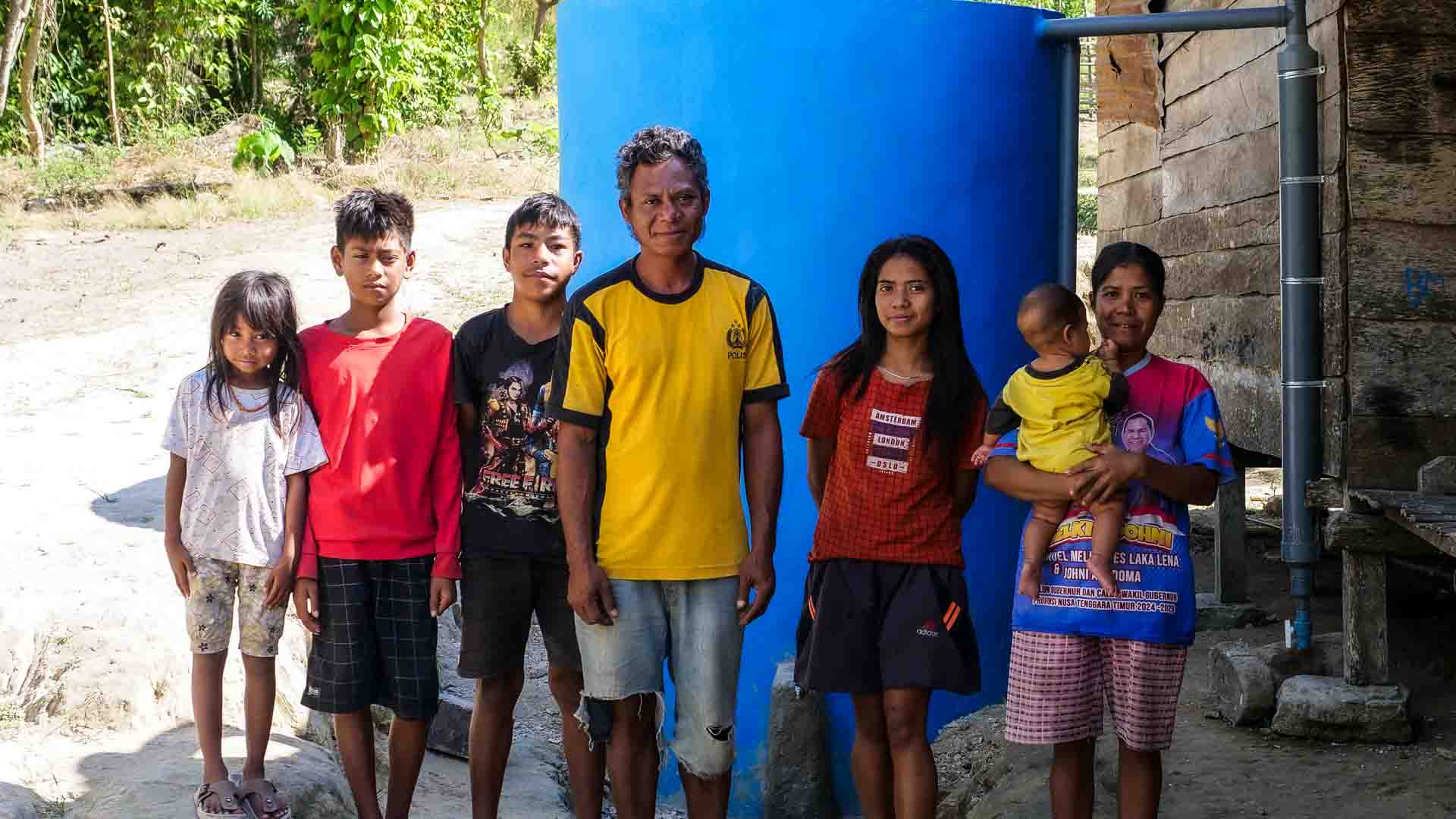
A reservoir is useful only when its catchment, filtration, structure, overflow and distribution remain safe and repairable.
See how a new reservoir brings water to schoolchildren in East Sumba, and why the daily journey to collect water remains a health concern for families.
The system behind every tap
Engineering that can be maintained locally
A tank alone is not water access. Each project combines source assessment, structural choices, protected storage, distribution and a maintenance plan. The aim is not technical complexity. It is a system that fits the terrain, can be inspected and can keep working after the construction team leaves.
Site assessment
Rainfall, groundwater, access, soil, terrain and household demand guide the design before materials arrive.
Reinforced storage
Ferrocement tanks and larger reinforced reservoirs are sized and built for the community and site conditions.
Protected distribution
Filters, pumps, gravity-fed HDPE pipe, taps, overflow and drainage move water without losing control of safety.
Water monitoring
Field checks and the Rumah Kambera laboratory support testing for microbial, physical and chemical indicators.
Welche Änderungen in der Praxis
Safe water changes the conditions in which illness begins
Less time collecting water
A household connection can return hours of walking, waiting and transport to families, especially women and children.
Safer daily hygiene
Water close to home makes handwashing, wound cleaning, food preparation and household cleaning more consistent.
Water where children learn
School storage supports drinking, toilets, cleaning and basic infection prevention throughout the day.
Stronger dry-season continuity
Storage, protected sources and planned distribution reduce dependence on a single distant or seasonal collection point.
EndberichtLaindatang 115 m³ reservoirRead the technical and field report for a large rainwater system serving more than 200 people and a school.
Project areaLaindatang & HambaritaExplore the linked reservoirs, filtration, construction and village water systems developed across these communities.
Child healthUnsafe water and childhood diarrhoeaUnderstand how contaminated water, dehydration and malnutrition reinforce one another in rural families.
Live FeldaufzeichnungFeldbesprechung aus OstindienFollow dated updates on construction, repairs, water access, health and the realities encountered by field teams.
Feldhandbuch & GlossarWater and sanitation, explainedExplore practical terms and field guides related to water safety, storage, hygiene and public health.
Public health referenceDrinking-water and healthRead the international evidence connecting safe water, sanitation, infection prevention and health.
Water and sanitation referenceWater, sanitation and hygieneExplore the wider framework linking safe water access, hygiene, childhood health and dignity.
Live aus dem Feld
Water Field Notes, as the work happens
Two recent updates from water construction, distribution or monitoring. These notes refresh when a new Water Connections Field Note is published.
Direkt vom Feld
Latest Water Connections reports
These reports document construction, water quality, household access, maintenance, failures, corrective work and the health conditions each system is built to change.
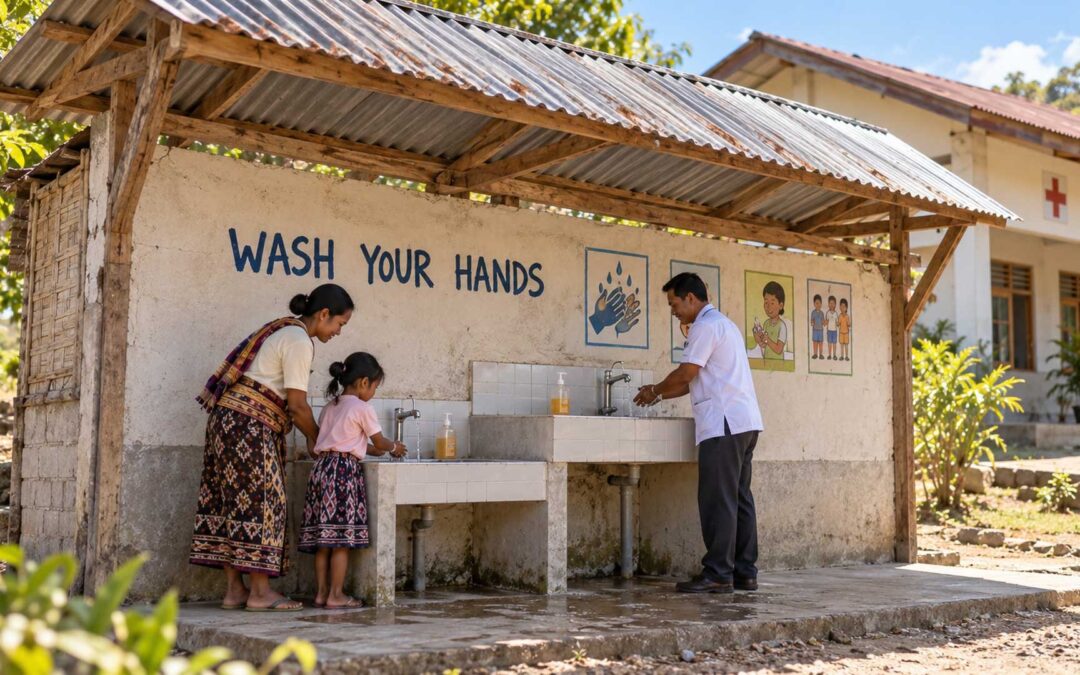
Handwäsche Rumah Kambera beginnt mit sorgfältiger Planung
Rotary Australia, der Rotary Club of Mandurah Districts und John Kevan unterstützen die geplanten Handwaschstationen im neuen Kindergarten Rumah Kambera. Barrierefreie Waschbecken und Hygiene-Schulungen werden Kindern und Erwachsenen zugutekommen. Die Installation soll für 2027 geplant sein, die Standorte, die Wasserinstallation und die Kosten müssen noch festgelegt werden.
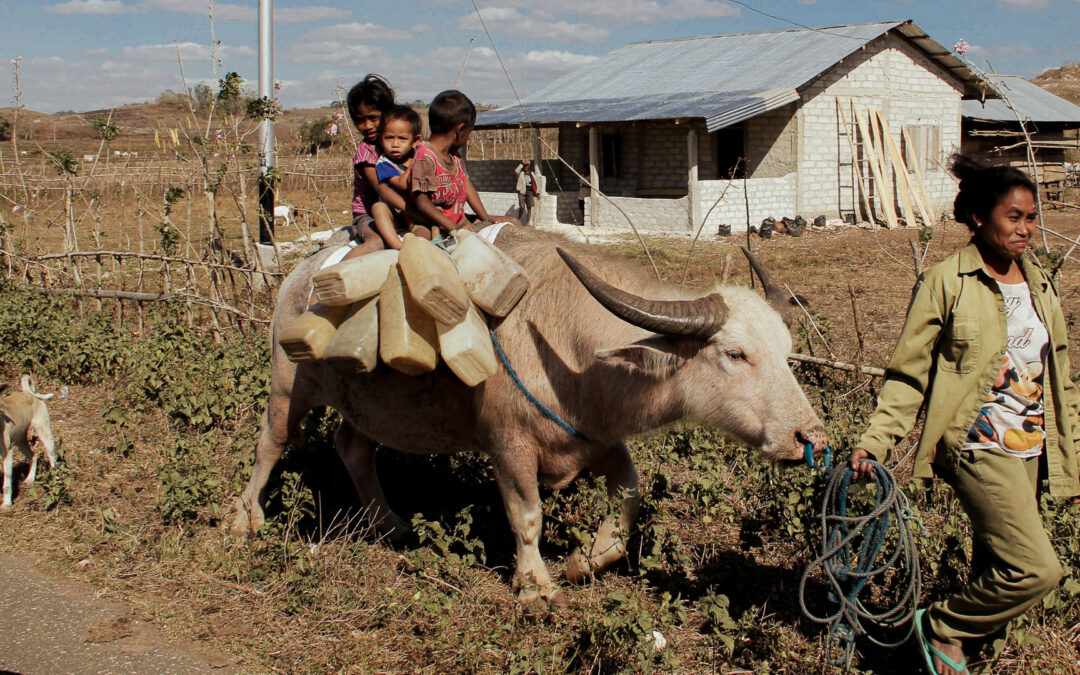
Drei Kinder auf einem Kerbau und die tägliche Wasserreise in Ost-Sumba
Drei Kinder reiten einen Kerbau, während ihre Mutter ihn zum Sammeln von Wasser in Ost-Sumba führt. Alex reflektiert über die begrenzten Mengen, die einige Familien erhalten können, über das Baden ohne Leitungswasser und über die Bedeutung zuverlässiger Wasserversorgung für Gesundheit, Hygiene, die Würde der Menstruation und das alltägliche Leben als Kind.
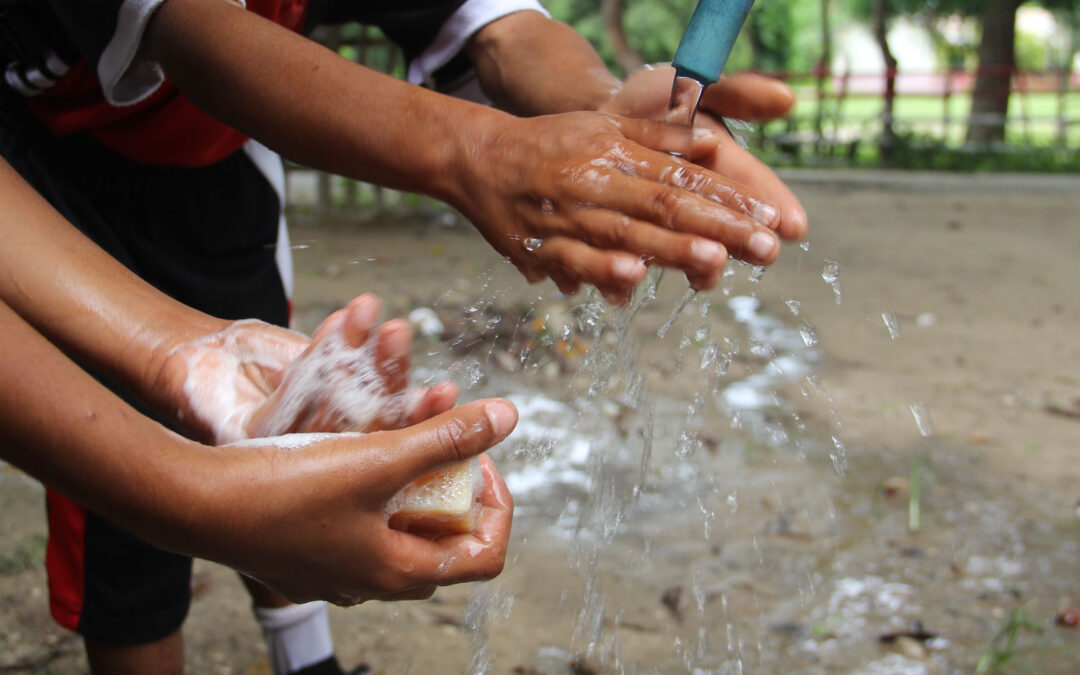
Globaler Handwaschtag 2026 und das Wasser, Seife und die Praktiken, die die Gesundheit schützen
Fair Future Foundation Am Globalen Handwaschentag am 15. Oktober Kawan Baik Indonesia untersuchen wir, wie Wasser, Seife und praktische Bildung die Infektionsprävention in East Sumba unterstützen. Arbeitsmöglichkeiten und routinierte Gewohnheiten sind neben medizinischer Versorgung unerlässlich, egal wo die Menschen leben.
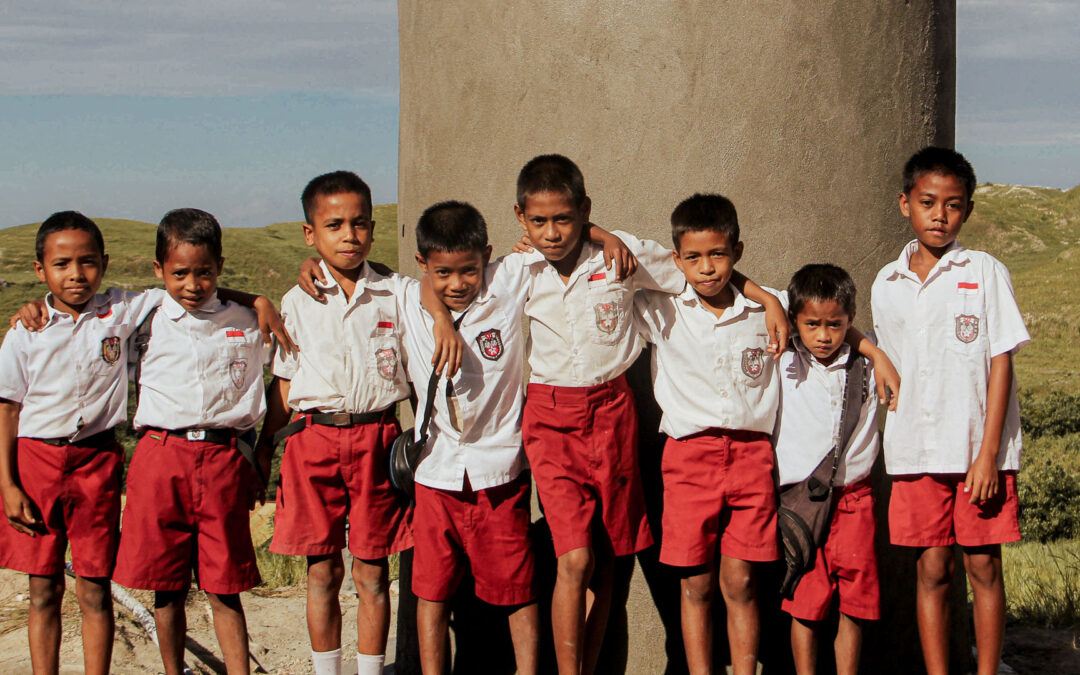
Acht Kinder, ein neuer Speicher und Wasser für die Schüler in Ost-Sumba
Acht Kinder stehen neben einem neu fertiggestellten Reservoir in Ost-Sumba. Ihre Schule hatte zuvor weder Wasser noch Toiletten und verfügt immer noch über keinen Strom. Die Water Connections Verknüpfung von Wasserversorgung mit praktischer Gesundheits- und Ernährungsbildung ist notwendig. Noch benötigt man Dutzende weitere Reservoirs.
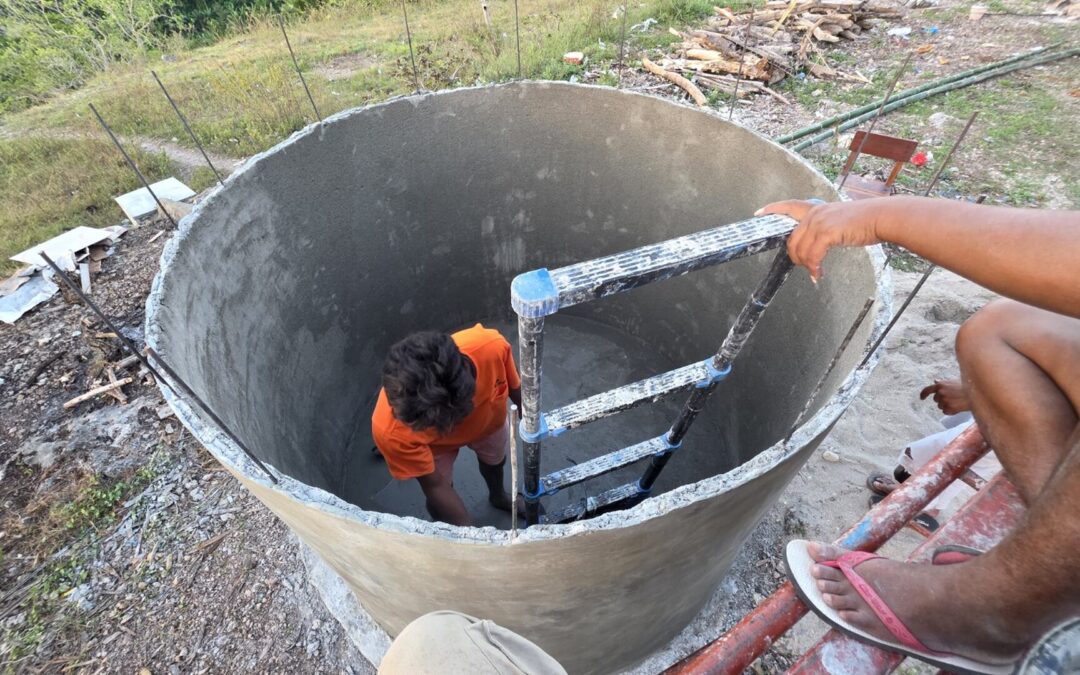
In einem Eisenbeton-Reservoir, das für die sichere Regenwasserversorgung gebaut wurde
Fair Future Foundation Und die Kawan Baik Indonesia Teammitglieder verlegen eine Abdichtung innerhalb eines 5.300 Liter großen Ferritbeton-Reservoirs in Ost-Sumba. Die örtlichen Dorfbewohner arbeiten neben ihnen und erlernen eine praktische Technik, die gefiltertes Regenwasser an drei ländliche Haushalte bringt.
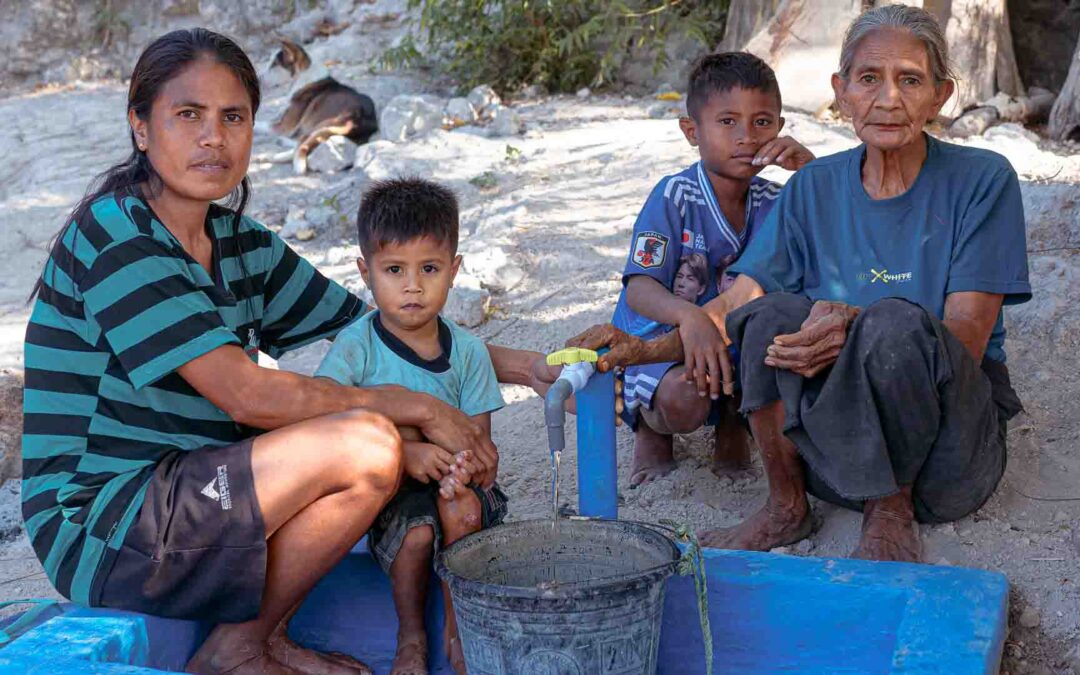
Sauberes Wasser zu Hause | Mit der Schwerkraft versorgt Water Connections
Ein neues 5.300-Liter-Speicherbecken und 200 Meter mit Wasser gefüllte Leitungen bringen nun Wasser direkt an zwei Familien vorbei. Für rund fünfzehn Menschen verändert ein Hauswasserhahn die Hydratisierung, die Zubereitung von Lebensmitteln, die Hygiene und die Exposition gegenüber Wasserkrankheiten und reduziert gleichzeitig die tägliche Belastung durch das Abholen von Wasser aus dem Haus.
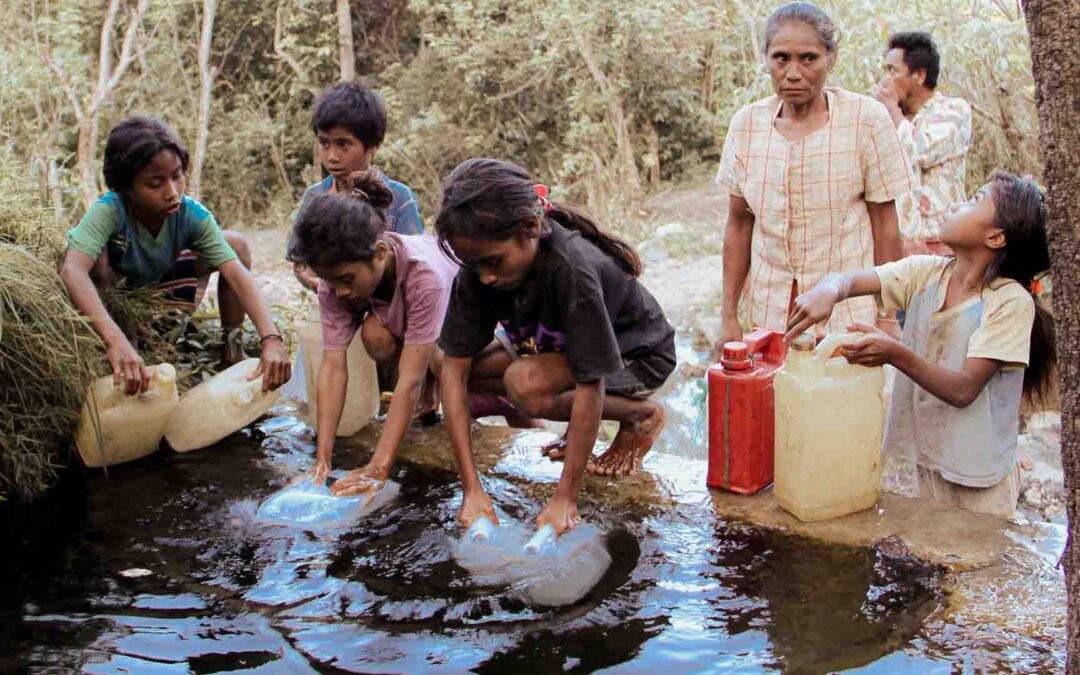
Unsicherer Wasserverbrauch – Kinderdiarrhöe in Indonesien | Gesundheitskrise
Unsichere Wasserqualität bleibt in Indonesien eine der Hauptursachen für diarrheale Erkrankungen bei Kindern in ländlichen Regionen. Verunreinigte Flüsse, mangelhafte sanitäre Einrichtungen und Plastikverschmutzung stellen Kinder einer Infektion, Dehydrierung und Unterernährung aus. Eine Verbesserung des Zugangs zu sauberem Wasser und einer Hygienebildung ist unerlässlich, um die Gesundheit der Kinder zu schützen.

Water Connections Reservoirfinanzierung | Reinwasser Sumba
Sauberes Wasser bleibt eine der dringendsten Herausforderungen für die öffentliche Gesundheit in Ost-Sumba. Durch Fair Future Foundation das Water Connections Programm Kawan Baik Indonesia sollen 12 neue Regenwasserreservoirs gebaut werden, um ländlichen Familien sicher gefiltertes Wasser zu liefern und die Gesundheit von Hunderten von Menschen zu verbessern.

Laindatang Wasserreservoirbericht | 114,5 m³
Laindatang Der Bericht über den Wasserreservoirbau dokumentiert den Bau eines 114 m³ großen Bewehrungskonstruktions-Regenwasser-Systems in East Sumba. Das Reservoir wurde errichtet, um für mehr als 200 Menschen und eine lokale Schule Wasser für die Trockenzeit zu sichern. Es ist nun voll und betriebsbereit, was die strukturelle Zuverlässigkeit und die Gemeindeverwaltung bestätigt.
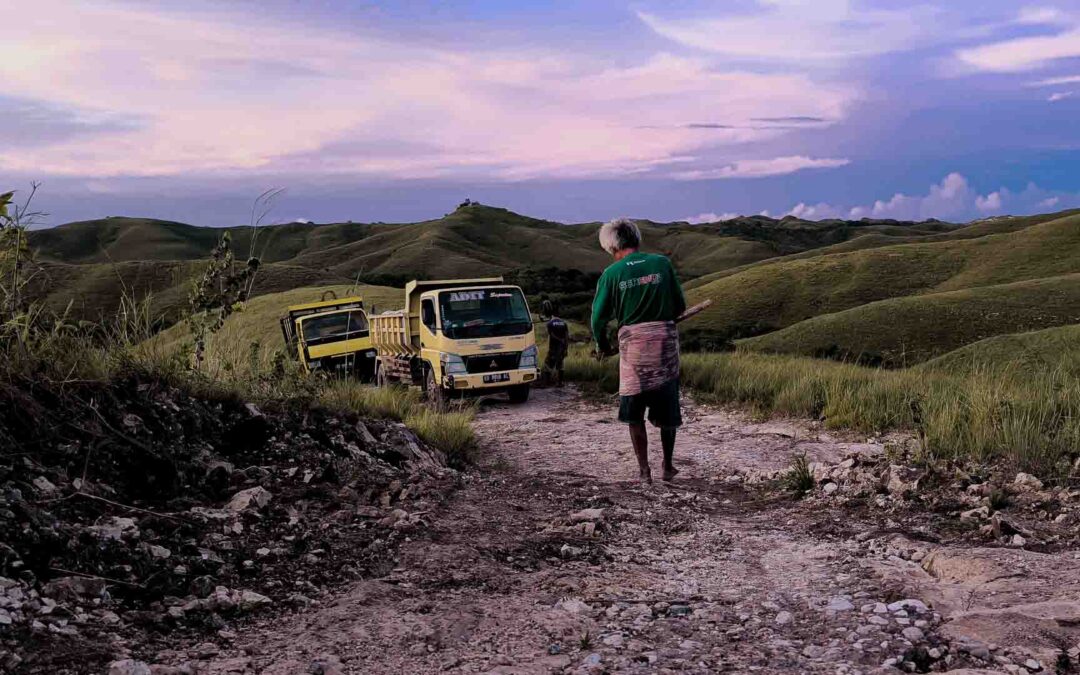
Gesundheit ohne Infrastruktur – eine Fiktion | Rural Care
Gesundheit ohne Infrastruktur beschreibt eine einfache Realität im ultra-ländlichen Osten Indonesiens. Wenn Straßen, Wasser und Strom fehlen, verzögert sich die Diagnose und vermeidbare Krankheiten werden tödlich. Infrastruktur ist nicht zweitrangig im Gesundheitswesen. Es ist Gesundheitswesen.

Wasserreservoir-Abschlussmaßstab zur Sicherung der Gesundheit der Bevölkerung
Im Inneren des Laindatang Reservoirs misst eine Graduierskala alle zehntausend Liter gespeicherte Wasser. Dieses präzise Instrument ermöglicht die sichere Überwachung, die kontrollierte Nutzung und den langfristigen Schutz sauberer Wasser. In ultra-ländlichen Dörfern ist die genaue Messung von Wasser keine technische Angelegenheit, sondern eine Frage der Prävention und des Überlebens.
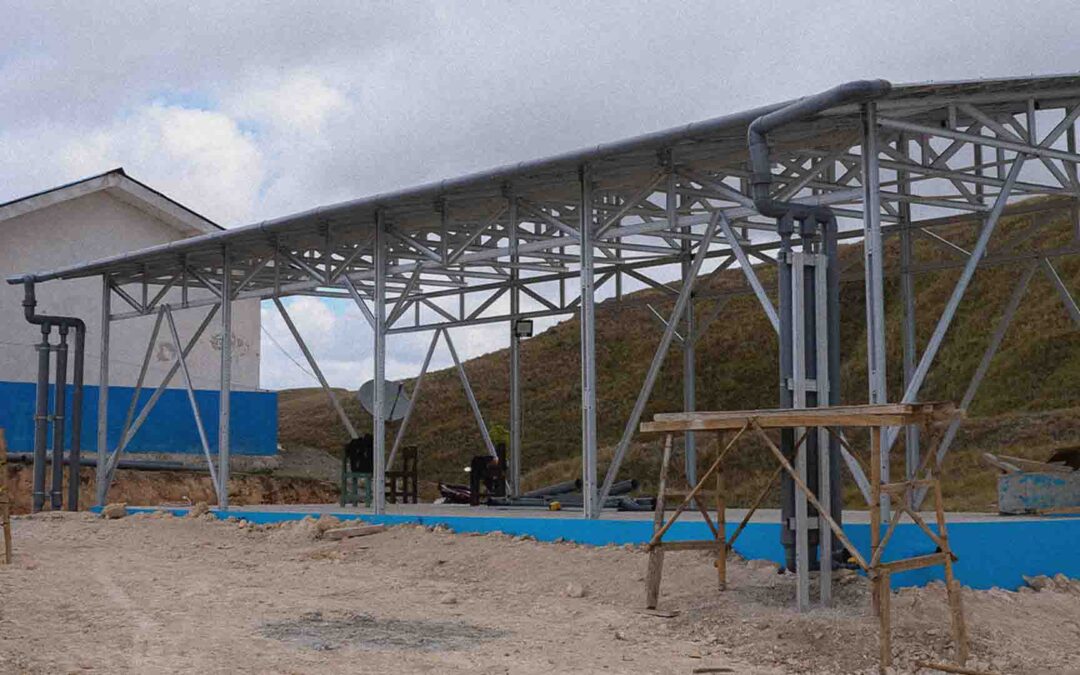
Laindatang Wasserfiltrationssystem | Präventive Gesundheit
Bevor das Wasser in den Tank gelangt Laindatang, wird es manuell gefiltert. Sonderanfertigte Filtermodule entfernen Schmutzpartikel, organische Stoffe und Insekten und verringern so die Kontaminationsrisiken. Dieses System verwandelt das Regenwasser-Ernteverfahren in eine präventive Medizin für Familien, die weit von medizinischer Infrastruktur entfernt leben.
Verantwortung
Water systems must remain measurable, repairable and transparent
We document volumes, construction, materials, beneficiaries, site inspections, faults, corrective work and how funds are used. A completed structure is not the end of responsibility. Its condition and usefulness must continue to be checked.
