


Spenden
Support Care
Artikel & News
Feldgeschichten
Glossar
Feldführer
Alle Artikel & Neuigkeiten
This page gathers all news and field articles from Fair Future Foundation. Medical missions, clean water projects, malaria prevention, solar electrification, logistics and training in ultra-rural Indonesia. Transparent reports, real stories, measurable impact. Follow our work, step by step, from the field to long-term solutions.
Berichte aus der Praxis
Original articles from our teams in East Indonesia
The work behind each story
Our teams write these articles from the places where we work. They document medical care, access to water, prevention, education and the practical decisions made with communities. Each story connects an observation from the field with the work needed to respond.
Erfahren Sie mehr über unsere Geschichten und Ressourcen
Latest articles
Von unseren Teams · Neuheiten zuerst

Verhaltenswirkungen auf die Ausbreitung der Malaria
Jenseits der Grenzen: Kampf Malaria zusammen in Ostindien. Dies ist das neue "Bild des Tages"Das Video zeigt ein junges Mädchen aus dem Lapinu Dorf, das unwohl aussieht. Alex untersuchte sie im Jahr 2020 und nutzte einen Stethoskop, um ihr Herzschlag zu hören. Im April 2023 besuchten wir das Dorf erneut im Rahmen des Primary Medical Care Programms. Leider erkrankte das Mädchen an Malaria Sie litt unter hohem Fieber, Schmerzen im Körper und einer allgemeinen schlechten Gesundheit. Nach der Behandlung und der Beratung ihrer Mutter hat das kleine Mädchen nach nur einem Monat bereits erhebliche Verbesserungen gezeigt.
Unsere Organisation ist darauf ausgerichtet, Fördern Gesundheitspolitik in ultra-ländlichen Regionen Indonesiens (wie hier in East Sumba), und wir sind zutiefst besorgt über die Auswirkungen Malaria Wie Sie bereits wissen, betrifft die Malaria besonders gefährdete Bevölkerungsgruppen. Leider ist die Malaria in Indonesien nach wie vor die häufigste Ursache für Krankheiten und Todesfälle, insbesondere in East Sumba, wo wir ansässig sind.
Ein bisschen GeschichteDas Wort "Malaria"Entspricht dem italienischen Ausdruck.“ "mal'aria", was so viel heißt wie "schlechtes Luft". Dieser Begriff wurde historisch verwendet, um die Annahme zu beschreiben, dass Krankheiten durch die Einatmung verschmutzter oder veralteter Luft in sumpfigen Gebieten verursacht werden. Der Plasmodium-Parasit ist für die Entstehung von Malaria verantwortlich und Forschungsergebnisse legen nahe, dass er seit jeher Menschen betrifft. mindestens 4.000 Jahre.
Mehrere menschliche Verhaltensweisen tragen irreparabel zur Ausbreitung oder Fortbestehung der Malaria bei. Hier sind einige der Faktoren, die zu einer Zunahme der Malariafälle führen:
Unfähigkeit, Stechmückenstiche zu verhindern, schlechte Abfallwirtschaft, unzureichende Wohn- und Sanitärbedingungen, Verschlechterung der hygienischen Bedingungen, Abholzung, Veränderungen der natürlichen Lebensräume, Zuwanderung von Menschen, Resistenz gegenüber Medikamenten*** und Missbrauch, eingeschränkter Zugang zu Gesundheitsdiensten, höhere Analphabetenraten bei jüngeren Bevölkerungsgruppen sowie fehlendes gemeinschaftliches Engagement und Bewusstsein können alle zu einer Zunahme der Zahl der Todesfälle führen. Malaria Fälle… Und das, unter anderem noch weitere Beispiele!
Infolgedessen leiden viele Menschen, insbesondere Kinder und Schwangere, weiterhin unter diesem vermeidbaren und behandelbaren Problem. Krankheit. Unser Programm zielt darauf ab, diese Probleme gezielt anzugehen, indem verschiedene Maßnahmen zur Stärkung der Malariabekämpfung in der Region umgesetzt werden. Es ist entscheidend zu betonen, dass der Kampf gegen Malaria eine einheitliche Strategie erfordert, die sowohl präventive als auch therapeutische Maßnahmen umfasst. Dazu gehören auch Initiativen zur Verbesserung der Lebensbedingungen und der Lebensqualität der von der Krankheit betroffenen Gemeinden.
***Das Problem der Selbstmedikation und die daraus resultierende Resistenz gegen antimalarische Medikamente sind zwei miteinander verbundene Herausforderungen, die die effektive Bekämpfung und Kontrolle der Malaria erheblich erschweren.

Unser Ziel ist es, rasch gegen Malaria vorzugehen.
Die Malaria hat aufgrund ihrer abgelegenen und unzugänglichen Lage, der unzureichenden Gesundheitsinfrastruktur und der begrenzten Präventionsmaßnahmen erhebliche Auswirkungen auf Ostindonesien, insbesondere auf Sumba Timur. Plasmodium falciparum und Plasmodium vivax sind in diesen Regionen weit verbreitet und die Malaria-Übertragung erfolgt das ganze Jahr über.

Beyond Borders: Gemeinsam gegen Malaria in Ostindonesien kämpfen
Jenseits der Grenzen: Kampf Malaria zusammen in Ostindien. Dies ist das neue "Bild des Tages" shows three kids between 8 and 12 years old. Children are among the most vulnerable Malaria victims in Indonesia, especially in the east of the country and of course here, where we work with Fair Future, Gute Freunde foundations and all our partners and friends.
The health and well-being of children in eastern Indonesia are threatened by Malaria, which hinders their growth, development, and quality of life. Our organizations have a deep understanding of the urgency to address this issue, and we are working hard on our disease control Programm, which is of utmost importance. We have a strong track record of working in these regions where the epidemic affects about 80% of children. Collaborative efforts are underway to combat malaria and prioritize the welfare of children in these areas.
Young children are at a higher risk of contracting malaria due to their underdeveloped immune systems. Living in rural and poor areas with limited access to preventive measures only exacerbates the severity of symptoms if infected. A contributing factor is that young children typically haven't been exposed to the Malaria parasite enough times to build up immunity* against it.
It can be challenging for young children in our regions to communicate or identify the symptoms of malaria, and their parents may not be familiar with them either. As a result, affected children may display non-specific symptoms like fever, tiredness, loss of appetite, irritability, and vomiting, which could easily be mistaken for other common childhood illnesses like drinking contaminated water. Consequently, this can cause delays in diagnosing and treating malaria accurately
*Some additional explanation: People living in malaria-endemic areas gradually develop acquired immunity, which reduces their susceptibility to severe infections in the future.

Primary Medical Care Bericht über den Fortschritt
Das Programm Primary Medical Care (PMC) hat in den ländlichen Gemeinden von East Sumba eine bemerkenswerte Veränderung bewirkt und über tausend Behandlungen durchgeführt, die dringend benötigte medizinische Hilfe für die Betroffenen bieten. Durch ihre unerschütterliche Hingabe und harte Arbeit haben die Frauen der Region die Kontrolle über die Gesundheit und das Wohlbefinden ihrer Bevölkerung übernommen…

Malaria in Ost-Sumba: Alle Dörfer wurden rot!
Diese neue "Bild des Tages" shows you a brave but sad mom who asks for care for her little boy. She is a courageous but sad mother who seeks care for her little boy, who suffers from Malaria. With pain and more than 40 fever, He is the example of the "typical patient" here: Under five years old, this family lives in an ultra-rural and marginalized area. She is poor, and they don't have access to Medizinische Versorgung or enough food and Sauberes Wasser; They don't have toilets either. Moreover, the whole village does not have access to electricity.
The medical staff of Gute Freunde and Fair Future Foundation bring him relief and medicine to lower his fever and get better as soon as possible. We also talk to the mother and give her good advice.
Let me re-explain to you what malaria is and why this disease is hazardous, and the categories of people it affects in the first place:
Malaria is caused by parasites transmitted by the bites of infected mosquitoes. Although anyone can get malaria, specific categories of people are more susceptible to severe illness and complications. We find that the impact of malaria varies by geographic region and local health infrastructure. Our efforts to fight malaria focus on prevention through measures such as the establishment of the Primary Medical Care Programm (PMC), mosquito nets, spraying in villages (fogging), and learning to wash with an "ani-malaria or disinfectant" soap, among others.
1. First, children under five: This is because young children have a weaker immune system and have not yet developed immunity to disease. They are more likely to have serious symptoms and complications, including severe anaemia and cerebral malaria, which can be life-threatening. This is the case here: Infant mortality is very high in ultra-rural areas and marginalized populations of East Sumba.
2. But also pregnant women: Of course, malaria can have adverse effects on both the mother and the unborn child. Pregnant women are at an increased risk of developing severe Malaria, leading to complications such as maternal anaemia, spontaneous abortion, stillbirth or low birth weight infants. I spoke to you about a similar case in Kabanda, right?
Public health interventions to provide vital advice to the most affected populations via the #kawansehat program are essential. You have to be close to people if you want to advise them on the best way to have a healthier life.
3. Ultra-rural and marginalized populations: Communities living in rural and remote areas, often with limited access to health care, such as here in East Sumba, are disproportionately affected by Malaria. Factors such as poverty, lack of knowledge about preventive measures and limited access to health services contribute to malaria's higher prevalence and impact in these communities.
4. Immunocompromised people: People with weakened immune systems, such as those living with HIV/AIDS, are more likely to contract severe malaria. We are also talking about people with chronic illnesses. Malaria can also aggravate the progression of HIV infection. And concerning the rate of HIV-positive people here is also very high, even with very few tests being conducted.

Es ist schön, Wasser zu haben, ohne weit zu gehen, um es zu bekommen.
Diese neue "Bild des Tages" shows you a 12-year-old kid named Yaspan. He was born in a tiny village in East Sumba where Fair Future and Gute Freunde have worked for over four years. We built a neuen Schulgebäude for him a few years ago, #sdmbinudita, and now he and his family have clean water reaching his house, which was not the case before. Yaspan and all his friends from the Village of Mbinudita are lucky because children struggle to get water everywhere else. They have to find it very far on foot; to do this, they miss school, get injured, and fall ill.
There's something inexplicably satisfying about the heavy rains in ultra-rural East Sumba, especially when you live in a water-scarce area: The sound of raindrops hitting the roof is soothing, and the smell of wet earth is refreshing; plus, you feel good because you know that this rain will help the family. When it rains a lot, kids and families here can't help but be happy knowing that their water tanks will be filled and they won't have to worry about running out of water for a moment.
"-It's a small blessing for which I am grateful, and I always make sure to take advantage of the rain while it lasts…" a friend from the village told me last month.
Heavy rains like the ones we experienced last month in one of the ultra-rural villages in East Sumba, where we work with Fair Future and Kawan Baik Indonesien foundations, are also an opportunity to celebrate as these kids wade through the water. They are the first to be happy because they won't have to walk for hours to fetch water far from home.
With those heavy rains comes plenty of water and the relief of much-needed hydration. The floods will provide much-needed food for crops, wash livestock and provide villagers with general water and sanitation assistance. With the bonus of increased economic activity and improved social well-being from the new abundance of water, these small floods are becoming the opportunity of a lifetime for the villages of Sumba. With increased water storage, a healthier environment and better living conditions, small floods caused by heavy rains are the perfect way to improve the lives of villagers in these areas where water is absent.
It's interesting to consider that what may be a challenge for many of us is a helpful solution for these families.

Kullup ist ein Loch in der Felswand, in dem Regenwasser gesammelt wird.
Diese neue "Bild des Tages" shows you kids from the village of Laidatang, who fetch water far from home in the "Kullup" of the village. Elthon, responsible for documentation (with the black t-shirt), und Alex, from the medical staff, are also present in this photo. With the kids and one or two adults accompanying us, we walk more than an hour to reach this place in the middle of a high hill. You must descend a steep path to access these hand-dug holes in the rock. In 30 minutes, we will have to go up the hill and walk back. But this time, loaded with several Jerry-Kanister filled to the brim.
Die Fair Future und Gute Freunde teams spend two days with the families of the ultra-rural and isolated village of Laindatang to get to know them even better. In this village, we have the project to create a #WaterConnections project. I let you read here the articles related to this project and here to see what your want to do to save their lives,
In Laindatang, families only have access to rainwater. It's for everything: eating, drinking, cooking, bathing, washing clothes, drinking water, caring for children, sick people or watering animals. Therefore, one of the ways for women and young girls to have water at home to live on is to walk several kilometres to find the "Kullup".
Kullup, what is it? These are small stone basins, directly dug into the rock by the villagers, used to collect and store rainwater in rural areas. When it rains, the water seeps into the ground at the top of the hill and then is filtered through the earth and the basements. It flows drop by drop in these stone basins, the "Kullup". Then the villagers come to fill their Jerry-Kanister with five or ten litres.
The "Kuluk" are an essential water source for the local communities. But the quality of stored water can be affected by bacterial contamination, chemicals, animal waste or debris. Therefore, regularly cleaning these small holes in the rock is essential to maintain water quality. It is important to note that the "kuluk" is only a temporary solution to the Wasserkrise in areas with limited access to drinking water. Indeed, the "kuluks" cannot fill up correctly without rain. They dry out about ten days after the last rains and remain dry for almost nine months. To find water, young girls, women and children, sometimes under five, will have to walk even further and longer.
Our two organizations work with local communities to implement longer-term solutions, such as constructing water supply networks using deep boreholes and sealed and healthy rainwater cisterns. The Water Connections program offers innovative and sustainable solutions. It includes promoting water conservation practices with “Kawan Sehat” and self-sustaining access to Primary Medical Care through the PMC-Programm.
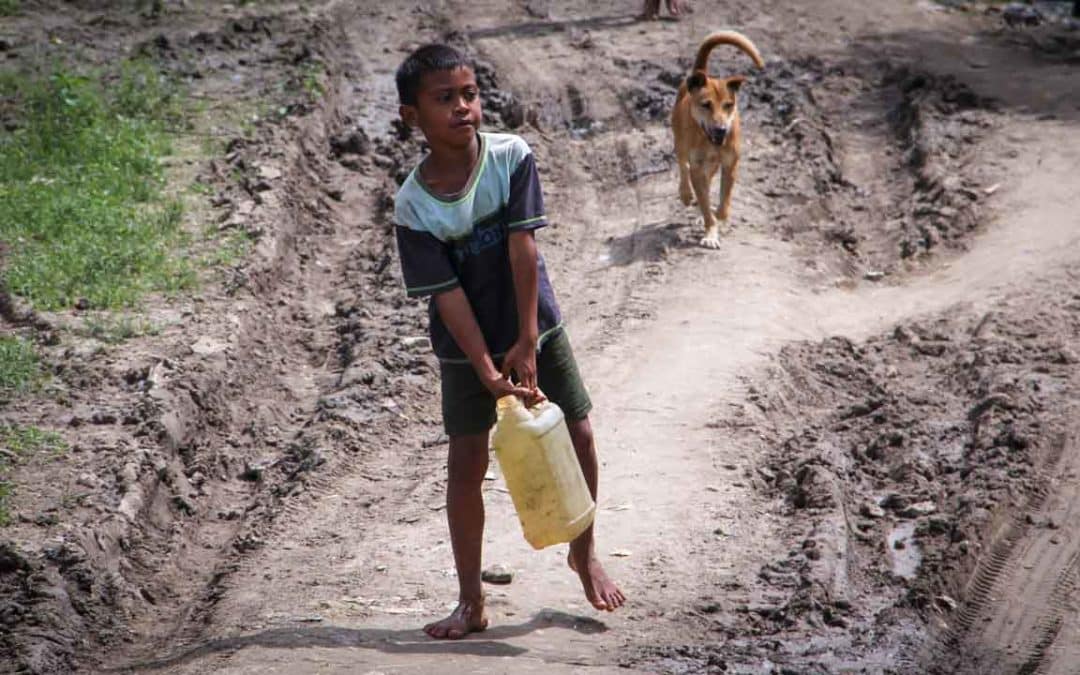
Der Zugang zu sauberem Wasser ist von entscheidender Bedeutung für die menschliche Gesundheit.
Dies "Bild des Tages"zeigt die Kämpfe junger Kinder“ Ost-Sumba. Die Kanister sind schwer und manchmal noch sichtbarer als die Kinder selbst. Aufgrund des eingeschränkten Zugangs zu Trinkwasserquellen leben die Kinder dort. (hier in diesen Bildern in den Dörfern von Kabanda, Mahu, Laindatang, und Tana Mbanas) Sie sind gezwungen, lange Wege zu Fuß zurückzulegen, um Wasser zu holen. Das Wasser in Fließgewässern oder Brunnen ist ebenfalls kontaminiert. Dies nimmt viel Zeit in Anspruch und stellt sie durch das Tragen schwerer Wassergewichte in Gefahr zu verletzen oder krank zu werden. Der Mangel an Zugang zu sauberem Wasser trägt ebenfalls zur schlechten Hygiene und sanitären Praktiken bei, was die gesundheitlichen Probleme jener Gemeinden in Ost-Sumba weiter verschärft, in denen Gute Freunde Und Fair Future arbeitet sehr hart. Gemeinsam setzen wir uns dafür ein, den Zugang zu sauberem Wasser in diesen Gebieten zu verbessern, in denen keine Straßen verläuft, um die Gesundheit und das Wohlbefinden von Kleinkindern und ihren Familien zu gewährleisten. Zusätzlich zur physischen Belastung durch das Abholen von Wasser und wie bereits erklärt In diesem Beitrag, Kinder in ländlichen Gebieten von Ost-Sumba sind aufgrund dieser Aufgabe oft von Bildung und anderen Möglichkeiten abgeschnitten. Dies ist weit verbreitet. (wie auf diesem Bild des Tages) dass sie die Schule oder andere Aktivitäten verpassen, um Wasser zu sammeln, Betrifft ihre akademisch Fortschritt und sozial Entwicklung.
Hier haben die Menschen hauptsächlich nur Zugang zu verunreinigtem Wasser. Dies führt zu vielen Krankheiten, darunter gastrointestinale Infektionen, Hautkrankheiten, parasitäre Krankheiten und andere Infektionskrankheiten wie Malaria, Denguefieber, Cholera, Typhus, Typhusfieber, Hepatitis A oder Darmdurchfall. Kinder und ältere Menschen sind besonders anfällig für Krankheiten, die durch verunreinigtes Wasser verursacht werden, was hier eine bedeutende Ursache für die Säuglingssterblichkeit ist.
Fazit:, die Gewährleistung des Zugangs Sauberes Wasser durch ein Programm wie das #waterconnections Das Projekt hat oberste Priorität und darf nicht vernachlässigt werden. Zugang Sauberes Wasser Es ist unerlässlich, das Leben zu erhalten und die Gesundheit aller hier zu gewährleisten. Wasser spielt eine entscheidende Rolle bei der Verhinderung der Verbreitung der oben genannten Krankheiten und ermöglicht es Menschen, ein gesünderes Leben zu führen. Ob zum Trinken, Kochen oder Reinigen –, Sauberes Wasser Ist unerlässlich für den Alltag. Ohne Zugang leiden die Gemeinden in den ultra-ländlichen Gebieten von Ost-Sumba unter einem Mangel an Sanität und Hygiene, Dies führt zu verschiedenen gesundheitlichen Problemen.
Deshalb müssen wir alles in unserer Macht Stehende tun, um sicherzustellen, dass sauberer Wasser für alle Menschen zur Verfügung steht, die es benötigen.
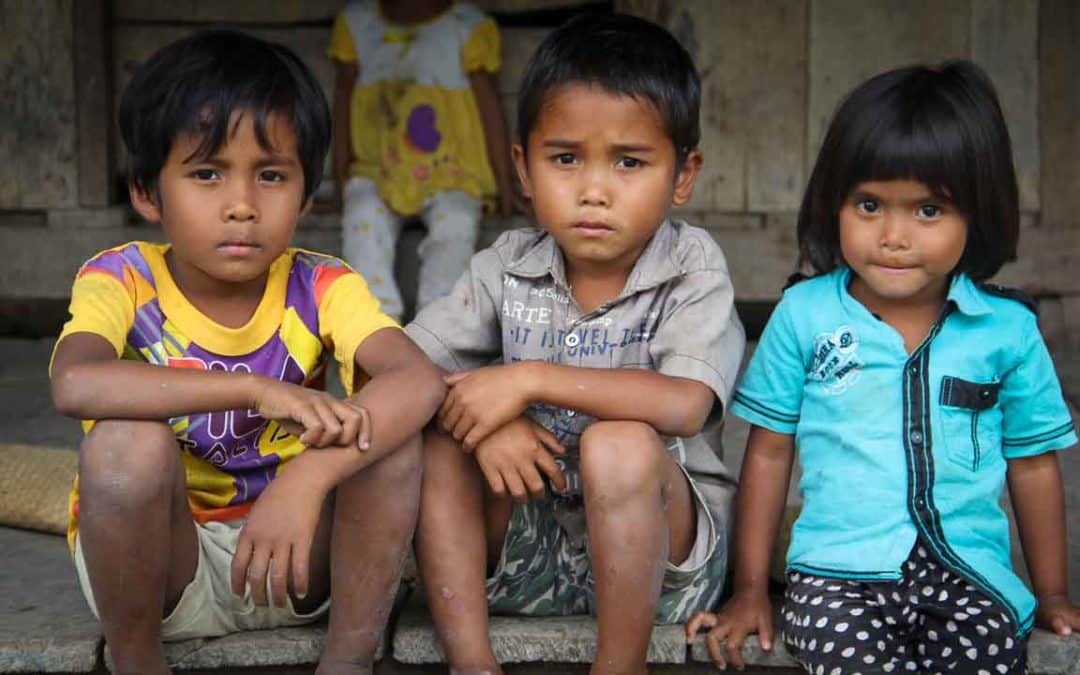
Lassen Sie uns Malaria verhindern, anstatt sie zu heilen!
In diesem "Bild des Tages" shows you three children from Kabanda Village in Ost-Sumba (read this post here), where the PMC program is in place. In this village, very far from everything, especially health centres, Malaria is very active and wreaking havoc. We are talking about 80% of children under 12 are affected. It is, therefore, essential to prevent and train families. This is what we are doing here.
The daily observations concerning the causes of Malaria are multiple here. These include, in particular, the lack of access to health care, information on prevention methods, the unavailability of health centres and sanitation, and the growing resistance to antimalarial drugs for regions with access to these treatments.
A reminder for all Kawans: Malaria is transmitted by female mosquitoes of the "Genus Anopheles", throughout the East Sumba region. These mosquitoes breed in standing Wasser, such as rainwater storage tanks and open water sources, most of the time in rural and deprived areas of East Sumba.
As Fair Future has repeatedly seen and repeated for years, the consequences of Malaria are serious if nothing is done to treat it: High fever, severe headache, nausea and vomiting. If not treated quickly, the disease can progress and lead to severe complications, including kidney failure, anaemia, seizures and death.
It is essential to train families and rural communities to protect themselves from this disease to reduce its transmission. Also, by learning how to prevent and treat Malaria, rural families and communities will reduce the economic and social burden of the disease. Malaria entails high costs for families and communities, particularly medical expenses (if they can access them), school absenteeism, and reduced productivity.
As we apply it with the Primary Medical Care Programm (PMC), training families and rural communities to protect themselves from malaria contributes to strengthening the resilience of these populations in the face of epidemics of infectious diseases such as HIV, Tuberculosis, Gastroenteritis, cholera etc…
Alexandre Wettstein from the Foundation’s Medico-Social Camp in East Sumba, Rumah Kambera, Lambanapu, on the 2nd of May 2023
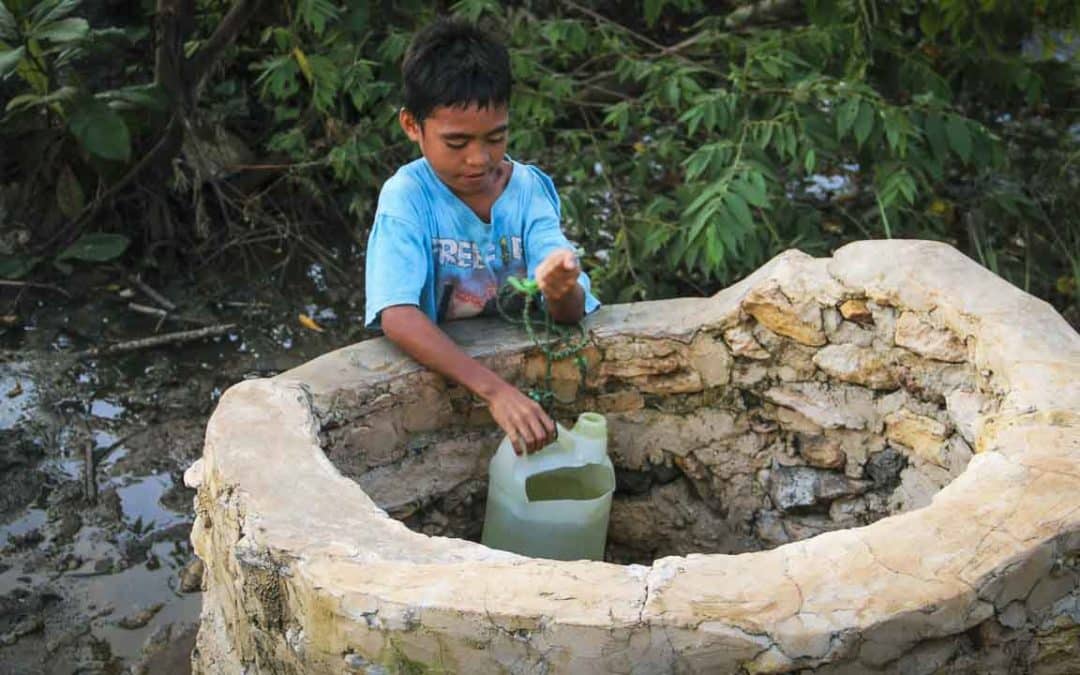
Verringern Sie die Gesundheitsrisiken durch sauberes Wasser für Familien
In diesem "Bild des Tages" shows you what children do several times a day: Fetch water for the family with some 5-litre jerrycans. Most of the time, the young girls take care of this. Here in this photo, it is a young child of ten years. There are no daughters in the family. He does this job instead of going to school. He and his family have only two litres or less of water a day for eating, drinking, bathing and everything else.
Unfortunately, like here in Tana Mbanas (Sumba Tenggah), there is still a vast majority of villages in Sumba that do not have access to clean drinking water. In these villages, the inhabitants often depend on surface water sources such as rivers, lakes or ponds, which bacteria, viruses, chemicals or by animals and insects mostly contaminate.
The lack of clean water has severe consequences for the health of the inhabitants. Waterborne diseases, such as Darmdurchfall, cholera and typhoid, Hepatitis A, Malaria und Dengue fever, are common where access to clean water and toilets is limited or absent. These diseases can be severe and even fatal, especially in children, pregnant women and the elderly.
To help villages without clean water in Sumba, Fair Future and Kawan Baik are implementing effective measures to improve access to clean and healthy water. Our solutions include drilling deep wells with our equipment, construction of water treatment plants, storage tanks, rainwater harvesting and storage, and installation of water management systems—irrigation and construction of healthy sanitation facilities.
We are still seeking funding and technical resources to set up sustainable, safe and clean water infrastructure in this region, one of the world's poorest and most dry.
Alexandre Wettstein from the Foundation’s Medico-Social Camp in East Sumba, Rumah Kambera, Lambanapu, on Mai 1st, 2023.

Kampf gegen Malaria in Ostindonesien
East Sumba, wo wir zum Zeitpunkt der Erstellung dieses Artikels tätig sind, erlebte eine dramatische Malaria-Epidemie. Im ersten Quartal 2023 gab es mehr als 28.000 Fälle von Malaria, ein deutlicher Anstieg im Vergleich zum Vorjahr. Vor einigen Monaten erklärte Fair Future diese lebensbedrohliche Notlage.
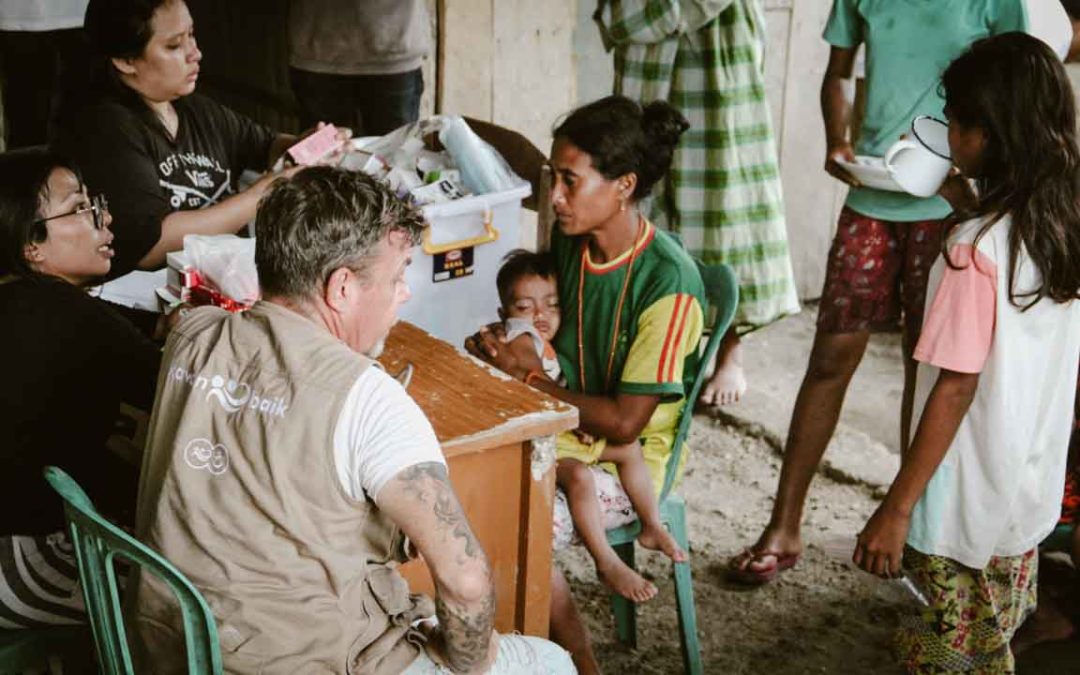
Medizinische Versorgung von Kindern, die an Malaria erkrankt sind
In diesem "Bild des Tages"Fair Future und Gute Freunde Medizinisches Personal versorgt die Kinder, die am wahrscheinlichsten von der Erkrankung betroffen sind. Malaria. Er ist weniger als zwei Jahre alt und hat ein Hauttemperatur von 40,6 °C. Ihre Symptome passen zu dieser Diagnose. Malaria. Wir geben ihm entsprechende Medikamente, primary medical care um seine Temperatur so schnell wie möglich zu senken. Dann wird er morgen zur Behandlung ins nächstgelegene Gesundheitszentrum gebracht, das sich mehr als drei Stunden vom Dorf entfernt befindet.
Malaria ist ein schwerwiegendes Problem für die öffentliche Gesundheit, insbesondere in den ultra-ländlichen und ärmeren Regionen, in denen Fair Future und Gute Freunde Stiftungen arbeiten sehr hart. Malaria Es ist eine lebensbedrohliche Erkrankung, die durch den Plasmodium-Parasiten verursacht wird und über die Bissverletzungen infizierter weiblicher Anopheles-Mücken bei Menschen übertragbar ist. Kinder unter fünf Und schwangere Frauen sind ebenfalls besonders anfällig für Malaria, da ihr Immunsystem weniger entwickelt ist und sie möglicherweise Schwierigkeiten haben, Infektionen zu bekämpfen. Menschen mit chronischen Erkrankungen sind ebenfalls anfällig. (HIV, Hepatitis, Unterernährung usw.)
Ultra-ländliche und arme Regionen wie East Sumba sind besonders anfällig für die Ausbreitung von Krankheiten. Malaria Aufgrund von Faktoren wie Wasserknappheit oder Verunreinigung Wasser, beklagenswerte Wohnbedingungen, fehlendes Zugang zu Gesundheitsversorgung und Präventionsmaßnahmen, unzureichende Sanität… Außerdem verfügen wir hier weder über Antimalariamittel noch über schnelle Tests zur Erkennung der Krankheit. Dies macht unsere Behandlung und Prävention sehr schwierig.
