


It is absolutely crucial to transform unsanitary school toilets into clean and hygienic environments in remote rural areas to effectively prevent the spread of diseases like malaria, dengue fever, and polio. By implementing and promoting safe sanitation practices and ensuring access to clean water, we can significantly enhance living standards and improve health outcomes for children and their families.
Cette image a une résolution de 1920×1080. Cliquez dessus pour l’agrandir et la voir en plein écran.
Improving Living Conditions in Rural Areas
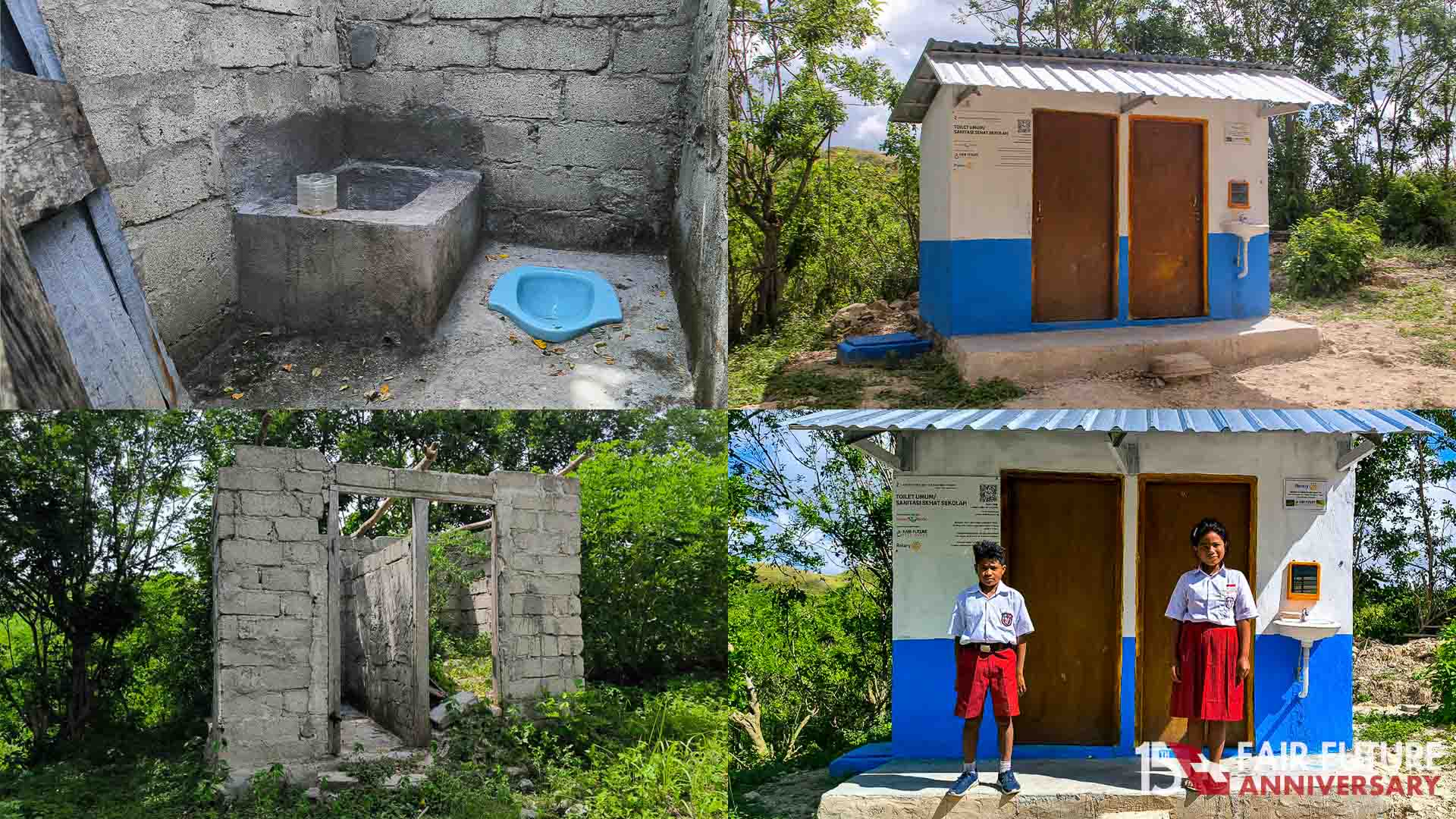
The latest “Photo of the Day” illustrates how our Foundation’s work is making a différence significative in areas where basic sanitation is scarce. Our rehabilitation efforts are transforming ultra-rural spaces that once posed Risques graves pour la santé into safe and hygienic environments, essential to preventing diseases such as maladie de malaria, dengue fièvre, diarrhée, et La poliomyélite—which has sadly resurfaced in this region.
This photograph highlights a horrifying example of a school toilet that was virtually unusable due to its lack of basic amenities such as water, doors, a roof and even a septic tank. These so-called “toilets” were unsanitary structures that posed significatif Risques pour la santé to students who could not use them or relieve themselves outside near the school premises, further increasing public hygiene risks in a locality already affected by the disease.
Before our intervention, nearly 100 children enrolled in this school did not have access to hygienic Installations sanitaires et Eau propre. Our teams deemed this unacceptable since the area is infested with maladie de malaria. Therefore, we have entirely redeveloped these toilets into two nettoyer et sain toilettes, thanks to the initiative of our Foundation. Currently used daily by children and educators, they promote Sécurité while creating an environment conducive to well-being.
“In regions where a simple toilet can save lives, our commitment to transforming unsafe spaces into clean, safe environments is a testament to our belief that every child deserves dignity and health.” — Alex Wettstein, CEO and Founder of Fair Future.
Due to insufficient toilet blocks for 100 children, two additional toilets (on the standard iron and cement model) are expected to be built soon. These facilities allow infants to wash their hands frequently and consume Eau propre while having access to potable water sources at home. Basique hygiène Pratiques comme par exemple lavage des mains instilled by teachers would become ingrained habits throughout society, significantly contributing to stopping the spread of diseases and ensuring that posterity enjoys better health outcomes.
Le Water Connections programme encompasses this intervention, which goes beyond its scope to significantly improve the well-being de ultra-remote communities. Fair Future sees it as a critical initiative à improve standards et reduce infectious diseases—particularly those linked to unsafe water sources ou inadequate sanitation, which leads à Mort de l'enfant rates. To maintain overall good santé et dignité throughout youth, everyone must first have access to nettoyer et accessible environments from an early age.
Un avenir juste Fondation medico-social camp in East Sumba – La maison de Kambera, Lambanapu – The 12th of Auguts 2024.


