In ultra-rural areas, the act of handwashing is not merely routine but a crucial, life-saving measure. This simple yet powerful practice plays an essential role in preventing the spread of diseases and safeguarding the health of entire communities. Despite its simplicity, handwashing with clean water can drastically reduce the incidence of waterborne illnesses, which are prevalent in regions lacking basic sanitation facilities.
Cette image a une résolution de 1920×1080. Cliquez dessus pour l’agrandir et la voir en plein écran.
Picture of the Day: The Life-Saving Habit of Handwashing
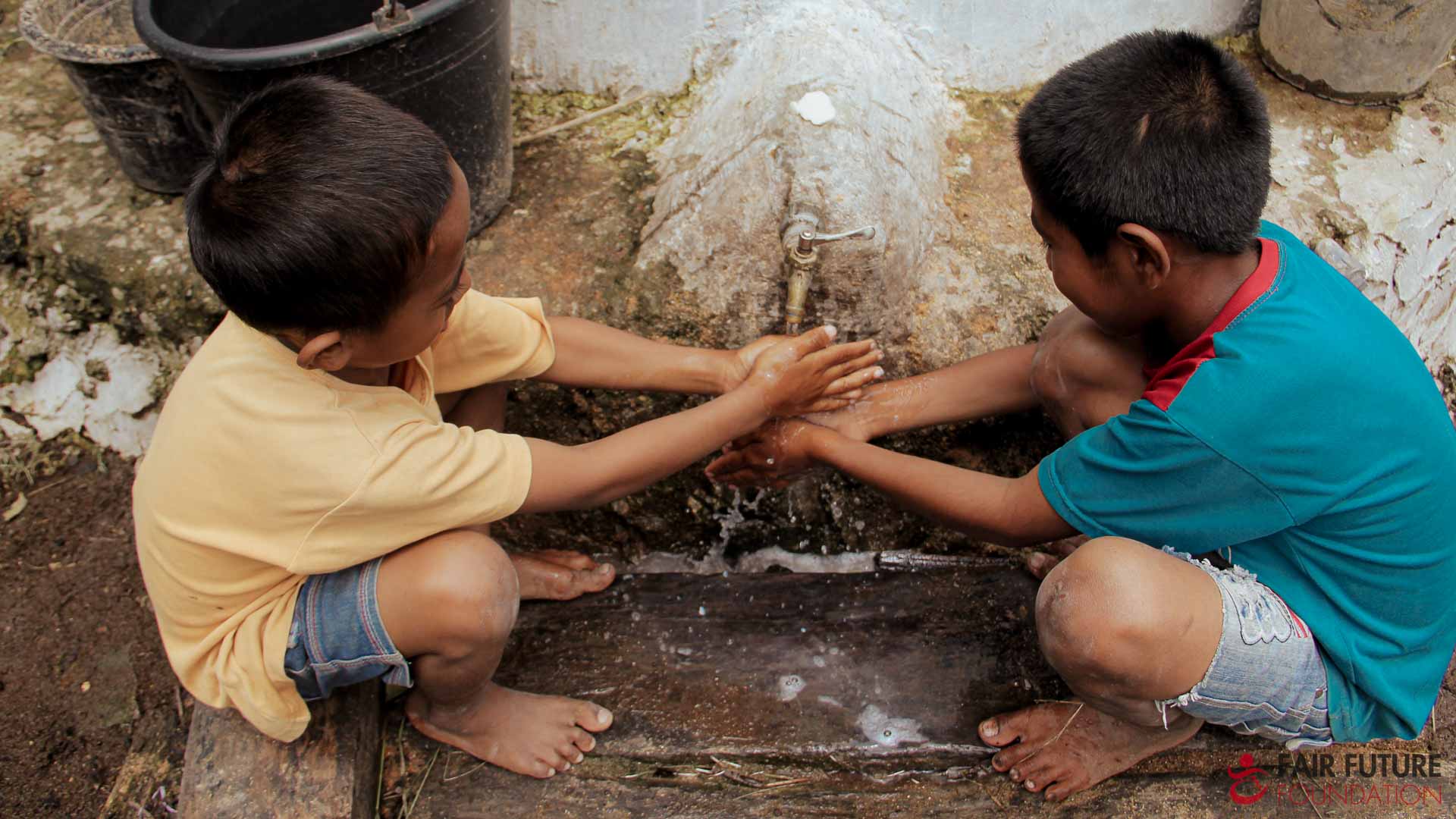
Cette nouvelle Photo de la journée shows two young children washing their hands under running water at the base of a ferrocement tank built by the Fair Future Foundation several years ago. This simple act is essential to prevent many diseases in ultra-rural areas where infectious and contagious diseases tragically claim countless lives.
Lavage des mains is more than just a good habit; it is an essential act of self-preservation and responsibility towards those around us. It serves as a defence against the germs we may encounter in others while protecting them from our own. Washing hands after using the toilet, before eating, and after meals is not just recommended; it is mandatory. However, in situations where water is limited or completely unavailable, lavage des mains becomes impossible, exposing communities to unnecessary risks that could otherwise be avoided.
“Healthy citizens are the greatest asset any country can have.” – Winston Churchill
That is why having access to clean water is not only important; it is vital. That’s why Fair Future created the Water Connections programme. By building reservoirs and developing water systems, we provide communities, and especially children, with the opportunity to understand the importance of hygiene and to start cultivating healthy habits from an early age.
In areas where water is extremely scarce, making lavage des mains impossible, Fair Future has launched the Primary Medical Care programme to help people who fall ill due to this shortage. This programme plays a vital role in providing the necessary care to those affected by water and hygiene-related illnesses.
This photo is about more than just water and hygiene: it symbolizes opportunity, education, and health. It signifies the potential of these enfants to lead healthier and safer lives. Accès à l’eau potable transforms handwashing from a mere possibility into an essential habit that can save lives.
Le Un avenir juste Foundation remains committed to defending this vital resource. It is fully aware that clean water transforms lives. It starts with the simple act of rincer les mains and impacts all areas of life, including health and dignity.
Un avenir juste Fondation medico-social camp in East Sumba – La maison de Kambera, Lambanapu – The December 19th 2024.
Autres lectures
- UNICEF: Works to provide access to clean water and promote hygiene education for children worldwide.
- OMS: Leads global campaigns on hygiene practices and waterborne disease prevention.
- WaterAid: Improves access to clean water, hygiene, and sanitation in underserved communities.
- Action contre la Faim: Focuses on providing water and hygiene solutions to combat malnutrition and disease.
- Partenariat mondial pour le lavage des mains: Advocates for handwashing with soap as a cost-effective, impactful health intervention.