
Programme de prévention de la malaria à Sumba 2023
It’s concerning that almost half of the global population is susceptible to malaria. Particularly in regions with high transmission rates, young children and expectant mothers are at a heightened risk of infection and mortality. In East Sumba, the situation is particularly dire, with some areas experiencing infection rates surpassing 80%.
1. Prevention: To prevent mosquito-borne diseases, it’s essential to implement environmental management strategies that reduce mosquito breeding sites, such as standing water, stormwater drainage, sanitation, quality of rainwater storage tanks, animals, and waste. Additionally, distributing long-lasting insecticide-treated mosquito nets* (LLINs) to households without them and providing families with “anti-malarial” soaps can help. Participating in the Indoor Residual Spraying (IRS) effort is also planned;
*LLINs are much more effective than untreated mosquito nets because they are produced with netting that contains a WHO-recommended insecticide
2. Diagnosis and treatment: We propose setting up diagnosis and treatment centres in targeted areas to address maladie de malaria using the “de-la-porte-au-port” approach. We will conduct home screenings using Rapid Diagnostic Tests (RDT) and Microscopes to detect cases accurately and quickly. Confirmed cases will receive timely treatment with antimalarial drugs, and we will educate patients on how to take the medication for maximum efficacy in eliminating the parasite from their bodies.
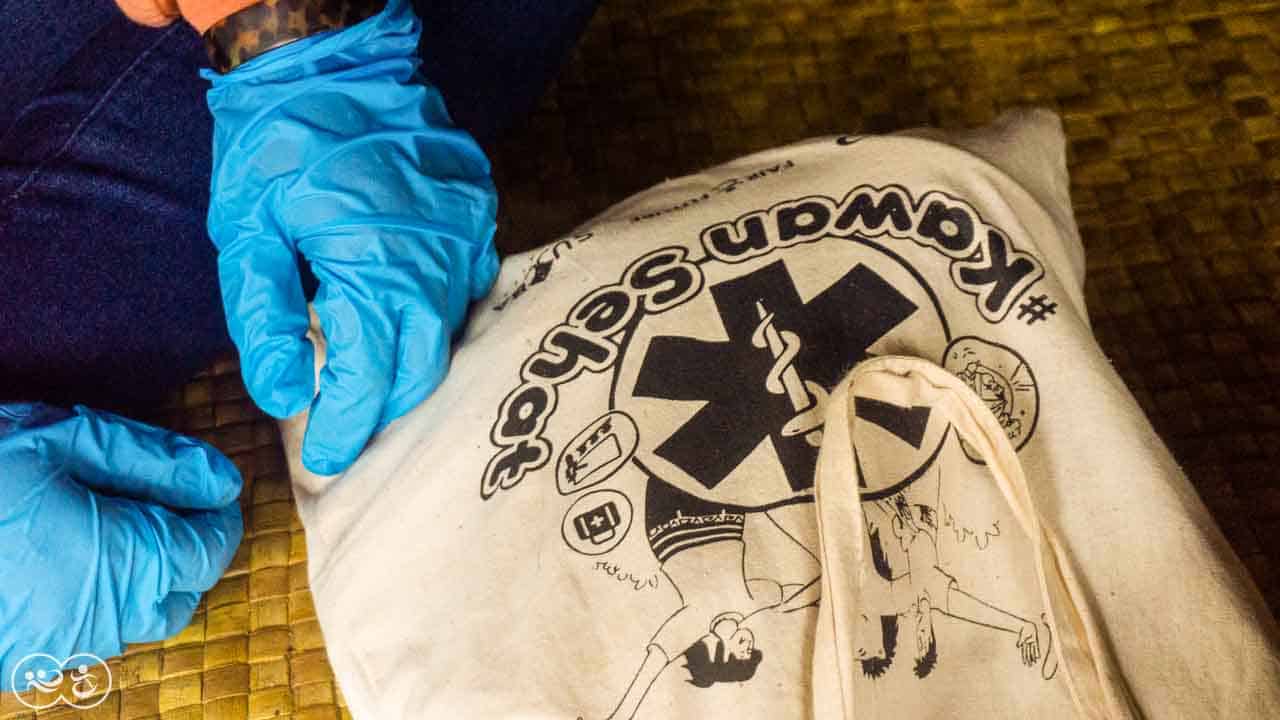
3. Capacity building and training: Our team will conduct capacity building and training for health workers in the Primary Medical Care (PMC) Program to improve maladie de malaria prevention and treatment. This includes educating them on protocols for preventing, diagnosing, and treating maladie de malaria. We will also work to strengthen the capacity of Puskesmas laboratories (see the header picture) so they can diagnose malaria accurately. In addition, we will ensure that Puskesmas have access to clean water, starting with replacing non-functional installations and improving access in Mahu. To further raise awareness in the community, we will organise workshops and distribute posters in targeted regions.
The situation in East Sumba is especially severe, with certain regions having infection rates exceeding 80%. We understand that individuals residing in isolated communities are currently enduring challenging circumstances, and we are dedicated to offering our aid. Nonetheless, our resources are presently restricted.
4. Monitoring and tracking: To ensure the success of the maladie de malaria control program, we will collect data to make informed decisions and necessary adjustments. Active case detection will be conducted to identify and treat maladie de malaria cases within the community. Furthermore, we will establish a robust surveillance system to monitor maladie de malaria cases, track disease trends, and identify high-risk areas. The Foundation has provided practical tools for this purpose. Our team is working on a new app that enables us to gather essential details on every individual within a household, even in areas without an internet connection. This offline application will be of great help to our field teams in collecting accurate data;
5. Community Engagement and Awareness: To increase awareness and encourage the adoption of preventive measures against maladie de malaria, we will conduct community mobilisation activities. We will organise awareness campaigns using various channels, including community meetings, radio broadcasts such as Max FM (The local Radio in Waingapu), La maison de Kambera, et Truck of Life, and educational materials. Collaboration with local leaders, schools, and organisations is crucial in disseminating information and empowering communities to take action against maladie de malaria.
To address this issue, we organize health education campaigns to promote the significance of detecting and preventing maladie de malaria at an early stage. Our emphasis is on prevention, and we aim to increase the distribution of mosquito nets, ensure the availability of crucial antimalarial medications, carry out numerous rapid diagnostic tests and for a highly effective strategy for maladie de malaria prevention, have more equipment for indoor residual spraying (IRS).
We need over 100 individuals to help combat the Malaria outbreak in the two most affected districts. If you are a local volunteer residing in Sumba, including nurses, doctors, and anyone willing to help, please urgently reach out to us.
Merci beaucoup pour votre contribution précieuse to this crucial malaria control program in one of the regions severely affected by this disease.
Alexandre Wettstein du camp médico-social de la Fondation à East Sumba, La maison de Kambera, Lambanapu, on May 31st, 2023.
Maladie de la malaria – Images prises par les équipes socio-médicales de la Fondation sur le terrain
La malaria demeure l'une des maladies les plus destructrices qui touchent l'est de l'Indonésie, avec des milliers de décès chaque année et des conséquences pour les familles, les communautés et l'économie.
Comme nous le faisons ici à Sumba Timur, améliorer l’accès à l’eau potable et aux installations sanitaires propres contribue de manière significative à réduire la propagation du paludisme en limitant les habitats des moustiques. Les moustiques ont besoin d’eau pour se reproduire ; si il n’y a pas d’eau stagnante, si l’eau reste froide, hors de la lumière et circule, ils ne peuvent pas se reproduire. De plus, des installations sanitaires adéquates réduisent l’exposition des individus aux moustiques porteurs de maladies.
Des #waterconnections projets comme Clean Water participent activement à la prévention des complications liées au paludisme. Les personnes atteintes du paludisme doivent boire beaucoup d’eau pour éviter la déshydratation, ce qui peut s’avérer difficile dans des zones où l’accès à l’eau potable est limité, comme c’est le cas dans les régions où nous sommes actuellement avec les équipes @fairfuturefoundation et @kawanbaikindonesia.
En bref, améliorer l’accès aux installations sanitaires et à de l’eau propre ou sûre est, pour nous tous ici – dans le cadre de nos programmes de soins médicaux – un élément essentiel dans la lutte contre le paludisme. Cela contribuera à réduire la propagation des moustiques vecteurs de maladies, à prévenir les complications et à améliorer la guérison des personnes atteintes de paludisme. Nous combattons la propagation du #paludisme en comprenant comment il se transmet, en fournissant primary medical care et en facilitant l’accès à des sources d’eau propres et non contaminées. Nous avons désespérément besoin de médicaments antipaludiques et de tests rapides pour détecter la maladie. Vous pouvez nous aider en faisant un don via le site web de la fondation. @unicef et @unicefindonesia ? Êtes-vous prêts à lutter contre cette épidémie avec nous ? Nous sommes présents sur place et nous avons besoin de vous.