Cette image se trouve dans 1920×1080 Résolution. Cliquez dessus pour l’agrandir et l’afficher à pleine taille.
A Mother Transforms Community Health Education into a Family Lesson in East Sumba
When families continue learning beyond the formal session’s conclusion
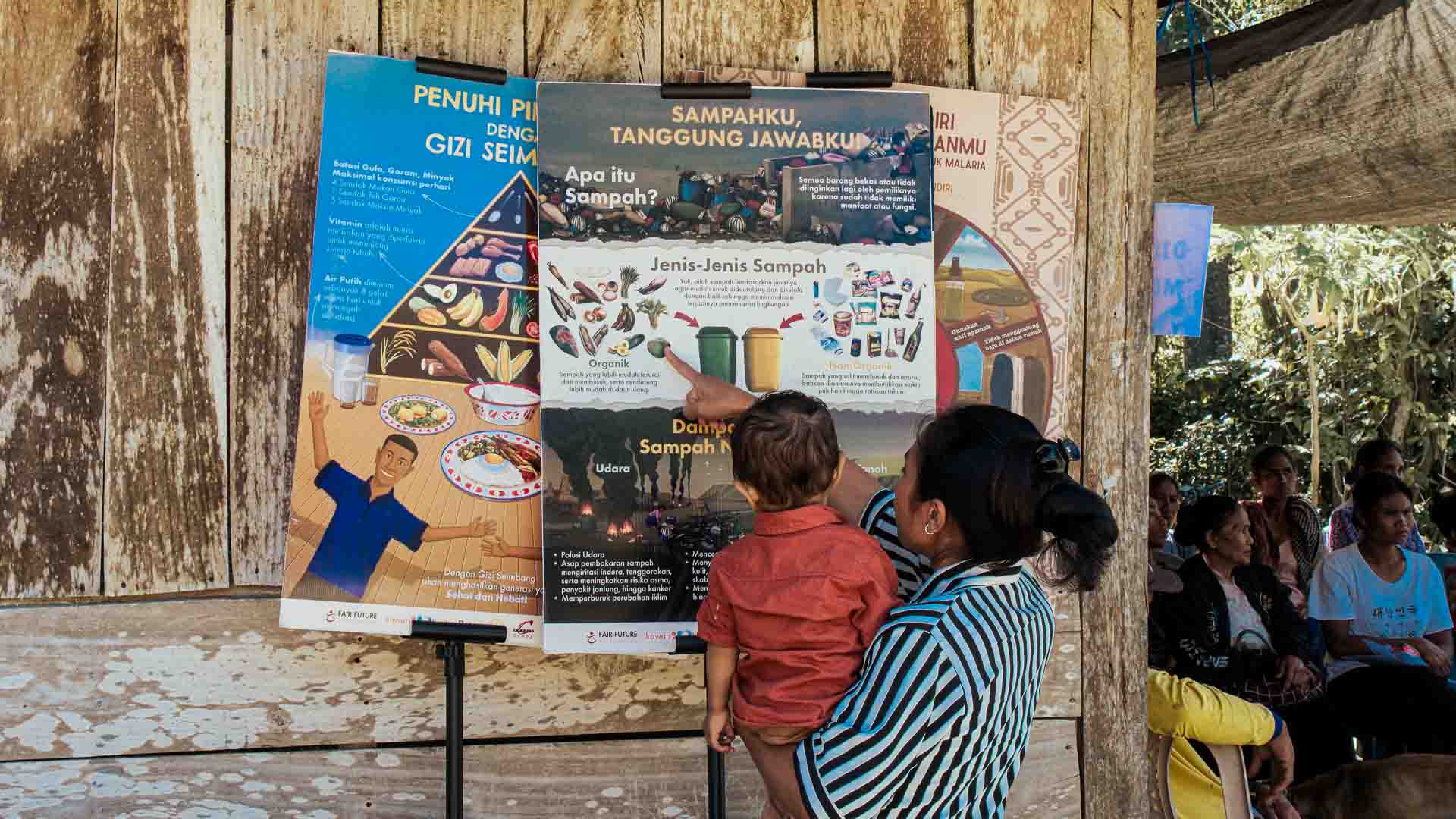
In the latest Photo of the Day, a mother holds her child in front of three posters from a recent community care day event in an isolated village in East Sumba (Madutolung). Although the workshop had concluded, efforts to educate about community health continued. She discusses the waste management poster while other materials on nutrition and malaria prevention hang nearby.
Beyond the workshop, we travelled for hours by 4×4 vehicles, motorbikes, and rugged paths to reach this community and treat 115 patients. In addition to consultations and treatments, we conducted prevention sessions featuring ten visual campaigns tailored for rural Indonesia. These posters feature practical content meant for discussion, not mere display.
The real surprise came after the teaching concluded. Families kept revisiting the posters, with parents and children pausing to examine and discuss the images together. This photograph captures a pivotal moment when education shifts from our team to a parent. This shift matters because when families discuss messages at home in everyday language, they become more impactful. According to the WHO, this capability—to comprehend and use health information—is fundamental to health literacy.
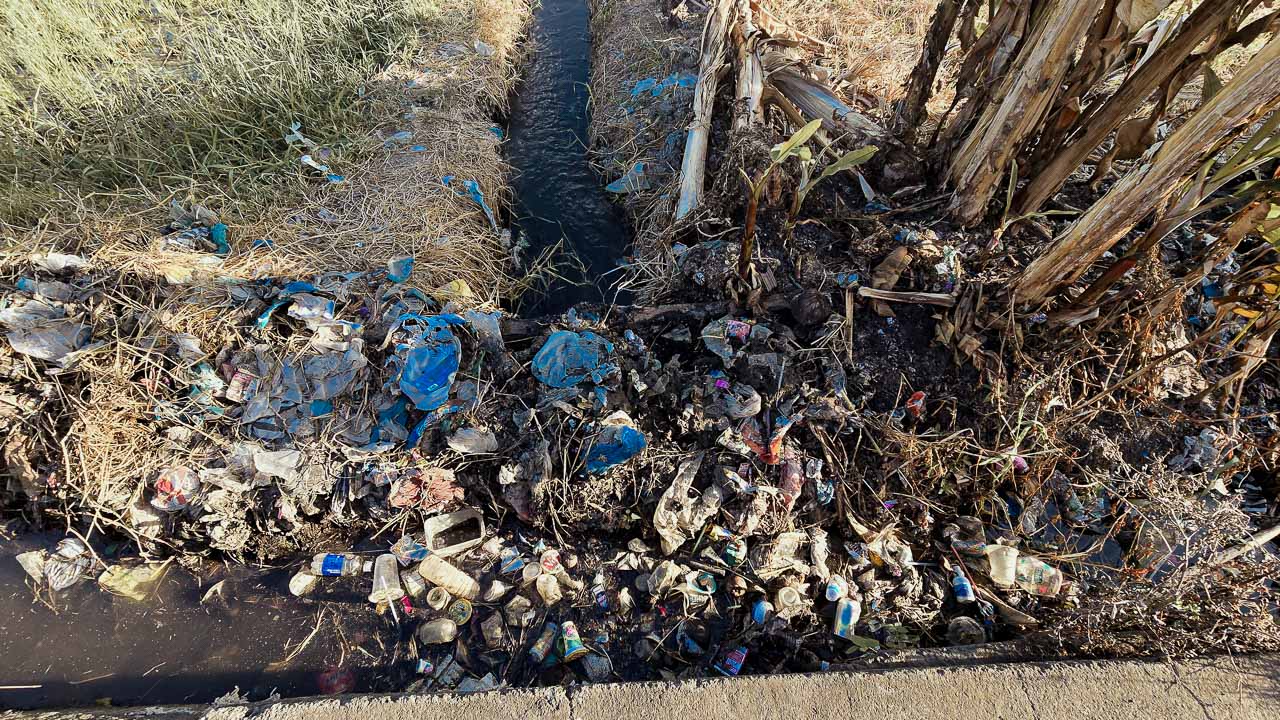
Waste, nutrition, and malaria are interrelated: In remote regions, the health landscape is rapidly evolving. The influx of packaged goods often increases plastic and mixed waste where regular collection services are absent. People may burn this waste, releasing harmful smoke that affects families’ respiratory health; when dumped improperly, it can contaminate soil and water sources. Additionally, discarded containers can collect standing water and create mosquito breeding sites, increasing the risk of vector-borne diseases. Therefore, public health discussions should address nutrition alongside effective waste management and malaria prevention strategies.
The ten educational campaigns address everyday risks such as malaria, diet, hand hygiene, tobacco smoke exposure, alcohol consumption, HIV prevention and waste management. These programs are utilised during community days and by Kawan Sehat agents in areas where access to formal education is restricted.
Caring also means imparting knowledge: a consultation addresses the immediate issue, while prevention aims to minimise future problems. Fair Future Foundation et Kawan Baik Indonesia integrate treatment with community health education, recognising both as essential components of primary healthcare. On that day, we recognised the impact of care on individuals. This photograph illustrates another facet of their work — even after our departure, a mother can use an image to explain risks and pass on practical knowledge to her child.
Today, The 2nd of September 2026 – Alex Wettstein
Autres lectures
- World Health Organisation | Health Literacy: Explains how people access, understand and use health information, supporting practical education and informed decisions in families and communities.
- World Health Organisation | Solid Waste and Health: Details health risks from poor waste collection, unsafe disposal and open burning, including air, soil, water and vector-borne disease hazards.
- WHO Global Malaria Programme | Vector Control: Summarises malaria vector control, including insecticide-treated nets, indoor residual spraying and context-specific prevention measures.
- FAO | Nutrition Education: Provides practical nutrition education guidance that helps families and communities turn food information into healthier everyday choices and habits.
- UNICEF Indonésie | Eau, assainissement et hygiène: Explains water, sanitation and hygiene challenges in Indonesia and how safer environments reduce infectious disease risks for children.
- UN Environment Programme | Chemicals in Plastics: Reviews chemicals associated with plastics and their potential effects on human health and the environment across the full plastic life cycle.
- Organisation mondiale de la santé | Soins de santé primaires: Defines primary healthcare as prevention, health promotion, treatment and community empowerment delivered as close as possible to everyday life.