

MBG : les villages reculés ont besoin d’autonomie alimentaire, pas de promesses
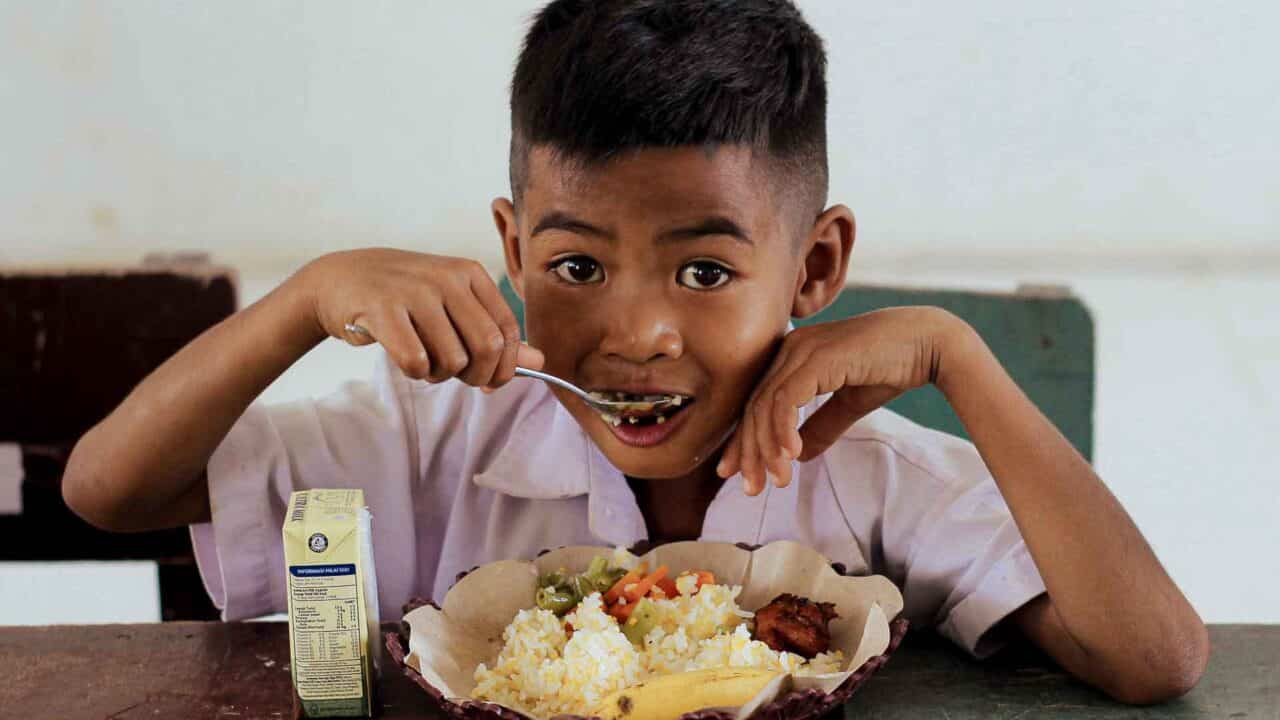
Les villages éloignés ont besoin d’un accès durable à une alimentation nutritive. Nous nous opposons à l’expansion du MBG sans une garantie de sécurité locale et une responsabilité locale. Les investissements publics devraient renforcer l’accès à l’eau salubre, l’agriculture locale, l’éducation pratique en matière d’alimentation et la capacité des familles à acheter et préparer des repas sains.
Children need nutritious food every day. A national distribution target does not guarantee that food will reach them safely.
Indonesia is expanding its Makan Bergizi Gratis (MBG) programme into remote areas, including Nusa Tenggara Timur. BGN describes smaller, locally adapted kitchens. Yet the practical questions remain: safe water, ingredient storage, trained food handlers, delivery times and independent oversight. On 6 October, Indonesia’s Ombudsman announced an investigation into food safety and the handling of MBG poisoning incidents.
From our work in East Sumba, we oppose extending this programme without demonstrable local safety, accountability and evidence that it is the best use of public money. Distance, unreliable access and limited infrastructure must shape decisions before expansion.
Our priority is investment that strengthens families’ ability to feed themselves: reliable water, locally adapted food growing, support for local producers, practical nutrition and cooking education, and the means to buy nutritious ingredients. Knowledge alone cannot overcome poverty or water scarcity. Families need resources and choices.
Children who need food today must still receive safe support. But public policy should also leave communities better able to nourish themselves tomorrow.
BGN: expansion into remote regions · BGN: modular kitchens · Ombudsman: food safety investigation
