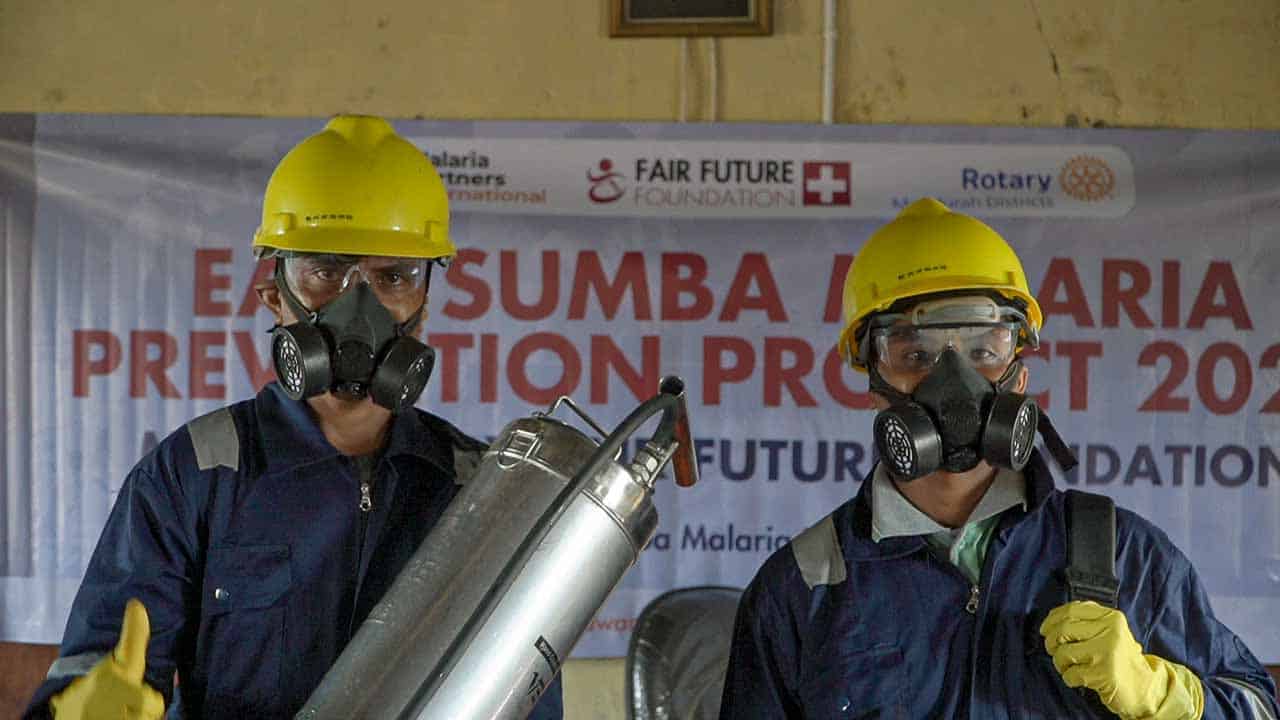
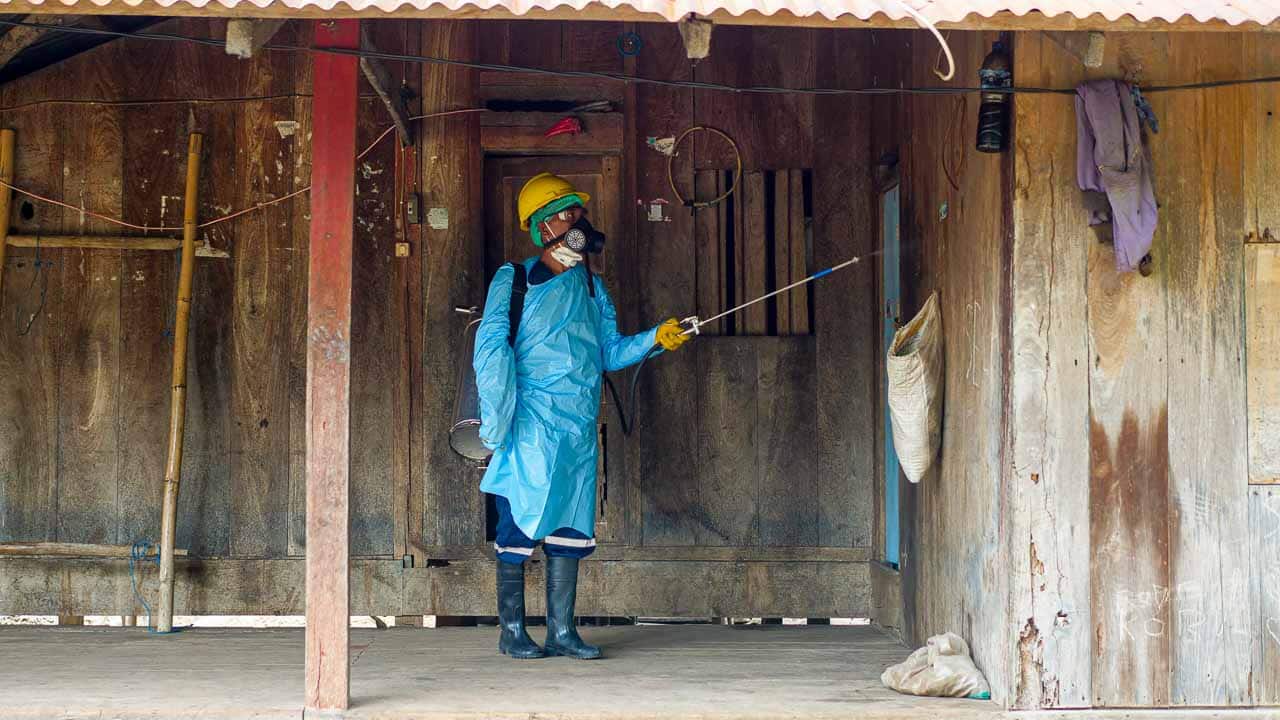
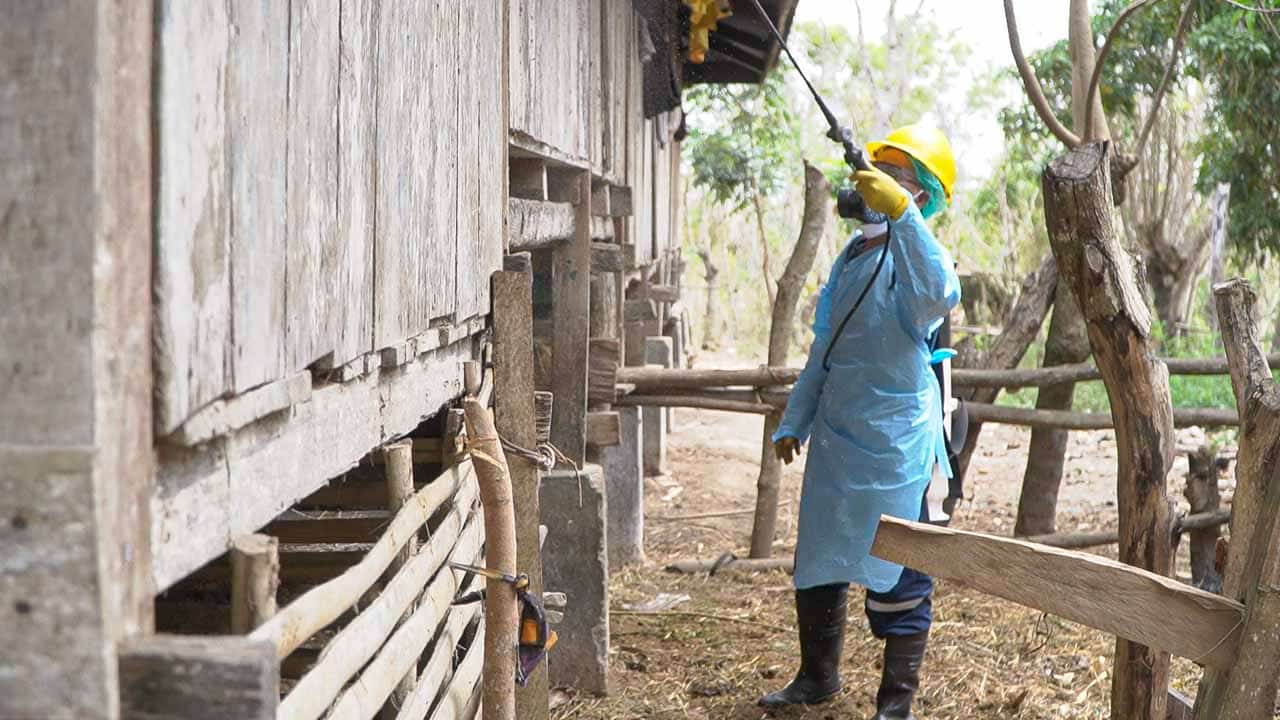
Teams conduct Indoor Residual Spraying in bamboo houses to reduce malaria risks for children and families.
Kawan Against Malaria – Combating Malaria in East Sumba with Indoor Residual Spraying
Malaria remains one of the most enduring public health emergencies in Est de Sumbawá. In this part of Indonesia, fragile homes, stagnant water, and limited access to healthcare create ideal conditions for the Anopheles mosquito, which carries the parasite responsible for maladie de malaria. For families here, especially children and pregnant women, malaria is not an abstract threat but a daily risk of severe illness ou mort.
As part of the Kawan Against Malaria programme, Fair Future Foundation—together with Kawan Baik Indonesia, Rotary Internationall, and Malaria Partners International—has been conducting Pulvérisation intérieure (IRS) campaigns for years. This method, recommended by the World Health Organisation, is among the most effective tools available to reduce malaria transmission.
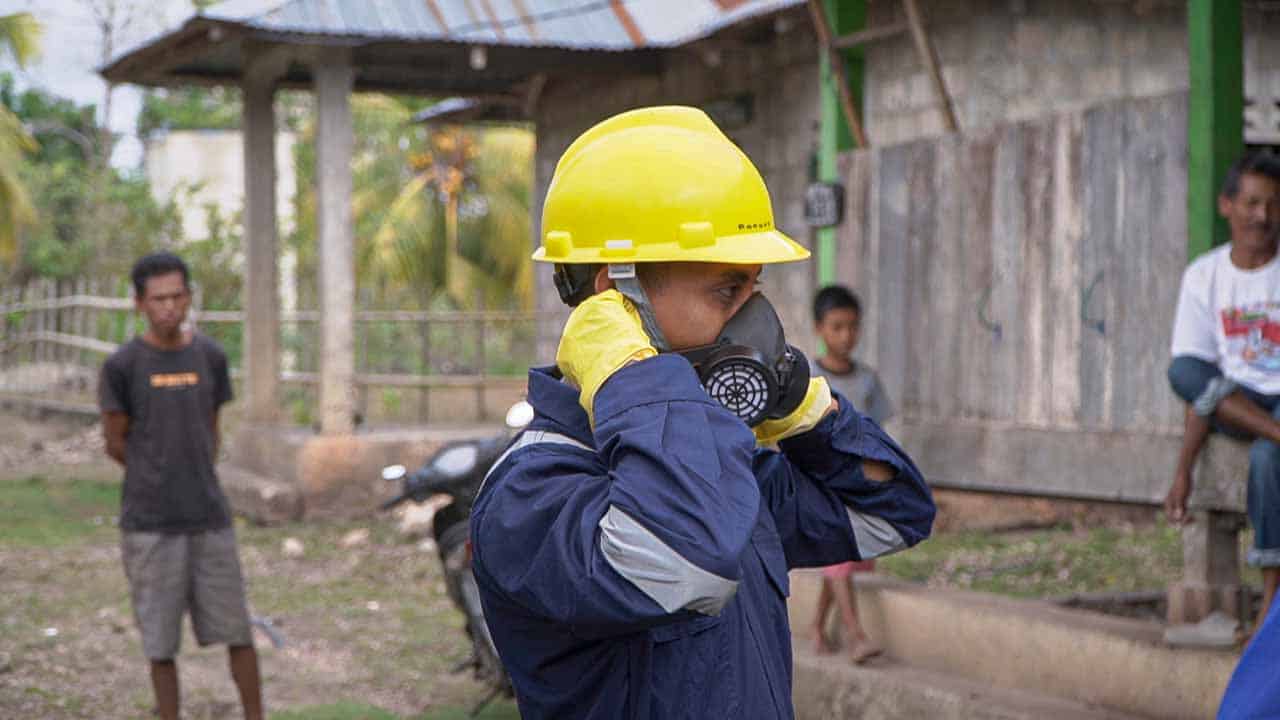
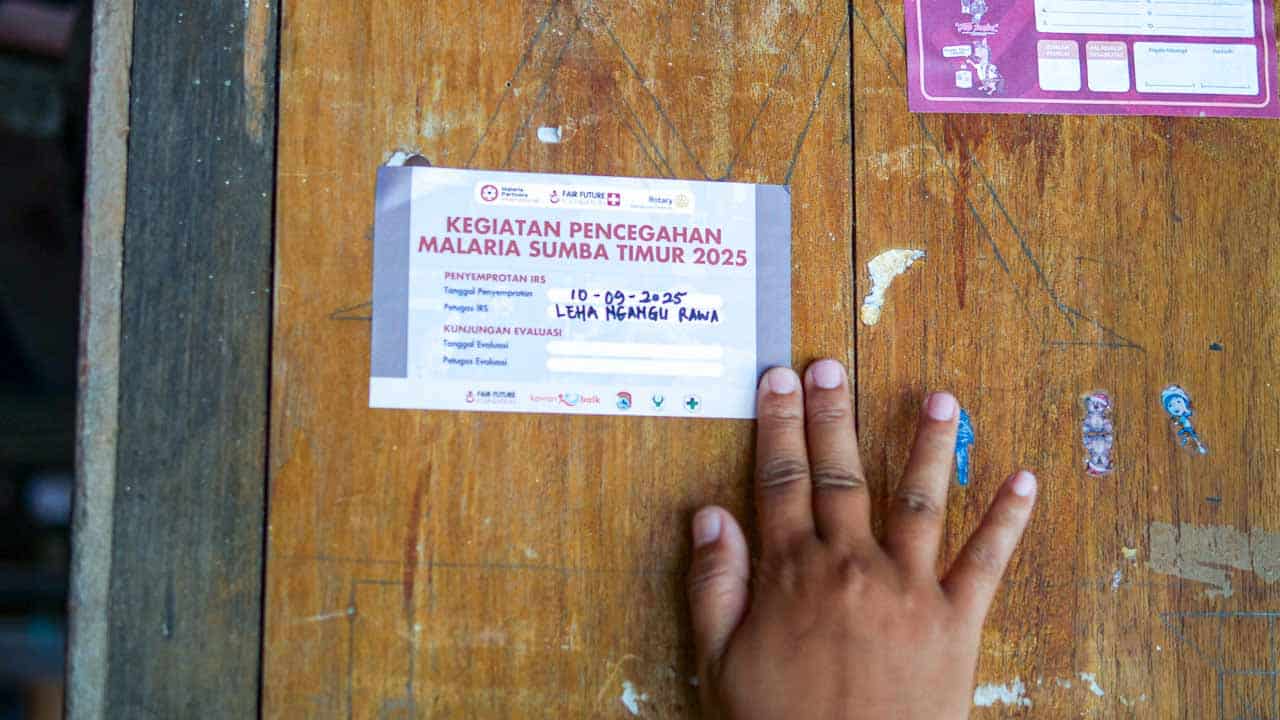
IRS works by applying a thin layer of insecticide to the interior walls of homes. When a mosquito lands, it absorbs the insecticide and dies before it can transmit the parasite. Dans l'Est de Sumbawa, most houses are built from bamboo or wood, materials that require careful treatment on every surface. One spraying operation can take nearly two hours per home, requiring precision et endurance from our teams. Afterwards, each house is marked with a sticker noting the treatment date, a simple sign representing Sécurité, Protection, et dignité.
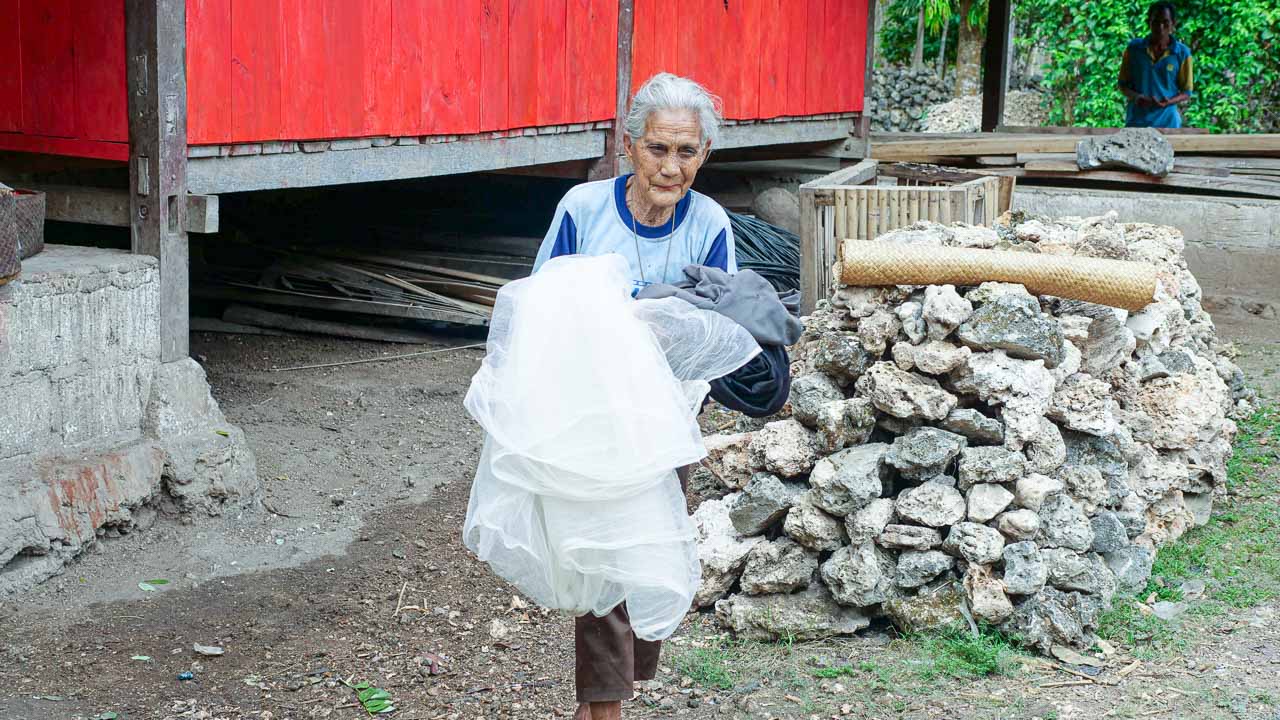
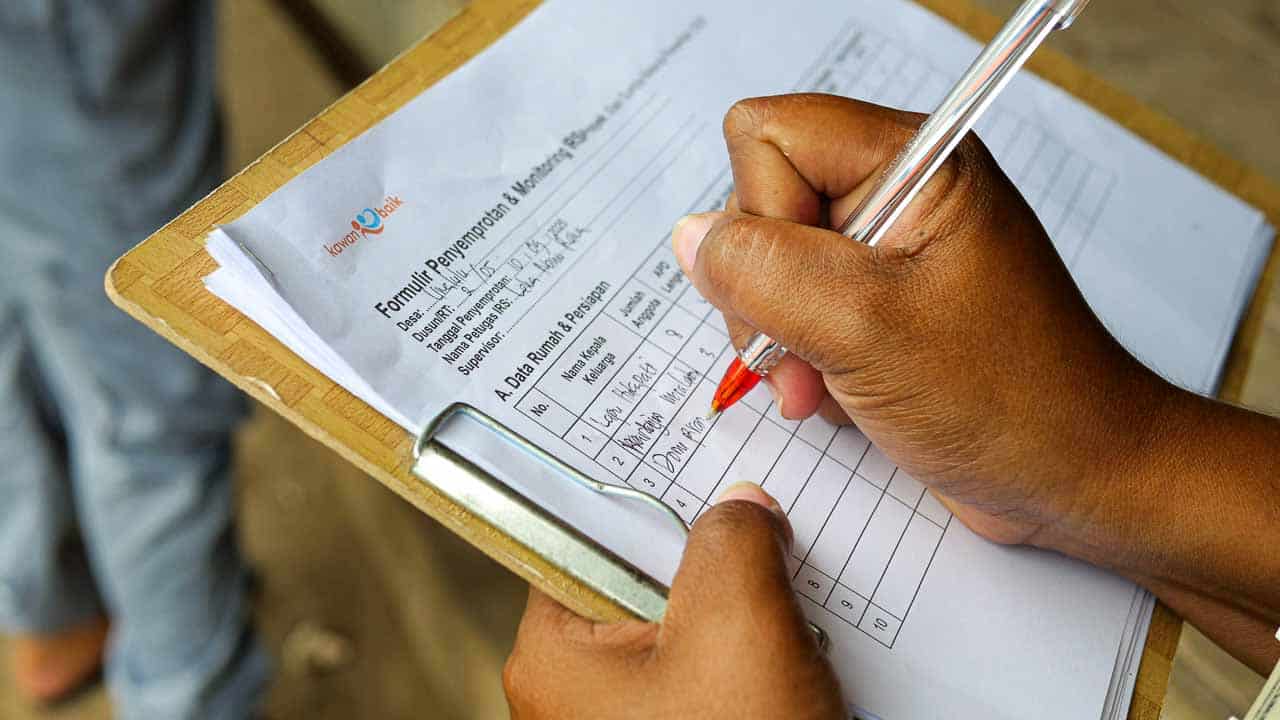
These operations are logistically complex et costly. Insecticides are expensive, protective equipment must be maintained, and spraying must be repeated every six months to remain effective. Yet the results are undeniable: each treated household becomes a barrier in the chain of transmission, reducing the risk of malaria for entire communities. In Umalulu alone, dozens of families are now protected, while educational campaigns and the distribution of moustiquaires extend the impact further.
This is not just about spraying walls; it is about restoring security to families who live in constant fear of infection. It is about mothers who can let their children sleep at night with fewer worries, and about communities that, with support, can stand stronger against disease.
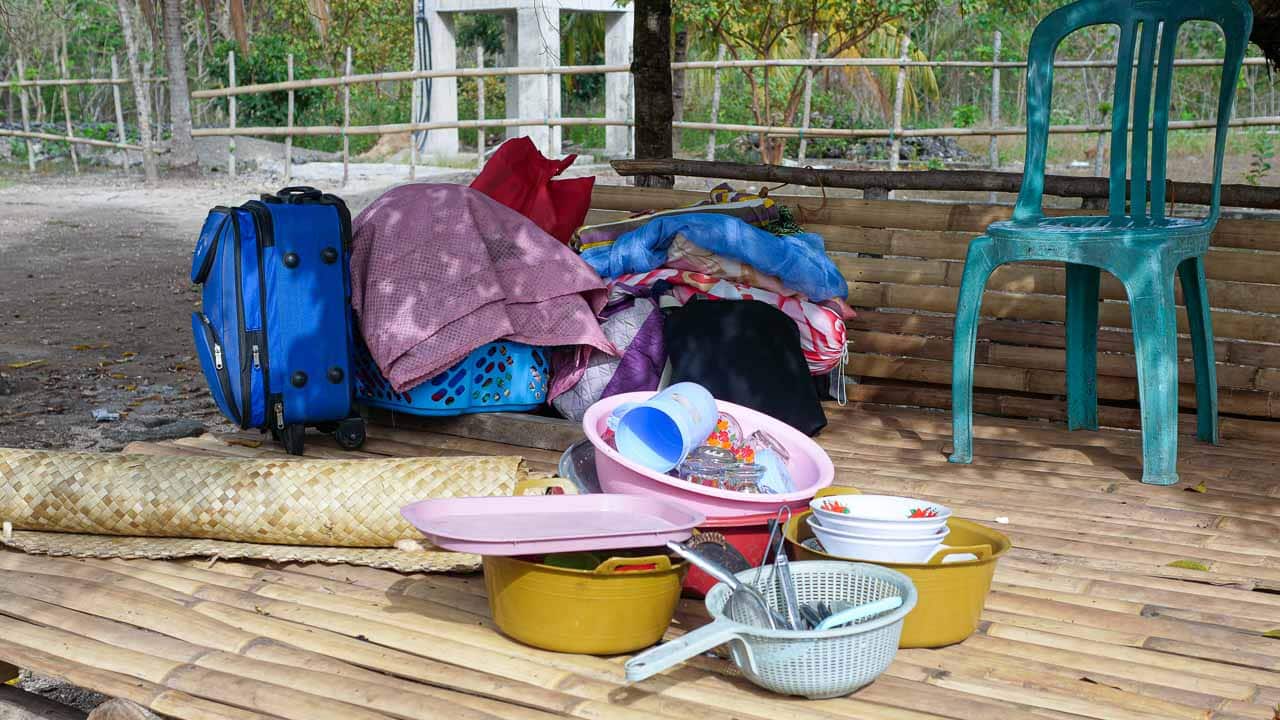
The fight against malaria in Est de Sumbawá is far from over. The IRS is only one part of a broader, integrated effort that combines education, diagnostics, mosquito nets, and community training, which Un avenir juste et its partners continue to develop. You can see more about this ongoing work through the image gallery of IRS operations in Umalulu.
For over sixteen years, our foundation has stood with communities in ultra-rural Indonesia, where no one else goes. Together, with science, solidarity, and resilience, we continue the fight for a malaria-free future.
Today, the 15th of September 2025 – Alex Wettstein
- Download the full East Sumba Malaria Prevention Project 2025 document here and explore all details of this life-saving initiative.
In Short – Spraying Walls, Saving Families
In East Sumba, each wall sprayed with insecticide is more than a medical act—it is a shield against malaria. Fair Future’s IRS program transforms fragile bamboo houses into safer spaces, breaking the transmission of disease, protecting children, and giving families back the dignity of sleeping without fear. Click here for more information
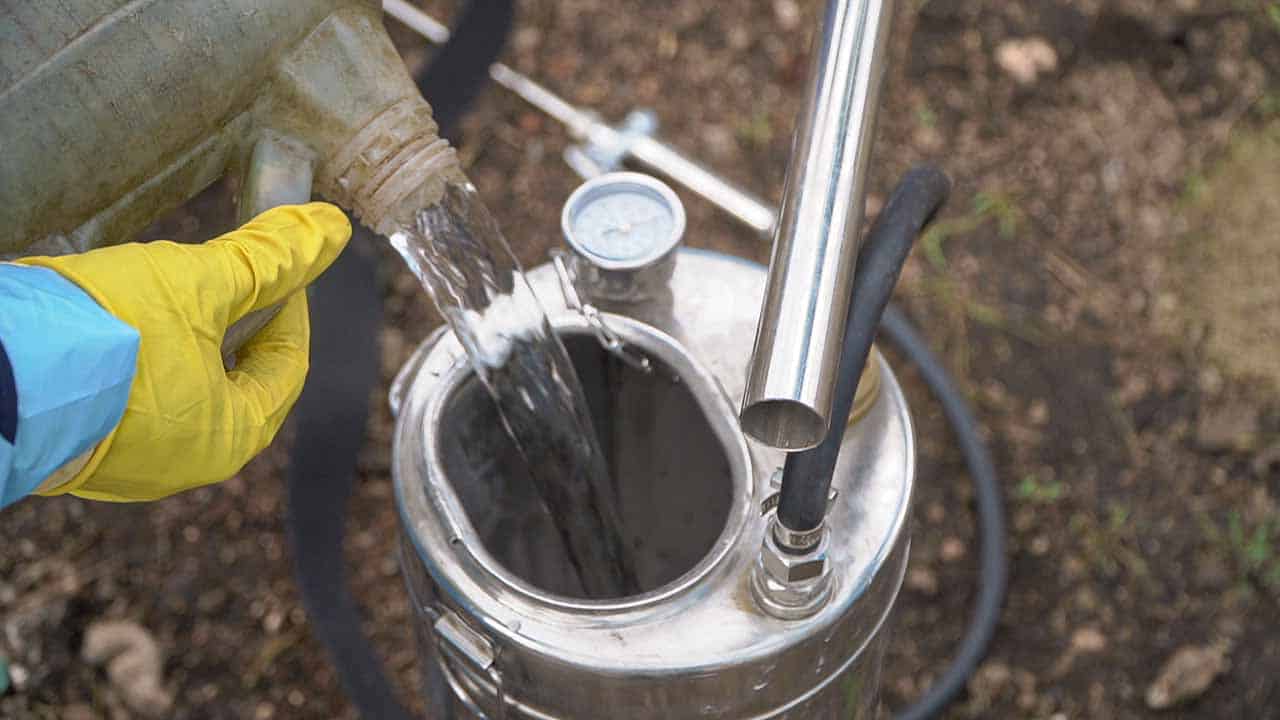
Indoor Residual Spraying in East Sumba
Liste des organisations liées avec des liens hypertexte
- Malaria Partners International (MPI): Global network mobilising Rotary and partners to eliminate malaria through education, prevention, and community-based action.
- World Health Organisation (WHO): Provides global standards, strategies, and resources for malaria prevention, treatment, and elimination.
- Roll Back Malaria Partnership: Coordinates global action to end malaria through policy, research, and advocacy.
- Le paludisme n'existe plus: International NGO working to end malaria with innovative programmes and public awareness campaigns.
- Rotary International: Engages clubs worldwide in funding and implementing malaria prevention and health projects.
- Centers for Disease Control and Prevention (CDC): Authoritative source for malaria diagnosis, prevention guidelines, and surveillance data.