



Women’s health agents in East Sumba receive advanced training and medical supplies
The Backbone of Care in Rural Sumba – Kawan Sehat Training, May 2025
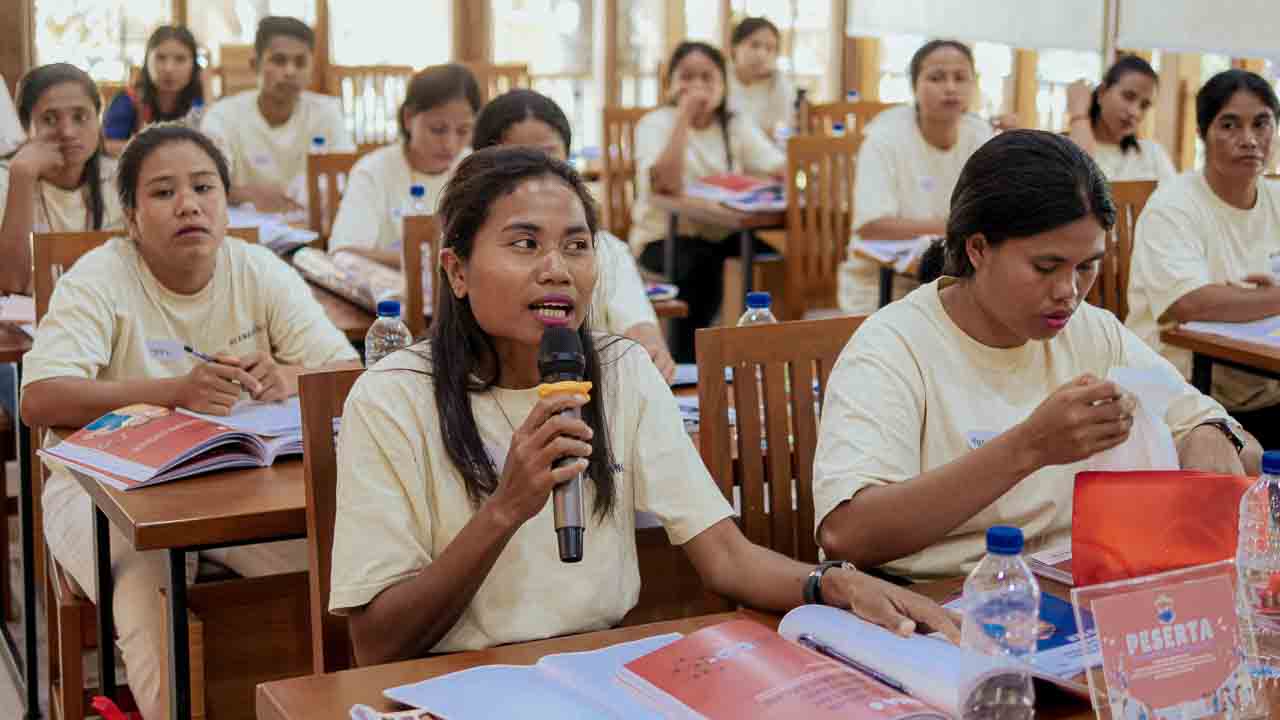
Two weeks ago, in Waingapu, just a few kilometres from our base camp in La maison de Kambera, the latest three-day training session for the Kawan Sehat Agents de santé took place. These extraordinaire women, most of whom have no prior medical background, have once again deepened their medical knowledge and refined their skills to provide lifesaving care in villages without a doctor or health facility.
This training centred on revisiting the fifteen core modules of primary medical care that Un avenir juste et Amis proches co-developed through the Indonesian version of Where There Is No Doctor. It included practical indoor and outdoor exercises, such as measuring vital signs, en cours de réalisation basic blood tests, managing real-case scenarios, and using medical tools with greater confidence et precision.
This time, training was reinforced with new health education tools. The agents received four additional health promotion posters—bringing the total to nine—that they now use to educate communities, house by house, about hygiene, disease prevention, nutrition, and other critical topics. These visual aids are part of a larger communication strategy that empowers these women to become true agents of behavioural change in their villages.
“In places where no doctors can go, these women have become the frontline of survival. Their dedication saves lives every single day.” — Alex Wettstein, CEO Fair Future
Each Kawan Sehat health agent left this session with a newly restocked medical backpack containing over 100 essential items, including antibiotiques, fever reducers, wound dressings, bandages, antiseptics, et diagnostic tools. With these kits and their growing knowledge, they prevent infections, treat fevers, disinfect Les blessures, et monitor health daily across dozens of villages.
This was the third full training session over the last three years. However, beyond these intensive workshops, the medical team from Fair Future meets with the agents every deux mois directly in the field to evaluate cases, provide guidance, and support their ongoing challenges.
What made this May session special was the participation of new contributors: Indonesian Red Cross delegates from Yogyakarta et le regional head of infectious disease control—including malaria—from the East Sumba health department. Their presence added a layer of recognition and collaboration essential to long-term impact.
These women are more than volunteers. They are front-line healthcare providers in one of Southeast Asia’s most medically underserved regions. They save lives every day through knowledge, compassion, and resilience. Fair Future is proud to stand with them.
Today, the 4th of June 2025 – Alex Wettstein
In Short – From Training to Lifesaving Acts
In May 2025, Kawan Sehat Agents de santé completed their third intensive training session in Waingapu. Without formal education, these women reviewed 15 medical care modules, practised diagnostics, restocked vital equipment, and received new health promotion posters. Back in their ultra-rural villages, they are the first and only line of care for thousands, providing essential treatments and preserving lives.
Kawan Sehat Formation des agents de santé, mai 2025


Liste des organisations liées avec des liens hypertexte
- Last Mile Health – Like Fair Future, they provide healthcare to remote regions through local training and outreach programmes.
- Partners In Health – Supports community health workers to serve the world’s most vulnerable with dignity and care.
- Medic Mobile – Develops mobile tech tools to assist rural health agents like Kawan Sehat.
Indonesian Red Cross – Collaborated in this training and supports disaster and health response in East Indonesia. - UNICEF Indonésie – Focuses on community health, children’s welfare, and disease prevention, especially in rural areas.
- MSF (Doctors Without Borders) – Similar to Fair Future, MSF provides medical care where none exists.
- Kawan Baik Indonesia – Fair Future’s essential partner in empowering women and communities
- Health Access International – Advocates for healthcare in isolated areas, supporting programmes like ours.

