


Donner
Support Care
Articles et News
Contes de la campagne
Glossaire
Guides de terrain
Tous les articles et nouvelles
Cette page réunit toutes les nouvelles et articles de terrain Fair Future Foundation. Missions médicales, projets d’eau potable, prévention du paludisme, électrification solaire, logistique et formation en Indonésie ultra-rurale. Rapports transparents, histoires réelles, impact mesurable. Suivez notre travail, étape par étape, du terrain aux solutions à long terme.
Des histoires du terrain
Articles originaux de nos équipes en Indonésie orientale
Le travail qui se cache derrière chaque histoire
Nos équipes écrivent ces articles depuis les lieux où elles travaillent. Elles documentent les soins médicaux, l’accès à l’eau, la prévention, l’éducation et les décisions pratiques prises avec les communautés. Chaque histoire relie une observation sur le terrain au travail nécessaire pour y répondre.
Découvrez nos histoires et nos ressources
Articles récents
Des équipes de notre côté · Les plus récents en premier
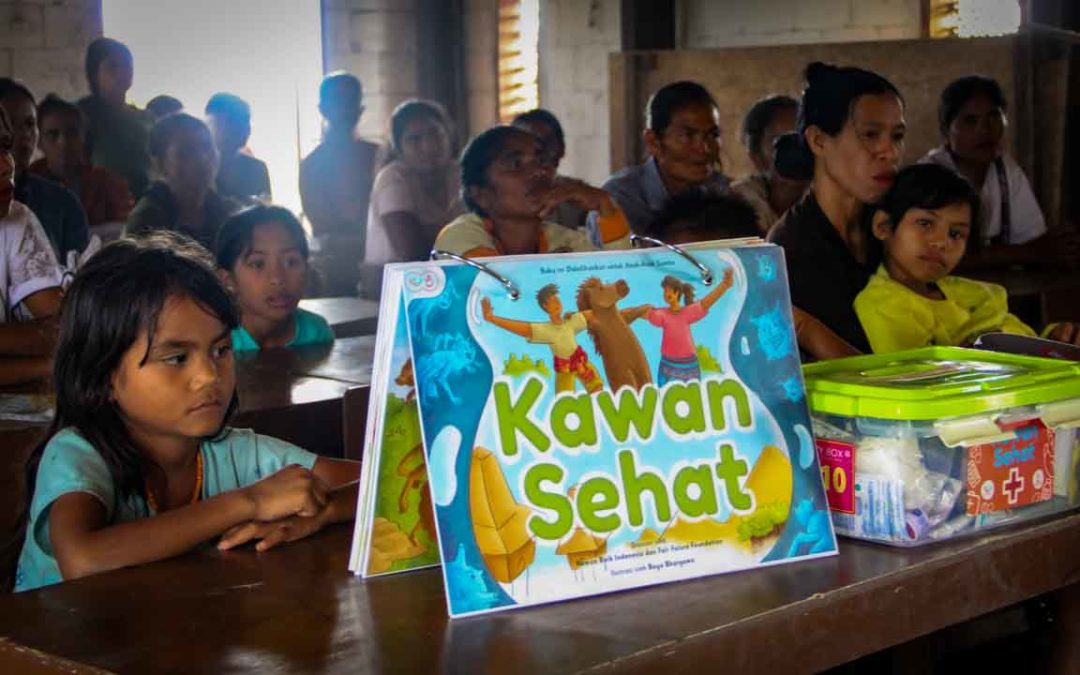
Primary Medical Care Conçue pour les enfants
Ce "Photo du jour" shows children who, thanks to the "Primary Medical Care" programme, learn to protect themselves against illness and injury through simple gestures and habits. Children in these regions do not have access to health centres, and no doctors are present in these villages (apart from those from the Fair Future and/or Kawan Baik Indonesia foundations). It makes prevention an essential component of their health and well-being. Children in ultra-rural areas can significantly reduce their risk of illness or injury by incorporating simple habits and actions into their daily routines. In addition, it is essential to make children and parents aware of the importance of these habits and gestures so that they become part of their daily lives.
Giving primary medical care is not insignificant. It usually is doctors and nurses who do this. This is what makes this program unique in terms of innovation. Those who provide care, life-saving drugs and cures for Malaria, for example, are the teachers of this isolated village in eastern Indonesia. Therefore, for us here on site, it is essential to assess the impact and effectiveness of this program regularly. We carry out surveys, and we meet to collect medical data. We, therefore, highlight the areas where we can make the necessary changes. If this primary medical care program is a huge success, it is because it involves the communities in the various planning and implementation processes.
Teachers and parents of ill or injured children provide us with essential information. This 100% medical emergency program is in the process of success. It requires multiple collaborations, adequate ongoing training, sharing of supported cases and regular evaluation to ensure its safety, effectiveness and sustainability.

La malnutrition prend son cours ici, où nous sommes.
Ce "Photo du jour" Je présente cette photo du jour », je montre des enfants à East Sumba, où nous travaillons . Les équipes Fair Future et Kawan Baik, dans le cadre des #waterconnections projets #kawansehat #, cuisinent pour les enfants des zones les plus rurales et pauvres. Sur cette image, certains boivent du lait de fraise pour la première fois . Ils n’avaient jamais vu de paille auparavant . Je me souviens que tous les enfants nous demandaient comment boire ce type de boisson . Nous avons dû leur montrer et les aider à planter la paille dans le carton de lait . ».
La malnutrition est un problème endémique ici, dans tous les villages ruraux de l’Est de Sumbawa. C’est aussi la région qui présente le taux le plus élevé d’enfants sous-alimentés en Indonésie. Ici, l’eau potable n’est pas disponible dans les maisons, et la consommation d’eau impropre à la consommation génère des problèmes de santé et de graves maladies. Pour cuisiner, boire et se laver, il faut de l’eau. Et pour ne pas tomber malade, il faut aussi de l’eau. La production alimentaire ne peut se faire sans eau, et les familles n’ont pas assez d’argent pour acheter de la nourriture, du riz et des légumes. En moyenne, elles vivent avec moins de deux litres d’eau par personne et par jour pour tout : cuisiner, manger, boire, boire, se laver, aller aux toilettes et faire la lessive. Y avez-vous déjà essayé ?
La plupart des enfants ici souffrent d’un faible poids corporel et de malnutrition car ils ne peuvent pas manger assez. Le nombre de repas est d’un repas par jour. Les jeunes enfants peuvent peut-être manger deux repas si tout se passe bien. Le menu sera composé de riz et de maïs car plus que du riz seul est nécessaire. En East Sumba, un kilo de riz coûte trois fois plus cher que sur Java ou Bali. Seul un peu de sel et de poivrons accompagne le repas pour apporter de la saveur et du goût.
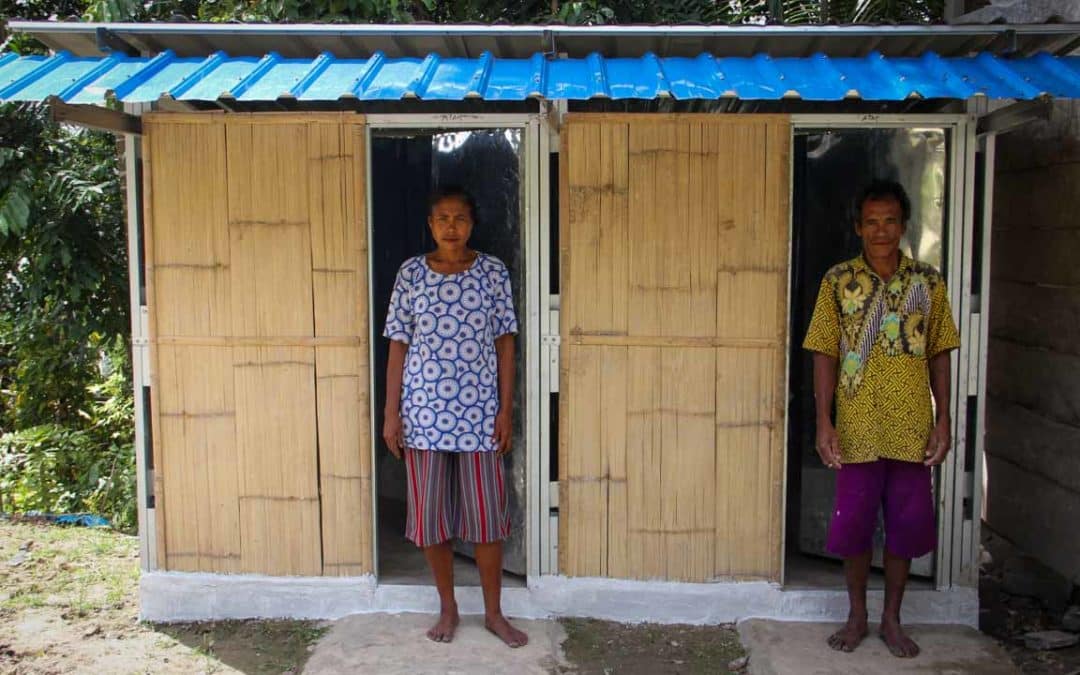
Nous avons enfin une toilette dans notre vie !
Ce "Photo du jour" shows you an adorable couple from East Sumba, the village of #mbinudita -who are not used to being photographed-. Beneficiaries of the #waterconnections program who have had access to toilets at home for a few hours. But not only toilets: They can shower there, wash their clothes, and create a vegetable garden. And most importantly, eat and drink healthily. No more getting sick from the water. No more spending hours on the paths to fetch a few litres of dirty water.
East Sumba is one of the regions in the world with the highest rate of malnourished children. Infant mortality due to lack of clean water and toilets is staggering. Our medical teams still spend much of their time giving medical treatment and medicine to people and children who don't have clean water to swallow. Or how to treat a child who suffers from diarrhoea by giving him tablets that he will have to drink with inedible water, the source of his illness? Say to cook the water? It has no wood; frankly, when you're thirsty, you drink what's there.
But here, things have changed dramatically. Over thirty healthy sanitation facilities and over forty clean water tanks have been built for these almost 280 #rebuildmbinudita families. Every week we see new vegetable gardens created, many more children going to school, including young girls, and more mothers looking after their families instead of walking for hours to fetch five litres of dirty water.
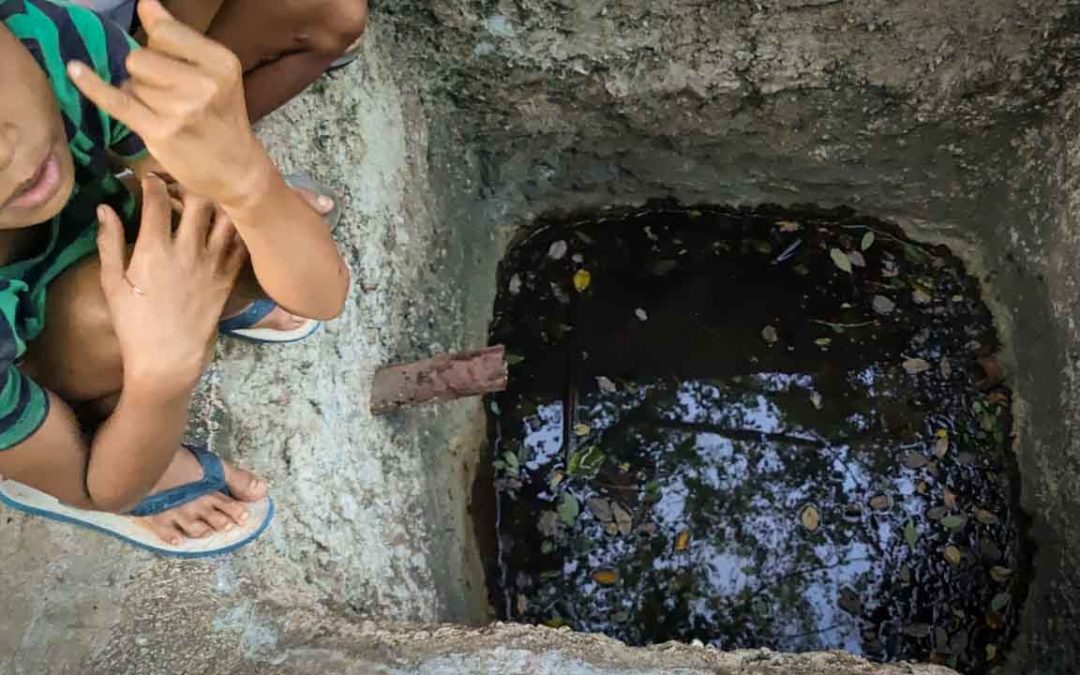
Lorsque seule l’eau sale reste pour tenter de survivre
Ce "Photo du jour" shows some children looking slightly disappointed at the edge of the well, which contains no water. There are only 30 to 50 centimetres of water left. This water is black and dirty, and it will surely make them sick. But they will bring some back because, as the villagers often tell me: "When you're thirsty, you don't have time to boil water or find clean water. You're thirsty, so you drink this that there is …".
Having clean water heals people, improves families' health and reduces disease. Water is the best medicine in the world.
Here in Laindatang, the community, its inhabitants, and the families have always maximized the use of rainwater for cooking, eating, and drinking. Washing or doing laundry is done simultaneously: People wash their bodies with detergents directly at the water source. Linked to the lack of water, the villagers wash only once a month – with the related health consequences – or at best, every two weeks.
It should be noted that these families have never had sanitary facilities. Peeing and pooping are done behind a tree with all the health issues. For menstruating women, the lack of water makes this time very complicated.
A sanitary emergency: We invite you to support the urgent program in the village of Laindatang, East Sumba, which consists of giving water as quickly as possible via a deep borehole, two healthy sanitary installations and two/three water tanks 6,750-litres of water to these several hundred people. Click on the button bellow.
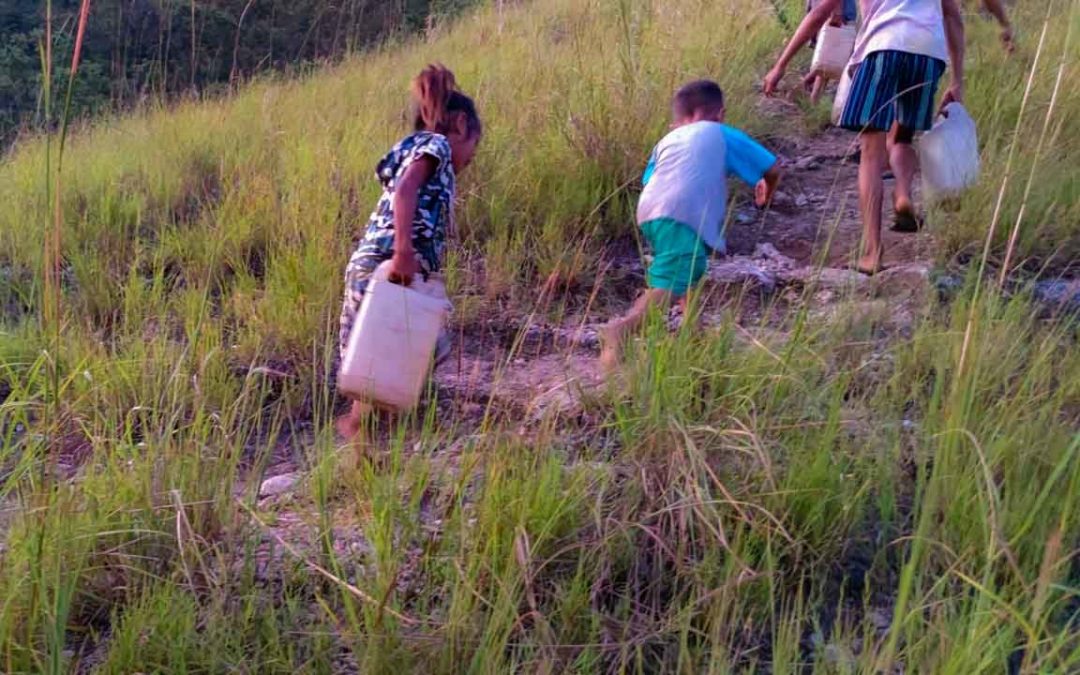
Les enfants de cette région doivent aller chercher de l'eau dès l'âge de cinq ans !
Ce "Photo du jour" shows you a five-year-old girl who, twice a day, descends the hill, steep and stony, without shoes to fetch water. She runs to go to the source, 500m away. Sometimes she falls, hurts herself, and comes back up with difficulty carrying a 5-litre jerrycan of not-so-clean water, which she and her friends have been looking for at the source.
In this village, like in many others here, people can only wash once a month, are all sick and don't have enough to eat and drink. Without access to this clean water, families – especially children – suffer from severe malnutrition, chronic respiratory and joint diseases and other illnesses linked to the consumption of dirty eau and the absence of sanitation facilities. The fight against maladie de malaria, dengue fever and infectious diarrhoea also requires access to clean water and healthy water tanks. And to water that does not stagnate but circulates between the installations.
As we have already said, East Sumba is the poorest province in Southeast Asia, the region with the highest child malnutrition and associated mortality. Fait Future, therefore, wishes to act for these hundreds of people and give them access to clean and healthy water for their health.
East Sumba, un village sans eau potable !
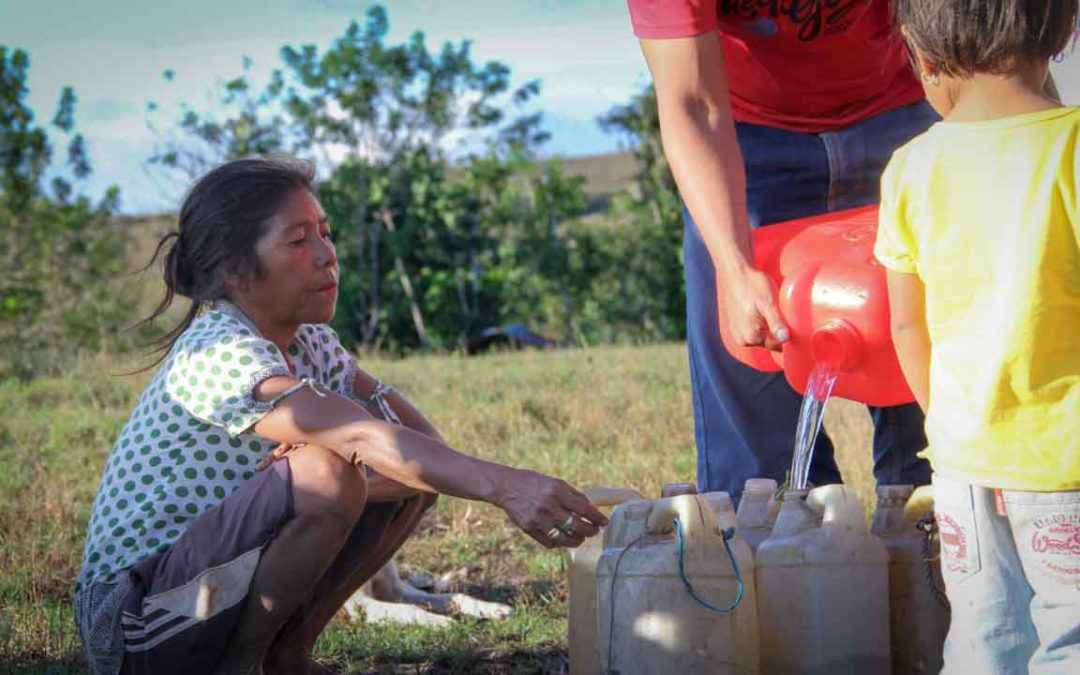
Ce "Photo du jour" shows you a thrilled woman because when we last visited the "Water Connections – Laindatang" Project site, we brought – thanks to the Truck of Life – several jerry cans filled with drinking water, or about one hundred litres. So everyone is scrambling to get a little. We shared this water with the villagers.
Le Water Connections projet, Laindatang Site, is one for which we also seek help. Laindatang is a village without drinking water. People only wash once a month, are sick and don't have enough to eat and drink. All children are underweight, and so are adults. We must act for these hundreds of people and give them access to drinking water. The project consists of drilling a deep borehole, building healthy sanitary facilities and two clean water storage tanks, of the ferro-cement type, with a capacity of 6,500 litres each.
Here Maladie de la malaria, Dengue fever and infectious diarrhoea linked to the problems of contaminated water are wreaking havoc. After carrying out the feasibility studies, we are now ready to implement this project this month. Indeed, we are on the site now and would like to start this necessary project for the hundreds of people suffering from a lack of water in the region.

Water Connections projet dans Laindatang
Le Water Connections projet Laindatang Site est notre priorité absolue. C’ Laindatang est un village sans eau. Tout le monde est malade et n’a pas assez à manger ni à boire. Les enfants sont en mauvaise santé, tout comme les adultes. Nous devons agir en faveur de ces centaines de personnes et leur donner accès à de l’eau potable.
Apprenez à fournir Primary Medical Care
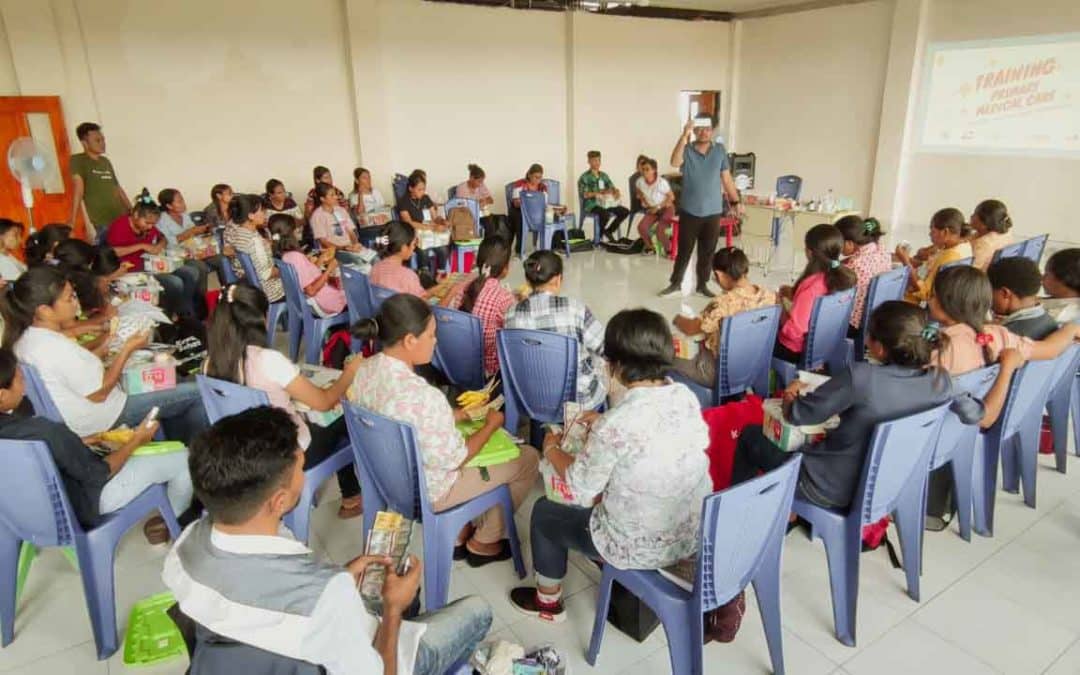
Ce "Photo du jour" shows you one of the classes of brave women (and two or three men) who learn with our teams how to give first aid – Primary Medical Care which is the most important – to a person or a sick or injured child.
These first days of medical training welcomed around sixty participants from the most isolated and rural villages. To give you an idea, folks, none of these villages has access to clean or Eau potable, and only a few have access to some electricity. There is often no road leading there, but only paths that are often impassable. And, of course, no medical centre or health centre near the villages.
The participants are 95% women, and all are teachers in the school of their ultra-rural region. What they have been doing for a few months now is remarkable. They heal and undoubtedly save lives, see here some images taken with their mobile phone.
Aside from being most undoubtedly unique in the world, the magic of this "primary medical care" program is that it works. The first batch of about 60 teachers who have undergone training in rural primary medical care are now gaining more and more confidence, and hundreds of urgent medical care are being provided to the children of sick or injured adults. Lives are being saved.
In a few days, Fair Future Foundation avec Kawan Baik Indonesia will evaluate this program directly from the villages, in the company of those who are its heroes, all these extraordinary women.

Le Water Connections programme, en une seule image
Ce "Photo du jour" shows you what the #watwerconnections program could look like from a technical side. Be a real "puzzle" that takes into account variables such as height differences, capacities, volumes, heights, distances, pressures and flow rates, diameters, inches, depths, quality, PH, watts, volts, solar and the panels that go with it, the notions of AC and DC, day and night working hours, eating yes but when? Sleep, yes but when? The number of families and children who will be there to help us today?
But Fair Future and Amis proches, together with the villagers of this region of East Sumba, NTT, in just under 18 months, we have provided access to drinking water and toilets to more than 250 familles, i.e. nearly 2,800 people, more than 65% of whom are enfants under the age of 12. Clean water is the best medicine and also the cheapest.
And as I write these few lines, we are drilling, treating, operating, prescribing and training. And you can always support Fair Future's technical and medical teams by donating. Your gesture will go a long way in helping us continue to help them have better health and a healthier life.
We invite you to look at the Water Connections project map here, Kawan.

Une histoire simple sur des bidons dans l'Est de Sumbawa
Deux litres d’eau par jour et par personne pour vivre. Et cela grâce à un objet aussi inoffensif qu’une vieille boîte de cinq litres. Un conteneur en plastique stupide ? Pour la plupart d’entre nous, c’est un objet qui finira irrémédiablement dans la poubelle. Mais ici, pour les familles avec lesquelles Fair Future et Kawan Baik travaillent – des dizaines de milliers de familles – c’est essentiel pour…

Les bidons à gaz ici, dans l'est de Sumba, valent leur poids en or
Ce "Photo du jour" shows you a young girl between ten and twelve, returning from the only water point in the village. She had to walk a few kilometres to fetch these five (5) litres of water, which is unhealthy since everyone does the laundry at this water source. This small amount of water will be used by his family, who, on average, can only use 2 to 3 litres per day per person. Location: Mata Air Payianu, Prai Paha, Nggaha Oriangu, Sumba Timur, NTT.
The jerry cans? They are essential because it is the only, or cheapest, way to fetch water from wells and distant water sources. They're also handy as they have a cap, but all here also use plastic to make a rudimentary 'seal' to make the container even more airtight, so you don't lose any water along the way. These cans are old 5-litre cooking oil cans. Once empty, people have to buy them expensively for their water needs. Some are years old and have travelled thousands of miles on the heads of these East Sumba children.
Voici chez La maison de Kambera, Fair Future and Kawan Baik staff have recovered quite a few ancient ones. We exchanged them for new ones, which we brought filled with water, clean and healthy with the Truck of Life.
In a few days, we will be there and collect more old jerrycans. They are true testimonies, like certain people's faces: Marked by hours of walking and exhausting work, fatigue exhaustion; these are often beautiful faces that we don't forget.

Ma famille va avoir des toilettes à la maison
Ce "Photo du jour shows you a family looking at the Fair Future and Amis proches teams who are finishing the construction of the first toilets in the history of this family, of this small group of houses. It's an incredible event for all of them who, until now, went out into nature to pee and poo. Location: Prai Paha, Nggaha Oriangu, Sumba Timur, NTT.
These toilets are part of more than forty toilets – healthy sanitary facilities – built by the Foundation as part of the #waterconnections project in East-Sumba. We also had to drill three deep wells and build more than thirty water reservoirs with a capacity varying between 3,500 and 24,000 litres, all connected by tens of thousands of meters of HDPE pipes.
