

Donner
Support Care
Articles et News
Contes de la campagne
Glossaire
Guides de terrain
Tous les articles et nouvelles
Cette page réunit toutes les nouvelles et articles de terrain Fair Future Foundation. Missions médicales, projets d’eau potable, prévention du paludisme, électrification solaire, logistique et formation en Indonésie ultra-rurale. Rapports transparents, histoires réelles, impact mesurable. Suivez notre travail, étape par étape, du terrain aux solutions à long terme.
Des histoires du terrain
Articles originaux de nos équipes en Indonésie orientale
Le travail qui se cache derrière chaque histoire
Nos équipes écrivent ces articles depuis les lieux où elles travaillent. Elles documentent les soins médicaux, l’accès à l’eau, la prévention, l’éducation et les décisions pratiques prises avec les communautés. Chaque histoire relie une observation sur le terrain au travail nécessaire pour y répondre.
Découvrez nos histoires et nos ressources
Articles récents
Des équipes de notre côté · Les plus récents en premier

Apprendre à vivre mieux ? Il n'y a pas d'âge pour ça !
Ce "Photo du jour": To live old, live happily, as the saying goes. This man is not old, but the harshness of life here, the hours spent on gravel and dirt roads fetching unhealthy water and consuming it, give him the traits of an old man from the village. Location: Padi, village of Mbinudita, East Nusa Tenggara.
An old bamboo cane that he made himself, just a pareo to wear, his skin tanned by the sun and the work in the fields, the rice paddies. His thinness is linked to eating his fill here being impossible. Him? He's not that old, but he doesn't know his age. He tells us: 60 years. And he is there, we have known him for a long time. He attends the meeting with the families of Padi, Mbinudita, and East-Sumba.
He listens to us talk about the means that can be put in place so that he too can have a better life, a life with less water stress, less disease, and more to drink and eat, thanks to the means and Infrastructures ce Futur juste et Amis proches have built the last four years here.
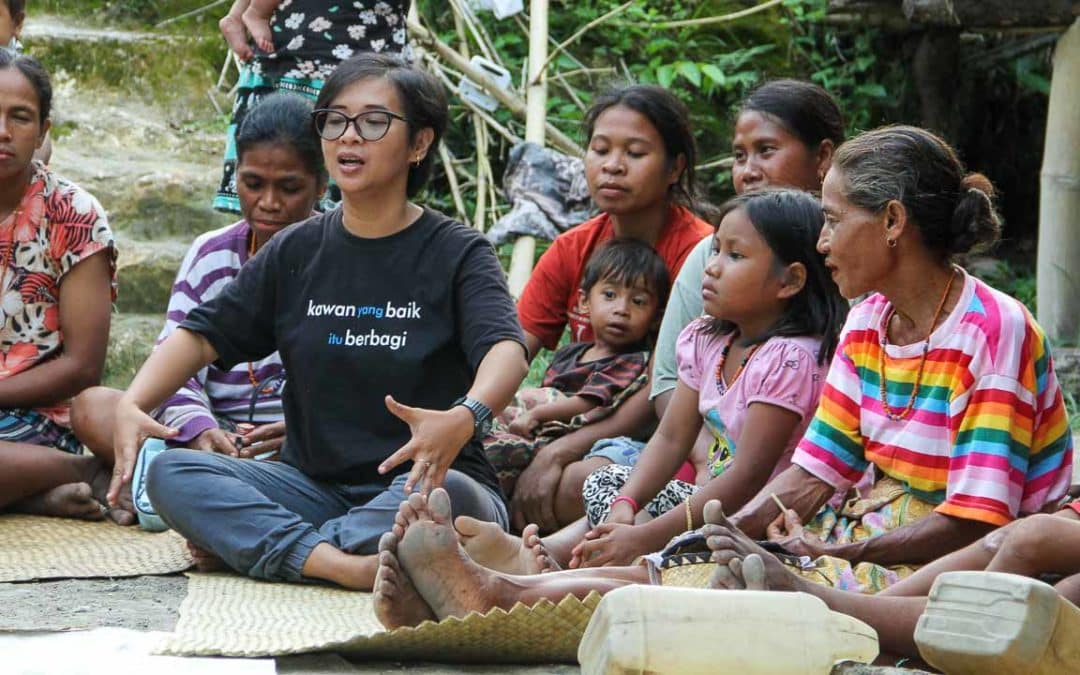
Apprendre à vivre plus sainement dans les zones rurales
Grâce aux équipes Fair Future & Kawan Baik présentes sur place et aux différents ouvrages que nos deux fondations ont publiés à leur sujet, nous passons quelques heures dans chaque groupe de maisons, dans chaque village où Fair Future et Kawan Baik ont mené un ou plusieurs projets relatifs à l’accès à l’eau potable et aux toilettes et autres installations sanitaires.

Some of the children of SD Mbinudita, East Sumba sing
Ce "Photo du jour": Yesterday, we asked the children to sing a song outside, in front of their school in SD Negeri Mbinudita. A song that we recorded and which will serve as a support for the film "Matawai", which Fair Future produced. A film about the immense problems linked to the lack of clean water here in this region… Location: SD Negeri Mbinudita, East Nusa Tenggara.
In 2019, there were only about sixty, in 2023 there are plus de cent and this is increasing. From three classes, we went to five and it will grow even more during the year. More children mean more classes, more teachers and more life too.
Hier, Kawan Elthon, Primus and Ino recorded the children singing a song called: "Akulah Sang Air", which means: "I am water". So yesterday was a great day for all these little ones, to whom we explained what we were doing. Soon you will be able to hear them as part of the film "Matawai" (water sources) which will be presented in the next two weeks.
"Akulah Sang Air – I am water"… Nothing could be more true here for all these children whose primary mission -in their everyday life- is to often cover several kilometres on foot, to fetch a few litres of water which is potentially dangerous to health. But since 2019, Fair Future and Amis proches are changing things here, in this huge region of Prai Paha, Nggaha Oriangu in Sumba Timur. All now have access to a source of clean water via #waterconnections, to a school #sdmbinudita, to primary medical care #primarymedicalcare among others…

A truck full of sanitations and toilets built by us
Ce "Photo du jour" shows you a truck loaded with metal constructions, which we transport to the rural villages of East Sumba. These are sanitary facilities built entirely by our teams in La maison de Kambera, which will be assembled in the houses -groups of houses-, so that the families can, for the first time in their lives, benefit from toilets and showers. Location: Prai Paha, East Sumba Regency, East Nusa Tenggara.
Rather than donating tons of medicine to cure these illnesses linked to lack of hygiene, we are building healthy sanitation facilities. Because now, Fair Future and Amis proches foundations have given them accès à l’eau potable, having toilets is possible.
Access to healthy toilets is an important challenge for children's health. Here in rural areas, very few households use sanitation facilities, often with serious health and environmental consequences. Fair Future and Kawan Baik know better than anyone that quality toilets save lives. They are essential to preserving the health of children by preventing the spread of disease through human faeces.

Together, learn to have a healthier life at home
Ce "Photo du jour" shows some villagers from this ultra-rural region of East Sumba. They learn with all of us how to have a healthy, more harmonious life, thanks to the Fair Future & Amis proches teams on-site… and to the various publications our two foundations have produced for them. Location: Prai Paha, East Sumba Regency, East Nusa Tenggara
Partnerships for the objectives, because it is all together that they will manage to change things in their villages: How to no longer suffer the inconvenience of water stress and correctly use the #waterconnections facilities that are now available to them. Learn to take care of yourself and the children who make up the majority of children in the region.
To achieve this, we invite them to take care of themselves. By washing more because there is water here now. By no longer using detergent to cleanse the body, hair or private parts, children and newborns included. By treating a minor injury or health problem before it becomes severe. And perhaps more need to disinfect a wound with motor oil, gasoline or diesel, the misdeeds of addictions related to tobacco, Siripinang, and alcohol, especially in children. All this can be done within the framework of the various programs for access to healthcare initiated by Un avenir juste and Kawan Baik, in particular those linked to access to Primary Medical Care (PMC).
Live better and longer by drinking more, eating better and using the healthy sanitation facilities we have built; and so many things that we are discussing with them here in the field in East Sumba, with the foundation's socio-medical teams.

If I can wash, it’s because I have water now!
Dans cette "Photo du jour", a young girl from the village of #Mbinudita is happy because now she and her family have access to water, so they can wash. Before for her, washing was once every two weeks, even once a month for others from the same village. Location: Prai Paha, East Sumba Regency, East Nusa Tenggara
The consequences of not washing on the body are disastrous: Development of microbes on the skin causing many skin diseases such as Scabies, ringworm, or dermatosis, and also much more graceful diseases: Typhoid fever, Hepatitis A, and Cholera. Not being able to wash leads to death linked to the development of the diseases mentioned. It is also a strong signal of the lack of water in a village. Not being able to wash for lack of water also means not being able to eat and drink enough.
Practising good personal hygiene is essential to allow proper functioning of the skin (breathing, secretions). Washing keeps the skin healthy, relaxes the body and maintains a positive self-image. This is why Fair Future and Amis proches develop solutions for access to better health by providing access to healthy and clean water. The cheapest and most effective drug.
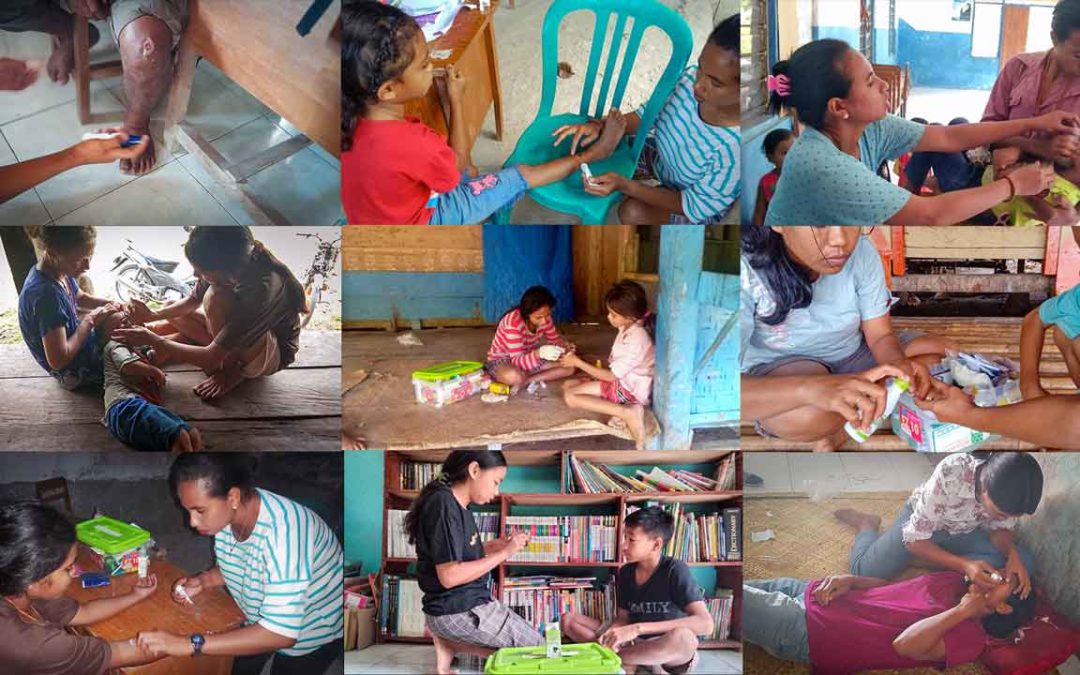
These teachers who save lives!
Dans cette "Photo du jour" The work of these female superheroes, who have performed hundreds of primary medical procedures since December 2022. This program is because there is no access to medical care here. These women are the only possible resources, and what they do is extraordinary. Location: East Sumba – NTT.
Le primary medical care program that Un avenir juste et Amis proches have set up is unique worldwide. A reminder? This program aims to provide theoretical and practical means to teachers in isolated villages to offer first medical care in the event of injury or illness of a child or an adult. It's simply outstanding; it saves lives.
It focuses on specific populations, groups and communities that are excluded from healthcare access systems and left behind. It offers knowledge and tools to teachers in ultra-rural villages to heal and save lives. It is the teachers of schools isolated from everything who provide first aid; 95% of them are women. There is no doctor or access road here, and the nearest health centre is often hours away. Fracture? Maladie de la malaria? Dengue? A snake bite? A burn? A choking person? Acute fever in a enfant? These women, these teachers from isolated villages, are also caregivers, real heroines in their interventions.

Évaluation du Primary Medical Care programme sur place
Ce primary medical care programme, lancé et mis en œuvre l’année dernière dans des zones ultra-rurales, est extraordinaire : il sauve des vies. Depuis décembre 2022, les participants au primary medical care programme – qui sont les enseignants du village – dispensent des premiers soins aux enfants et aux habitants du village. Ils traitent des blessures, des maladies, le paludisme et la dengue.

In principle, we should eat every day!
Dans cette "Photo du jour" a man who must be 40 years old (but who seems much older), is going to prepare the little rice he has found in the house. It will be for his meal or all those of the week certainly. He cleans it with the wind blowing, throwing it in the air from his rattan basket in front of his house. Here in the ultra-rural villages, few people own rice fields, so they have to buy rice when they can. Location: Desa Mbinudita – Prai Paha.
Eating healthy here? It is very complicated, it is even impossible. The water available is scarce, even if we change this in certain regions. All the meals for these families in East Sumba – where Fair Future and Amis proches set up socio-medical projects – consist of corn and a little rice when the families have it.
Vegetables are far too rare or you have to look for those found in the forest, in nature. Meat is almost never present, or when there is a feast they will kill a pig or goat to cook it and share it with friends and family. Fruits? Maybe one day, in a photo, they saw some.
Dans #sdmbinudita, East-Sumba, the #waterconnections project provides access to healthy and clean water sources close to families' houses. They can cook, and have a vegetable jardin to grow their own vegetables. Gradually, habits change, and the health of the villagers improves.

Water Connections Regardez tout ce que nous avons accompli !
Regardez ce que l’on a accompli ces 20 derniers mois : c’est tout simplement extraordinaire, car faire cela dans cette région était a priori impossible, mais nous l’avons fait. Nous sommes à la fin du Water Connections projet, nous n’avons “ que ” quelques choses à construire, dont un énorme réservoir de 25 000 litres.

Young girls now go to school more than before
Ce "Photo du jour" depicts a 12-year-old girl who goes to the #sdmbinudita school built by Fair Future and Amis, in East Sumba, in order to follow the lessons given by one of the five teachers. She is lucky to be able to go there every day. Location: SD Mbinudita Prai Paha.
Quality education for all is one of the most robust and proven pillars of sustainable development. You still have to be able to go to school. This is all the more true when you are a girl. But these successes come up against significant challenges in developing regions due to high levels of poverty, lack of food, eau potable and other emergencies to which we are trying to find solutions (access to Santé de base et Primary Medical Care, for example).
Indeed, the main task of almost all these girls of school age in the ultra-rural villages where we are active is to fetch water that is not very clean and not very healthy, far from their homes. To do this, they have to walk for hours carrying jerrycans.
Dans #sdmbinudita, East-Sumba, the #waterconnections project provides access to healthy and clean water sources close to residential homes. From now on, it does not take much time to have water in quantity and quality. And so young girls can go to school.

Health, happiness & sustainable development
What does Sustainable Development Goals mean in a nutshell for Fair Future? Reduce poverty (and not eradicate it because it is impossible), increase access to basic and primary medical care, improve access to technology and knowledge, reduce the number of undernourished people, be better health, reduce antimicrobial resistance, provide quality…