


Donner
Support Care
Articles et News
Contes de la campagne
Glossaire
Guides de terrain
Water, Health & Infrastructure
Water Connections in Laindatang & Hambarita
Since 2022, two neighbouring villages and Fair Future Foundation have built the roads, reservoirs and local systems that keep safer water closer to families.
- Working together since 2022
- 115,000-litre community reservoir
- Household ferrocement tanks
Water begins with the people who live here
Laindatang and Hambarita are not project sites on a map. After four years of work, they are part of our daily field life. Families have repaired access roads, carried materials, built ferrocement tanks and organised the care of shared water systems. The infrastructure works because responsibility remains inside the villages.
Le programme
A water system built with the village
In this dry part of East Sumba, water access shapes infection risk, nutrition, hygiene, school attendance and the time families can give to work and food production.
Work began in 2022 with the understanding that a tank alone would not solve the problem. The programme had to connect catchment roofs, first-flush systems, filtration, storage, protected taps, access roads and local maintenance. In Laindatang, this led to a 115-cubic-metre community reservoir. In Laindatang and Hambarita together, around twenty household ferrocement reservoirs bring water closer to families.
The work has required patience. Roads were rebuilt so trucks and materials could reach the villages. A groundwater attempt continued for nine months without producing a reliable supply. The failure was documented, the plan changed and the work continued. A new possible borehole location has since been identified for technical validation.
A large semi-buried reservoir in Laindatang protects filtered rainwater for the wider community.
Ferrocement tanks across the two villages bring stored water closer to daily family life.
Construction, road access, maintenance and new phases have continued with the community since 2022.
A new storage reservoir for Hambarita is being considered, subject to engineering and funding.
From a field constraint to daily water
How water reaches a family
A safe water system is a chain. Access, construction, clean catchment, protected storage, maintenance and household practice must work together.
Listen and map the need
Families identify water routes, roof surfaces, dry-season pressure, available land and the people who will care for each system.
Make access possible
Roads, slopes and delivery routes are repaired before cement, steel, pipes and filters can reach the construction site.
Capture and protect rain
Gutters, first-flush devices and filtration reduce contamination before water enters a reservoir.
Store water close to home
The community reservoir and household tanks protect useful rain for cooking, hygiene and the dry months.
Maintain and adapt
Families clean, inspect and repair the systems. Field teams document failures and change the plan when evidence requires it.
Responsibility must remain shared
Infrastructure works when ownership and safety stay together
The village brings knowledge, labour and long-term care. Fair Future brings engineering, materials, water-safety measures and the obligation to recognise technical limits.
What the community makes possible
- Choose land and agree how shared water will be used
- Repair access routes and help move materials into the villages
- Build with local masons and families throughout construction
- Name caretakers for tanks, roofs, gutters, filters and taps
- Report cracks, contamination risks, damaged pipes and empty reserves
- Use available water for hygiene, household needs and small food gardens
What requires technical responsibility
- Structural design, reinforcement and safe ferrocement construction
- Catchment sizing, first flush, filtration and protected distribution
- Water-quality testing and corrective action when contamination is found
- Engineering review before a new large reservoir is built
- Hydrogeological validation before another borehole attempt begins
- Transparent reporting of cost, failure, maintenance and work still unfinished
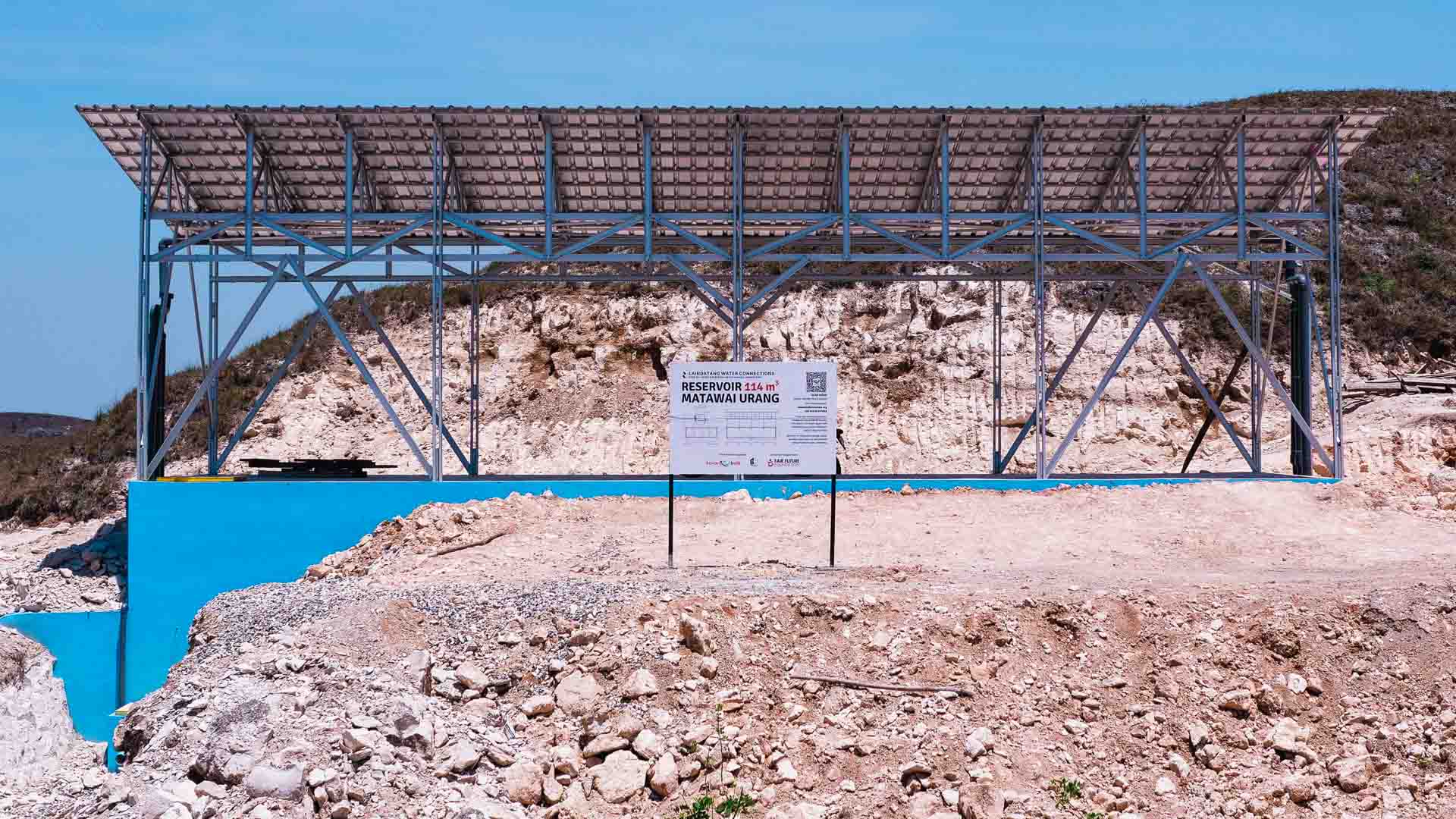
The 115 m³ reservoir is one part of a wider village system that includes roads, roofs, filters, household tanks, protected taps and local maintenance.
The infrastructure behind each litre
Built for repair, daily use and the dry season
Useful infrastructure must fit the land and the people who maintain it. Ferrocement can be built and repaired locally. Gravity reduces dependence on pumps. Roof catchment protects short rain events that would otherwise be lost. Every part has to remain understandable and maintainable inside the village.
Ferrocement storage
Reinforced mesh and cement create durable reservoirs that local builders can inspect and repair.
Roof catchment
Gutters and first-flush devices collect rain while diverting the most contaminated initial flow.
Filtration and taps
Filters, protected outlets and clean handling reduce contamination between the roof and the household.
Roads and logistics
Excavators, trucks, repaired tracks and manual carrying make construction possible where access is fragile.
Quels changements dans la pratique
Safer water changes the whole day
Water is closer to home
Families spend less time walking and carrying water over difficult ground, especially during the dry season.
Household storage is safer
Protected catchment, filtration and closed reservoirs reduce reliance on open or visibly contaminated sources.
Children regain time
When water collection is less dominant, there is more space for school, hygiene, rest and care inside the family.
Food gardens become possible
Carefully managed water gives households a small but important margin for vegetables and daily nutrition.
Water & healthWater Connections programmeSee the wider programme linking safe water, disease prevention, nutrition and community infrastructure.
CommunautéEight Hambarita reservoirsSee how named household tanks were built with families and local caretakers.
Outils de chantierLaindatang filtration systemUnderstand the catchment, filtration and storage safeguards behind the reservoir.
Field archiveLaindatang and Hambarita reportsOpen the complete archive of construction, access, maintenance and water updates.
Récord en direct du terrainNotes de terrain de l’Indonésie orientaleFollow short, dated reports from water work, health, logistics and community life.
Guide de terrain & glossaireWater and hygiene, explainedExplore practical terms behind rainwater capture, filtration, storage and safe household use.
Références médicalesWHO drinking-water guidanceRead the public-health evidence connecting safe water with infection prevention and health.
En direct du terrain
Water Field Notes, as the work happens
Two recent signals from water, construction and village life in Eastern Indonesia. These notes refresh automatically when a relevant Field Note is published.
Directement du terrain
Latest Laindatang and Hambarita reports
These reports document the work as it happens: road access, rainwater capture, reservoir construction, filtration, maintenance, local decisions, technical limits and the next phases.

Transformer des vies grâce à des solutions innovantes pour l’eau de pluie
Dans la région aride de Tanambanas, une transformation remarquable est en cours. Le #WaterConnections projet, mené par Fair Future et Kawan Baik, remanie le récit de la pénurie d’eau. Grâce à des solutions innovantes en matière d’eau de pluie, chaque goutte est transformée en espoir, santé et bonheur.

Un voyage d'espoir dans notre lutte contre le paludisme
Combattre le paludisme | Un voyage d’espoir. Découvrez le courage des équipes de Fair Future dans leur #ZeroMalaria campagne sans relâche. Ce film captivant est bien plus qu’un simple récit : c’est un portrait intime de la quête salvatrice dans les régions ultra-rurales de l’est de l’Indonésie, où l’espoir se construit malgré les difficultés.
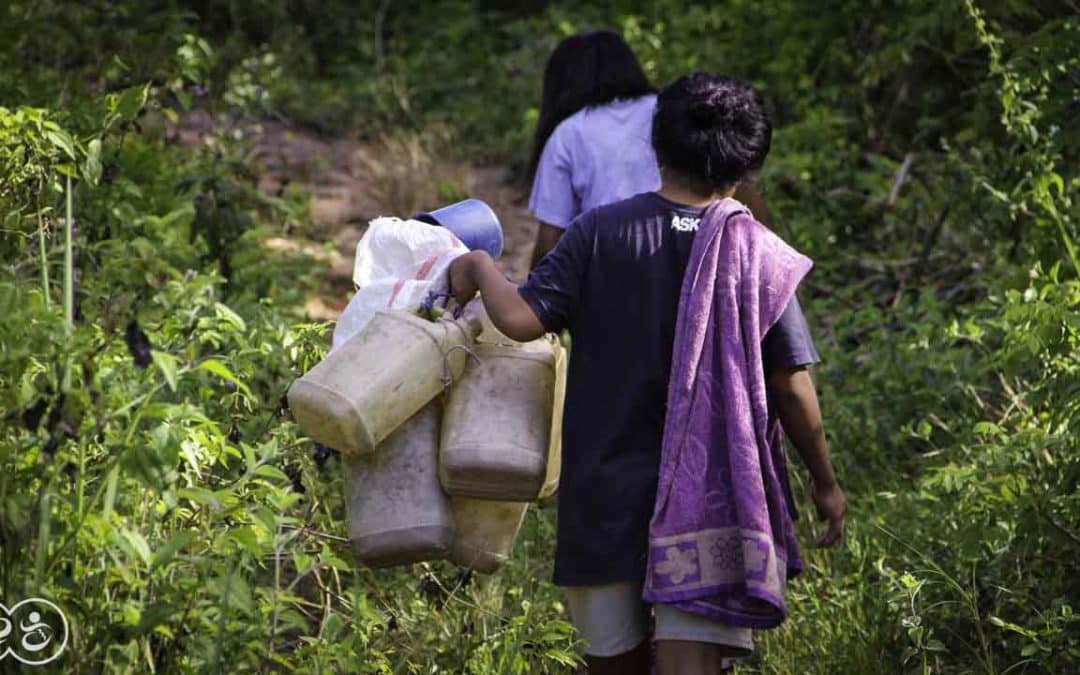
Briser les barrières d’eau pour les femmes et les filles dans l’est de Sumba
Water Connections réduit le temps que les femmes et les filles consacrent à la collecte de l’eau dans les zones rurales de l’Est de Sumba, favorisant ainsi la santé, la fréquentation scolaire et la vie quotidienne de la famille.

Pompes Dragon : un avenir prometteur #WaterConnections à Laindatang
L’arrivée des pompes Dragon à Laindatang East Sumba marque un tournant dans le #WaterConnections projet de Fair Future. En collaboration avec Kawan Baik et Rotary Australia, nous transformons le paysage sanitaire de ce village isolé. De la réduction de la prévalence des maladies infectieuses à la mise en place des toilettes sanitaires les plus modernes…

Matawai : le documentaire de Fair Future sur la crise hydrique en Indonésie orientale
’ Matawai’ » constitue un véritable rappel à l’attention de la communauté internationale sur la crise de l’eau en Indonésie orientale. Réalisé par Fair Future Foundation, ce documentaire saisissant rend visible de manière vivante les luttes quotidiennes des familles rurales. Grâce à ce film, vous verrez également les initiatives pionnières que nous avons mises en œuvre pour améliorer l’accès à…

Élever la capacité d'action de Laindatatang : un chemin vers l'opportunité et l'unité
Embarquez pour un voyage avec les familles du village de Laindatatang, qui, avec le soutien de Fair Future et de Kawan Baik, ont réussi à améliorer l’accès à leur communauté, ouvrant ainsi de nouvelles opportunités pour tous. Découvrez comment ce projet d’infrastructures ambitieux, marqué par une dévouement inébranlable et une implication locale, symbolise un engagement envers…

Transformant des vies à East Sumba : le partenariat vital de Rotary Australia
Le partenariat entre Rotary Australia et Fair Future vise à avoir un impact positif sur les communautés vulnérables de l’Est de Sumbawa. Grâce à une collaboration étroite, nous nous engageons à fournir accès à de l’eau potable et à des services de lutte contre les maladies, ce qui permettra d’apporter de l’espoir et un avenir meilleur à ces communautés.

Une initiative audacieuse visant à améliorer les conditions de salubrité et l’accès à l’eau potable Laindatang
Laindatang Dans l’est de Sumbawa, il n’y a ni eau potable ni installations sanitaires. Fair Future change cette réalité et apporte une transformation remarquable. Un voyage monumental qui promet de révolutionner l’avenir de cette communauté ultra rurale. Ils ne construisent pas seulement des bâtiments, ils créent de l’espoir et des opportunités.

Amener des services d’assainissement dans un village défavorisé de l’Est de Sumbawa
Une communauté rurale de l’Est de Sumbawa commence à bénéficier d’accès à l’assainissement, à l’eau potable et à des conditions de vie plus saines grâce à des infrastructures construites localement.

#ZeroMalaria, pour éliminer le paludisme dans Laindatang
Fair Future Foundation, en collaboration avec Sumba Volunteer Kawan Baik Indonesia et l’ONG locale Sumba, œuvre pour lutter contre le paludisme dans la région fortement touchée de l’Est de Sumba, en Indonésie. Par le biais de leur programme, ils visent à fournir des services de dépistage, de prévention et de traitement dans le village isolé de Laindatang.

L’accès au village est une espérance d’une vie meilleure
Découvrez les progrès remarquables réalisés dans nos efforts continus de construction et de réparation sur le chemin de la localité de Laindatatang, dans l’est de Sumba. Nous Fair Future Foundation avons été à l’avant-garde, coordonnant et supervisant méticuleusement ce projet important pendant des mois.

Superbe ! Le premier camion chargé arrive Laindatang
Après des travaux de réparation de routes difficiles, un camion transportant des matériaux de construction et du matériel de sanitaires arrive Laindatang dans un endroit isolé de l’est de Sumba.
Rapports de responsabilisation
Water systems must remain measurable, maintained and transparent
We document what is built, how much water can be stored, what fails, what requires repair and what remains unfinished. The next work may include a new 80,000 to 100,000-litre reservoir in Hambarita, solar energy for the school and another groundwater attempt after technical validation. Each phase depends on evidence, local responsibility and available resources.
