Des femmes fortes représentent une nation forte
Achieving gender equality and empowering women are fundamental to the fight against extreme poverty, hunger and malnutrition.
Women and girls in East Sumba (and other outermost regions of Indonesia) play an essentiel and increasingly recognized role in the sustainability of households and communities in rural areas. Even if sometimes it does not seem to be the case!
Women comprise a large part of the formal and informal agricultural labour and perform most domestic tasks, such as fetching water within rural families and households. Women also contribute significantly to agricultural production, food security and nutrition, land and natural resource management, and building capacity to adapt to climate change.
Women here play an essential role in the rural economy:
It is mainly the ones who look after the welfare of their families, children and elderly relatives, whom they feed and care for. In rural areas here in East Sumba, women do unpaid work, including fetching firewood for cooking and water for drinking, eating and bathing several times a day.
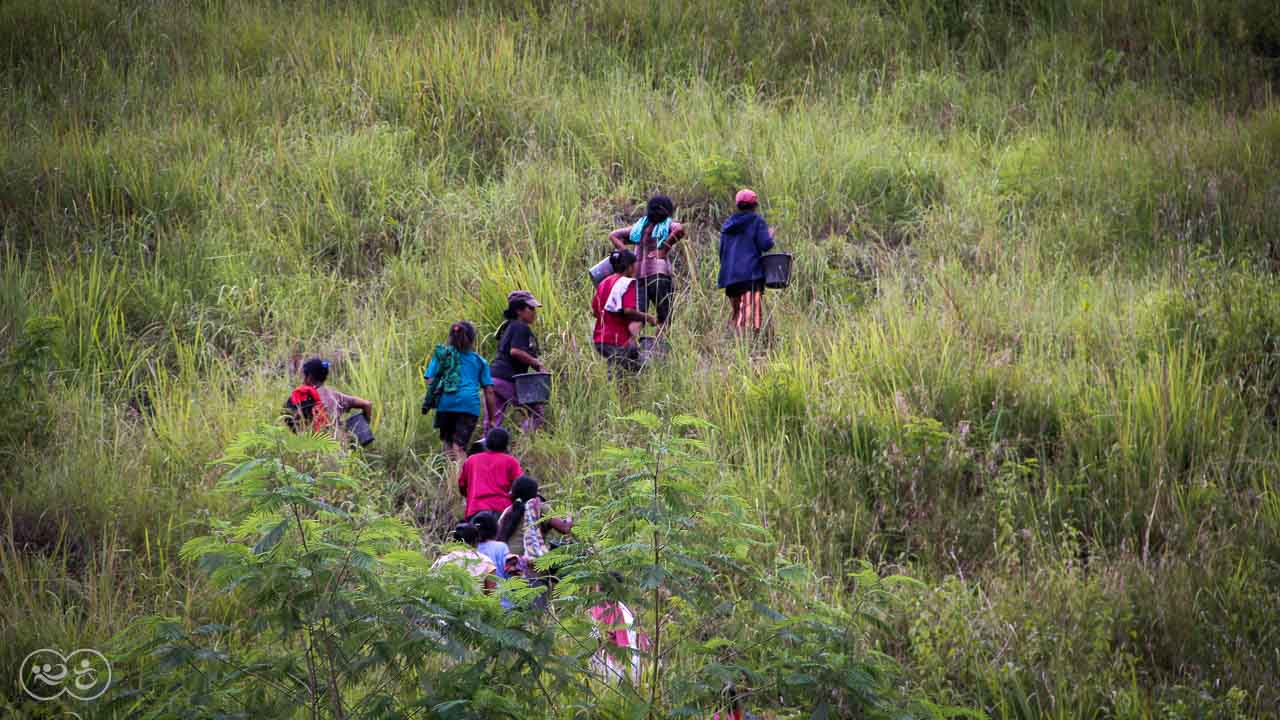
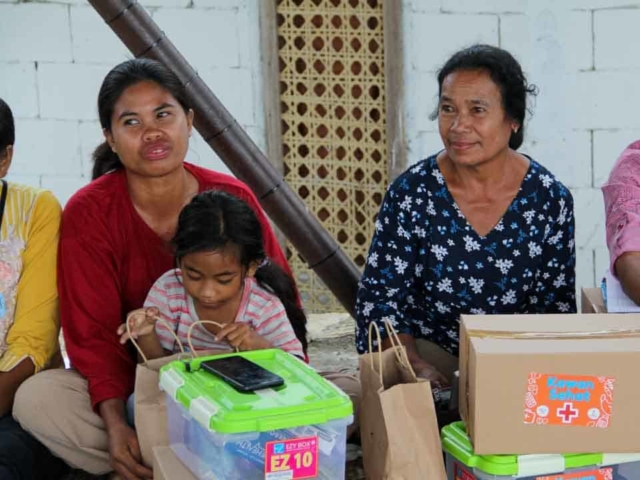
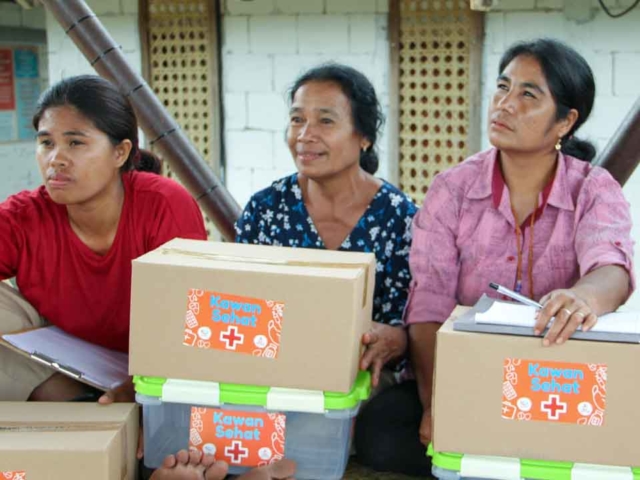
The images you can see below highlight the incredible work of women and young girls in the rural village of Mbinudita in East Sumba.
Women do most of the work.
These strong women are grandmothers, mothers and sometimes young women, girls too. They are the ones who take care of the heavy work of the family: Carrying, walking, gardening, cooking, caring for, taking care of, going shopping… That’s how it goes here.
These strong women spend most of their time fetching water, just a few litres, to meet the needs of all family members. To do this, they have to walk for a long time, sometimes far, to bring a few litres of water into the house, which is not always clean and healthy. These people living in the rural areas of East Sumba consume between 2 and 3 litres of water per day and per person for all the needs of the day, such as cooking, eating, drinking, washing and watering the animals too. That’s why they work hard with all of us, to have water in quantity et Qualité in all the houses in the region… And it works thanks to them, thanks to the Water Connection project.
They are doing a tremendous job with all of us here.
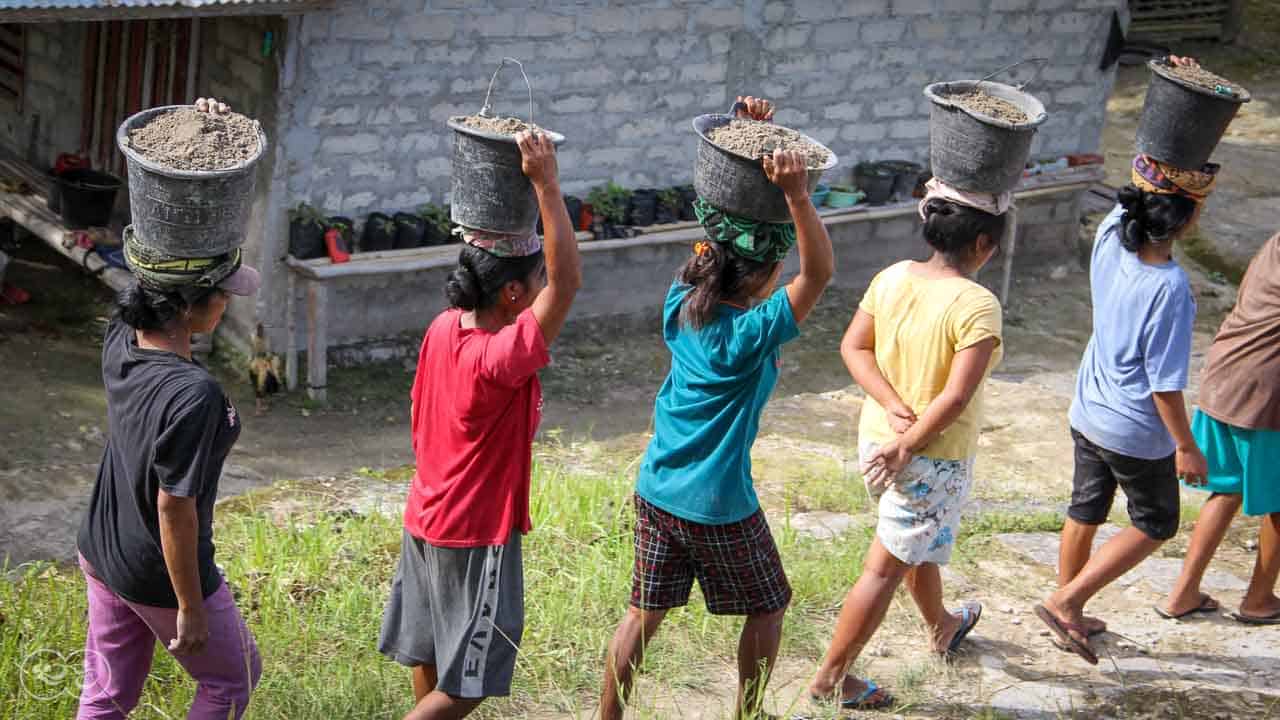
As part of the “water connections” project, they are the ones that transport the sand and other construction materials that will be used to manufacture a 6,500-litre Ferro-cement tank (to date, the foundation has been built more than ten). But also the sanitary facilities that the Amis proches and Fair Future teams have been building for months here on the Mbinudta site.
The equipment is loaded on their heads, and they sing traditional songs to give themselves courage. It’s incredible to see, to experience too. Where these women clear a path, no one else can pass. You have to have experience, put on good shoes for you otherwise you slip and fall. But for them, no problem, even barefoot. They are powerful women who wonderfully represent a proud, strong nation.
We are all very proud of you all, ladies. Thank you for everything.
#indonesianwomen #strongwoman #strongnation #genderequality #empoweringwoman #waterconnections #malnutrition #hunger #healthierlife #sustainability #ntt #ruraleconomy #workforce #kawanbaik #kawansehat #kawanpintar #fairfuturefoundation
Une belle journée à vous de l'Est de Sumbawa.
La maison de Kambera – Base médicale socio-sanitaire, le 06.09.2022
Date des photos : juin 2022 | Situation géographique : SD Mbinudita, Sumba Est, NTT
Élargir les possibilités aux femmes rurales dans le NTT : un moteur du succès de l’Indonésie et du développement communautaire dans l’Est de Sumbawa
Fair Future Foundation L’autonomisation des femmes est au cœur des initiatives de la Fondation dans les zones rurales du NTT, en Indonésie. Reconnaissant le rôle indispensable des femmes dans les réalisations de la nation, la fondation s’efforce d’en renforcer l’autonomie grâce à des approches variées. Voici les éléments clés de sa stratégie en faveur de l’autonomisation des femmes. L’égalité des genres et l’autonomisation des femmes sont essentielles dans la lutte contre l’extrême pauvreté, la faim et la malnutrition.
La galerie d’images qui accompagne cet article présente la contribution significative de ces femmes à l’économie rurale de leur village. Elles sont responsables du transport du sable pour la construction d’un nouveau réservoir d’eau potable sur le Mbinudita site. Inspirées par leur héritage, elles se soutiennent grâce à la musique traditionnelle, sachant parfaitement les énormes défis auxquels elles sont confrontées. Ces femmes résilientes montrent le chemin dans l’accomplissement de tâches sans aucun doute ardues. Sans aucun doute, les femmes fortes ouvrent la voie vers une nation forte.
Les Fair Future Foundation collaborateurs Amis proches, une organisation partenaire locale, pour mettre en œuvre des initiatives visant à relever les défis auxquels sont confrontées les femmes dans les zones ultra-rurales, notamment le cycle de la pauvreté. En fournissant des opportunités économiques, telles que le développement des compétences et la formation professionnelle, les femmes sont dotées des outils nécessaires pour créer des moyens de subsistance durables, améliorant ainsi leur bien-être économique. De plus, les organisations s’efforcent d’améliorer l’accès des femmes aux ressources essentielles, telles que la santé, l’éducation et les infrastructures. La fondation vise à créer un environnement propice où les femmes peuvent prospérer et participer activement à leur communauté en répondant à ces besoins fondamentaux. Grâce à ces approches globales, elle Fair Future Foundation vise à autonomiser les femmes dans les zones rurales de l’Indonésie, leur permettant de sortir du cycle de pauvreté et de contribuer à leur propre développement ainsi que celui de leurs communautés.