Desiana Brings Community Health Education into Lahiru’s Posyandu Care
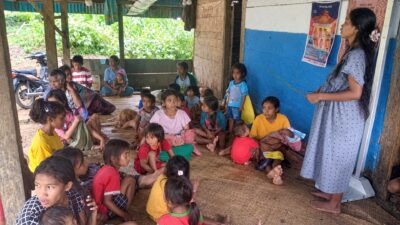
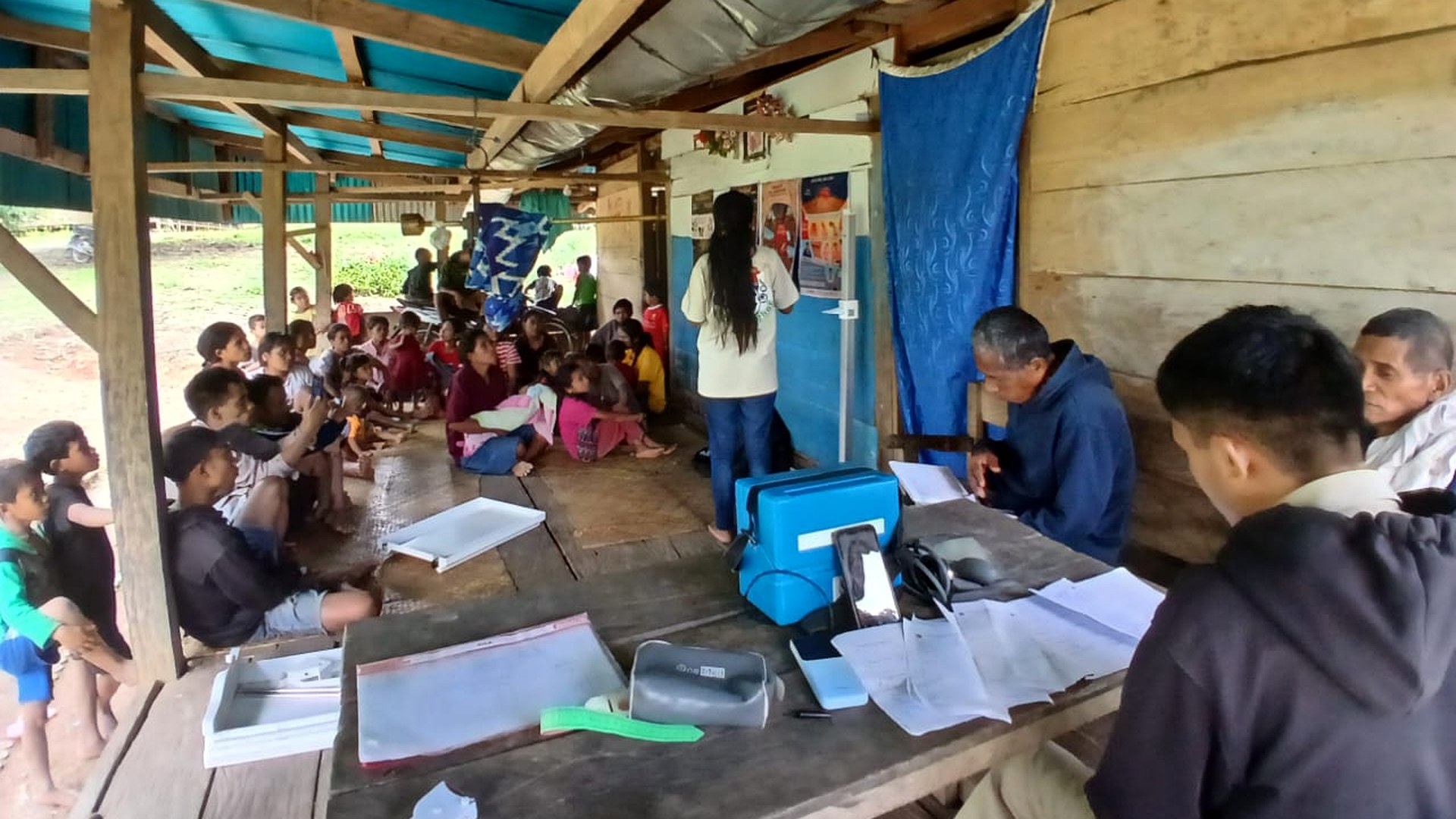
This new Picture of the Day shows Desiana beside fabric posters in Lahiru, East Sumba. Children and adults sit nearby, including a mother holding her baby. Papers and health equipment lie on the table. During an action co-organised with the local Posyandu, community health education gives families time to understand prevention alongside care.
Understanding community health education
Desiana is a Kawan Sehat agent. In front of her are people of different ages, gathered in the same wooden space. The families are listening attentively. For these families, the subjects she explains concern daily life, caring for a child, recognising an illness and deciding when to ask for help.
The session brings together waste management, alcohol-related harm, malaria prevention and recognising malaria symptoms. The fabric posters give these subjects a visible form. Desiana gives them a voice. An illustration becomes useful when someone takes time to explain what it means and how it relates to life at home.
For malaria, that distinction is clinical. Fever, chills and headache can suggest infection, but cannot confirm it. A suspected case needs a rapid diagnostic test or microscopy. Confusion, seizures or breathing difficulty require urgent medical attention. Understanding symptoms should help families seek assessment, without encouraging them to diagnose themselves.
Taking time to explain during care
The mother holding her baby is part of this gathering, alongside children and older adults. One explanation must reach several generations. Information needs to be understandable without losing its medical meaning. People also need room to ask questions, especially about practices that are familiar, difficult to change or constrained by available resources.
Co-organising this action with the local Posyandu brings education into an existing moment of care. Families can receive information where they already meet health workers. This photograph does not tell us what each person will remember or change. It records the work of explaining, with attention and time given to prevention.
Through Primary Medical Care, Fair Future Foundation and Kawan Baik Indonesia support local agents who connect families with care and referral. Here, community health education is part of that responsibility. Thank you, Desiana and the Posyandu team, for making medical knowledge accessible to the people who need to use it.
Alex Wettstein | 6 October 2026
Further reading
- World Health Organization: WHO explains malaria symptoms, diagnostic testing and mosquito-bite prevention, helping families understand when to seek assessment and urgent care.
- UNICEF: UNICEF supports community health systems that connect remote children and mothers with trained workers, practical information and essential care.
- WHO alcohol guidance: WHO describes alcohol-related disease and injury, providing a medical basis for discussing consumption and its effects within community education.
- WHO community worker guidance: WHO guidance addresses training and support for community health workers, including their integration into local services and community structures.
- WHO diarrhoeal disease guidance: WHO explains how safe water, sanitation and handwashing help prevent diarrhoeal disease, connecting environmental health with everyday family care.