

Image Use and Consent Policy
Our image use and consent policy puts dignity first. Every image shows a person whose dignity matters more than the photograph. We document our work to make care visible, explain the realities of remote communities and sustain the support that makes action possible. Respect, empathy and responsibility guide what we photograph, what we share and what we choose to keep private.
Image use and consent: making care visible with respect
Documenting action. Protecting people.
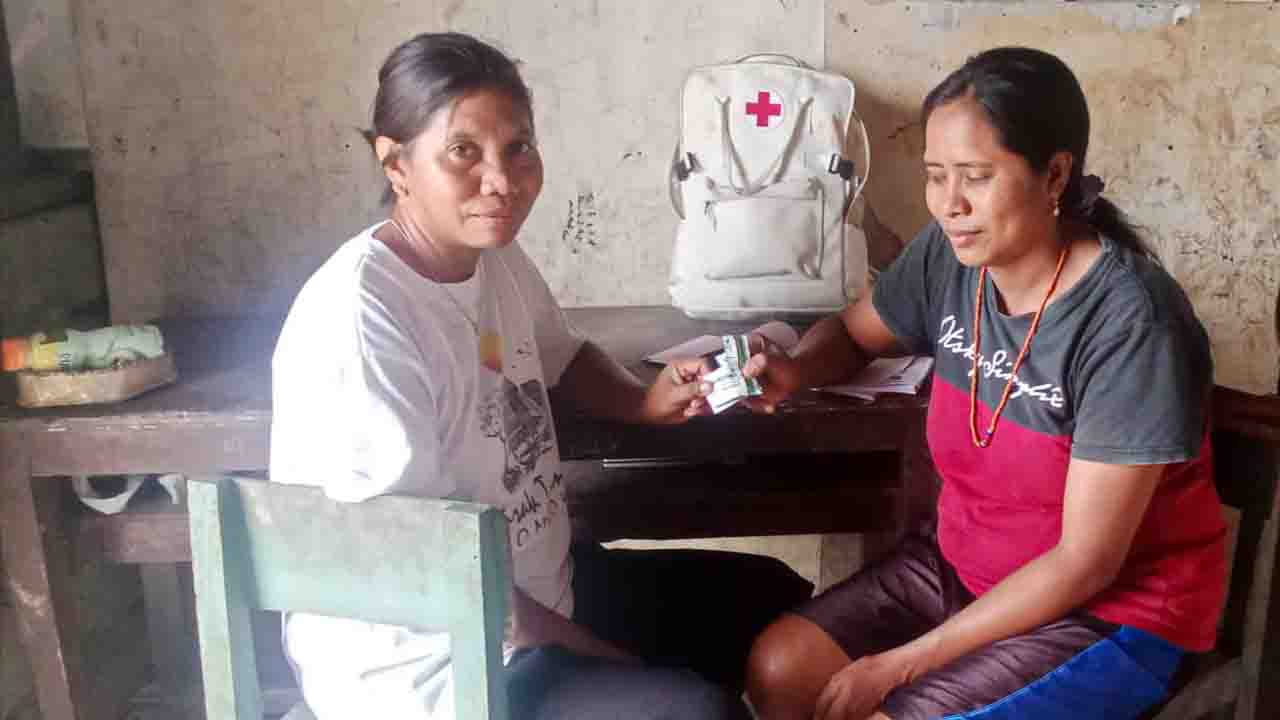
Consultations, triage, medicine distribution, and community-based care in ultra-rural Eastern Indonesia, where access to healthcare remains fragile and unequal.
Why we document our work
Fair Future Foundation is a medical foundation working with communities in eastern Indonesia. Images help explain what our teams do, the barriers people face and the practical care delivered where access is limited. They also help us account for the use of donations and raise funds to continue this work.
We publish with a clear purpose: to inform, bear witness and give recognition to the people carrying out this work. There is no place for voyeurism, humiliation or the use of suffering as a spectacle. A compelling image never outweighs a person’s safety or dignity.
Kawan Sehat: images that support care
Much of our medical documentation comes from Kawan Sehat community health agents. In very remote villages, where there is no doctor or health centre nearby, they use applications developed by Fair Future to transmit images alongside clinical observations, their assessment, treatment provided and follow-up information to our medical teams.
Patients are informed about why photographs are taken and how they support documentation and exchanges with medical colleagues. This is a care-related purpose. Being informed about a clinical photograph does not, by itself, mean agreeing to its publication. Medical images are not a public image library.
Image use and consent: separate decisions
Taking an image for care, sharing it with the medical team and publishing it for a wider audience are different decisions. Consent for public use must be specific, informed and freely given. Consent to care or to medical documentation does not authorise use on our website, social media, reports or fundraising materials.
Before public use of an identifiable image, the person must understand what will be shown, why it will be shared and the intended channels. Explanations must use a language and words they understand, including the possibility of online sharing beyond our control. Silence, a smile or posing for a photograph is not sufficient evidence of consent.
A real choice, without pressure
People may refuse a photograph, limit the uses they accept or change their mind. Their decision must never affect the care, treatment or support they receive. Nobody owes us their image in exchange for assistance. We do not seek publicity consent from someone who cannot make a free and informed decision at that time.
Permission for publication must be documented in a way appropriate to the context, such as a written record or a recorded oral agreement, with the agreed uses, date and responsible team member. A signature alone does not replace a meaningful conversation. If permission is unclear, we do not publish an identifiable image.
Medical confidentiality and protection from recognition
For publicly shared medical cases, faces are blurred or otherwise concealed. We also assess whether the person could be recognised through clothing, tattoos, surroundings, a voice, a caption or a combination of details. Blurring a face alone does not guarantee anonymity and does not create permission to publish.
Names, patient records, screens, precise locations and unnecessary clinical details must be kept out of public material. Sensitive images require a specific review of necessity, consent and possible harm, even when identity is concealed. If adequate protection cannot be achieved, the image must not be published. We can explain care through a different photograph or through words.
Children and people at heightened risk
Our Child Protection Policy applies to every image involving a child. Public use of an identifiable child’s image requires informed permission from a parent or legal guardian and, according to age and understanding, the child’s own agreement. A child’s refusal or discomfort must be respected.
Consent does not justify an image that could expose a child or any other person to stigma, discrimination, violence or humiliation. We do not publish identifiable images of children in highly sensitive circumstances, including sexual violence. The person’s best interests and protection take priority over any communication objective.
Showing people and care with accuracy
Our photographs must reflect real situations and be accompanied by truthful context. We show the work of local health agents, families and communities as well as medical needs. People are participants in their own lives and care, with knowledge, relationships and choices that extend beyond a medical condition.
We do not stage distress, exaggerate a diagnosis or use misleading captions to strengthen an appeal. Cropping, colour correction and anonymisation must not change the meaning of an image. Fundraising follows the same standards as every other publication. The need to finance care never removes the need for consent and respect.
Responsible handling and review before publication
Clinical documentation must remain within authorised care workflows, with access limited to people who need it for their role. Public communication requires a separate selection and review. Staff, volunteers, partners and visiting photographers must follow these principles; access to our activities does not authorise personal posting or unrestricted reuse.
Before publication, the responsible team must check the purpose, permission, context, confidentiality, protection of children and risk of recognition. It must also check that captions and alternative text do not reveal information removed from the photograph. This policy sets the standards for that review; it does not certify the technical security of the applications used for care.
Questions, withdrawal and requests for removal
Anyone concerned about an image can speak to their Kawan Sehat agent or contact Fair Future Foundation at [email protected], through our contact page or by telephone at +41 79 631 29 69. A person may ask questions, correct a caption, withdraw permission for future use or request removal. No justification is required.
Please provide a link or a short description so we can locate the image; do not send additional medical records or identity documents. We will review the request, stop further use where permission has been withdrawn and remove the image from channels we control where applicable. We cannot guarantee recall of printed material or copies already shared by others. A request about public use is handled separately from clinical records needed for care.
Scope and responsibility
These principles cover photographs, video, audio and associated stories used by Fair Future Foundation in public communications, including donor reports and fundraising. They complement our Child Protection Policy, Ethical Code and Working Principles. The medical and communication teams share responsibility for applying them.
- Our shared responsibilities: Child Protection Policy · Ethical Code · Working Principles · Kawan Sehat care in the field
- Learn more: Our mission · Use of funds · Contact the Foundation
Policy at a glance
Version: v1.0
Published: 24 November 2026
Revised: 24 November 2026
Document: FFF-SHQ-POL-2026-20261124-01
Scope: Public images and stories across our work
Languages: English · Français · Bahasa Indonesia
Questions or removal requests:
[email protected]
Contact our team