


Donate
Support Care
Articles & News
Field stories
Glossary
Field guides
Responsible Giving and Donation Principles
Giving responsibly means knowing where support goes, how decisions are made and what safeguards protect donors and communities. Our work is field-led, independently governed and documented through audited accounts and activity reports.
Responsible Giving Principles in Humanitarian Work
Clear rules to protect donors and communities
Giving with clarity
A donation creates a duty
Responsible giving is an agreement of trust between the donor, our foundation and the communities with whom we work in East Indonesia.
We accept support only when it strengthens our medical, water, prevention, education or community programmes and when we can use it safely, legally and effectively. We do not reshape our mission to secure a gift.
Our principles
What responsible giving means to us
Needs are defined in the field
Medical priorities, water access and community realities guide decisions. A donation does not give authority over patients, staff or communities.
Independence comes first
We decline support when its conditions conflict with our statutes, ethics, clinical responsibilities or operational independence.
People are never promotional material
Support does not buy access to patients, private medical information or images. Consent and dignity remain non-negotiable.
Commitments remain traceable
Restricted donations are used for the agreed purpose. Material changes are discussed with the donor and documented.
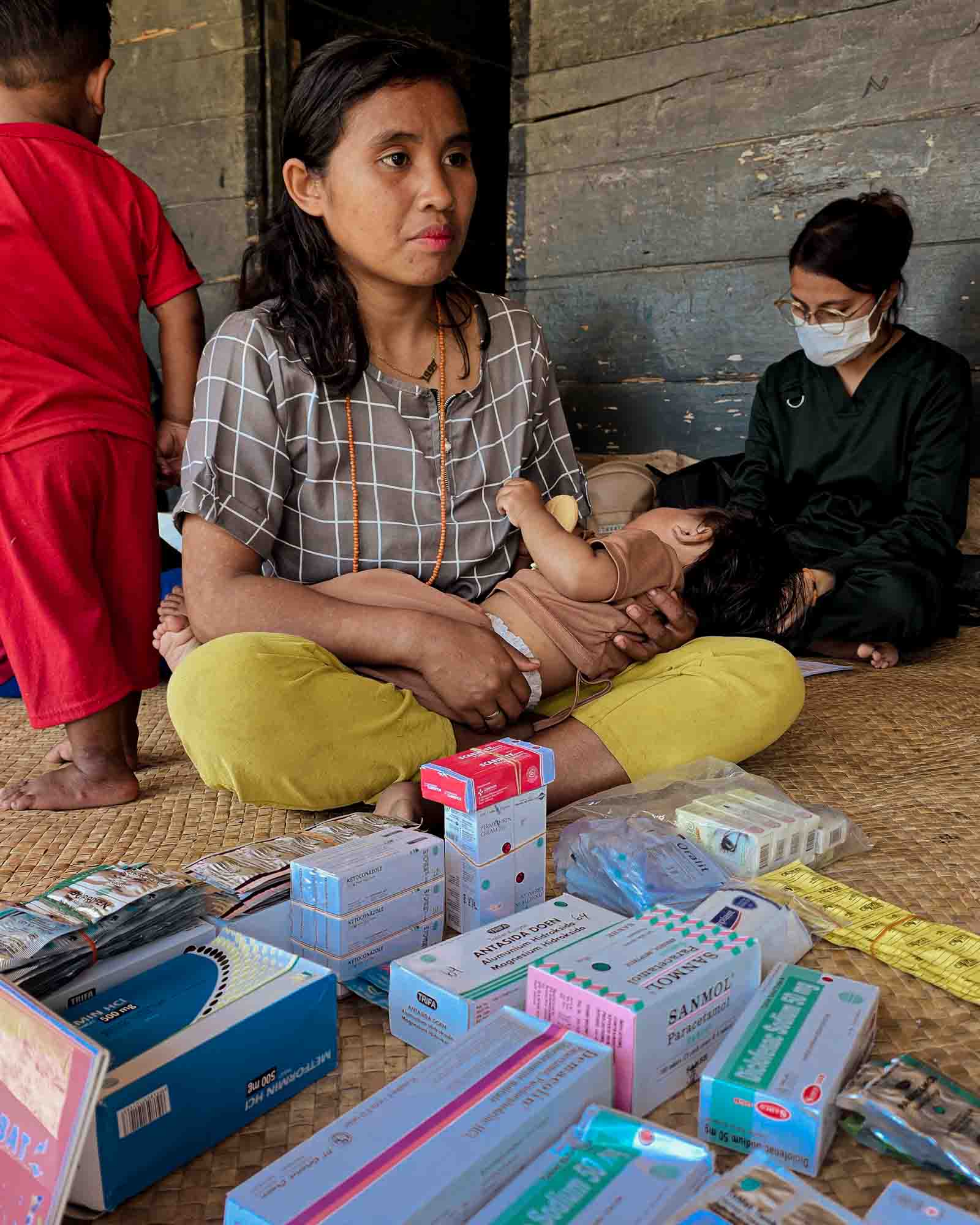
What support becomes
Medicines, care and time with a family
In remote villages, a contribution is not an abstract financial line. It becomes the medicines carried to a home, the clinical time given to a child and the transport that allows our teams to reach a family.
That is why every accepted donation must be useful, traceable and connected to a real field need.
Community medical visit in East Sumba. Fair Future Foundation and Kawan Baik Indonesia.Accepted support
Useful support, not unusable cargo
Usefulness matters more than volume. Transport, storage, maintenance, local regulations and clinical standards are considered before any in-kind donation is accepted.
Financial donations
- Unrestricted support
- Support for a defined programme
- Legacies and listed securities
Goods and equipment
- Medicines and medical supplies
- Educational materials and books
- Tools and construction materials
Time and expertise
- Qualified volunteering
- Technical or clinical expertise
- Training and operational support
Accountability
From a gift to work in the field
We assess
The team checks the need, purpose, restrictions, costs and practical feasibility.
We deliver
Funds and resources are committed through our own programmes and field operations.
We account
Accounts, activity reports and field documentation make their use visible and verifiable.
A voluntary board
Members of the foundation board serve without remuneration. Operational expenditure is tied to delivering the work and meeting legal obligations.
Payment processing
Fair Future Foundation adds no processing fee. Banks and providers such as Stripe or PayPal may apply their own transaction charges.
Legal framework
Swiss oversight and donor protection
Recognised public-interest foundation
Fair Future Foundation is registered in Switzerland and recognised as serving the public interest. Its statutes, governance and accounts define how resources may be accepted and used.
Tax treatment
Eligible donations may benefit from tax deductibility under the rules applying to the donor. Requirements differ by country and personal situation.
Read the evidence
The documents behind the principles
These pages bring together the foundation’s legal basis, accounts, ethical commitments and explanations of how funds are used.
Support that reaches the field
Give securely, support a defined programme or contact us before offering equipment or professional expertise.
