


Clean water roof Laindatang built by communities
Medical water safety starts above the tank
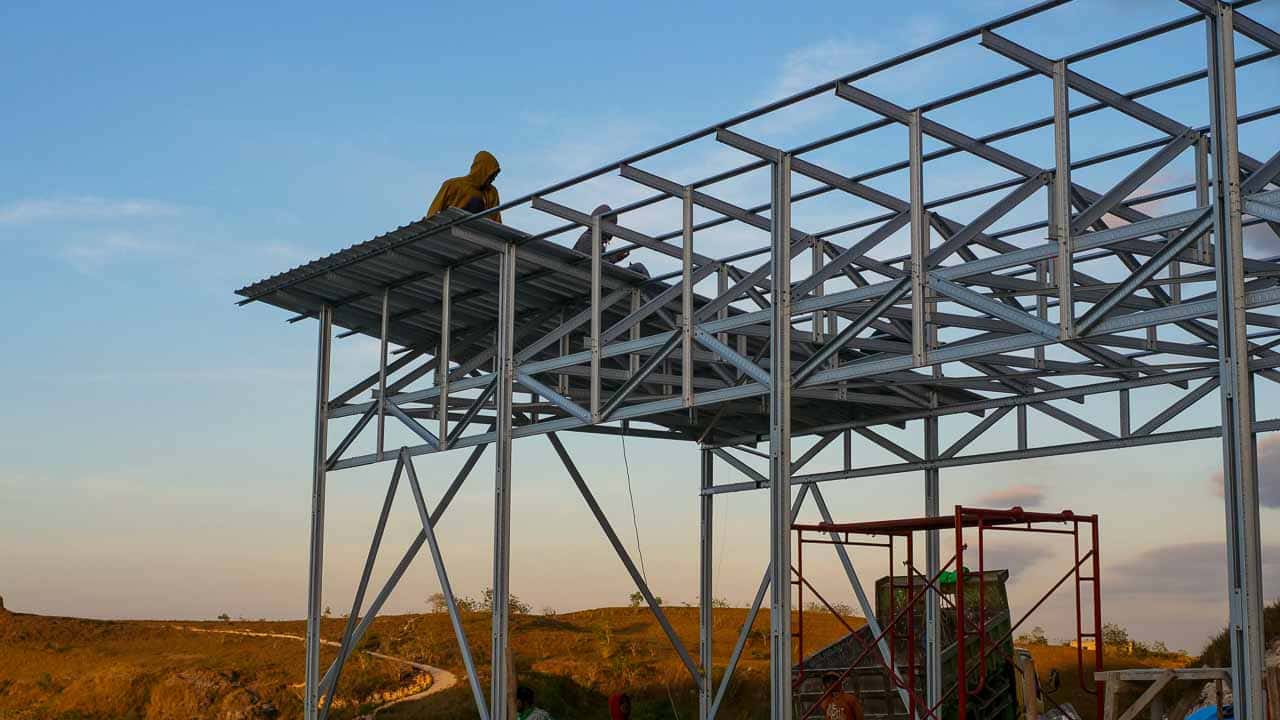
Step-by-step construction of Fair Future’s 115 m³ rainwater reservoir in Laindatang—built without electricity, road access, or water, to store and filter clean rainwater for the entire village.
Clean water is a form of preventive medicine.
In Laindatang, the Fair Future Foundation and Kawan Baik Indonesia teamed up with local villagers to install a resilient, lightweight steel roof over a reservoir. This “clean water roof” protects filtered rainwater from environmental hazards, significantly reducing microbial risks in the tropical climate.
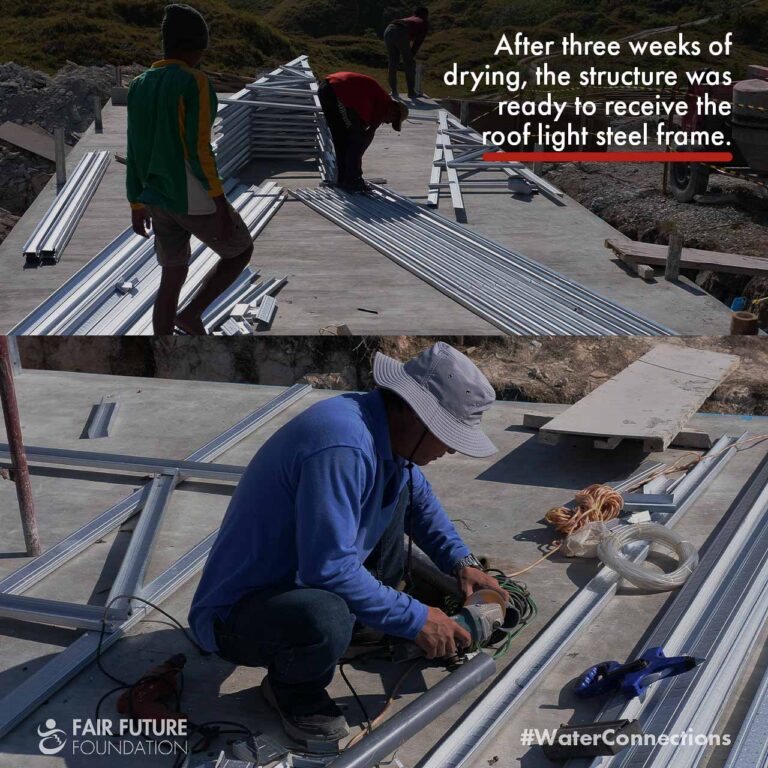
The project started with a three-week controlled drying period for the concrete reservoir to ensure it was ready. The choice of light steel for the roof was driven by its durability and ease of assembly in remote areas, reflecting Swiss precision and efficiency. This practical barrier minimises exposure to contaminants.
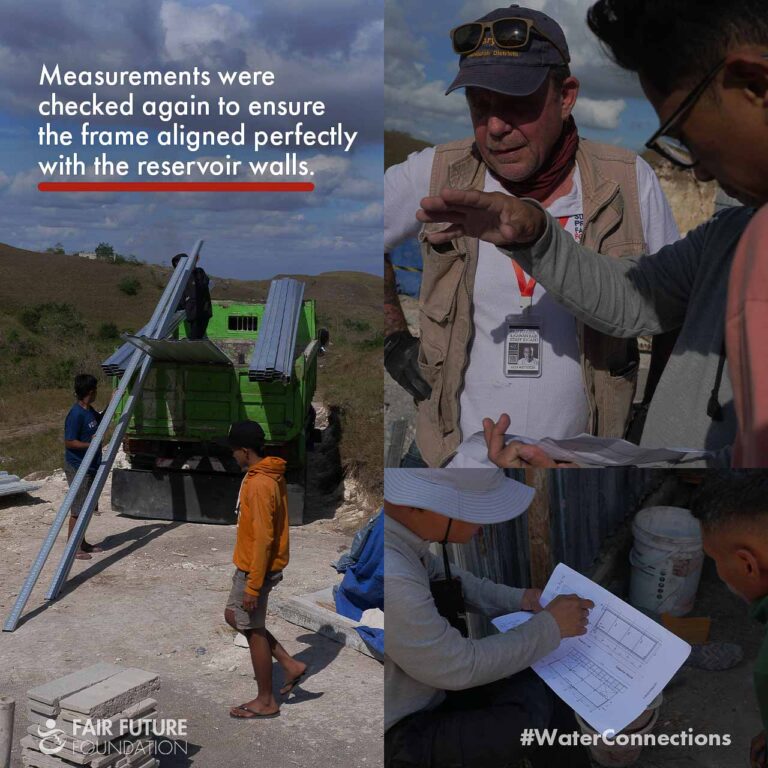
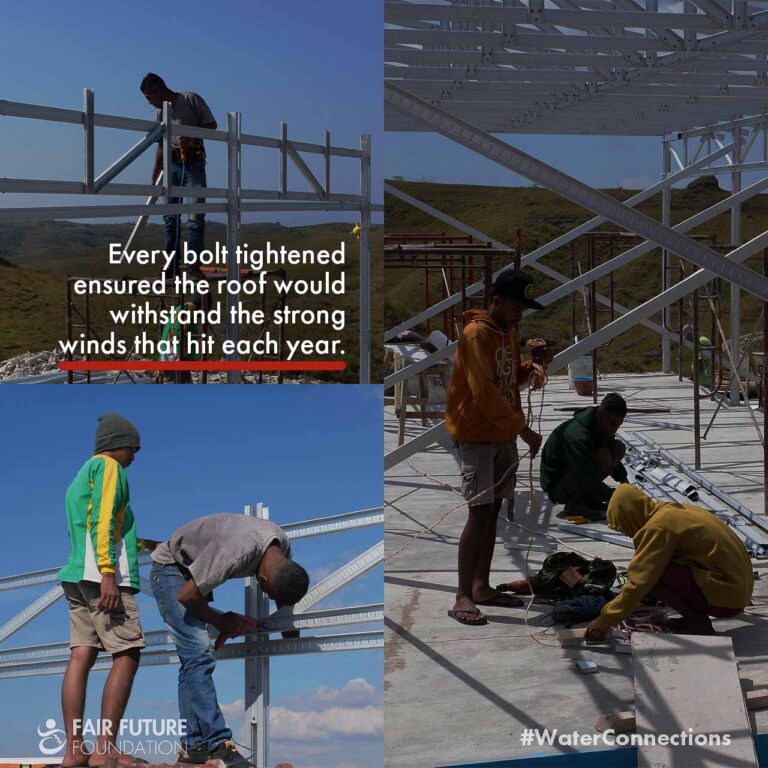
Villagers, guided by Fair Future Foundation’s technical teams and supported by Kawan Baik Indonesia’s logistics, carefully measured, aligned, and installed each component to withstand seasonal winds common on this elevated terrain. The design ensures structural accuracy while keeping the reservoir’s weight manageable.
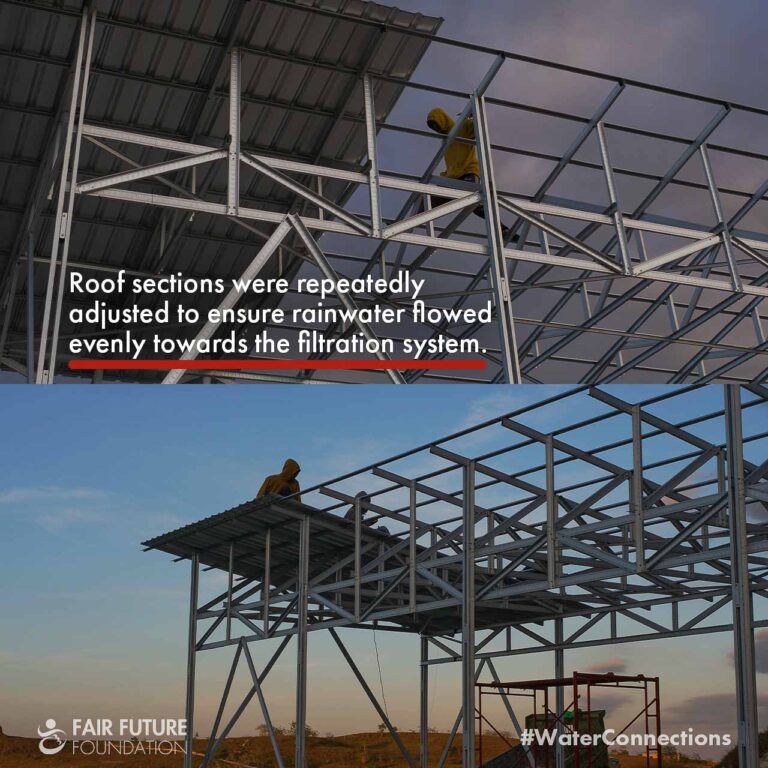
The roof’s angle was carefully calculated to direct rainwater into a three-stage filtration system before it enters the 115,000-litre sealed reservoir. This environment controls light exposure and restricts access, preventing bacteria and algae growth.
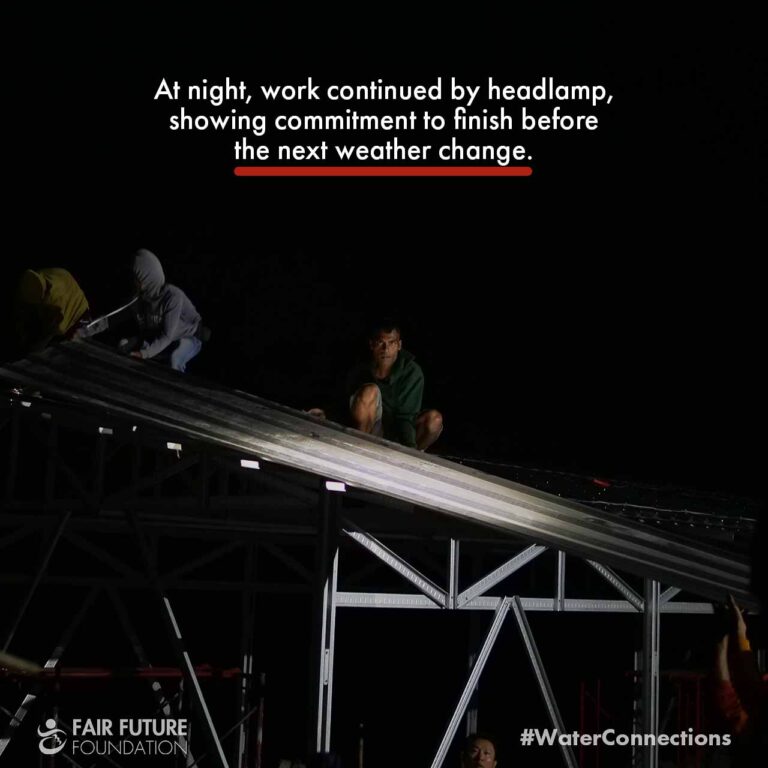
The community’s tireless night work stems from a deep sense of responsibility. Providing secure, clean water in this rural setting is akin to offering vital medicine, reducing diarrheal diseases and infections, and ensuring safer drinking water for families. The villagers are both builders and custodians of this project.
With 16 years of expertise, Fair Future Foundation and Kawan Baik Indonesia emphasise sustainable solutions that empower communities, reflecting their commitment to impactful, Swiss-inspired work.
Today, the 16th of December 2025 – Alex Wettstein
- Download the updated architectural plans for the Laindatang reservoir here
- Learn more about all nine reservoirs by exploring our dedicated gallery of large information panels placed beside each tank here.
- Explore the interactive project map for Laindatang and Hambarita to see the exact location of each reservoir and related works. View the map here.
- Explore the full online gallery of over 66 images from the Laindatang reservoir project here
In-Short | Why the roof matters medically
The 86 m2 roof is a health measure. By limiting heat and light exposure, it reduces conditions that favour microbial growth in stored water. It also shields the filtration inflow from debris and contamination during storms. In ultra-rural villages, this kind of detail prevents illness before it starts.
Clean Water Roof in Light Steel, Laindatang
Clean Water Infrastructure Built With Communities
Medical-grade water safety in ultra-rural East Sumba
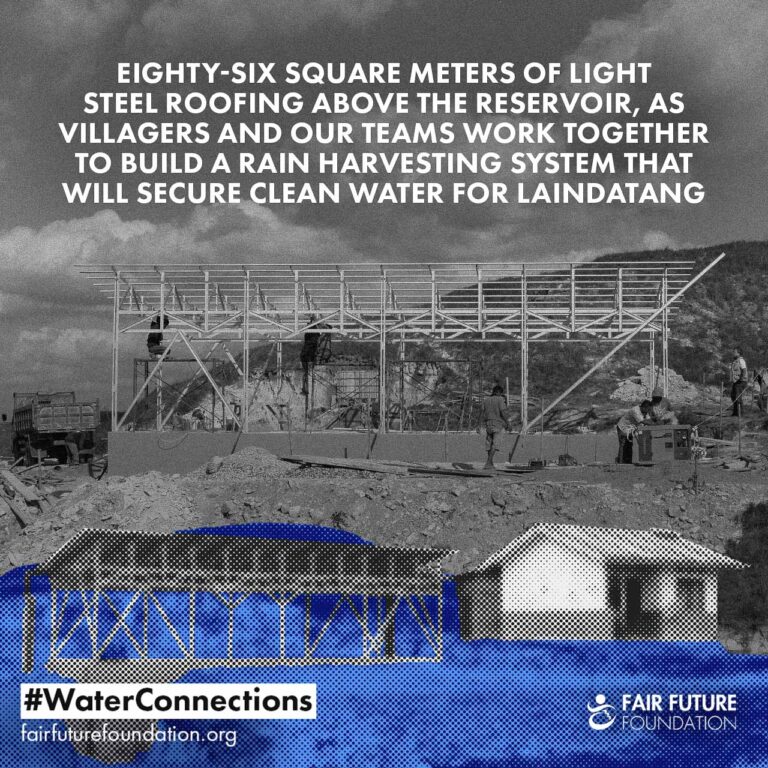
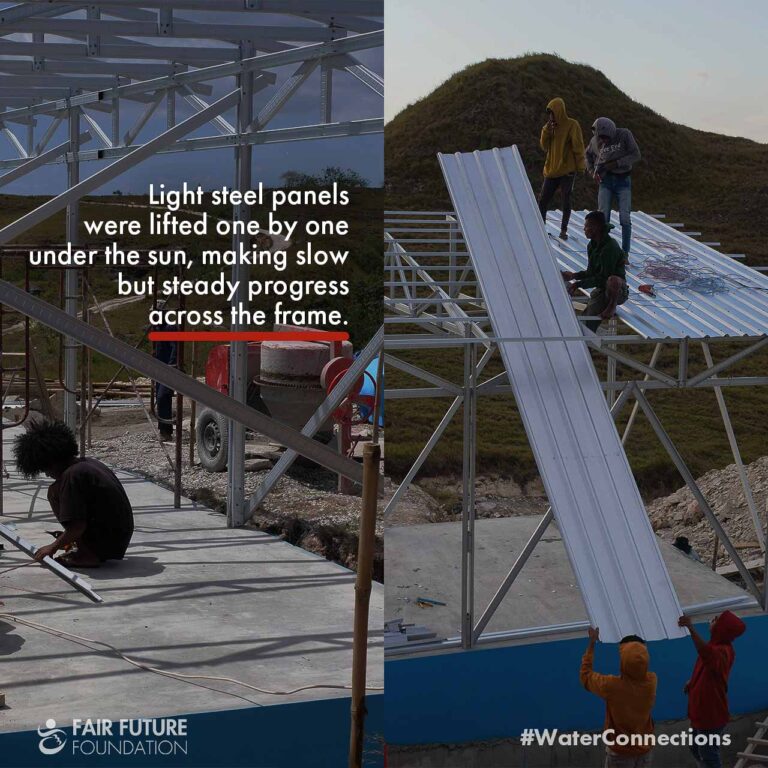
After three weeks of controlled drying, the concrete structure was ready to receive its roof. What followed was not a symbolic step, but a critical medical one. The 86-square-meter light steel roof installed above the reservoir protects harvested rainwater from heat, light, contamination, and biological growth. These factors are essential in preventing bacterial development and maintaining water quality in tropical environments.
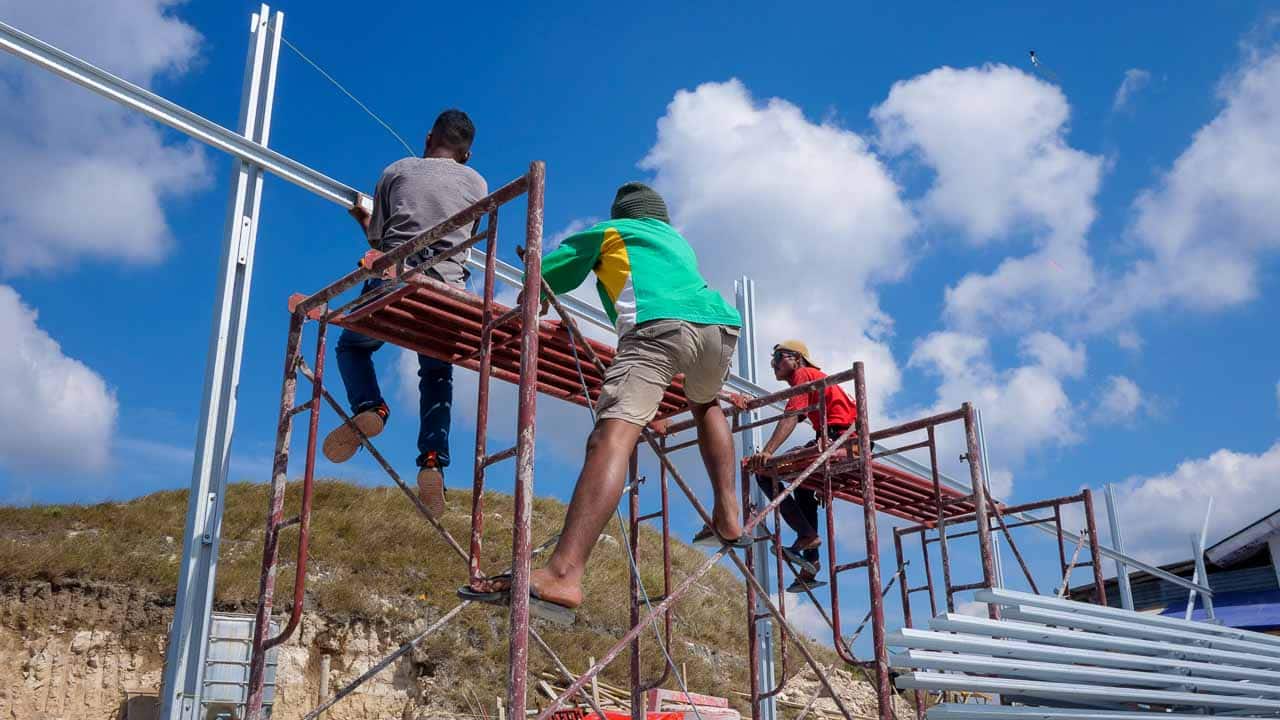
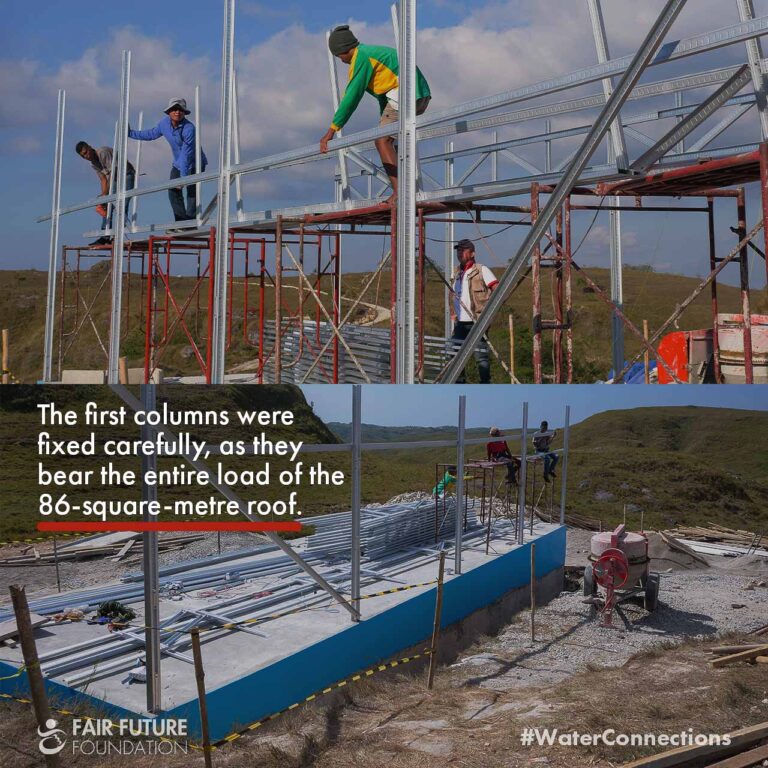
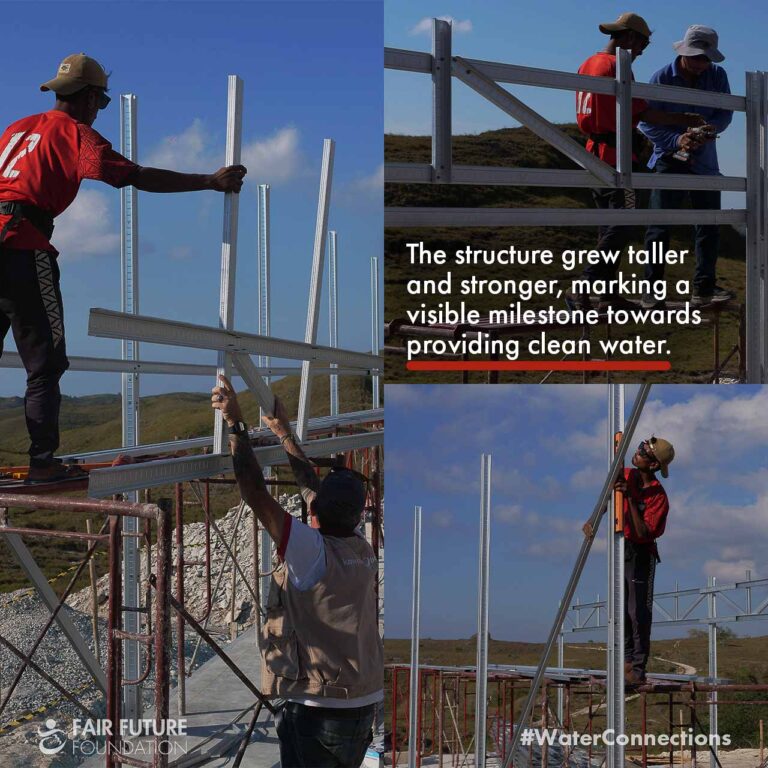
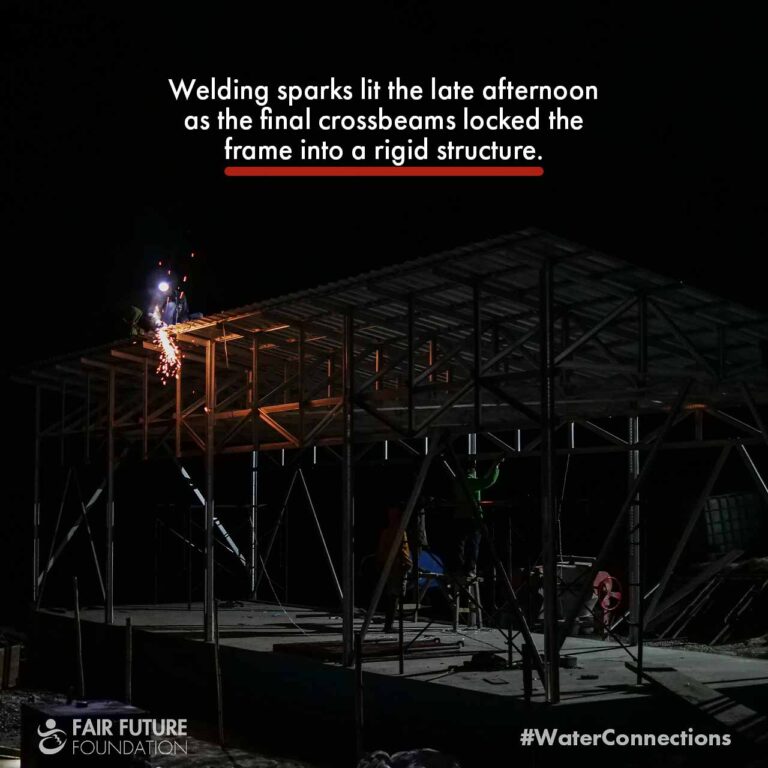
The work was carried out entirely by hand. Steel beams were transported up the slope by villagers, guided by Fair Future engineers and coordinated with Kawan Baik field teams. Every measurement was checked repeatedly. The first columns were fixed with precision, as they bear the full load of the structure and ensure long-term stability in a region exposed to strong seasonal winds.
This roof is designed to channel rainwater efficiently toward a three-stage filtration system before it enters the 115,000-litre reservoir. The height, angle, and sealing all follow medical water safety principles. No light enters the tank. No open access remains. Steel hatches, sealed joints, and controlled airflow protect the water from external contamination.
Work continued into the night under headlamps, not out of urgency, but out of responsibility. This reservoir is not just infrastructure. It is a preventive health tool. Clean water reduces diarrheal disease, skin infections, parasitic exposure, and child mortality. Built together, it belongs to the community and will be maintained by it.
We cordially invite all captivated by this story to explore our photo gallery, witness this extraordinary effort, and further engage with our mission through our Instagram account.
Alex Wettstein – Fair Future Foundation medico-social camp in East Sumba – Rumah Kambera, Lambanapu – the 16th of December, 2025


List of Related Organisations with Hyperlinks
- WaterAid: Works globally on sustainable clean water systems, sanitation, and hygiene as primary tools for disease prevention.
- Aguaconsult: Specialists in water engineering and climate-resilient infrastructure for remote and low-resource environments.
- WHO Water Safety Plan Programme: Promotes preventive risk management from water catchment to point of use, including storage and protection.
- IRC WASH: Focuses on long-term functionality of rural water systems through design quality, governance, and community ownership.
- Eawag: Swiss Federal Institute of Aquatic Science and Technology conducts research on safe water storage, prevention of contamination, and water quality in low-income and tropical settings.
- Practical Action: Implements appropriate technologies to improve water access and support climate adaptation in remote and fragile communities.
- SolarBuddy: Provides solar lighting solutions that support water safety, hygiene practices, and health in off-grid communities.
- MSF – Water and Sanitation Units: Delivers emergency and long-term WASH infrastructure as part of medical responses in isolated regions.