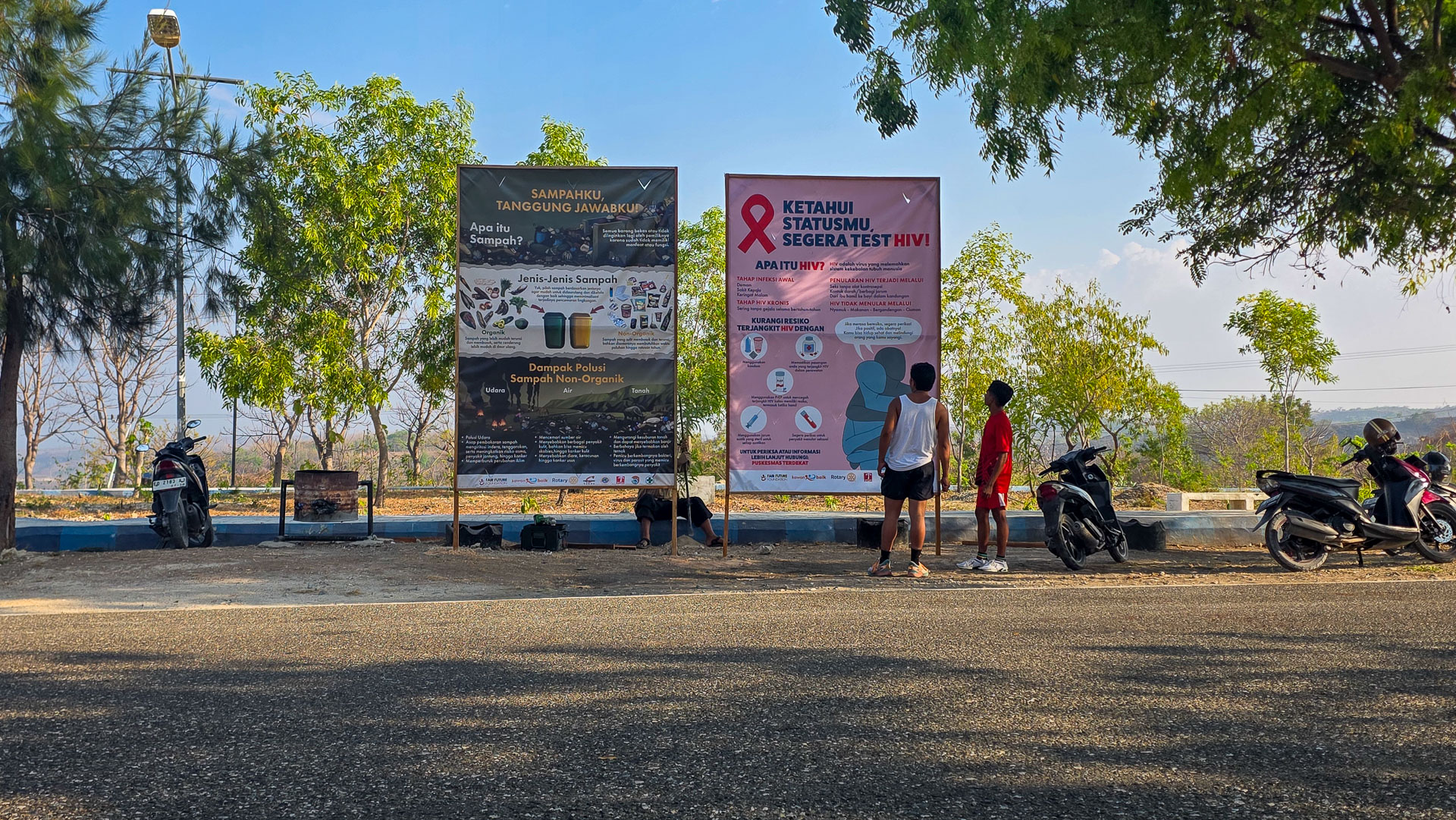
Waste and HIV billboards beside a local jogging trail in Waingapu, where people gather for evening exercise.
Original photograph, 1920 × 1081 pixels. Click the image to view it at full size.
Where Waingapu Comes to Run, Health Questions Find a Place
This new Photo of the Day shows our waste and HIV billboards beside a local jogging trail in Waingapu. People come here to move, meet and spend time outdoors. On 19 October, as we installed about ten more panels across the city, community health education became part of that familiar evening routine.
Community health education where people already gather
An estimated 100 to 200 people use this place each evening, arriving on foot or by scooter. During installation, many showed interest. Some young people thanked our team.
I walked three kilometres on the trail myself. Being here matters. We can see where people pause and make ourselves available for a conversation, without asking anyone to disclose something personal.
Feeling well is not an HIV test
HIV can be present without symptoms. Physical fitness cannot establish a person’s HIV status. Testing, with consent and confidentiality, opens access to appropriate prevention or treatment. Antiretroviral therapy suppresses viral replication and protects immune function. Nobody should have to become visibly ill before seeking care. A young person asking about HIV deserves a calm, respectful response. The next step should be access to care, not an explanation to onlookers.
Our HIV poster and waste management poster address different risks. Waste collection and safe disposal help protect the places where people exercise; burning rubbish exposes people to harmful air pollution. The two messages belong in public space, without stigma or blame.
Our 9 October report introduced the campaign. Tonight’s community health education begins with people stopping and responding. That interest matters. Whether it leads to testing, care or different waste practices is something we still have to establish.
19 October 2026 | Alex Wettstein
Further reading
- WHO | HIV and AIDS: WHO explains HIV symptoms, testing and treatment, including why early diagnosis and access to antiretroviral therapy protect immune health.
- UNAIDS | HIV and AIDS basic facts: UNAIDS answers questions about HIV, transmission, testing and treatment, with facts that support informed decisions and challenge stigma.
- WHO | Physical activity: WHO describes the physical and mental health benefits of regular movement, and the importance of accessible opportunities to be active.
- WHO | Solid waste: WHO links solid-waste management with environmental health, outlining risks and measures for safer handling, collection and waste disposal.
- WHO | Open waste burning: WHO examines open waste burning as a source of harmful air pollution and outlines practical measures to reduce emissions and health risks.