


Kawan Sehat medical evaluation in East Sumba
Strengthening frontline care in isolated communities
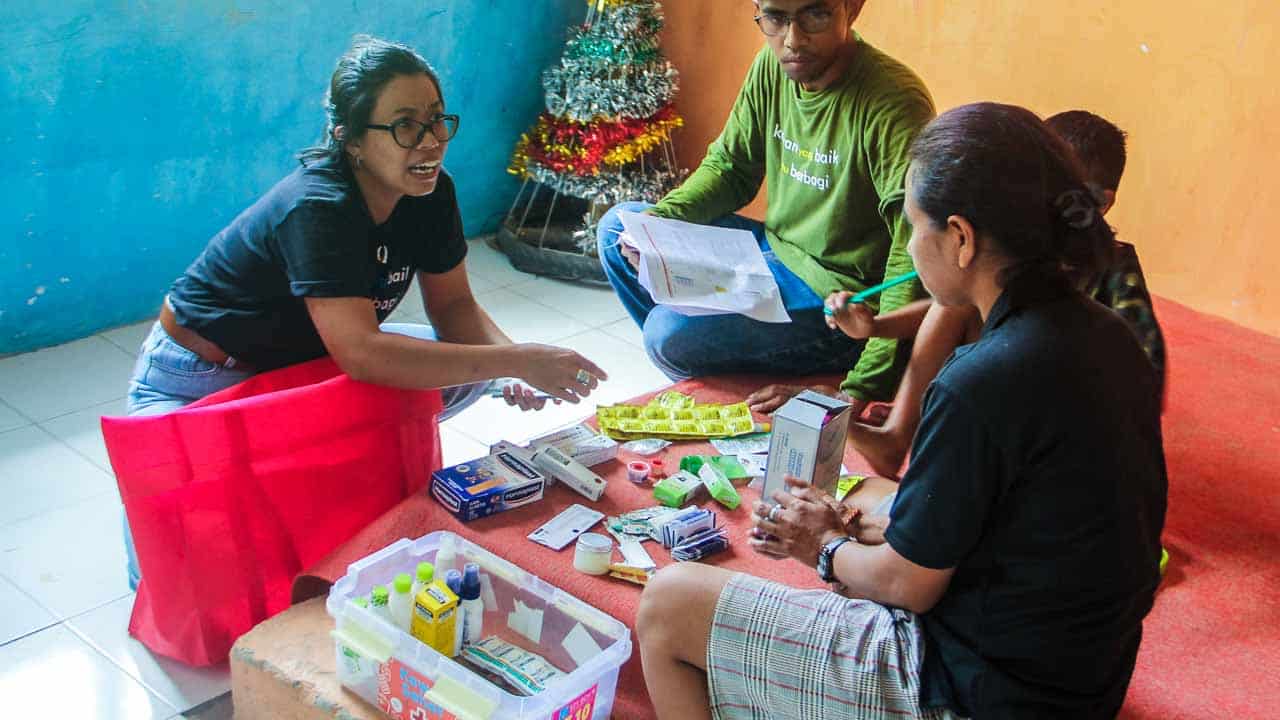
Medical evaluation of frontline care delivery strengthens the quality of primary healthcare in remote villages.
Kawan Sehat medical evaluation
In East Sumba, access to healthcare often depends on a single trained individual per village, in this case, Rambu Katrina, who has been active in the Primary Medical Care programme since 2022.
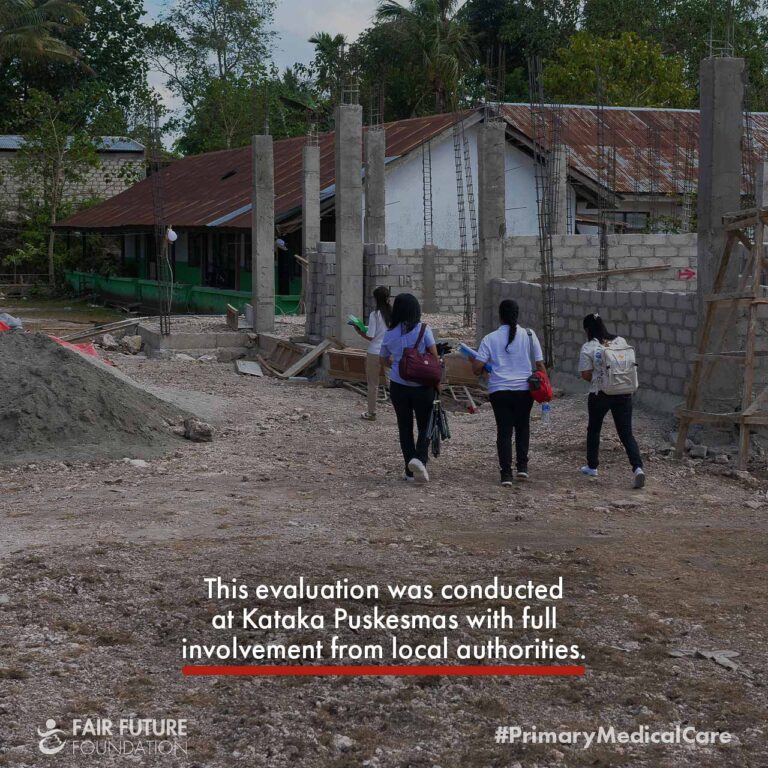
This article presents a medical evaluation of the Kawan Sehat programme conducted at the Kataka Health Centre (Kataka Puskesmas). The evaluation examined clinical practices, adherence to training, and the reliability of reports to strengthen the safety and consistency of primary healthcare in isolated communities.
The evaluation brought together medical teams from Fair Future and Kawan Baik, local health authorities, and Kawan Sehat Health Agents operating in Lapinu, a village lacking doctors, nurses, and medical infrastructure. Clinical case analyses focused on triage, decision-making, and emergency response in resource-limited settings.
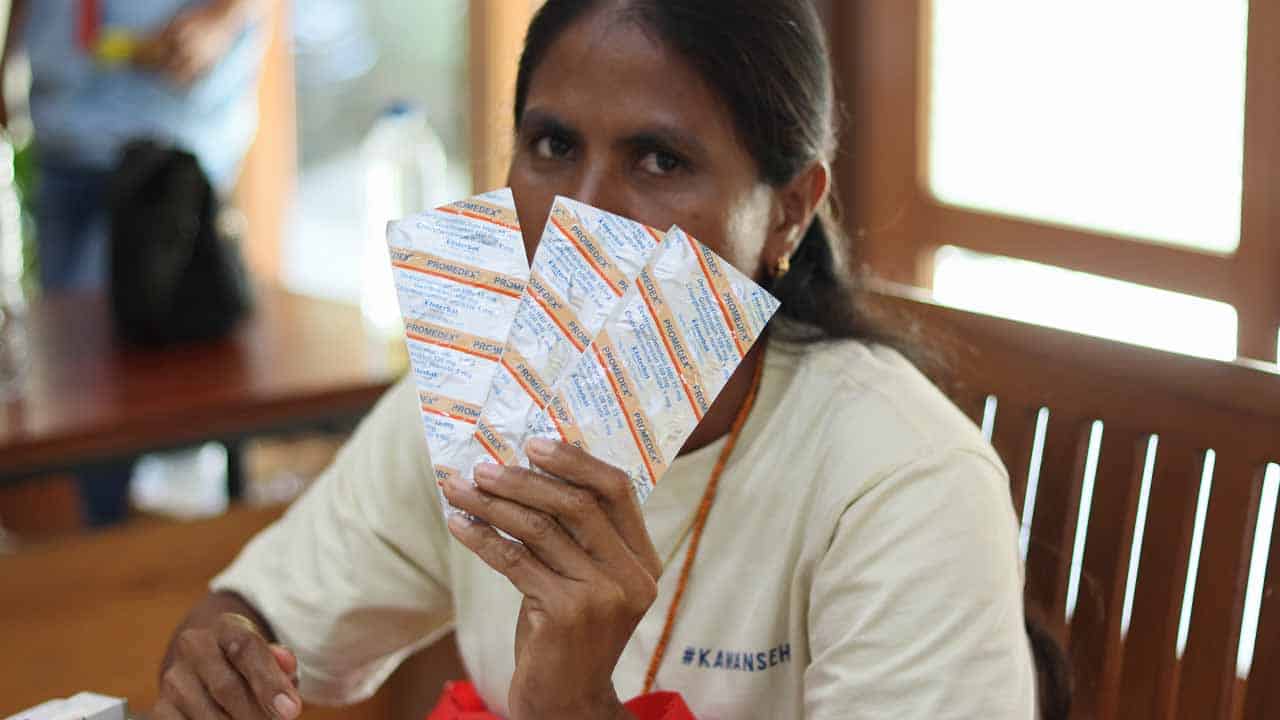
Medical supervision included an evaluation of prevention tools, educational posters, and the updated training manual used throughout the Primary Medical Care programme. Particular attention was paid to fever management, infection recognition, wound care, and early detection of malaria.
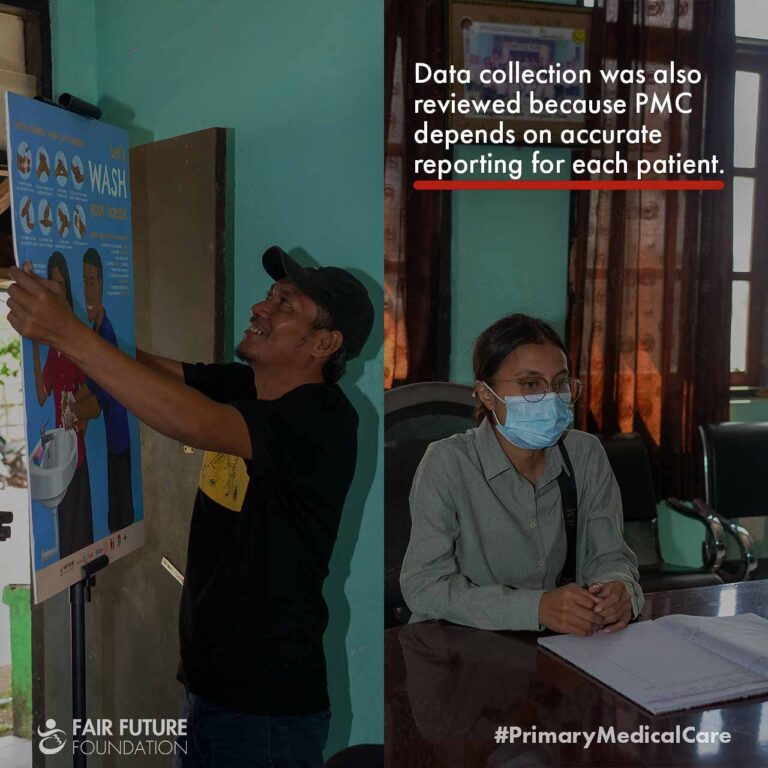
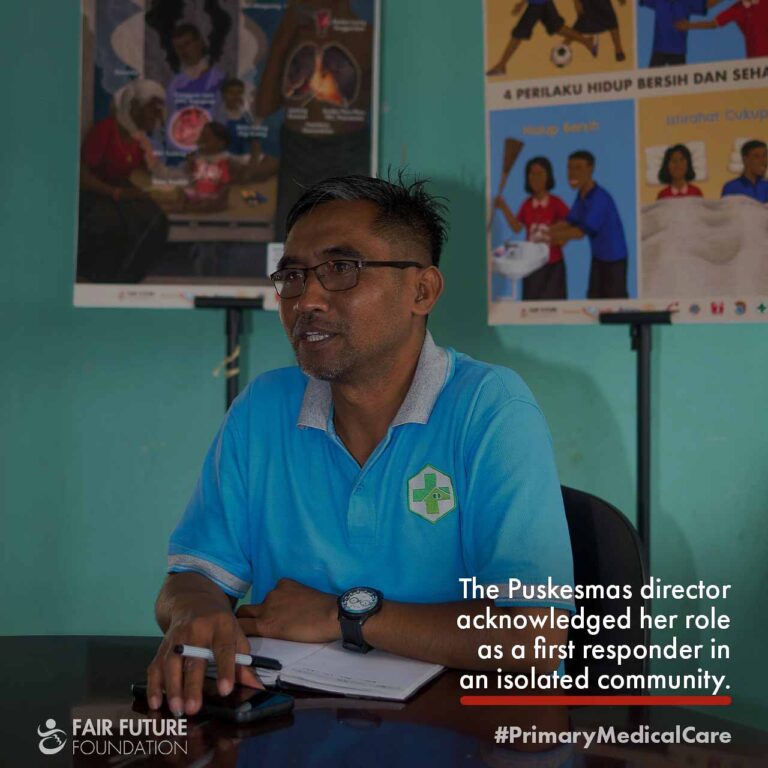
Data collection and reporting practices were reviewed to ensure continuity of care, traceability, and programme-level monitoring. Local health authorities formally recognised the role of Kawan Sehat agents as first responders and key actors in the public health system.
Today, the 8th of January 2026 – Alex Wettstein
In Short | When evaluation protects rural healthcare
In settings without doctors or clinics, structured evaluation is not administrative work. It is a clinical safeguard that protects patients, supports health agents, and maintains medical standards where healthcare systems are most fragile.
Primary medical care evaluation in East Sumba
Kawan Sehat medical evaluation in East Sumba
Assessing frontline care where no doctors exist
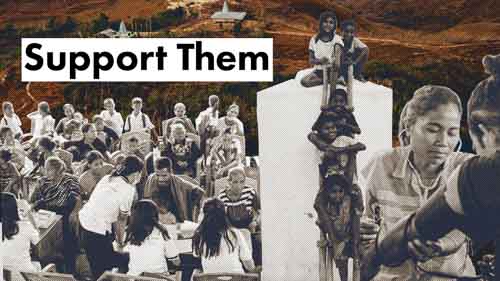
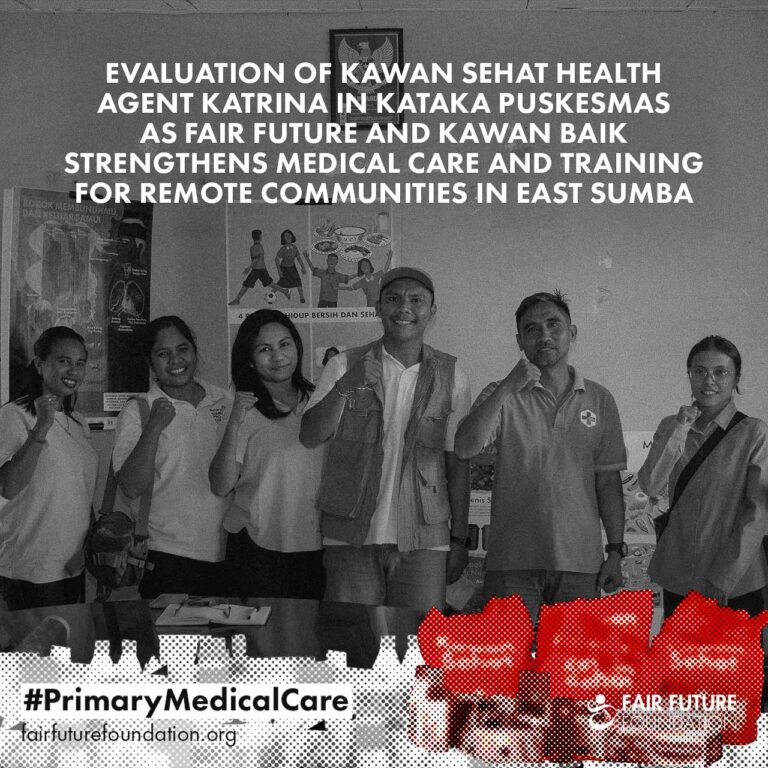
At Kataka Puskesmas in East Sumba, medical teams from Fair Future and Kawan Baik conducted a formal field evaluation of Katrina, one of the first Kawan Sehat health agents trained through the Primary Medical Care programme. For more than three years, Katrina has provided essential care in Lapinu, a remote village with no doctor, nurse, or medical facility.
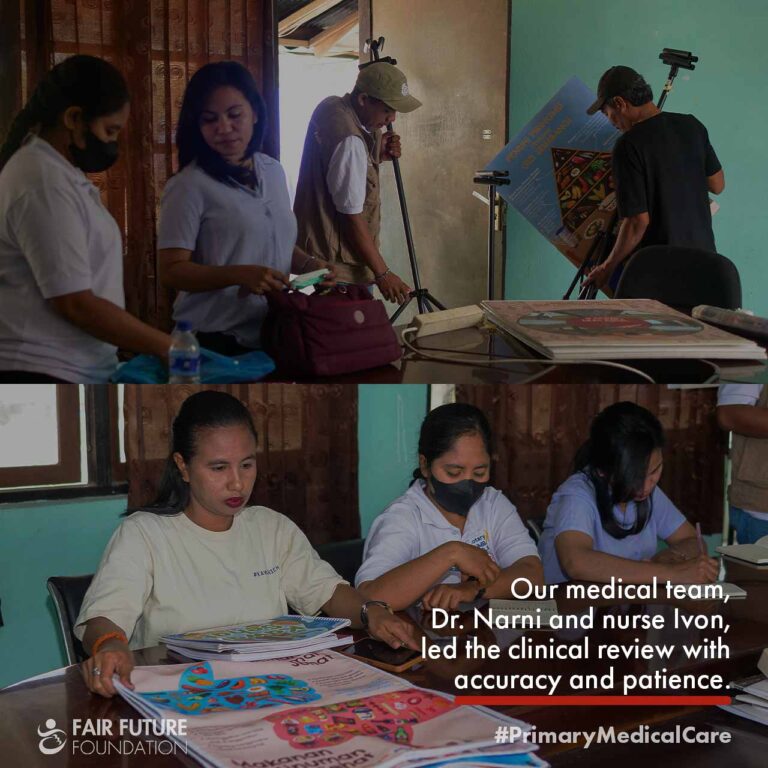
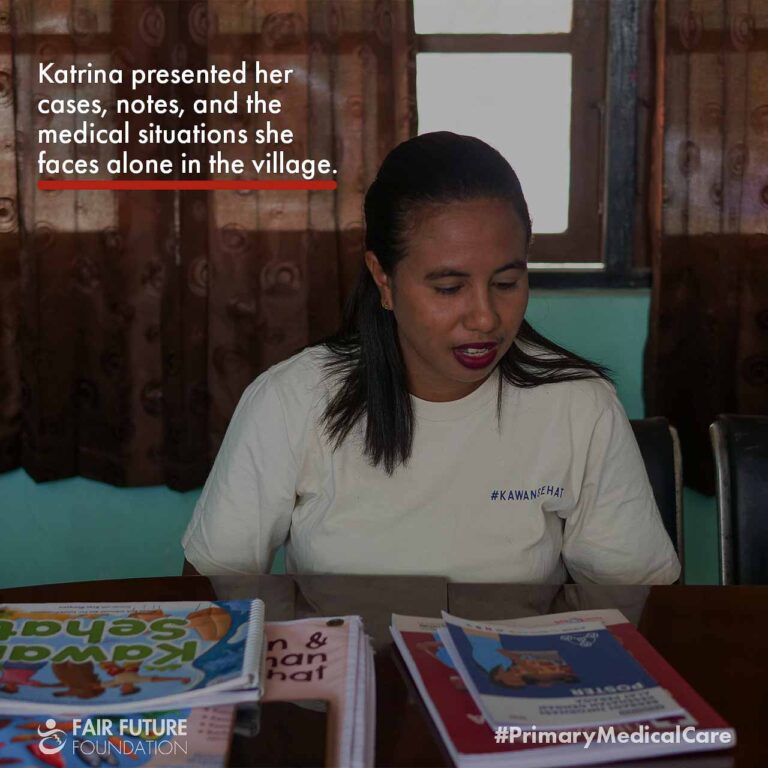
The evaluation was led by Dr Narni and nurse Ivon, who carefully reviewed patient records, clinical decisions, triage practices, and emergency responses carried out by Katrina alone in the village. Each case reflects the reality of primary care in ultra-rural settings, where diagnosis relies on clinical observation, structured protocols, and constant decision-making without equipment.
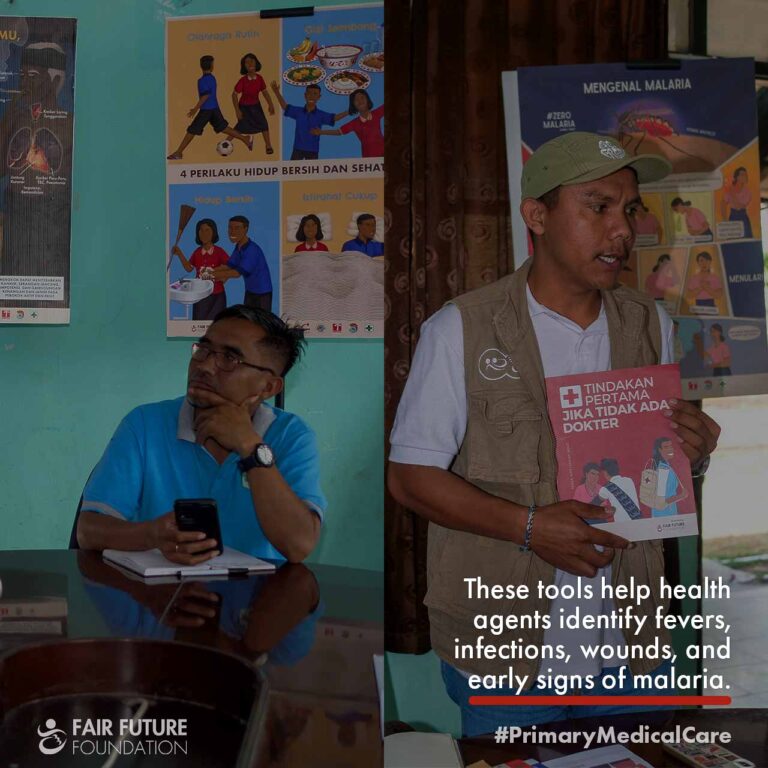
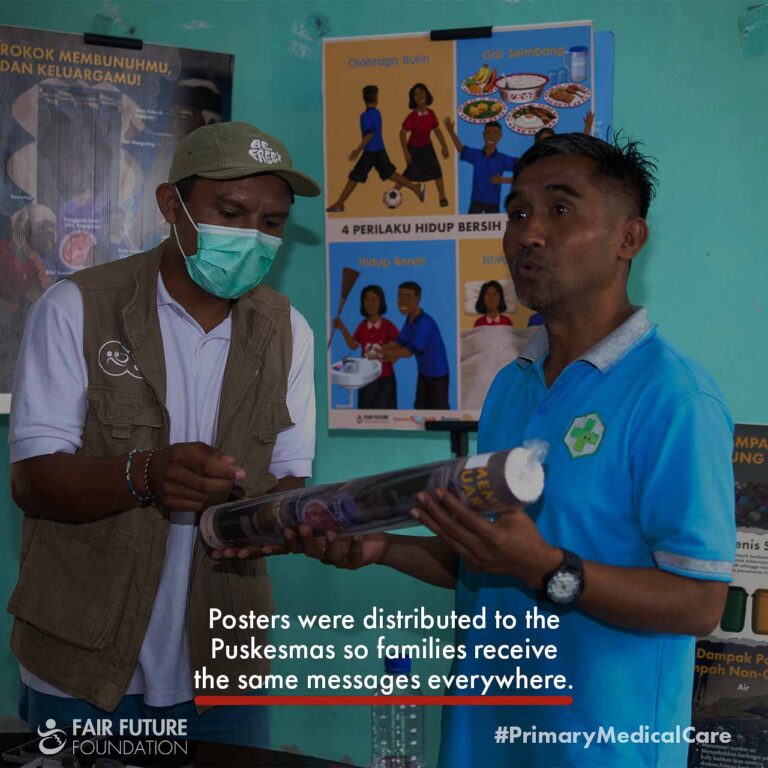
Erwin presented the full set of Primary Medical Care tools, including prevention posters, medical booklets, and the updated 150-page training manual used by all Kawan Sehat agents. These materials support early identification of infections, fever patterns, wounds, and malaria warning signs. Posters were also installed at the Puskesmas to ensure that families receive consistent medical messages from village to clinic.
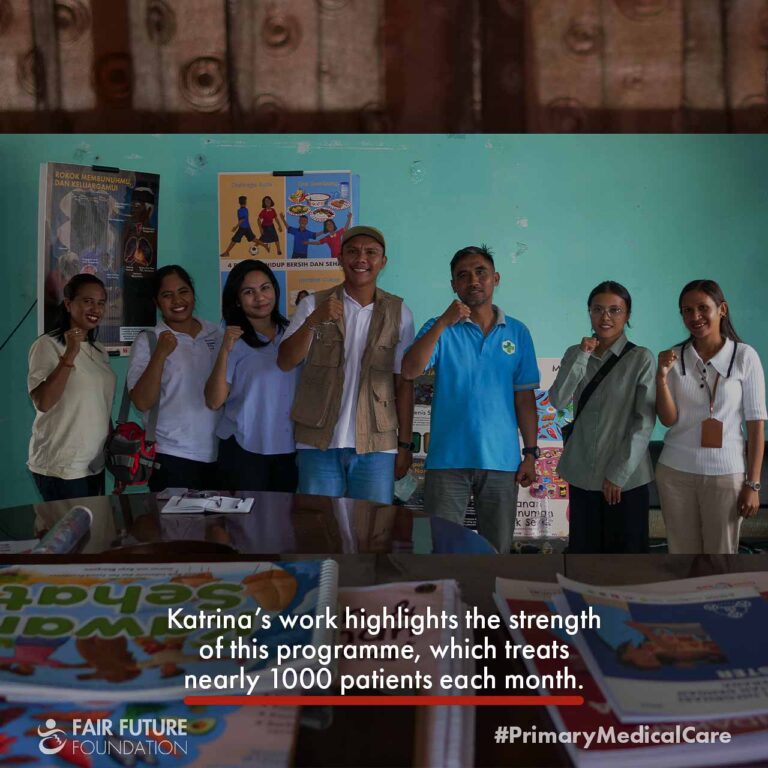
Local health authorities acknowledged Katrina’s role as a first responder and an essential link between households and the health system. With nearly one thousand patients treated each month by the programme, continuous training, supervision, and data accuracy remain central to maintaining medical quality in isolated communities.
We cordially invite all captivated by this story to explore our photo gallery, witness this extraordinary effort, and further engage with our mission through our Instagram account.
Alex Wettstein – Fair Future Foundation medico-social camp in East Sumba – Rumah Kambera, Lambanapu – the 8th of January 2025



List of Related Organisations with Hyperlinks
- World Health Organisation: Provides global guidance on primary health care systems, community health workers, and quality standards for care delivery in resource-limited settings.
- UNICEF Health Programmes: Supports community-based health services, maternal and child health, and the integration of frontline health workers into public systems.
- Médecins Sans Frontières: Delivers medical care in remote and crisis-affected areas, with strong expertise in clinical protocols and field-level supervision.
- Malaria Consortium: Implements malaria prevention, diagnosis, and treatment programmes through community health workers in underserved regions.
- Primary Health Care Performance Initiative: Focuses on measuring and improving primary health care performance, data quality, and system accountability worldwide.
- IFRC: Strengthens community health, epidemic preparedness, and primary care delivery through local actors and national health systems.
- Last Mile Health: Specialises in training and supervising community health workers to deliver quality primary care in the world’s most remote communities.