

Water Reservoir Graduation Scale
Measuring Water to Protect Community Health
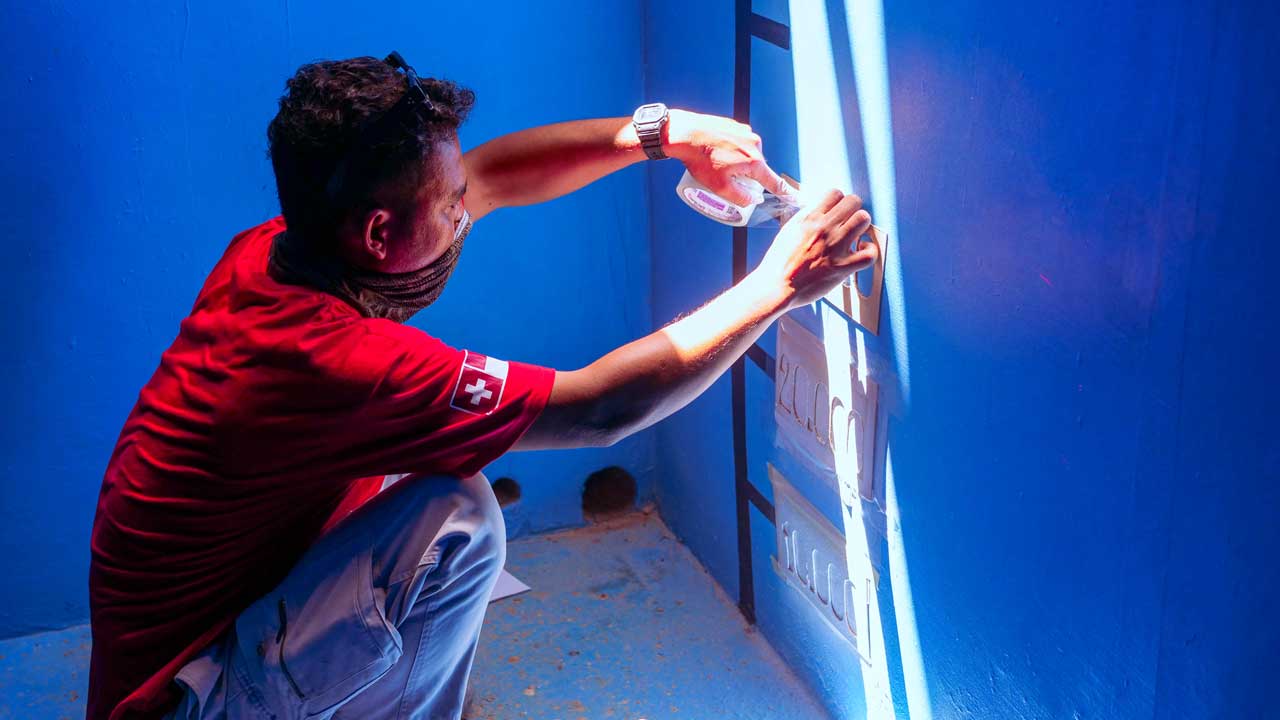
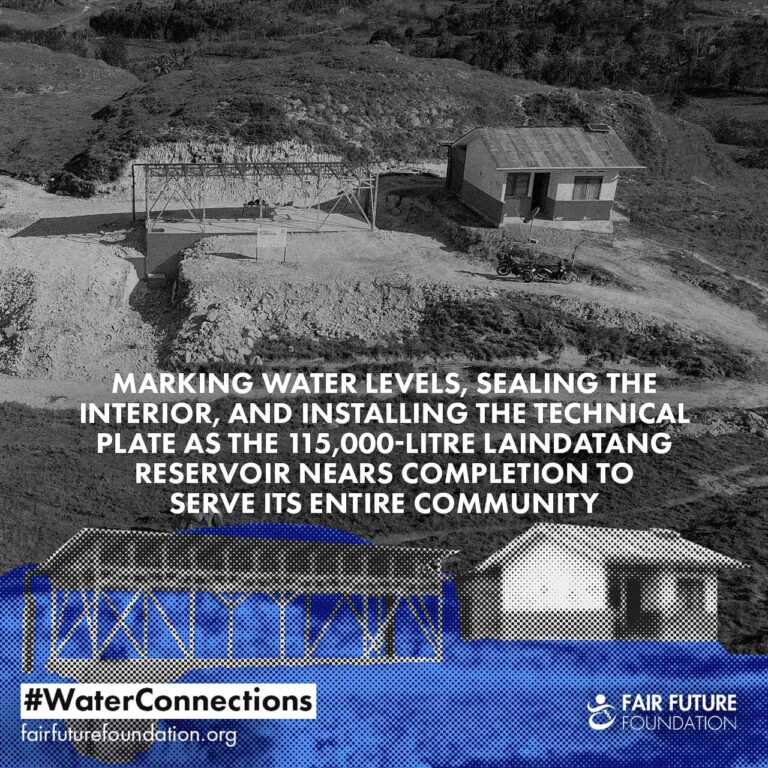
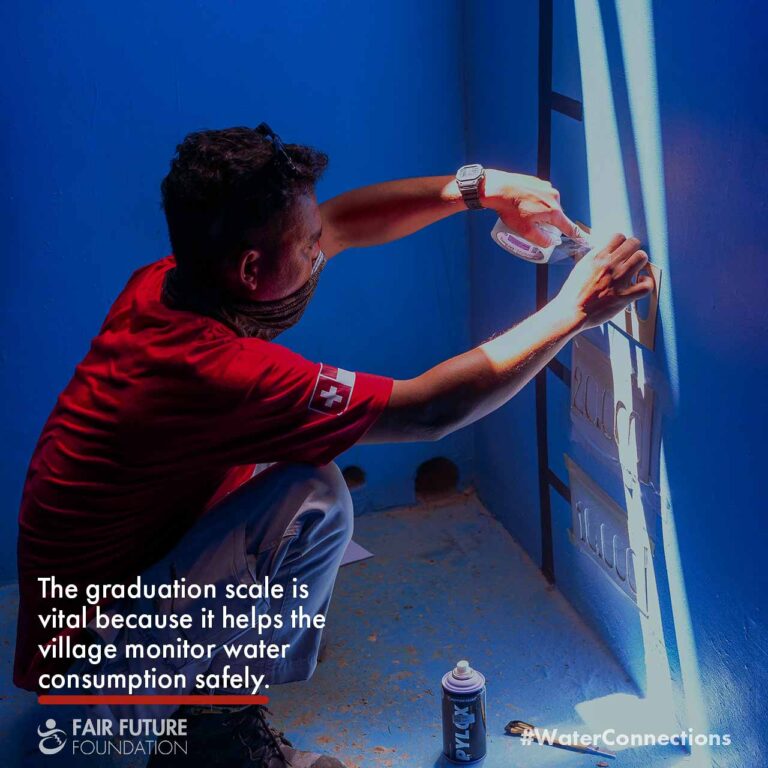
Manual installation of the graduation scale inside the Laindatang reservoir to measure water levels accurately and protect clean water.
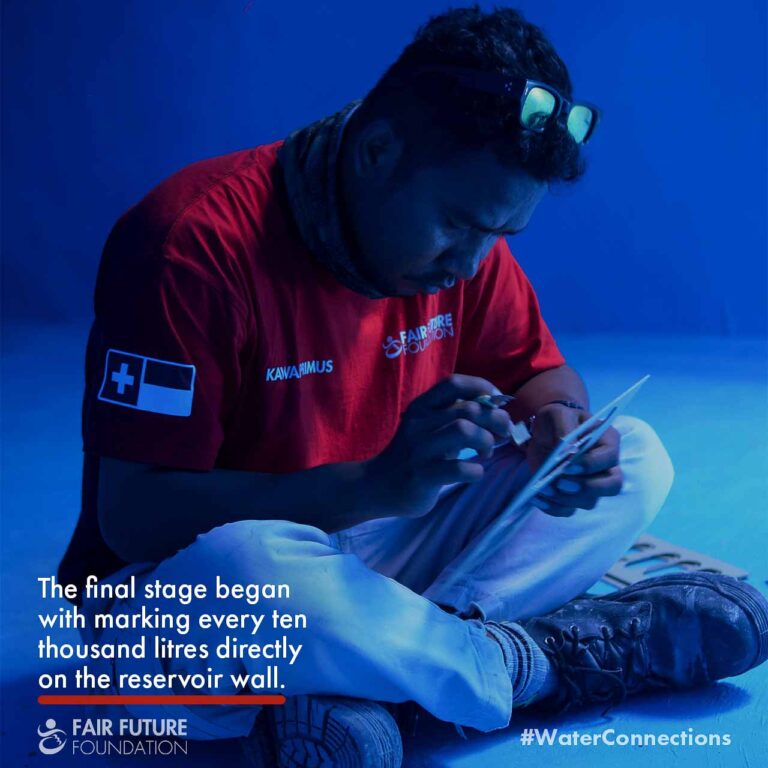
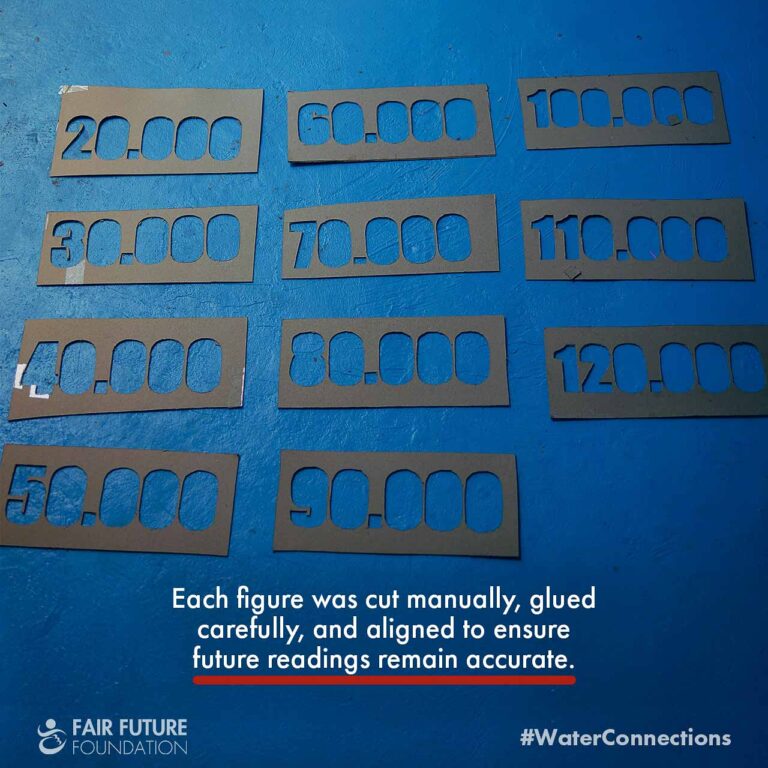
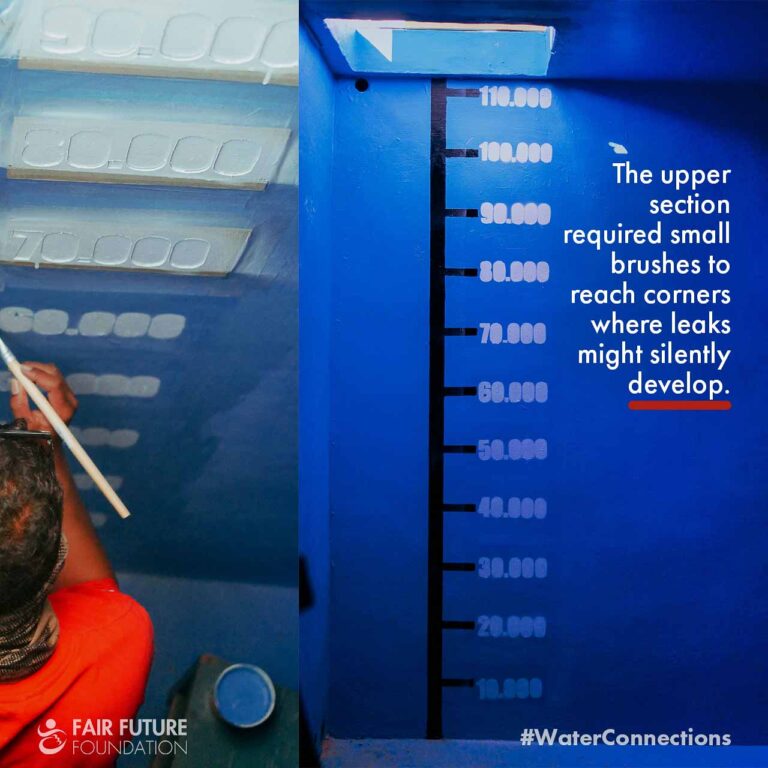
Inside the reservoir, a graduated scale was installed to measure each ten-thousand-litre increment.
This simple and accurate tool enables reliable monitoring of water consumption, prevents waste, and ensures sustainable access to drinking water. In remote villages, the amount of stored water is a vital factor in public health.
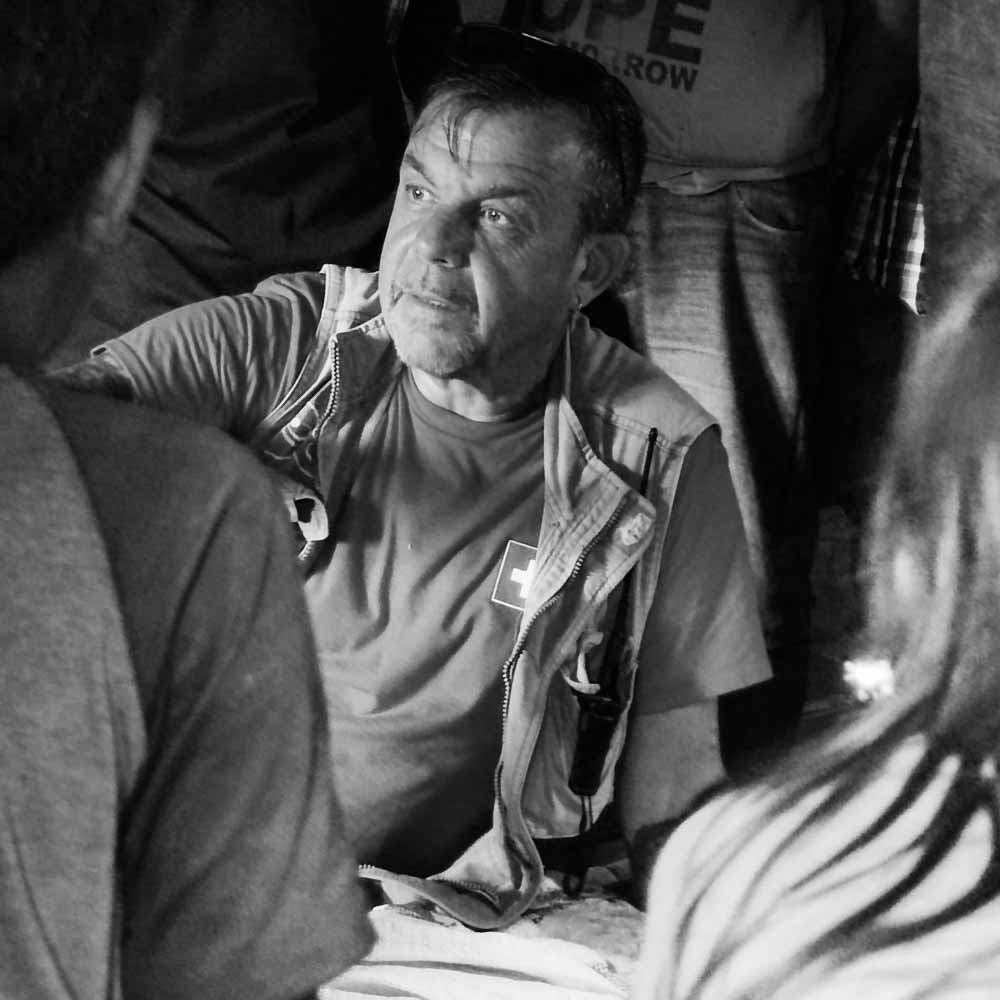
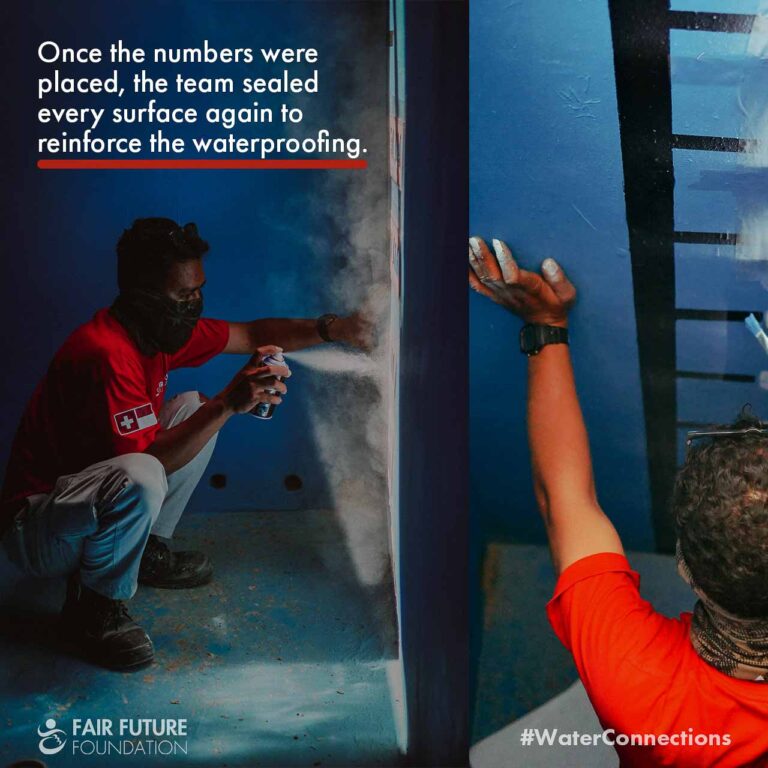
The scale was cut, aligned, and manually attached to the inside of the reservoir wall. Despite the low light conditions, the teams from the Fair Future Foundation and Kawan Baik Indonesia ensured that each marking was legible from the reservoir’s inlet hatch. Accuracy is crucial, as even minor errors can impact water management during the dry season.
This graduated scale is not merely decorative; it helps the community anticipate shortages, regulate its daily consumption, and prevent contamination from frequent openings or unsafe access. Combined with internal sealing and light control, it contributes to the long-term stability of water quality.
By integrating measurement into the infrastructure, the reservoir becomes a public health tool. Water quality is maintained not only through filtration and sealing but also through precise knowledge of the remaining water level. This approach is the result of sixteen years of Swiss experience in medical and technical fields.
Today, the 17th of December 2025 – Alex Wettstein
- Download the updated architectural plans for the Laindatang reservoir here
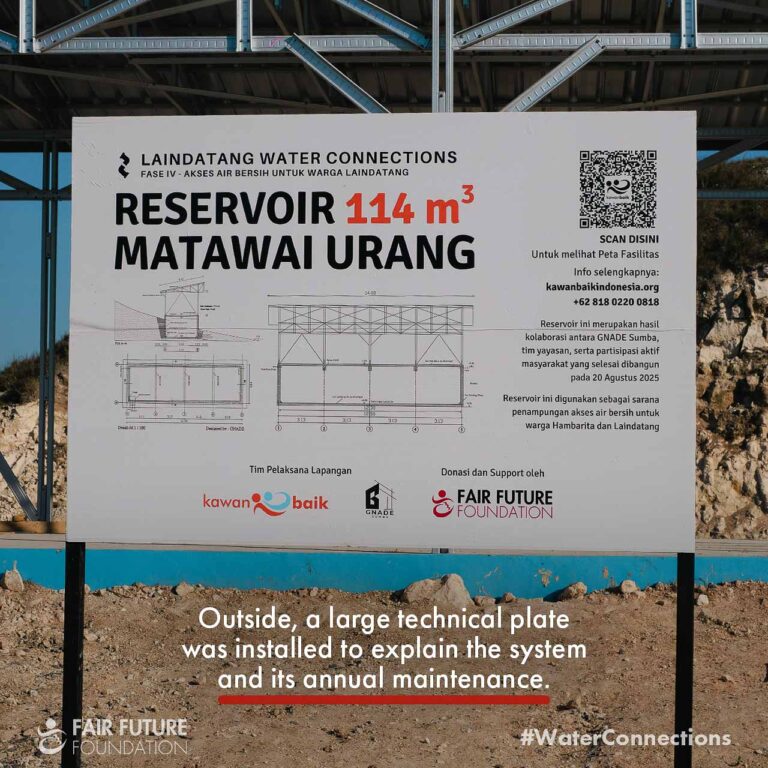
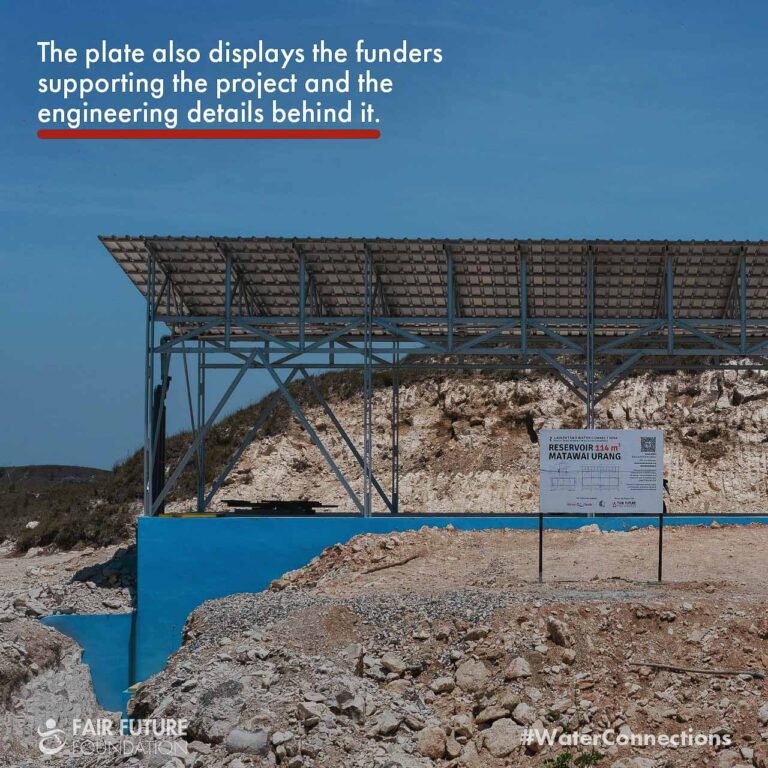
- Learn more about all nine reservoirs by exploring our dedicated gallery of large information panels placed beside each tank here.
- Explore the interactive project map for Laindatang and Hambarita to see the exact location of each reservoir and related works. View the map here.
- Explore the full online gallery of over 66 images from the Laindatang reservoir project here
In Short | When measurement saves water
A straightforward graduation scale transforms a reservoir into a management tool. By accurately measuring the remaining water, communities can plan effectively, safeguard quality, and mitigate risks associated with access. In remote areas, measurement is not just a technical detail; it is a form of prevention.
Laindatang Water Filtration Infrastructure
Water reservoir graduation scale
Measuring water to protect community health
Inside the reservoir, a water graduation scale was installed to measure the volume in every 10,000 litres stored. This precise but straightforward tool allows safe monitoring of consumption, prevents overuse, and supports long-term access to clean water. In remote villages, measuring water accurately is a direct act of health prevention.
The graduation scale was cut, aligned, and fixed manually inside the reservoir wall. Working in low light, teams from Fair Future Foundation and Kawan Baik Indonesia ensured each mark remained readable from the reservoir floor. Accuracy is essential, as even minor errors can affect water planning during the dry season.
This water reservoir graduation scale is not decorative. It allows the community to anticipate shortages, regulate daily use, and avoid contamination caused by frequent opening or unsafe access. Combined with internal sealing and light control, it supports stable water quality over time.
By integrating measurement into infrastructure, the reservoir becomes a medical tool. Clean water is protected not only by filtration and sealing, but by knowing exactly how much remains available. This approach reflects sixteen years of Swiss medical and technical field experience.
We cordially invite all captivated by this story to explore our photo gallery, witness this extraordinary effort, and further engage with our mission through our Instagram account.
Alex Wettstein – Fair Future Foundation medico-social camp in East Sumba – Rumah Kambera, Lambanapu – the 17th of December, 2025


List of Related Organisations with Hyperlinks
- WaterAid: Works globally on sustainable clean water systems, sanitation, and hygiene as primary tools for disease prevention.
- Aguaconsult: Specialists in water engineering and climate-resilient infrastructure for remote and low-resource environments.
- WHO Water Safety Plan Programme: Promotes preventive risk management from water catchment to point of use, including storage and protection.
- IRC WASH: Focuses on long-term functionality of rural water systems through design quality, governance, and community ownership.
- Eawag: Swiss Federal Institute of Aquatic Science and Technology conducts research on safe water storage, prevention of contamination, and water quality in low-income and tropical settings.
- Practical Action: Implements appropriate technologies to improve water access and support climate adaptation in remote and fragile communities.
- SolarBuddy: Provides solar lighting solutions that support water safety, hygiene practices, and health in off-grid communities.
- MSF – Water and Sanitation Units: Delivers emergency and long-term WASH infrastructure as part of medical responses in isolated regions.