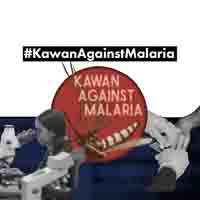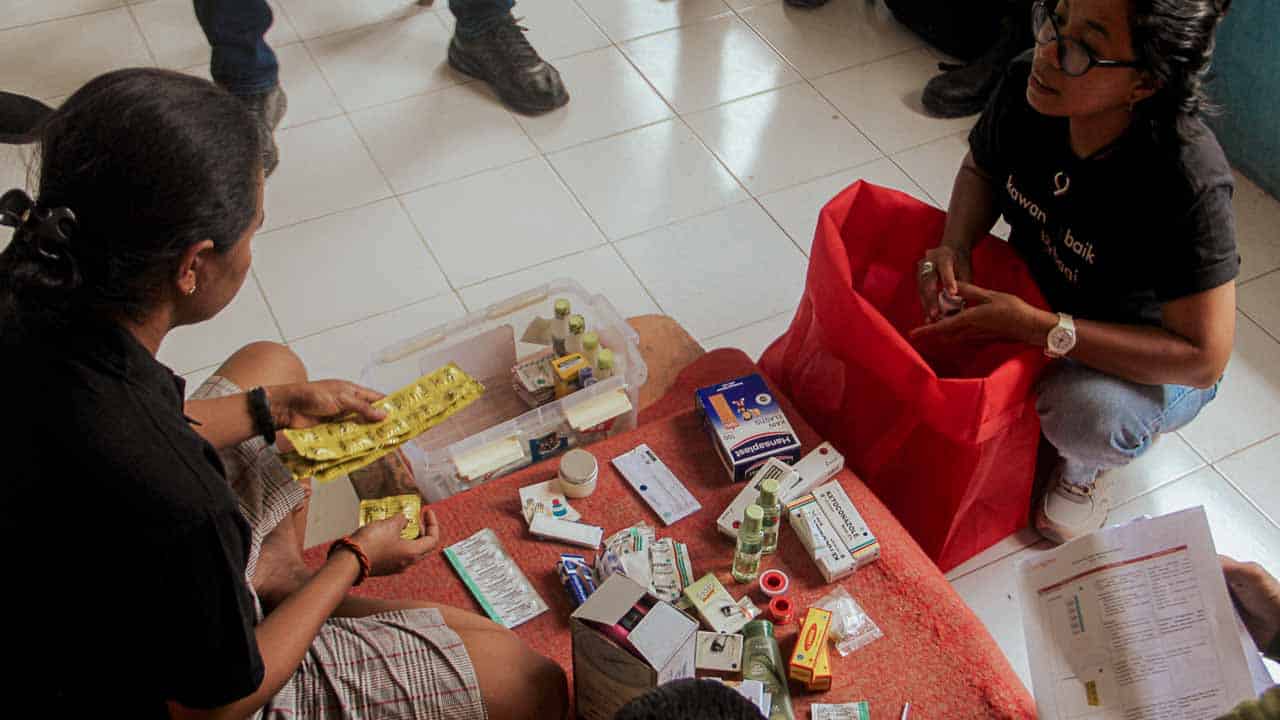



Primary medical care prevention posters in action
Medical prevention through accessible education
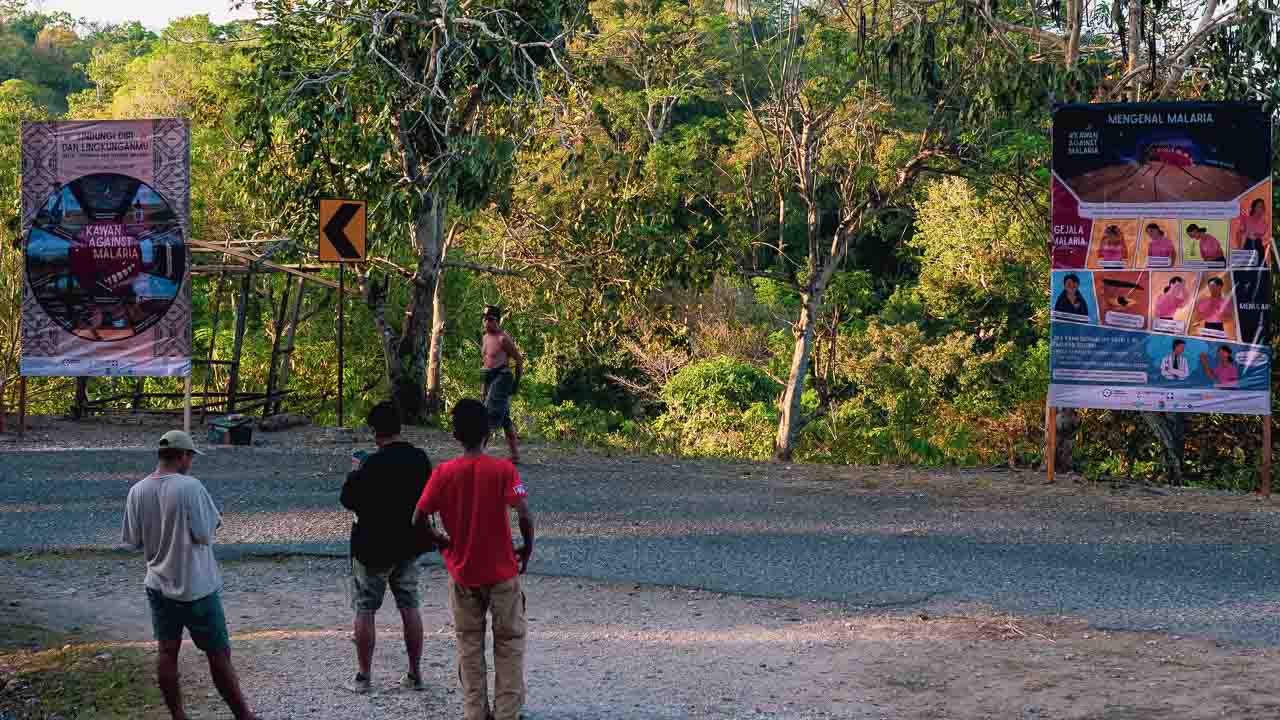
Large medical prevention billboards installed along rural roads to raise malaria awareness and support early community action.
Prevention through structured medical education.
Primary medical care prevention remains the most effective intervention in regions without doctors. Through structured prevention posters, trained health agents deliver clear, evidence-based education directly to families, reducing infections, complications, and avoidable emergencies in ultra-rural communities.
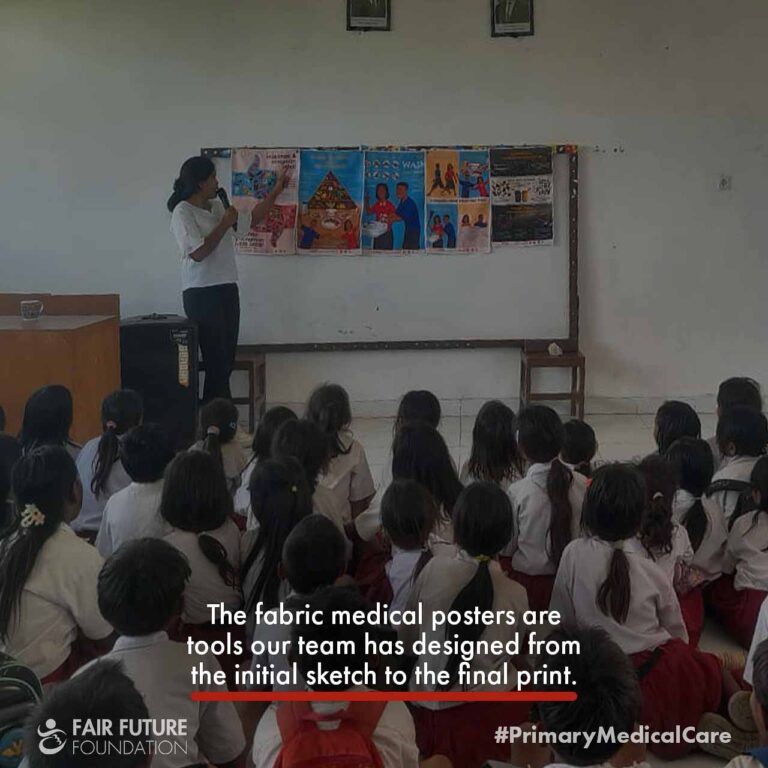
These prevention posters are not outsourced or adapted from external sources. They are conceived, written, illustrated, validated, and produced internally by Fair Future Foundation medical teams in collaboration with Kawan Baik Indonesia. Each poster is designed in line with international public health standards and adapted to local languages, literacy levels, and epidemiological realities. Today, 10 comprehensive prevention campaigns exist, each addressing critical medical topics such as hygiene, infection transmission, fever management, wound care, sanitation, nutrition, and child health.
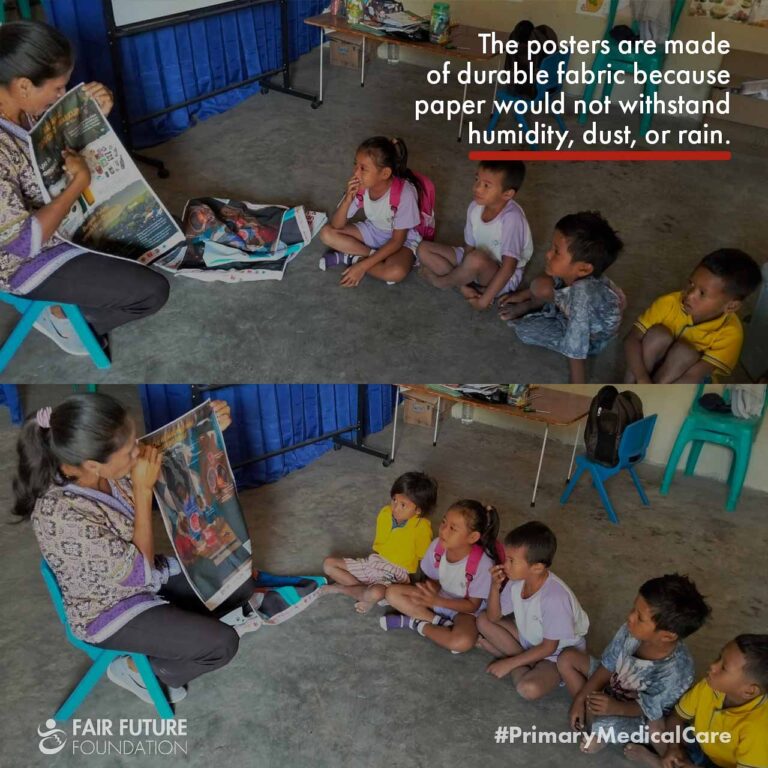
The choice of fabric printing is deliberate and medical. In humid, dusty, and isolated environments, paper degrades rapidly. Fabric ensures durability, continuity, and repeated use over months and years. Health agents transport these posters between villages, schools, and households, using them as structured teaching tools. Sessions are conducted verbally, visually, and interactively, ensuring understanding even in populations with limited formal education.
Primary medical care prevention posters translate complex medical concepts into simple actions. Families learn to recognise early danger signs, understand infection pathways, and apply basic preventive measures before complications occur. This approach aligns with WHO recommendations on community-based prevention and task shifting. Prevention is not secondary care. It is the foundation of survival in areas without healthcare infrastructure.
Today, the 13th of January 2026 – Alex Wettstein
In Short | Ten campaigns, one medical strategy
Each prevention poster belongs to a structured medical campaign developed internally by our teams. Ten campaigns exist today, each targeting a specific public health risk. This continuity allows repetition, evaluation, and adaptation over time, which is essential for effective prevention in ultra-rural settings.
Primary medical care prevention education
Primary medical care posters in action
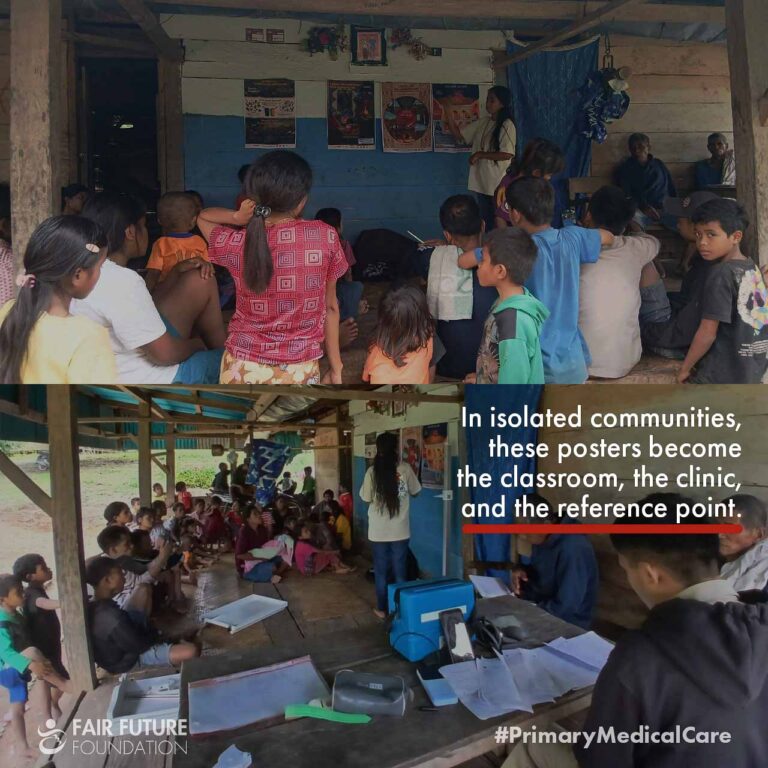
Medical knowledge delivered where clinics do not exist
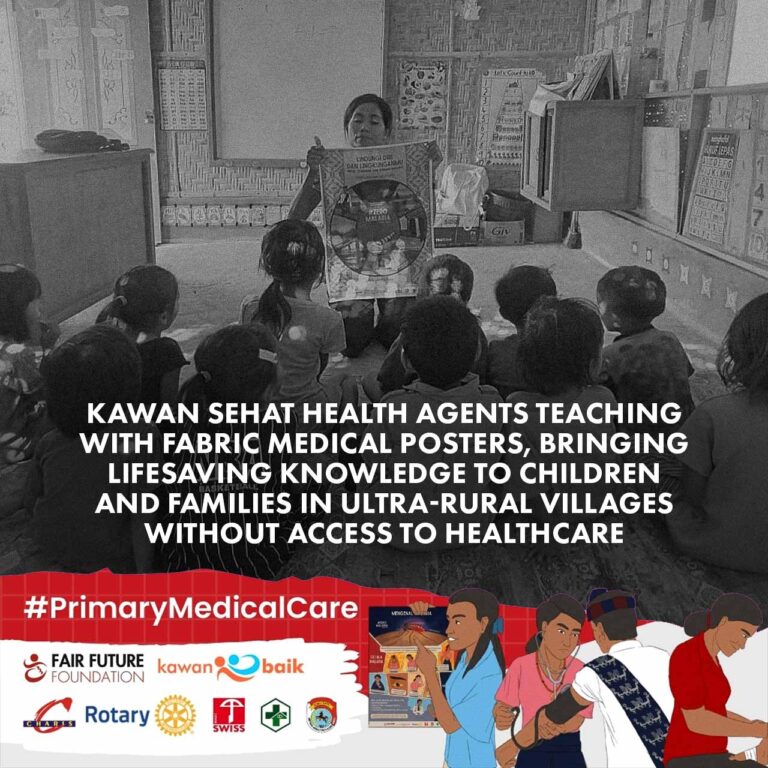
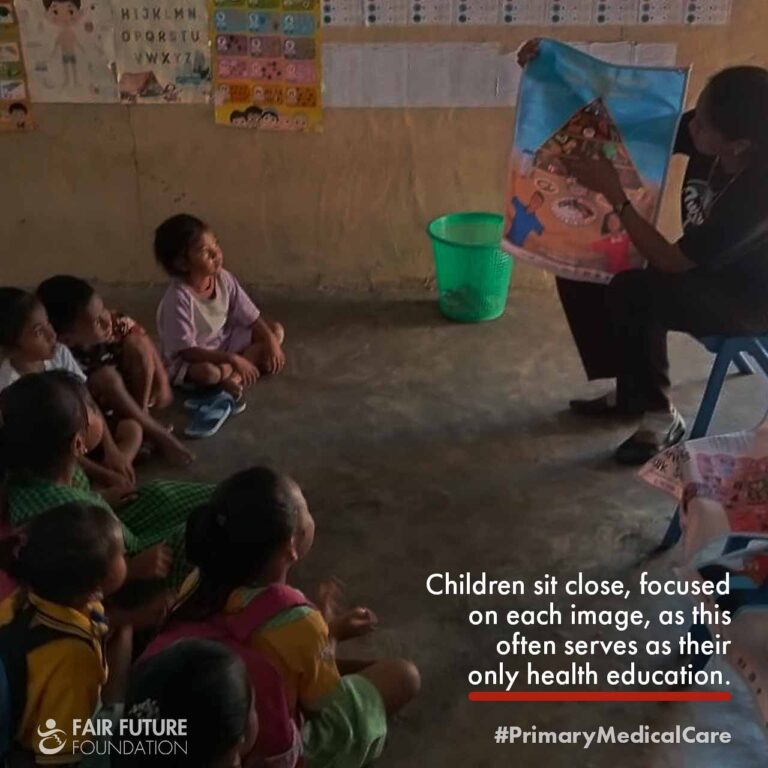
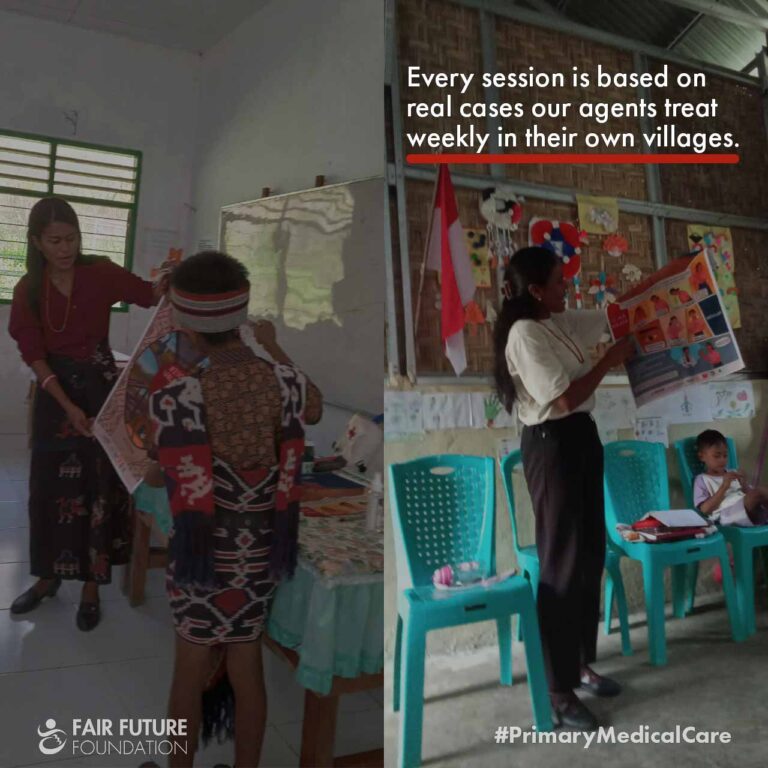
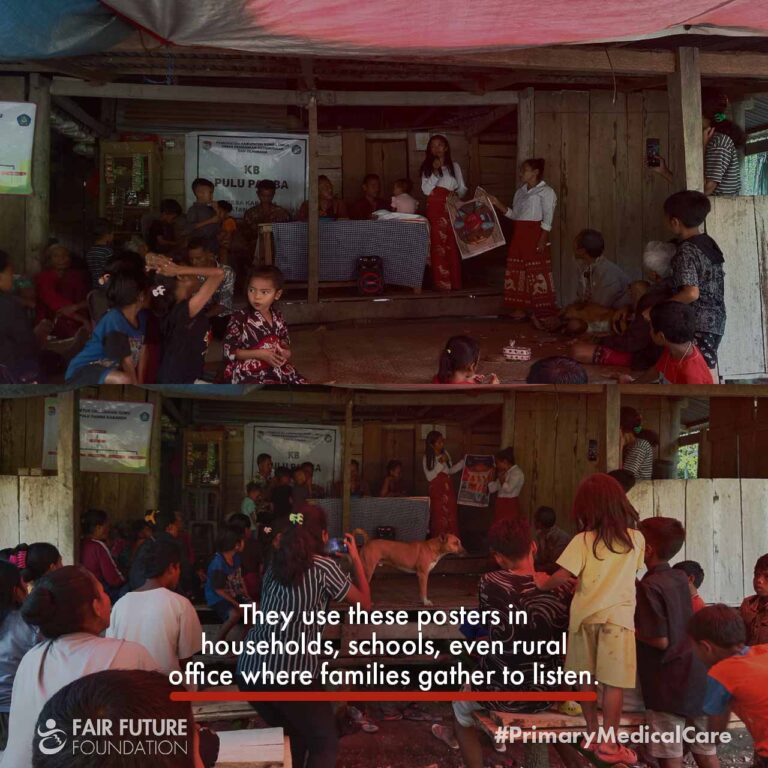
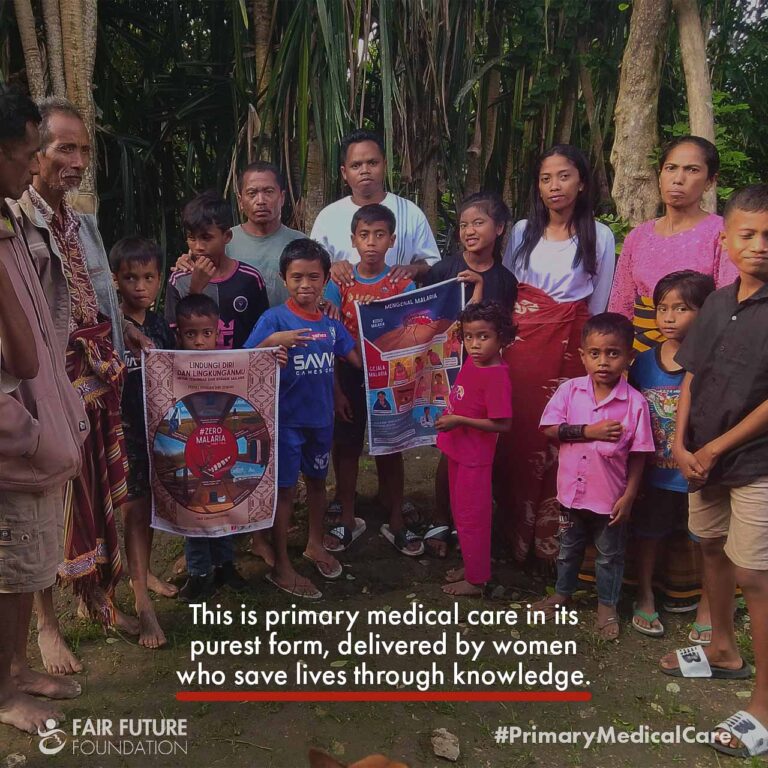
In ultra-rural villages where no doctor is available, medical knowledge must reach the people. Kawan Sehat health agents use durable fabric medical posters to teach children and families how to prevent disease, recognise danger signs early, and act before emergencies become fatal.
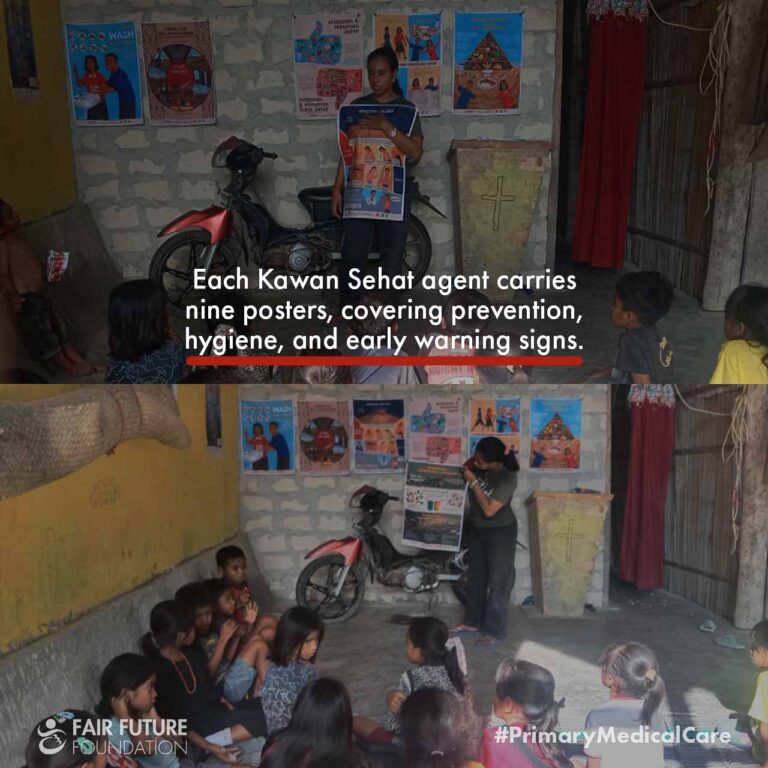
These posters are not generic tools. They were designed by Fair Future Foundation medical teams, together with Kawan Baik Indonesia, from the first sketches to the final fabric printing. Each trained agent carries nine posters covering hygiene, infection prevention, fever management, wound care, sanitation, and child health. Fabric was chosen because paper does not survive humidity, dust, rain, or long walks between villages.
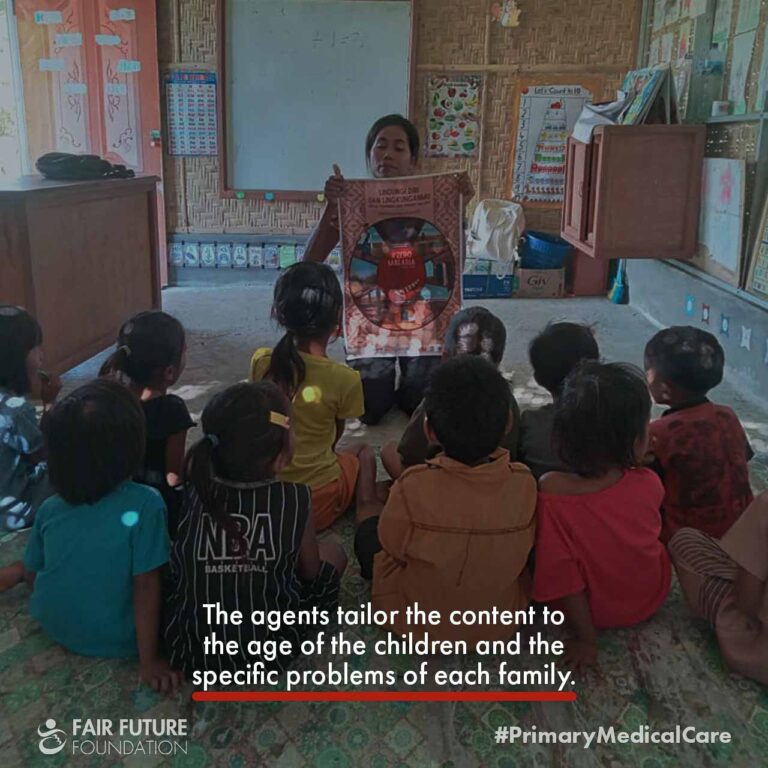
Sessions take place wherever people live and learn. In schools, posters remain on the walls so teachers can continue the lessons. In homes, children sit on the floor and repeat each step aloud. Under trees, families gather to understand how infections spread and how simple actions can save lives.
Agents follow a structured medical handbook, translating clinical knowledge into clear, practical guidance adapted to age, culture, and real cases treated weekly in their own communities. Mothers learn how to manage fevers, clean wounds, and identify warning signs when no clinic is reachable.
This is primary medical care at its most effective. Women teach medicine through trust, repetition, and proximity. Knowledge becomes prevention. Prevention becomes survival.
Alex Wettstein – Fair Future Foundation medico-social camp in East Sumba – Rumah Kambera, Lambanapu – the 13th of January 2025


List of Related Organisations with Hyperlinks
- World Health Organisation: Provides international guidance on disease prevention and community-based health education.
- UNICEF: Supports child health education and preventive healthcare interventions worldwide.
- Médecins Sans Frontières: Delivers medical care and prevention in remote and underserved regions.
- Save the Children: Implements prevention-focused child health and education programmes.
- Global Health Workforce Alliance: Promotes task shifting and community health worker models.
- WaterAid: Links hygiene education and sanitation to disease prevention in vulnerable communities.